

Mold on wood is a common problem in many homes. It often shows up in damp basements, bathrooms, crawl spaces, attics, and around leaks. At first, it may look like a small stain or a fuzzy patch. But if you ignore it, mold can spread fast and damage the wood. It can also cause bad smells and make the air in your home less healthy.
The good news is that small mold spots on wood can often be cleaned at home. You just need the right tools, the right cleaner, and the right steps. In this guide, you’ll learn how to remove mold from wood safely, how to tell mold apart from other stains, and how to stop it from coming back.
Why Mold Grows on Wood
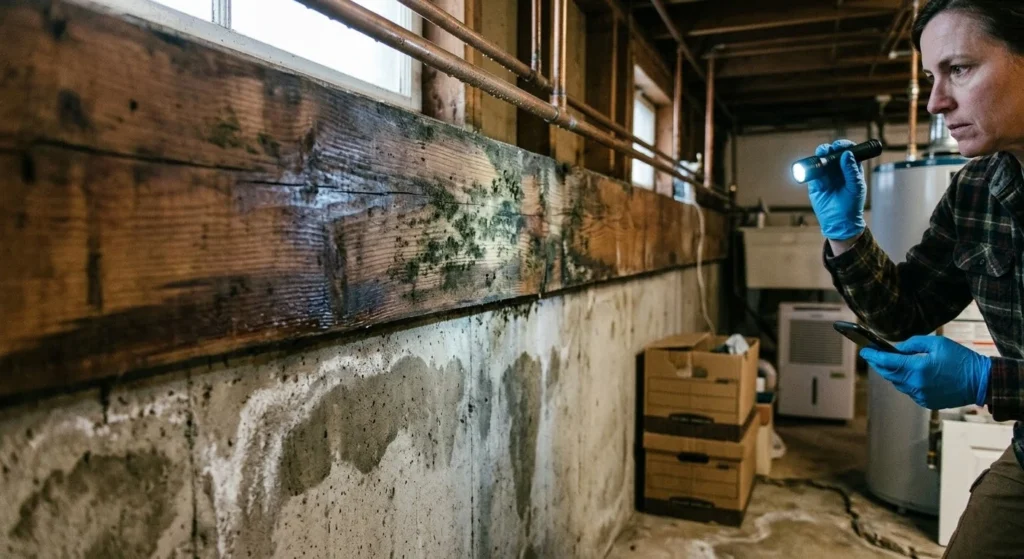
Mold grows when it finds three things:
- Moisture
- Warmth
- A food source
Wood is a natural material, so it gives mold something to feed on. If the wood stays wet or damp for too long, mold spores in the air can settle there and start growing.
Common causes of mold on wood include:
- Roof leaks
- Pipe leaks
- High indoor humidity
- Flooding or water damage
- Poor airflow in closed spaces
- Damp basements or crawl spaces
- Condensation near windows or walls
If you only clean the mold but do not fix the moisture problem, the mold will usually come back.
Why Mold on Wood Is a Problem
Many people think mold is only ugly. But it can cause more than just a bad-looking stain.
Health Concerns
Mold can irritate your:
- Nose
- Eyes
- Throat
- Skin
- Lungs
Some people may have:
- Sneezing
- Coughing
- Stuffy nose
- Watery eyes
- Skin rash
- Trouble breathing
People with asthma, allergies, or weak immune systems may react more strongly.
Damage to Wood
Mold can slowly break down wood fibers. Over time, this may lead to:
- Stains that are hard to remove
- Weak or soft wood
- Rot in severe cases
- Damage to floors, trim, furniture, and framing
That is why it is smart to remove mold as soon as you see it.
How To Identify Mold on Wood
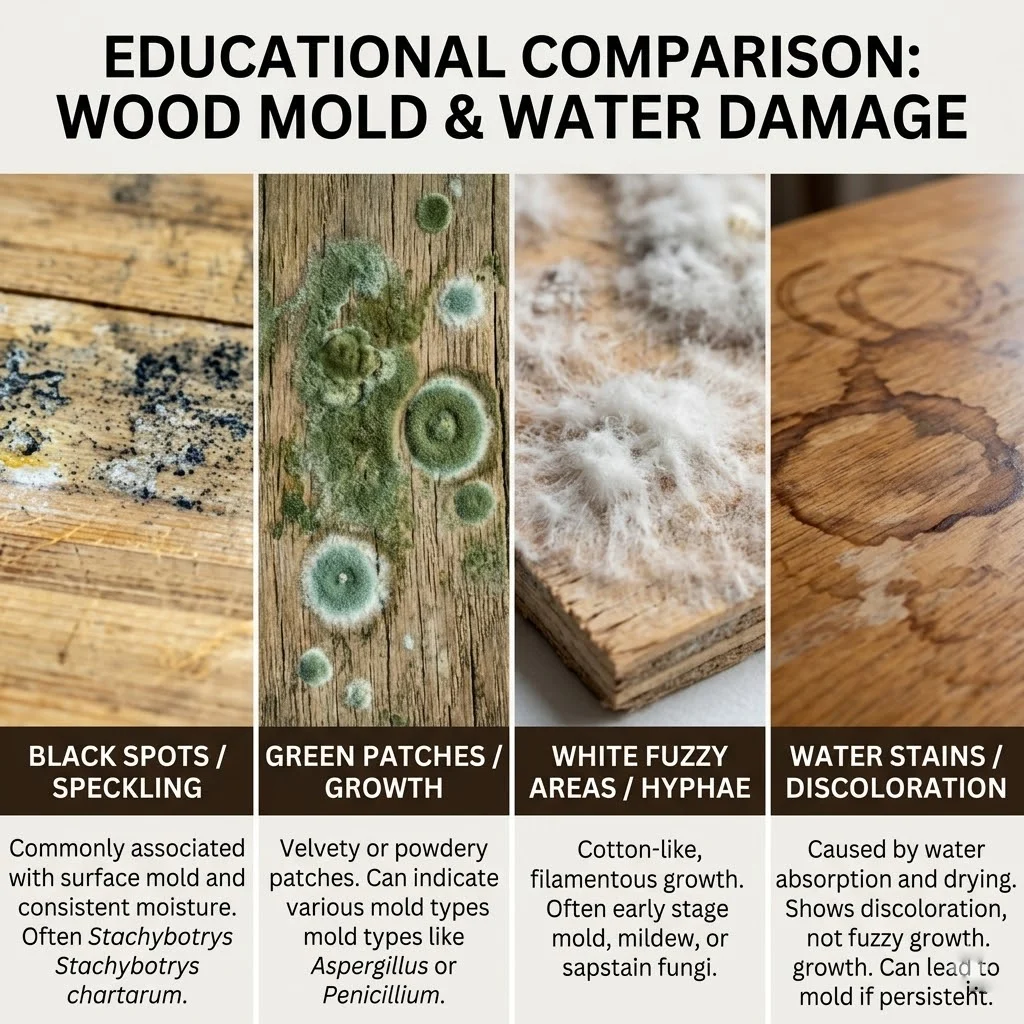
Before you start cleaning, make sure you are really dealing with mold.
Common Signs of Mold on Wood
Mold can look like:
- Black spots
- Green patches
- Gray fuzz
- White powdery areas
- Brown or dark stains with texture
It may also have a:
- Musty smell
- Damp smell
- Spreading or uneven pattern
Mold vs. Water Stains
Sometimes mold gets confused with water stains or dirt.
Mold usually:
- Has texture (fuzzy, powdery, slimy, or patchy)
- Spreads in odd shapes
- Smells musty
Water stains usually:
- Look flat
- Are yellow, brown, or light gray
- Follow the shape of a leak or drip
- Do not have a fuzzy texture
If you wipe a spot and it smears or feels fuzzy, it may be mold.
When You Can Clean Mold Yourself
You can often clean mold on your own if:
- The mold covers a small area
- The wood is still solid
- The mold is only on the surface
- No one in your home has serious breathing problems
A good rule is this: if the moldy area is smaller than 10 square feet, you can usually try DIY cleaning.
When To Call a Professional
Do not handle it yourself if:
- The mold covers more than 10 square feet
- The wood feels soft, crumbly, or rotten
- Mold is inside walls, ceilings, or subfloors
- Mold is growing in HVAC vents or ductwork
- The home had flooding
- Someone in the house has asthma, allergies, or a weak immune system
- The mold keeps coming back after cleaning
In these cases, a mold removal expert is the safer choice.
Safety Tips Before You Start
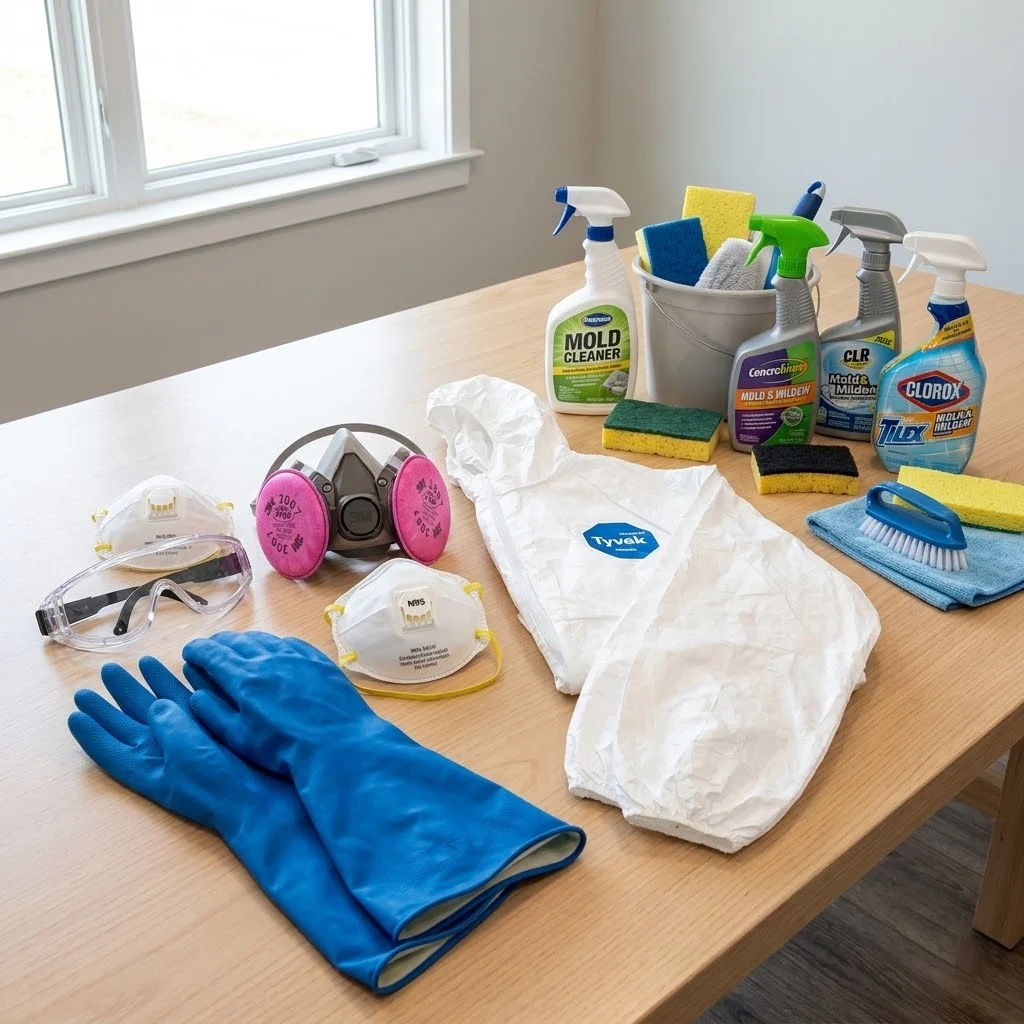
Before you clean mold, protect yourself. Mold spores can spread into the air while you scrub.
Wear These Items
- Long sleeves
- Long pants
- Rubber gloves
- Safety goggles
- N95 mask or respirator
Important Safety Rules
- Open windows and doors
- Keep kids and pets away
- Never mix cleaning chemicals
- Never mix bleach with ammonia
- Do not soak the wood too much
- Work in a well-ventilated space
These simple steps help you stay safe while cleaning.
Tools and Supplies You’ll Need
Before you begin, gather everything first.
Basic Supplies
- Mild dish soap
- Warm water
- Bucket
- Soft scrub brush or sponge
- Microfiber cloths
- Spray bottle
- White cleaning vinegar
- Fan or dehumidifier
Optional Supplies
- Commercial mold cleaner
- Bleach (only if needed and used carefully)
- Sandpaper
- Power sander
- HEPA vacuum (best if sanding)
Start with the gentlest cleaner first. Strong chemicals should only be used if mild cleaning does not work.
How To Remove Mold From Wood (Step-by-Step)
Now let’s go through the full process.
Step 1: Ventilate the Area
Open all nearby:
- Windows
- Doors
- Vents
Good airflow helps in two ways:
- It lowers the amount of mold spores in the air
- It helps the wood dry faster
If possible, place a fan near the area. If the space is damp, use a dehumidifier too.
Step 2: Vacuum Loose Mold (Optional but Helpful)
If you have a HEPA vacuum, use it first to remove loose spores from the wood surface.
This is helpful because:
- It reduces airborne mold
- It makes scrubbing easier
- It helps contain the mess
After vacuuming, empty the vacuum safely outside if possible, and clean the filter if the manufacturer allows it.
If you do not have a HEPA vacuum, skip this step and move carefully to the cleaning stage.
Step 3: Make a Gentle Cleaning Solution
Start with the safest and mildest option first.
Best First Cleaner
Mix:
- A few drops of dish soap
- With warm water
This works well for small surface mold.
You can also use:
- White cleaning vinegar in a spray bottle for stronger surface mold
Vinegar is often a good next step because it can help kill mold and remove odor.
Step 4: Apply the Cleaner
Use a sponge, cloth, or soft brush to apply the cleaning solution.
Important Tip
Do not soak the wood.
Wood absorbs moisture. If you use too much liquid, it can make the mold problem worse.
Instead:
- Lightly dampen the area
- Cover the moldy spot
- Let the cleaner sit for a few minutes
If you are using vinegar, spray it lightly and let it sit for 10 to 15 minutes before scrubbing.
Step 5: Scrub the Mold Off the Surface
Now gently scrub the moldy area.
Use:
- A soft brush
- A sponge
- A microfiber cloth
Scrub in small circles. Do not scrub too hard if the wood is painted, stained, or sealed. Hard scrubbing may remove the finish.
Your goal is to remove:
- Visible mold
- Surface stains
- Loose residue
Take your time. Small areas may need more than one pass.
Step 6: Wipe Away the Residue
After scrubbing, use a clean damp cloth to wipe away:
- Mold residue
- Cleaner
- Dirt
Do not splash the dirty water onto clean surfaces.
It’s a good idea to:
- Use more than one cloth
- Change water if it gets dirty
- Throw away disposable wipes if used
This helps stop mold spores from spreading.
Step 7: Dry the Wood Completely
This step is very important.
Even if the wood looks clean, mold can come back if the area stays damp.
How To Dry It
- Leave windows open
- Run a fan
- Use a dehumidifier
- Keep air moving for several hours
If the wood is in a basement or crawl space, drying may take longer.
Do not repaint, stain, or seal the wood until it is fully dry.
Step 8: Use a Stronger Cleaner If Needed
If mold or dark stains are still there, you may need a stronger method.
Option 1: White Vinegar
Spray cleaning-strength white vinegar on the area and let it sit for 10–15 minutes. Then scrub again.
Option 2: Commercial Mold Cleaner
Use a wood-safe mold cleaner and follow the label directions.
Option 3: Diluted Bleach (Use Carefully)
Bleach should be your last option.
Mix:
- 1 cup bleach
- 1 gallon water
Then:
- Apply lightly
- Never soak the wood
- Use strong ventilation
- Wear gloves and a mask
Warning
- Never mix bleach with ammonia
- Never mix bleach with vinegar
- Never use too much bleach in a closed room
Bleach can help with stains, but it may not always reach deep into porous wood.
Step 9: Sand the Wood If Stains Remain
Sometimes the mold is gone, but dark marks stay behind.
In that case, you can:
- Lightly sand the area by hand
- Use a power sander for larger spots
Before Sanding
- Make sure the wood is fully dry
- Wear goggles and an N95 mask
- Use a HEPA vacuum if possible
Sanding can remove:
- Deep surface stains
- Leftover discoloration
- Damaged finish
After sanding, wipe the dust away carefully.
Step 10: Clean Up the Area
Once the mold is removed, clean everything around it.
What To Do
- Wash your gloves if reusable
- Throw away dirty cloths if needed
- Wash your clothes separately
- Vacuum or mop the floor
- Wipe nearby surfaces
- Bag any moldy trash before throwing it away
This final cleanup helps remove leftover spores.
Best Cleaner for Mold on Wood
Many homeowners ask: What is the best cleaner for mold on wood?
Here is the simple answer:
Best Options
- Dish soap + warm water – best first choice for light surface mold
- White vinegar – great for stronger mold and odor
- Commercial mold cleaner – useful for stubborn spots
- Diluted bleach – only for tough cases and used with care
Best Overall Choice
For most small mold problems, dish soap first, then white vinegar if needed is the safest and easiest method.
How To Remove Mold From Different Wood Surfaces
Not all wood surfaces are the same.
Wood Furniture
Use the gentlest method first. Too much water can damage the finish. Wipe carefully and dry fast.
Wood Floors
If the floor feels solid, surface mold can often be cleaned. If the wood feels soft or swollen, there may be deeper water damage.
Wood Framing or Beams
Check basements, attics, crawl spaces, and utility rooms. Structural wood can often be cleaned if the mold is caught early.
Wood Ceilings
Be extra careful on ladders. Work slowly and keep the room ventilated.
How To Prevent Mold From Coming Back
Cleaning mold is only half the job. To stop it from returning, remove the moisture source.
Fix Water Problems
- Repair roof leaks
- Fix plumbing leaks
- Seal window leaks
- Dry wet areas quickly
Lower Indoor Humidity
Try to keep humidity between 30% and 50%.
Use:
- Dehumidifiers
- Exhaust fans
- Air conditioning
- Better airflow in closed rooms
Improve Ventilation
- Run bathroom fans during and after showers
- Use kitchen exhaust fans
- Vent dryers properly
- Open windows when weather allows
Keep Damp Areas Clean and Dry
Pay attention to:
- Basements
- Crawl spaces
- Bathrooms
- Laundry rooms
- Under sinks
- Around windows
Use Mold-Resistant Products
If mold is a repeat problem, consider:
- Mold-resistant primer
- Mold-resistant paint
- Treated wood
- Better insulation around cold pipes and walls
Common Mistakes To Avoid
Here are some mistakes homeowners often make:
- Ignoring the leak that caused the mold
- Using too much water on wood
- Cleaning without a mask
- Mixing bleach with other cleaners
- Painting over damp wood
- Not drying the area fully
- Sanding moldy wood without protection
Avoiding these mistakes can save time and prevent mold from returning.
Final Thoughts
Learning how to remove mold from wood is important for every homeowner. Mold may start small, but it can spread quickly if the wood stays damp. The safest way to handle small mold spots is to wear protective gear, clean with mild soap first, use vinegar if needed, dry the wood fully, and fix the moisture problem right away.
If the mold is large, keeps returning, or has damaged the wood deeply, it is best to call a professional. In most cases, fast action makes the biggest difference.
FAQs About Removing Mold From Wood
Can mold be fully removed from wood?
You can remove visible mold from wood, but mold spores are always present in the air. The best way to stop mold is to clean it and fix the moisture problem.
Does vinegar kill mold on wood?
Yes, white cleaning vinegar can help kill many types of surface mold and is a common choice for wood cleaning.
Is bleach the best cleaner for mold on wood?
Not always. Bleach can help with stains, but wood is porous. Mild soap and vinegar are often better first choices.
Can I paint over moldy wood?
No. You should never paint over mold. Clean the mold first, let the wood dry completely, and fix the moisture issue before painting.
How fast does mold grow on wood?
Mold can begin growing within 24 to 48 hours after wood becomes wet if the conditions are right.