

To fix a squeaky door, start by identifying the noisy hinge. Remove the hinge pin with a hammer and nail, clean off any dirt or rust, then coat the pin with WD-40, petroleum jelly, or olive oil. Reinsert the pin, open and close the door a few times, and wipe away any excess. Done.
There’s something about a squeaky door that gets under your skin. You tune it out during the day, but the second the house goes quiet at night, that shrill creak announces every trip to the kitchen. If you’ve got a squeaky door near a bedroom or a baby’s nursery, you know exactly how maddening it can be.
The good news? You almost certainly don’t need to call a professional. Fixing a squeaky door is one of those home repairs that looks harder than it is. Most of the time, all it takes is 10 minutes, a hammer, and something you probably already have sitting in a kitchen drawer.
Why Does a Door Squeak in the First Place?
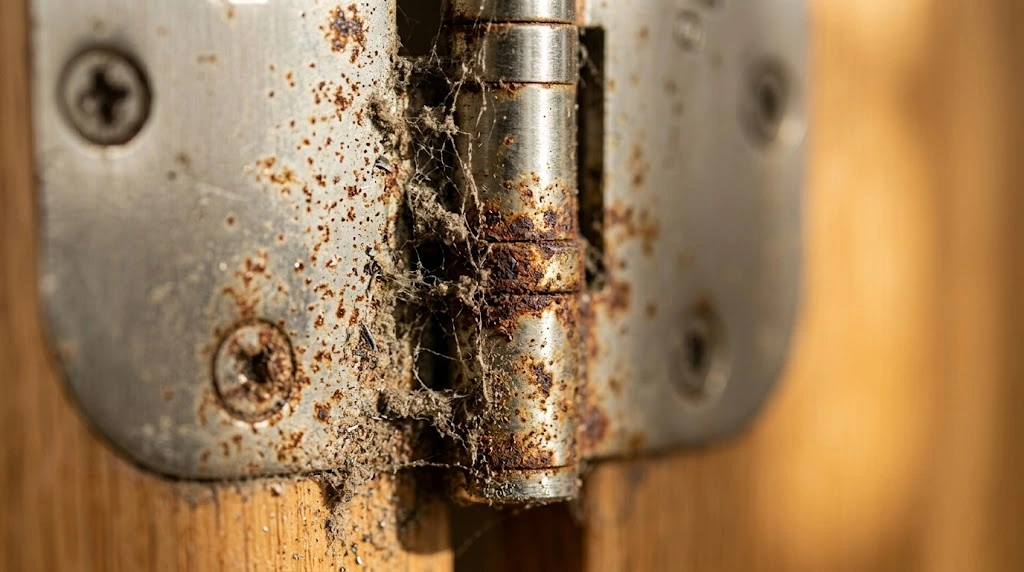
Before you grab a can of WD-40, it helps to understand what’s actually causing the noise. A squeaky door almost always traces back to friction — metal rubbing against metal inside the hinges. But what’s causing that friction can vary.
The most common culprit is a lack of lubrication. Over time, the oil or grease on a hinge dries out, and when the metal pin moves inside the hinge knuckle, it grinds and squeaks. This is especially common in older homes where no one has touched the hinges in years.
Dirt and debris are another big cause. Dust, grime, and even rust can build up inside the knuckle of the hinge. That layer of gunk creates extra resistance every time the door swings open or shut. Simply adding lubricant on top of a dirty hinge won’t fix the problem for long — you need to clean it first.
Loose screws are also worth checking. When a hinge screw loosens, the hinge sits at a slight angle. That uneven pressure causes the metal pieces to rub together in ways they weren’t designed to, which produces the squeak. Bent hinge pins have the same effect — the misalignment creates constant friction.
In some cases, the door or door frame itself is the issue. Wood expands and contracts with humidity and temperature changes, and over time a door can shift enough that it rubs against the frame. If your door scrapes or drags when you open it, that friction may be creating the noise rather than the hinges.
What You’ll Need
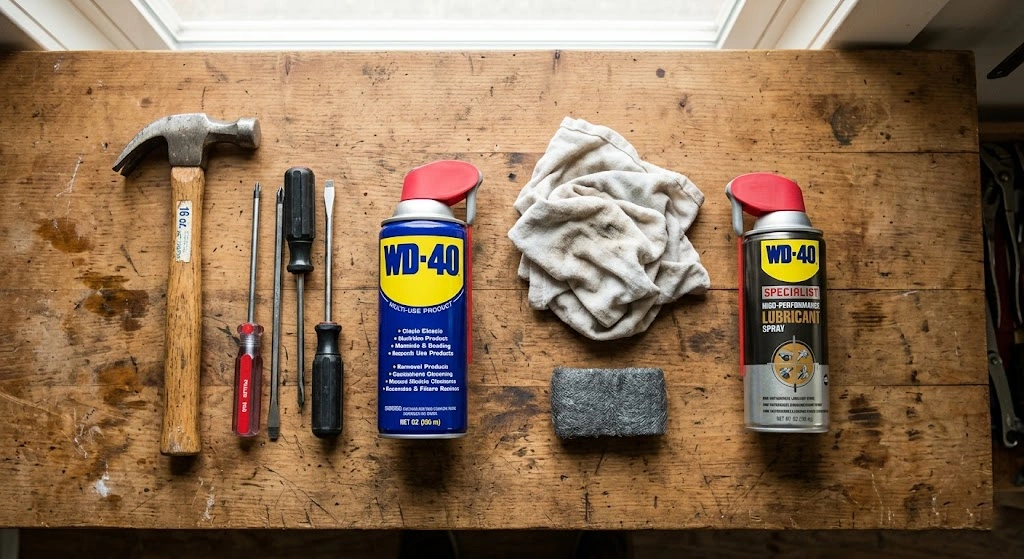
You don’t need a toolbox full of specialty equipment. Most fixes call for basic items you likely already own. A hammer, a flat-head screwdriver, and some kind of lubricant cover about 90% of squeaky door situations.
For lubrication, you have plenty of choices: WD-40 is the classic go-to. Silicone spray is a cleaner long-term option. Petroleum jelly, olive oil, bar soap, and even chapstick work in a pinch. Paraffin candle wax also does the job. If you want a more permanent fix, dry PTFE lubricant from a hardware store is your best bet.
You’ll also want a clean rag or paper towels to wipe away any excess, and possibly some sandpaper or steel wool if rust is involved.
How to Fix a Squeaky Door: Step by Step
Step 1 — Find the Noisy Hinge
Open and close the door slowly and listen carefully. Most doors have two or three hinges, and not all of them squeak. Pinpointing the exact one saves you time. Once you hear where the sound comes from, put your hand on each hinge and feel for vibration as you move the door. That’s your target.
Step 2 — Remove the Hinge Pin
Place a book or a folded towel under the door to keep it steady. Most standard door hinges have a removable pin running through the center of the knuckle. To remove it, hold a nail or the tip of a screwdriver at the base of the pin and tap upward with a hammer until the pin slides out of the top.
Don’t worry — this is a lot simpler than it sounds. The pin should come out without much force unless it’s been there for decades.
Step 3 — Clean the Pin and the Hinge
Before you add any lubricant, take a moment to clean things up. Wipe the pin down with a rag. If you see rust or significant buildup, use steel wool or fine sandpaper to scrub it off. You can also clean the inside of the hinge knuckle with a dry cloth or a cotton swab.
If the dirt is stubborn, a 50/50 mixture of water and white vinegar works well. Dip a cloth in the solution, wipe the hinge down, and let it dry before moving on.
Step 4 — Apply Your Lubricant
This is the main event. Coat the hinge pin generously with your lubricant of choice. Petroleum jelly and bar soap cling well to metal, which makes them solid options. If you’re using WD-40 or silicone spray, apply it directly to the pin and also spray a little into the hinge knuckle itself.
For a longer-lasting result, use a dry lubricant like PTFE spray. Unlike oil-based products, it doesn’t attract dust and dirt, which means you won’t have to repeat the process as often.
Step 5 — Reinsert the Pin
Slide the pin back into the hinge from the top. Use your hammer to tap it gently back into place until it sits fully through all the knuckles. Open and close the door several times to work the lubricant into the hinge. You should hear the squeak disappear almost immediately.
Wipe away any excess lubricant with a clean rag so it doesn’t drip onto your floor or door frame.
What to Do If the Squeak Comes Back
If you’ve lubricated the hinge and the squeak returns within a few days, the dirt buildup is likely worse than a quick wipe-down can handle. In that case, remove the hinge completely from the door — not just the pin — and soak it in vinegar or a cleaning solution for an hour. Scrub it thoroughly, dry it, lubricate it, and reattach.
How to Fix Loose Hinge Screws
Sometimes the squeak has nothing to do with lubrication and everything to do with a loose screw. If a hinge screw spins freely when you try to tighten it, the screw hole in the wood has worn out and no longer grips the screw properly.
The easy fix is to use longer screws. A 3-inch screw will reach deeper into the door frame and get a solid grip where the shorter screw couldn’t. If you prefer to keep the original screw size, fill the hole first. Push a few wooden toothpicks coated in wood glue into the hole, let them dry, snap off the excess, and then drive the screw in again. The wood fibers give the screw something to bite into.
How to Fix a Door That Rubs Against the Frame
If your squeak or scraping sound comes from wood rubbing on wood rather than the hinges, a different approach is needed. Open the door and look for shiny or worn patches along the edge — that’s where the contact is happening.
For minor rubbing, rub a bar of soap, a wax candle, or some petroleum jelly along the worn edge. This reduces friction enough to stop the noise. For a more permanent fix, you may need to sand or plane down the edge of the door slightly so it moves freely in the frame.
Keep in mind that wood swells in humid weather and shrinks in dry conditions. If your door only squeaks or sticks during certain seasons, humidity is likely the real cause. A dehumidifier can help regulate moisture levels and reduce how much the wood moves.
How to Stop a Squeaky Door From Coming Back
Once you’ve fixed the squeak, a little routine care goes a long way. Lubricate your door hinges every six months — more often if the door gets heavy use. This takes about two minutes per door and keeps everything moving smoothly.
Tighten hinge screws once a year as part of a general home check. A quarter-turn with a screwdriver now prevents a wobbling, squeaky hinge six months down the road.
If you’re replacing old hinges entirely, choose stainless steel or brass. Both materials resist rust far better than standard zinc or painted steel hinges, which means they stay quiet much longer.
When to Call a Professional
The fixes covered here handle the vast majority of squeaky door problems. But if you’ve tried everything — cleaning, lubricating, tightening screws, adjusting the strike plate — and the door still squeaks, the issue may be structural. A settling foundation can shift door frames significantly, causing doors to bind and scrape in ways that no amount of lubrication will fix.
At that point, a carpenter or contractor can assess whether the door frame needs adjustment or replacement. The cost for professional door repairs typically runs from $50 for minor work up to $235 or more for significant frame adjustments, depending on your location and the scope of the job. For most squeaky doors, though, you’ll have it sorted out long before reaching that point.
A quiet door takes less than 15 minutes to fix. Grab your hammer and get started.