

Renovating in New York City is a different undertaking than renovating anywhere else, largely because the buildings tend to be older and the regulatory environment around them has grown stricter over the years, to the point where getting materials, workers, and inspectors coordinated inside a Manhattan co-op or condo turns out to be far more complicated than most owners expect and usually something they only come to realize once the project is already underway.
The choice of renovation firm ends up shaping everything that follows. It affects how quickly a board signs off, whether the original design survives the construction process intact, and whether the person running the job has filed enough DOB paperwork and negotiated enough alteration agreements to see problems coming rather than scramble to fix them after the fact.
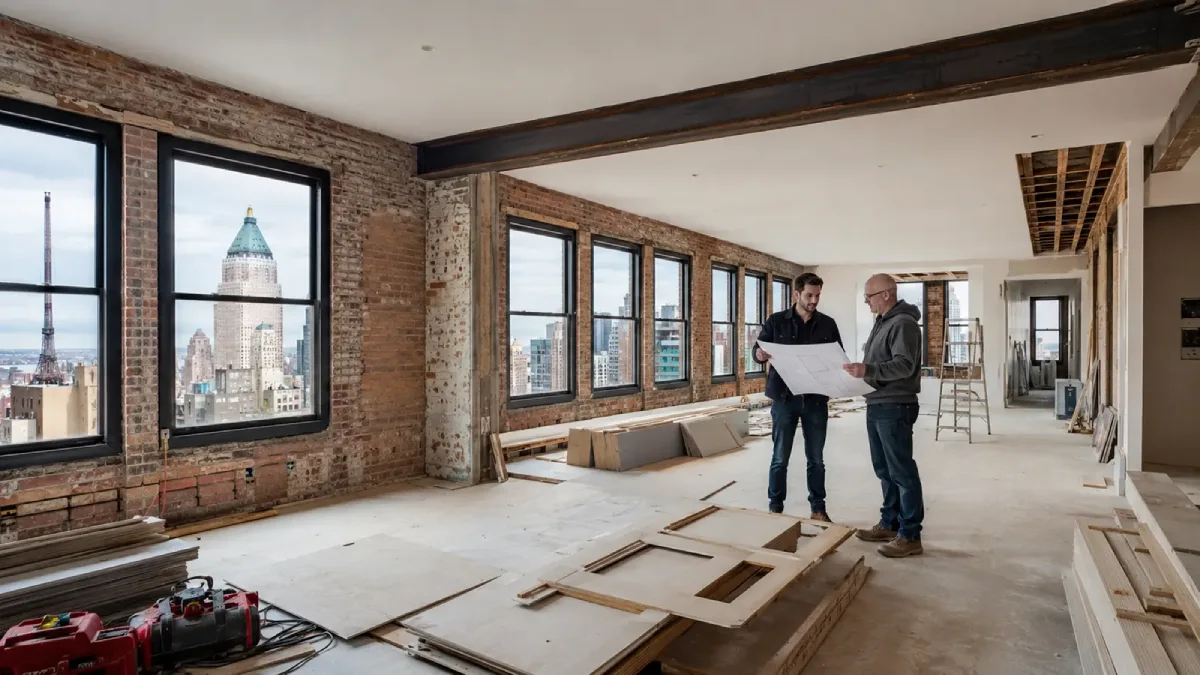
Why the Integrated Approach Works
A common path for owners is to hire a designer and a contractor as two separate parties, then hope the two stay in sync on their own. In practice, that handoff between design intent and construction reality tends to be exactly where time and money disappear, since drawings arrive late and field conditions on site rarely match what was actually drawn, leaving the owner as the one stuck translating between two professionals who don’t share the same priorities or the same patience for ambiguity.
Hoppler Design & Build avoids that split by running design and construction as one continuous process. A single team shapes the interior concept, manages the architectural drawings and permit filings, sources the materials, and oversees construction through a project manager who answers for the whole outcome and not just one piece of it. That structure matters most for owners who are already juggling full-time jobs and city life while their apartment is being torn apart; conversations that would otherwise take three separate meetings happen in one.

What Manhattan Buildings Actually Require
Pre-war co-ops and newer condo buildings each have their own approval process, and neither one is quick: some boards demand detailed alteration agreements, others require a deposit held against potential damage to common areas, and timelines vary just as widely, with larger co-ops that have a dedicated alteration committee sometimes taking several months to approve a project before a single wall comes down.
On the city’s side, a full gut renovation gets filed as an Alteration with the NYC Department of Buildings, which means an architect of record signs off on the drawings while a separately licensed general contractor is registered against the same job. Inspections happen in stages throughout construction, and nothing is legally occupiable again until DOB issues a final sign-off. Firms that have been through this cycle many times tend to move faster, less because they’re cutting corners, more because their paperwork is already clean and the people reviewing it already know their name.
Specialty Work and Why Timing Matters
How good a finished renovation looks often comes down to when the specialty trades get involved. Architectural glass is a clear example. Manhattan apartments are frequently short on both square footage and natural light, so the choice between a glass partition and a solid wall can completely change how a floor plan reads. A frameless glass divider between a kitchen and living room keeps the openness of the space while still marking it as distinct. A steel-framed glass door on a home office, meanwhile, closes off sound without stealing light from the rooms around it.
Glass Desire New York builds custom partitions, doors, railings, and sliding systems for residential projects across Manhattan. That kind of work has to be planned with the general contractor before framing closes up, so structural needs and hardware details get worked out on paper instead of being improvised on site. Done early, it looks effortless. Done late, it shows.

Budget and Timeline Expectations
A full gut renovation in Manhattan generally runs $250 to $500 per square foot. That range climbs higher in pre-war buildings once custom millwork, imported stone, or high-end appliances enter the picture and none of those figures include design fees, permit or expediter costs, or whatever deposit the building requires.
Hoppler doesn’t publish a flat rate, simply because too much depends on the specifics of a given apartment to fit into one number. Instead, the firm puts together an itemized proposal after actually assessing the space. It’s a conversation worth having early. Owners who work out budget and scope together before locking in a contractor almost always end up with a smoother project than those who have that conversation after the fact.
Common Questions
How Do I Find a Renovation Firm I Can Trust in Manhattan?
The best filter is a referral — ideally from someone in your own building, or at least a building with a similar profile. Property managers often keep records of which contractors have actually gotten projects through board approval successfully, and that history tells you more than any online review could. If the goal is to avoid managing design and construction as two separate relationships, look for a firm with a real track record in Manhattan specifically.
Is an Interior Designer Necessary for a Renovation?
For purely cosmetic work, an interior designer isn’t strictly necessary, but for a full gut renovation, having design coordination in place tends to cut down on mistakes and change orders simply because decisions get made before construction starts instead of during it. An architect of record is a different requirement entirely — legally necessary for most DOB filings, and a distinct role from interior design even on projects where both happen to sit with the same firm. In an integrated design-build setup, that role is simply absorbed in-house.
How Much Does Board Approval Affect the Schedule?
Board approval affects the schedule more than most owners assume going in, since some boards move in a few weeks while others take several months, and firms that have already worked within a particular building type tend to get through review faster, partly because their paperwork already matches what that board expects, and partly because they already have a working relationship with the property manager. Having that conversation before choosing a contractor, rather than after, is almost always the better order of operations.