

Snake fencing is a physical barrier made of fine wire mesh, buried underground and standing at least 30 inches tall. It blocks snakes from climbing over or digging under it. Proper mesh size, height, and gate sealing make the difference between a fence that works and one that doesn’t.
If you’ve ever spotted a snake near your back door, you know the feeling. Your heart jumps, you freeze, and suddenly your yard doesn’t feel so relaxing anymore. The good news is you can do something about it. Snake fencing is one of the few methods that actually stops snakes cold, instead of just scaring them off for a day or two.
This guide walks you through everything you need to know about snake fencing and proofing your property. We’ll cover materials, height, depth, gates, and the small details that most people miss.
What Snake Fencing Actually Does
A snake fence works differently than a regular yard fence. It’s not about privacy or keeping your dog in the yard. It’s about closing off every possible way a snake could get through, over, or under the barrier.
Snakes are patient and flexible. They can squeeze through gaps as small as a quarter inch. Many species can also climb rough surfaces, and some can support a good portion of their body weight while doing it. That means a fence with big gaps, low height, or loose ground contact won’t do much good.
A proper snake fence solves all three problems at once. It uses mesh small enough to block even baby snakes, it stands tall enough to stop climbing, and it goes deep enough underground to stop digging. When all three pieces come together, snakes tend to avoid the area entirely rather than waste energy trying to get through.
Choosing the Right Mesh Material
Material choice matters more than most homeowners realize. The mesh needs to be strong, weather resistant, and tight enough to block small openings.
Galvanized steel mesh is the most common choice, and for good reason. It holds up well outdoors and resists rust for years. Many professional installers use quarter-inch galvanized mesh that stands 36 inches high, which covers both height and gap size in one product.
Aluminum mesh is another solid option. Aluminum wire mesh is popular for snake fencing because it’s affordable, high quality, and easy to shape and cut to size. Some aluminum products come pre-crimped for extra stability, which helps the mesh hold its shape over time.
Stainless steel mesh costs more, but it lasts longer in harsh climates. Type 304 stainless steel is the most common grade and performs well in typical yard and garden conditions.
Whatever material you pick, stick to a quarter-inch opening size. Anything larger, and you’re leaving a door open for young snakes. A fence with half-inch gaps might look secure, but it offers little real protection against smaller snakes that can flatten their bodies and slide right through.
The Right Height and Depth
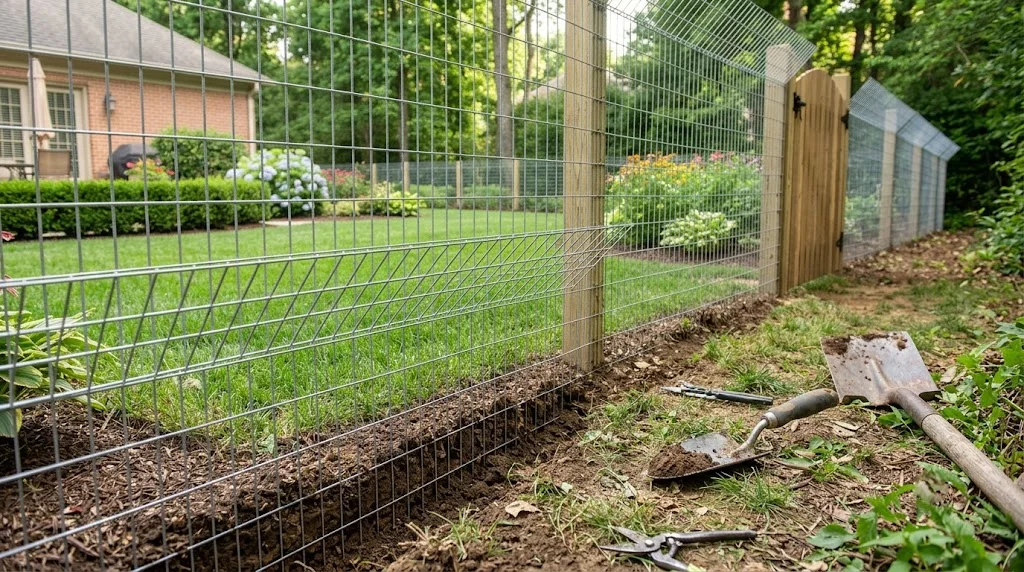
Height and depth are where most DIY snake fences fail. People underestimate how far a snake can reach or how deep it can dig, and the fence ends up with a weak spot within the first year.
For height, aim for at least 30 inches above ground, though 36 inches gives you more of a safety margin. Snake-proof fencing should be at least 30 inches tall, since snakes can climb and support up to a third of their body weight while doing so. That climbing ability is exactly why shorter fences don’t hold up.
Angling the top of the mesh outward, roughly 30 degrees, adds another layer of protection. A slight outward angle at the top of the mesh makes it harder for snakes to climb over the barrier. Think of it like the curved top of a prison fence. It’s much harder to get a grip when the surface leans away from you.
Depth matters just as much as height. Snakes and burrowing rodents can dig under a fence that only sits on top of the soil. The mesh should be buried at least four inches underground to stop snakes from digging beneath it, and some installers recommend going even deeper, especially in loose or sandy soil. Bending the buried portion outward with about six inches of overlap staked into the ground adds extra security against snakes trying to push under the barrier.
Digging a trench before installation makes this step much easier. Dig along the entire fence line, drop the mesh in, then backfill and pack the soil down firmly. A loose trench defeats the purpose, since shifting soil can create small gaps over time.
Sealing Gates and Other Weak Points
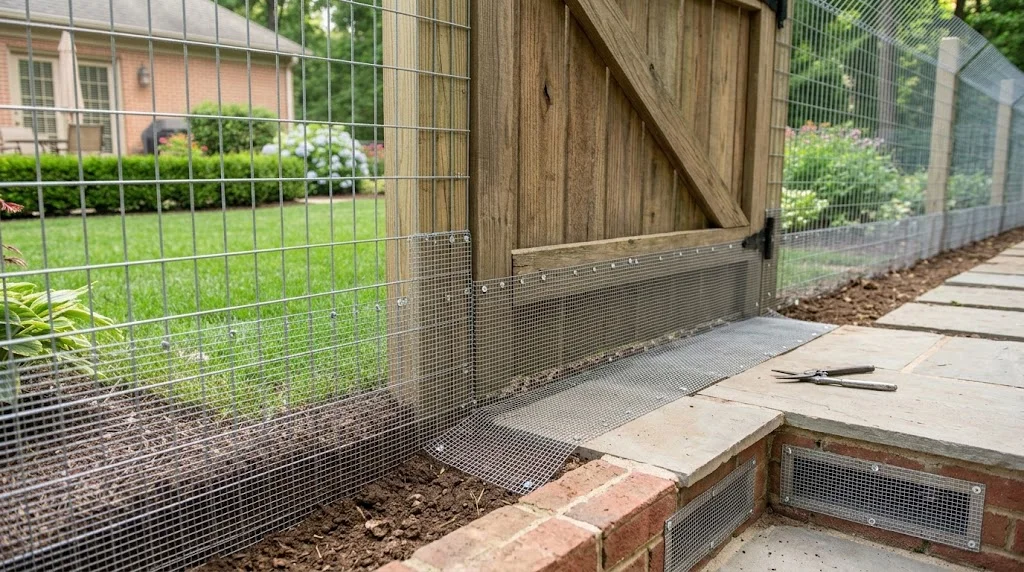
Gates cause more snake fence failures than any other part of the system. A fence can be perfect everywhere else, but a gap under a gate, or a poorly sealed hinge, gives snakes an easy entry point.
Gates are the trickiest part of snake proofing, since closing every gap to a quarter inch without ruining how the gate swings takes real skill. If your gate sits on gravel or an uneven surface, that gap grows even wider, and standard weatherstripping usually isn’t enough to close it.
A few fixes help here. Attach mesh directly to the bottom portion of the gate, extending it down into a small trench just like the rest of the fence line. Use flexible mesh where the gate needs to swing, so it doesn’t bind or tear. Check the latch side too, since gaps often form there as the gate settles over time.
Don’t forget other weak points around your property. Gaps under sheds, spaces around deck footings, and openings where a fence meets a wall or foundation all need the same mesh treatment. Wire mesh can also be installed around foundation vents, soffit screens, gutters, and chimneys to block entry points into the house itself.
Pairing Fencing with Yard Habitat Changes
A fence works best when it’s not fighting against an inviting yard. Snakes go where the food and shelter are, so cutting down on both makes your fence far more effective.
Rodents are the biggest draw. Since snakes prey on rodents, tackling a rodent problem first is one of the best ways to keep snakes away from an outdoor space. Store pet food in sealed containers, secure trash and compost bins with tight-fitting lids, and clear out woodpiles where mice like to nest.
Overgrown plants near the fence line create another problem. Vines, shrubs, and tall grass growing against the mesh give snakes something to climb, which can undo all your careful height planning. Trimming or removing plants and shrubbery near the fence keeps snakes from using them as a ladder over the barrier.
Piles of rocks, wood, or debris near the fence line also act as hiding spots and staging areas. Clearing this material away, especially close to gates and low points in the yard, removes cover that snakes rely on before making a move toward your property.
Keeping Your Snake Fence Working Long Term
A snake fence isn’t a one-and-done project. Soil shifts, wind loosens fasteners, and ground settling can open small gaps that weren’t there on installation day.
Walk the fence line a few times a year, especially after heavy rain or a hard freeze. Look closely at the bottom edge where mesh meets soil, since that’s the spot most likely to lift or separate. Fencing installed directly on top of the dirt, rather than buried below grade, tends to develop access points fairly quickly as the ground shifts and other animals dig nearby.
Check gate hinges and latches too. These moving parts wear down faster than the rest of the fence and often create the first weak spot. A quick tightening of screws or a small mesh patch usually solves the problem before it becomes an entry point.
DIY or Professional Installation
Plenty of homeowners install snake fencing themselves, and it’s a manageable weekend project if your yard has fairly flat, even ground. Basic tools, the right mesh, and a bit of patience with the trenching go a long way.
That said, tricky terrain, uneven gates, or large properties often call for professional help. Companies that specialize in snake exclusion know how to handle gate sealing and unusual ground conditions that trip up first-time installers. If your area has frequent rattlesnake activity or borders open desert or wooded land, a professional assessment can catch weak points you might miss on your own.
Before starting any project, it’s worth checking local wildlife regulations. Rules around snake exclusion and relocation vary by state, so a quick call to your local wildlife agency can save you a headache later.
A well-built snake fence, paired with a cleaner, less inviting yard, gives you real peace of mind. Get the mesh size right, bury it deep enough, seal your gates tight, and check it every so often. Do that, and your yard becomes a much harder target for any snake passing through.