

Building under-deck storage means adding drainage, skirting, and shelving beneath a raised deck to create a dry, usable space. Start by waterproofing the joists, enclose the sides with matching panels or siding, add a door for access, then fit shelves, drawers, or cabinets to organize tools and outdoor gear.
What Makes Under-Deck Storage Worth Building
If you have a raised deck, chances are there’s a chunk of dead space sitting underneath it right now. Most people just let it collect leaves, spiderwebs, and whatever got shoved under there last fall. That’s a shame, because with a little work, that space can hold your lawn mower, pool floats, garden tools, and holiday decorations.
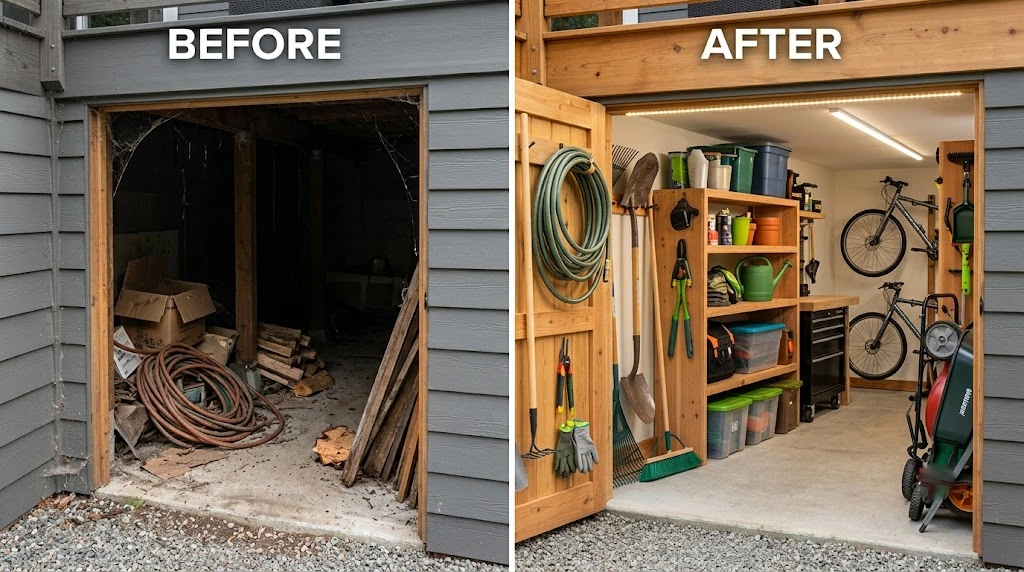
The idea is simple. You seal off the top so water doesn’t drip through, close in the sides so it looks tidy, and add some kind of storage system inside. Done right, it adds real square footage to your property without the cost of building a shed from scratch.
Check Your Deck Height Before You Start
Before you get excited about drawers and cabinets, measure how much clearance you actually have. <cite index=”6-1″>A deck should be at least 30 inches high for the space underneath to work as storage.</cite> Anything lower than that gets tight fast, especially once you add flooring or a ceiling system.
If your deck sits higher, even better. Taller decks can fit walk-in sheds, workbenches, or even a small hangout spot. Grab a tape measure and check the height at a few different points, since decks aren’t always perfectly level with the ground below them.
Solve the Water Problem First
This is the step people skip, and it’s the one that ruins everything later. Rain runs straight through the gaps in your deck boards, so anything stored underneath gets soaked unless you deal with it. <cite index=”3-1″>Before committing to under-deck storage, consider retrofitting a drainage system that channels runoff toward a dedicated gutter.</cite>
You have a few options here. <cite index=”3-1″>EPDM rubber panels can drape between the lower edges of deck joists to form sloped, water-diverting troughs, while interlocking vinyl panels clip to under-joist supports to create both a sloped catchment and a finished ceiling in one step.</cite> Either method keeps water moving away from your storage area instead of pooling on top of it.
Some homeowners install the drainage layer above the joists, right before the deck boards go down. Others prefer working from underneath after the deck is already built. Both approaches work, but installing it during construction is usually easier and cheaper.
While you’re under there, take a good look at the wood. This Old House contractor Tom Silva points out that checking under a deck gives you a chance to spot rot in the joists and ledger before it becomes a bigger problem. Fix any damage now, because covering up a rotting deck with storage just hides an issue that will get worse.
Choosing the Right Skirting Material
Skirting is what closes off the sides of your under-deck space so it doesn’t look like an open crawl space. You have plenty of choices, and the right one depends on your budget and the style of your house.
Lattice panels are cheap and let some air through, which helps prevent moisture buildup inside. Solid wood or vinyl siding gives more privacy and blocks the view completely. Some people match the siding to their house for a built-in look, so the storage area blends in instead of standing out.
Whatever material you pick, line the inside with a plastic tarp or moisture barrier if you’re worried about humidity. Just keep in mind that solid enclosures trap heat in warmer climates, so anything stored inside needs to handle higher temperatures without damage.
Picking a Door That Actually Works
You need a way in, and it needs to work for the stuff you’re storing. A small removable panel works fine for occasional access, like pulling out holiday decorations twice a year. For anything you use often, a hinged door is a better call.
Hinged doors also let you add a lock, which matters if you’re storing power tools or anything worth stealing. Build the door frame out of pressure-treated 2x4s and use exterior-rated hinges so they hold up outside. If you’re storing bikes or a mower, make the opening wide enough that you’re not wrestling gear through a narrow gap every time.
Building Shelves, Drawers, and Cabinets
Once the space is dry and enclosed, it’s time to organize the inside. Floor-to-ceiling shelving works well for bins, pots, and anything you can stack. Pegboards give you a spot for hand tools, hoses, and anything with a hook or handle.
If your clearance is tight, slide-out drawers make a lot more sense than shelves. You can reach the back of a drawer without crawling in, which matters when the ceiling is low. Use heavy-duty drawer sliders rated for full extension, and build the frames from pressure-treated lumber so they hold up to any leftover moisture.
Cabinets add a cleaner look and keep dust off stored items, but they take more time and money to build than open shelving. If you want that finished look without building from scratch, several companies sell modular under-deck storage systems that bolt right into the joists.
Metal lockers or stainless cabinets are worth considering too, especially in a dry space with decent airflow. They hold up better than cardboard boxes and keep pests from chewing through your gear over the winter.
Turning the Space Into a Mini Shed
If your deck sits high enough, don’t limit yourself to shelves. A full enclosure with walls and a locking door turns the space into a legitimate shed. This works especially well for lawn mowers, snow blowers, and bikes that would otherwise crowd your garage.
Building a shed to fit the exact footprint under your deck makes the most of every inch. It also keeps airflow moving properly, since a custom fit avoids the awkward gaps you’d get from a prefab shed shoved into an irregular space. The result looks intentional instead of like an afterthought.
Some homeowners take it even further and build a small office, workshop, or reading nook under a tall deck. With decent lighting, ventilation, and insulation, that space can get real use for most of the year, not just as a place to dump tools.
Keeping Pests and Moisture Out Long Term
Finishing the build is only half the job. Under-deck storage needs regular check-ins to stay useful. Walk through the space every few months and look for water stains, soft wood, or signs that something has been chewing through your siding.
After heavy rain, check your drainage system for leaks or clogs. Leaves and debris can build up in gutters and troughs, which sends water right back where you didn’t want it. A quick rinse or sweep-out a few times a year keeps everything flowing the way it should.
If you notice mold or a musty smell, improve the airflow before it spreads. Sometimes that means adding a vent panel or leaving a gap in the skirting rather than sealing everything airtight. A little airflow goes a long way toward keeping stored items in good shape.
DIY or Hire a Pro
Plenty of homeowners build their own under-deck storage over a weekend or two, especially if the project is mostly shelving and skirting. If you’re comfortable with basic carpentry and have the right tools, this is a project you can tackle yourself.
Where it gets trickier is the drainage system. Some under-joist panel systems require precise slope calculations and careful installation to actually work. If water management feels outside your comfort zone, it’s worth bringing in a contractor for that piece, even if you handle the shelving and siding yourself.
Either way, take your time on the planning stage. Measure the space carefully, decide what you’re storing, and sketch out where doors, shelves, and drainage will go before you buy a single board. That upfront planning saves you from redoing work later.
Final Thoughts
The space under your deck doesn’t have to sit empty. With the right drainage, some skirting, and a storage system that fits your needs, it can hold everything from garden tools to holiday decorations without cluttering up your yard or garage. Start with waterproofing, since that one step protects everything else you build on top of it. From there, the rest comes down to picking materials and layouts that match how you actually plan to use the space.