

House cricket control starts with cutting off moisture and sealing entry points around your home. Vacuum up eggs and adults, reduce outdoor lighting that attracts them, and clear clutter where they hide. For heavy infestations, baits and professional treatment give you the fastest, longest-lasting results.
That chirping sound at 2 a.m. isn’t charming once it’s coming from inside your walls. House crickets sneak into homes looking for warmth, food, and a little moisture, and once they’re settled in, they don’t leave on their own. The good news is that getting rid of them isn’t complicated. You just need to know what you’re dealing with and take a few consistent steps.
This guide walks you through everything: how to spot a house cricket, why they end up in your home, and the exact methods that get rid of them and keep them from coming back.
What Is a House Cricket, Exactly?
House crickets are small, light yellowish-brown insects with three dark bands running across the top of their heads. They usually measure somewhere between 16 and 22 millimeters long, so roughly the size of a fingernail. Their antennae are thin and long, often stretching out longer than their entire body.
Young crickets, called nymphs, look almost identical to adults but don’t have wings yet. Both nymphs and adults are most active at night, which is exactly why you hear them chirping after dark instead of during the day. That sound comes from the males rubbing their wings together, a process called stridulation, and it’s how they attract mates and communicate with each other.
House crickets don’t bite people and they don’t spread disease, so they’re not a health threat. That said, they’re not exactly harmless either. Left alone, they can do real damage to your home.
Why Crickets Are Actually a Problem
The biggest issue with house crickets is what they eat. They’re drawn to natural fibers like wool, cotton, and silk, and they’ll happily chew through clothing, carpets, and upholstery. Because they feed by scraping at the surface of fabric, you’ll often notice a rough, frayed texture on damaged items before you ever see the cricket responsible.
In bad infestations, entire sections of fabric can get eaten through. Crickets aren’t picky eaters either. Indoors, they’ll go after wallpaper glue, paper products, and even stored food. Outdoors, they eat decaying plant matter, other insects, and pretty much anything organic they come across.
A female house cricket can lay several hundred eggs in her lifetime, though indoor egg counts tend to run lower than outdoor ones. That reproductive rate is exactly why a small cricket problem can turn into a serious infestation if you wait too long to deal with it.
Signs You Have a House Cricket Infestation
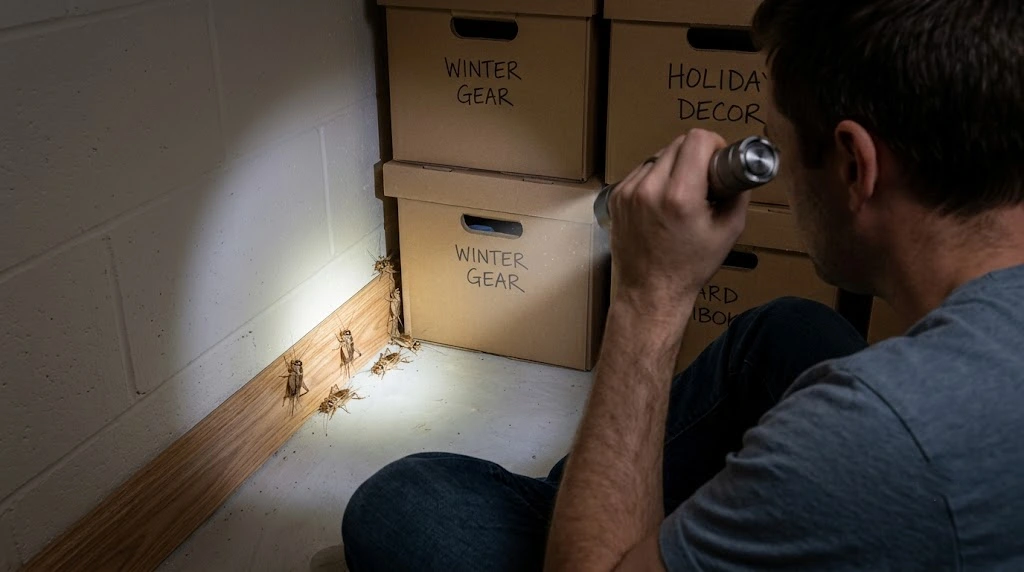
The most obvious clue is sound. If you’re hearing steady chirping at night, especially coming from one general area like a basement or behind a fireplace, that’s a strong signal crickets have moved in. A single cricket that wandered in by accident is one thing. Regular chirping night after night points to something more established.
Actually spotting crickets is another giveaway. They tend to hide in cracks, behind baseboards, and in dark, cluttered corners during the day, so seeing one out in the open, especially more than once, usually means there are more hiding nearby. Keep an eye out for damaged fabric too. Roughened patches on sweaters, carpets, or curtains are a classic sign that crickets have been feeding.
Crickets gravitate toward warm, humid spots in your home. That means basements, laundry rooms, kitchens, and areas near water heaters or furnaces are common hot spots. If you notice several of these signs together, it’s time to start treatment rather than wait and see.
What Draws Crickets Into Your Home
Crickets don’t invade homes for no reason. Temperature is usually the trigger. As outdoor temperatures drop in the fall, crickets look for warmer places to survive, and a house is a perfect option. During warmer months, they typically live outside in woodpiles, mulch beds, compost piles, and under rocks or debris.
Moisture plays a huge role too. Crickets need humidity to survive, so damp basements, leaky pipes, and poorly ventilated crawl spaces are exactly the kind of environment they look for. Outdoor lighting matters as well. Crickets are attracted to bright lights at night, and porch lights or exterior fixtures near doors and windows can pull them right up to your entry points.
Once they’re close to your home, any small gap becomes an open invitation. Cracks in the foundation, gaps around windows and doors, and openings where utility lines enter the house all give crickets an easy way inside.
How to Get Rid of House Crickets
Getting rid of crickets works best when you combine a few methods rather than relying on just one. Start with the basics and build from there depending on how serious the problem is.
Reduce moisture first. Since crickets are drawn to damp conditions, fixing leaky pipes and running a dehumidifier in basements or crawl spaces removes one of their biggest incentives to stick around. Good ventilation in bathrooms and laundry areas helps too.
Seal off entry points. Walk around your home’s exterior and look for cracks in the foundation, gaps around window and door frames, and openings where cables or pipes enter the house. Caulk and weather stripping are cheap fixes that close off these access points before crickets ever get inside.
Vacuum regularly. A vacuum is one of the most effective tools you have. It physically removes crickets, nymphs, and eggs from carpets, baseboards, and hiding spots, which cuts down the population fast without any chemicals.
Cut down outdoor lighting. Since bright white lights attract crickets from a distance, switching to yellow or sodium vapor bulbs on porches and near entryways makes your home less appealing to them in the first place. Turning off unnecessary outdoor lights at night helps even more.
Clear yard debris. Piles of leaves, firewood stacked against the house, thick mulch beds, and overgrown grass all give crickets a comfortable place to live right next to your foundation. Keeping the area around your home’s perimeter tidy removes those hiding spots and puts more distance between crickets and your door.
Use baits when needed. For active infestations, baits formulated for cockroaches or earwigs work well on crickets too. Place them along baseboards, in basements, and near other areas where you’ve noticed activity.
Bring in a professional for bigger problems. If you’re dealing with a heavy infestation or the chirping keeps coming back no matter what you try, a licensed pest control professional can inspect your home, find hidden entry points you might have missed, and apply treatments that aren’t available over the counter.
Keeping Crickets Out for Good
Once you’ve cleared out an infestation, the goal shifts to prevention. Stay consistent with the same habits that worked to get rid of them. Keep humidity low with dehumidifiers in problem areas, check your home’s exterior seasonally for new cracks or gaps, and keep exterior lighting to a minimum after dark.
Regular home maintenance makes a bigger difference than most people expect. A quick walk around your foundation every few months, combined with routine vacuuming and yard cleanup, keeps conditions unfavorable for crickets before they ever get the chance to settle in. Pests generally go where life is easiest, so the less appealing you make your home, the less likely they are to come back.
If you’ve dealt with an infestation before, it’s worth scheduling a seasonal inspection with a pest control company, especially heading into fall when crickets are actively searching for warm places to spend the winter. Catching a problem early, before you’re hearing chirping every night, always makes the fix faster and less frustrating.
Final Thoughts
House crickets aren’t dangerous, but they can wreck your favorite sweater and keep you up at night with their chirping. The fix comes down to a handful of consistent habits: control moisture, seal up gaps, vacuum often, and keep your yard clear of debris. Combine those steps with baits or professional help when the problem is bigger than you can handle alone, and you’ll have a quiet, cricket-free home again.