

To get rid of centipedes, remove moisture and hiding spots, seal cracks around your foundation and windows, and eliminate the smaller insects they feed on. Sticky traps catch existing centipedes, while diatomaceous earth and sealed entry points keep new ones from getting inside.
Why Centipedes Show Up in Your Home
Centipedes don’t wander into your house by accident. They follow two things: moisture and food. Damp basements, leaky pipes, and humid bathrooms create the exact environment these bugs need to survive.
Centipedes also hunt other insects. If you’re seeing centipedes, there’s a good chance you have spiders, silverfish, or roaches somewhere in your home too. Centipedes are predators, not scavengers, so their presence often points to a hidden pest problem.
Older homes tend to attract more centipedes than newer ones. Foundations shift over time, and small gaps form around pipes, baseboards, and window frames. Poor airflow in crawl spaces adds to the moisture buildup, giving centipedes a comfortable place to settle in.
None of this means your home is dirty or poorly maintained. It just means a few small adjustments can make your house far less appealing to these pests.
Are House Centipedes Dangerous
House centipedes look unsettling with their long legs and fast movements, but they pose almost no threat to people. They rarely bite, and when they do, the bite feels similar to a bee sting. Most people never notice one at all.
These bugs don’t spread disease. They don’t damage furniture, food, or your home’s structure. In fact, they help control other pests by eating them. Still, most homeowners don’t want to see centipedes darting across the bathroom floor at night, and that’s a completely reasonable reaction.
Clean and Dry Out Damp Areas
Moisture control is the single most effective step you can take. Centipedes need humidity to survive, so drying out damp spaces removes their reason to stay.
Start with your basement and crawl space. Run a dehumidifier if humidity levels stay above 50 percent. Check under sinks for slow leaks, and repair any dripping pipes right away. Bathrooms should get good ventilation, so run the exhaust fan during and after showers.
Clutter makes the problem worse. Piles of cardboard boxes, old newspapers, and stacked laundry give centipedes places to hide during the day. Clear out storage areas in basements and closets, and lift boxes off the floor onto shelves whenever possible.
Outside, check your gutters and downspouts. Water that pools near your foundation seeps into crawl spaces and basements, feeding the exact moisture problem you’re trying to fix indoors. Clean your gutters regularly and make sure downspouts direct water several feet away from the house.
Seal Entry Points Around Your Home
Centipedes are small and flexible, so they squeeze through gaps most people would never notice. Walk around your home’s exterior and look for cracks in the foundation, gaps around pipes, and worn weatherstripping on doors and windows.
Use caulk or spray foam to seal these openings. Pay close attention to spots where utility lines enter the house, since these areas often have small gaps that never get sealed properly. Torn window screens also let centipedes inside, so patch or replace any damaged screens you find.
Door sweeps make a noticeable difference too. A gap under an exterior door is an open invitation for centipedes and other insects. Adding a simple door sweep costs very little and blocks one of the most common entry points.
Remove Outdoor Hiding Spots
What happens outside your home directly affects what shows up inside. Centipedes love hiding under leaf litter, mulch, woodpiles, and stacks of rocks. When these materials sit close to your foundation, centipedes have an easy path indoors.
Move firewood at least 20 feet away from your house, and store it off the ground on a rack. Clear away leaf piles and thick mulch beds near your foundation walls. Trim back bushes and dense foliage that touch the side of your home, since these create shaded, damp pockets that centipedes find irresistible.
Grading your yard so water flows away from the foundation also helps. Standing water near your house feeds the moisture cycle that keeps centipedes coming back.
Cut Off Their Food Source
Centipedes eat spiders, silverfish, roaches, and other small insects. If your home has a hidden population of these pests, centipedes will keep showing up no matter how much you clean.
Vacuum regularly, paying attention to corners, baseboards, and closets where insects like to hide. Store food in sealed containers to avoid attracting pantry pests. If you notice silverfish or spiders in specific rooms, treat those areas directly rather than only focusing on the centipedes themselves.
Sticky traps placed along baseboards and in corners serve two purposes here. They catch centipedes directly, and they also show you what other insects are present in your home. If a trap fills up with silverfish, you know exactly what’s drawing centipedes into that room.
Use Traps and Natural Repellents
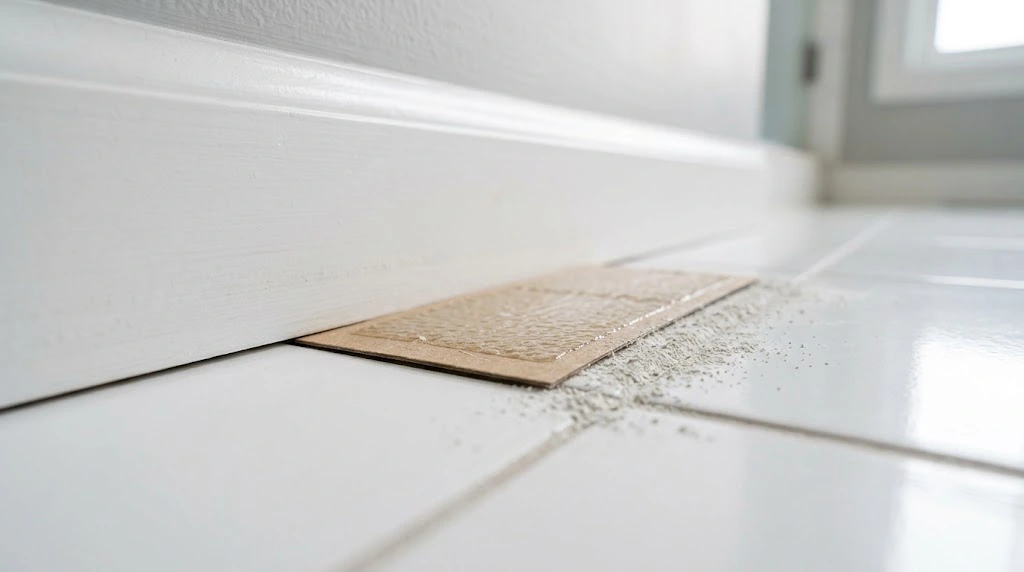
For centipedes already inside your home, sticky traps work well without any chemicals. Place them along walls and in dark corners, bathrooms, and basements where centipedes are most active. Check and replace the traps every few weeks.
Diatomaceous earth is another effective option. This fine powder damages the exoskeletons of centipedes and other insects, causing them to dry out. Sprinkle it in cracks, along baseboards, and near entry points. It’s safe around pets and children once it settles, though you should avoid breathing in the dust while applying it.
Some homeowners have success with essential oils like peppermint or tea tree oil. Mix about 25 drops of either oil with six ounces of water in a spray bottle, then apply it around door frames, windows, and small cracks. Reapply weekly, since the scent fades over a few days.
If you catch a centipede out in the open, the simplest removal method is trapping it under a glass or cup and sliding a piece of paper underneath. Carry it outside and release it. Centipedes can’t climb the smooth sides of glass or plastic, which makes this an easy, chemical-free way to handle a single bug.
When to Call a Pest Control Professional
Most centipede problems respond well to cleaning, sealing, and moisture control. But if you’re still seeing centipedes regularly after a few weeks of effort, it’s worth calling a pest control company.
A professional can identify what’s really drawing centipedes into your home, whether that’s a hidden leak, a gap you missed, or an insect infestation you haven’t noticed yet. This matters most in older homes, where multiple small entry points can add up to a persistent problem that’s hard to fix on your own.
Treatment costs vary depending on your location and the size of your home, so it’s worth getting a few quotes before committing to a service. Many companies also offer free inspections, which can help you understand the scope of the problem before spending any money.
How to Keep Centipedes from Coming Back
Getting rid of centipedes once isn’t enough if the conditions that attracted them are still in place. Keep humidity low with a dehumidifier in damp areas, and check your gutters and downspouts each season to make sure water drains away from your foundation.
Walk your home’s exterior a few times a year to spot new cracks or gaps before they become entry points. Keep firewood, mulch, and leaf piles away from your foundation, and stay on top of vacuuming and decluttering indoors.
Small, consistent habits matter far more than a single deep clean. Once you remove the moisture, food, and hiding spots centipedes rely on, your home stops looking like a good place for them to live.