

“Earwig Pest Control: How to Keep Your Home Earwig-Free” Earwig pest control starts with cutting off moisture and hiding spots. Fix leaky pipes, seal cracks, and clear leaf piles from your foundation. Use boric acid, insecticide sprays, or soapy water traps indoors. Consistent prevention keeps earwigs away for good.
You spot something dark and fast skittering across your bathroom floor. You look closer and see a long, flat body with a pair of pincers on its tail end. Your stomach drops a little. That, right there, is an earwig — and once you see one, chances are more are hiding somewhere nearby.
The good news? Earwigs are far less scary than they look. They don’t bite (well, rarely), they don’t spread disease, and they’re not going to set up a colony in your walls the way termites do. But they can damage your plants, trigger some real disgust, and in large numbers, they become a genuine nuisance. This guide walks you through exactly what earwigs are, how to spot an infestation, and the most effective ways to get rid of them and keep them out.
What Exactly Is an Earwig?
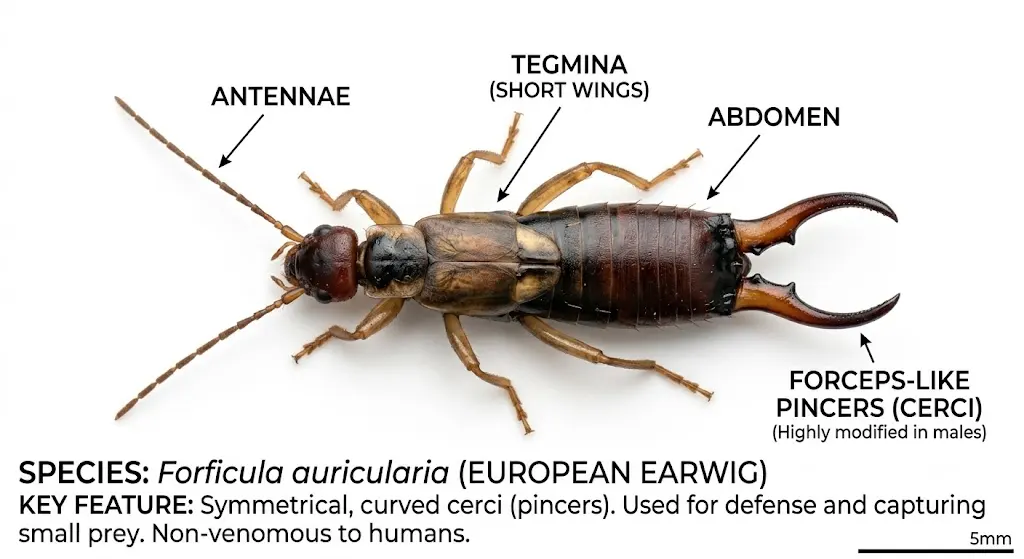
Earwigs are slender, reddish-brown insects that range from about a quarter of an inch to one inch long. The most recognizable feature is the pair of curved forceps-like pincers at the back of their abdomen. Those pincers look threatening, but they’re mainly used for defense and mating — not for attacking humans. If you do pick one up and agitate it, it might pinch you, but no venom is transferred and the pinch rarely breaks the skin.
The name “earwig” comes from an old European myth that these insects crawl into people’s ears while they sleep. There’s no truth to that. Earwigs do not crawl into people’s ears — they actually prefer to live outdoors in cool, damp areas.
Earwigs feed most actively at night and seek out dark, cool, moist places to hide during the day. They’re omnivores, eating decaying plant material, fungi, smaller insects, and sometimes garden plants. In small numbers, they actually help your garden by eating aphids and other tiny pests. The problem starts when their numbers grow and they start targeting your home.
How Do Earwigs Get Into Your Home?
Earwigs don’t move indoors because they want to live with you permanently. They wander in when outdoor conditions become unfavorable — either too hot and dry in summer, or too cold in fall. Like boxelder bugs and millipedes, earwigs enter homes by accident or when seeking shelter from cold temperatures or dry weather.
Once inside, they gravitate toward water. You’ll usually find them in places where there is water, such as the kitchen, bathroom, laundry room, or in cool, damp places like basements and crawl spaces.
They get in through surprisingly small openings. Gaps around utility pipes, cracks in the foundation, tears in window screens, and poorly sealed doors are all common entry points. If your home has any moisture problem — a slow drip under the sink, a humid basement, or clogged gutters — earwigs treat that as an open invitation.
Signs You Have an Earwig Problem
Earwigs are nocturnal, which means a small infestation can go unnoticed for a while. But there are clear signs to watch for if you suspect they’ve moved in.
The most obvious sign is simply seeing them. Earwigs are nocturnal and can be seen scurrying away when the lights are turned on at night — look for them in dark, humid spots like kitchens, basements, bathrooms, and laundry rooms.
Check your indoor and outdoor plants closely. If you notice chewed leaves, damaged flowers, or small holes in fruits, earwigs might be the culprits. They go after soft plants especially, including zinnias, dahlias, marigolds, strawberries, and lettuce.
A less obvious clue is smell. Crushed or otherwise disturbed earwigs release an odorous yellow-brown liquid. If you notice a foul, musty smell in a damp area of your home, a larger earwig population could be the cause.
Dark, crumbly droppings around baseboards or near plant pots are another indicator that earwigs have been active in that area.
How to Get Rid of Earwigs Naturally
You don’t need to reach for heavy chemicals right away. Several natural methods work well, especially when you catch the problem early.
Soapy water spray is one of the simplest fixes. Fill a spray bottle three-quarters full with water, add a tablespoon of dish soap, and shake to mix. Spray this directly on earwigs or in areas where they hide. The solution kills earwigs on contact and doesn’t harm your plants or family.
A newspaper trap works surprisingly well indoors. Roll damp newspaper into a tube and place it in areas where earwigs are active — basements, garages, and dark corners. After a couple of days, pick it up with gloves and drop it into a sealed bag or dump the earwigs into a bowl of soapy water. This method works best indoors and can be placed in basements, garages, or any area where earwigs are active.
Neem oil is a chemical-free option that also fights fungal issues on plants. Mix a capful with a gallon of water and add a squirt of gentle liquid soap — this creates an effective natural application that can deter earwigs and other pests without harsh chemicals.
Essential oils like peppermint, eucalyptus, and citrus can act as a natural repellent. Mix a few drops with water in a spray bottle and apply around doorways, baseboards, and cracks where earwigs might enter.
Yellow outdoor lighting is a smart swap if earwigs are congregating on your porch at night. White outdoor lights attract earwigs, so replacing them with yellow or sodium vapor lights makes your outdoor spaces far less appealing to them.
Chemical Treatments That Work
When natural methods aren’t cutting it, targeted chemical treatments can eliminate the problem faster. The key is knowing where and what to apply.
For outdoor perimeter treatment, consider an insecticide containing the active ingredients deltamethrin or bifenthrin — these provide quick results against earwigs already present and leave a residual effect that lasts between 30 and 90 days. Apply the spray about three feet out from your foundation and three feet up the wall.
Insecticides containing spinosad — such as Sluggo Plus baits or spinosad sprays — are among the most effective and environmentally sound products for earwig control. Sprinkle bait around susceptible plants or along the foundation. Dampen the bait slightly after application to make it more attractive to earwigs.
For indoor use, insecticide sprays applied along baseboards, under sinks, and in the corners of damp rooms can address earwigs that have already made their way inside. Glue boards placed in out-of-the-way spots are also useful for monitoring whether your treatments are working.
Always follow label instructions carefully when using any pesticide. Apply only in the amounts specified, keep pets and children away from treated areas until dry, and never apply indoors as a first step — address moisture and entry points first.
How to Keep Earwigs Out for Good
Getting rid of earwigs once is one thing. Keeping them from coming back is what really matters. Prevention is straightforward once you understand what draws them in.
The most important part is eliminating their hiding places — if those are not addressed, any other treatment methods will only manage but never completely eliminate an earwig population.
Start with moisture. Fix leaky faucets and pipes, clean out gutters, and make sure downspouts direct water away from your foundation. Use a dehumidifier in damp basements or crawl spaces. Water your garden less frequently but more deeply — this keeps the surface drier.
Clear out hiding spots around your home’s exterior. Remove leaf piles, woodpiles, and excess mulch from close to the foundation. Keep mulch in garden beds thin and try to keep it dry. Remove leaf piles, excess vegetation, and any stored wood from around the yard to eliminate earwig harborage sites.
Seal your home properly. Cracks and crevices should be sealed with a silicone-based caulk, steel wool, or a combination of both — this includes sealing around doors, windows, attic vents, and foundation vents. Check for gaps around utility pipes where they enter the wall and seal those too.
Keeping your home clean helps as well. Vacuum floors regularly, store dry goods in airtight containers, and clean up food spills promptly. Earwigs are opportunistic — a clean, dry home simply doesn’t offer them much.
When to Call a Professional
Most earwig problems respond well to DIY treatment. But some situations call for professional help. If you’ve tried multiple methods over several weeks without seeing improvement, or if you’re dealing with a recurring infestation season after season, a licensed pest control technician can make a real difference.
Professionals have access to commercial-grade products and can identify entry points and moisture sources that are easy to miss on your own. They can also apply treatments to hard-to-reach areas — crawl spaces, wall voids, and deep soil around the foundation — where earwigs often breed.
A professional can create a treatment plan tailored to your situation and has access to pro-grade products to control earwigs in a safe and effective manner.
Look for a company licensed in your state, with certified technicians and experience treating earwig infestations specifically. Many offer follow-up visits and seasonal prevention plans, which are worth considering if earwigs are a persistent problem in your area.
Earwigs are one of those pests that seem scarier than they are — but that doesn’t mean you have to share your home with them. Start with moisture control and sealing entry points, add a few targeted treatments, and you’ll have your home earwig-free in no time.