

To protect appliances from cockroaches, keep them clean and dry, wipe up crumbs and spills daily, and seal gaps around pipes, cabinets, and walls. Place gel baits in hidden cracks near appliances, not inside food areas. Check seals and drain areas often. Call a pest professional if you keep seeing roaches.
Picture this. You walk into the kitchen late at night, flip on the light, and see a small brown shape dash behind the toaster. A minute later, you start to wonder what else is hiding in your fridge, microwave, or dishwasher. It’s an awful feeling, and it happens in clean homes more often than people admit. The good news is that you can stop it. Cockroaches follow simple rules, and once you know them, you can make your appliances a place they skip.
Why Cockroaches Choose Your Appliances
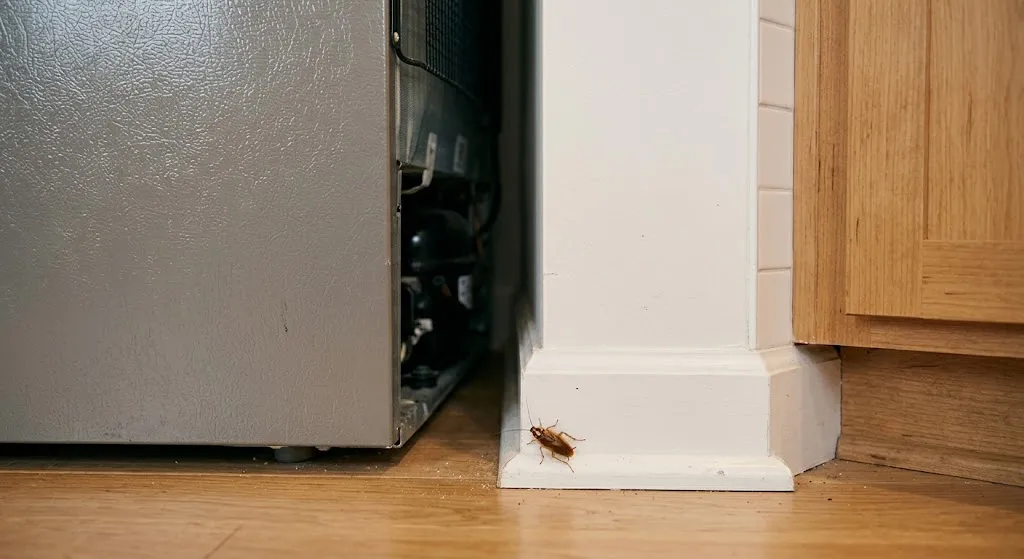
Cockroaches look for three things: warmth, moisture, and a dark place to hide. Appliances offer all three. A fridge motor runs warm all day. A dishwasher stays damp long after the cycle ends. A microwave has tight corners and a dark inside. Roaches are drawn to warm, moist hiding spaces, which is why fridges, washing machines, and dishwashers attract them.
The most common culprit indoors is the German cockroach. It’s about half an inch long, with two dark stripes behind its head. Its flat body lets it slip in and out of narrow cracks with ease. Adults can fit through gaps under one-eighth of an inch wide, and young roaches fit through even smaller ones. That means a thin seam around your oven or the gap behind a fridge panel is an open door to them.
Roaches also don’t need much food. A few crumbs, a drop of grease, or a sticky spill makes a full meal. They leave scent trails that guide other roaches to the same spot, so one visitor can turn into a crowd. This changes how you think about prevention. You’re removing food, water, and shelter, one appliance at a time.
Start With Daily Cleaning Habits
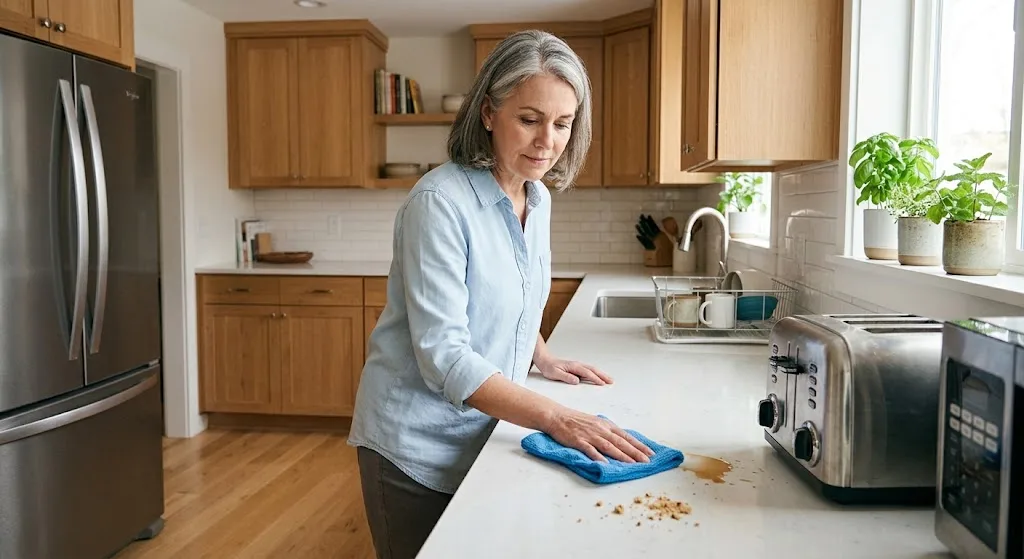
Cleaning is the base of every good prevention plan. University extension experts name sanitation as a key factor, and it also makes roach baits work better. If crumbs are everywhere, roaches ignore the bait and eat the crumbs instead.
Build a short evening routine. Wipe the counters, sweep the floor, and rinse any dishes left in the sink. Put leftovers in sealed containers and move them to the fridge right away. Take out the trash every night, especially if it holds food scraps. Pick up the pet bowl overnight if you can.
Pay extra attention to the spots people forget. Crumbs collect inside the toaster tray, under the microwave plate, and beneath the stove burners. Grease builds up on the back of the stove and along the side of the fridge. Every month or two, pull these items out and clean the space around them. A vacuum with a crevice tool works well for narrow gaps, and it removes crumbs, dead roaches, and egg cases in one pass. The whole routine takes about ten minutes a day.
Keep Your Fridge and Freezer Clean and Dry
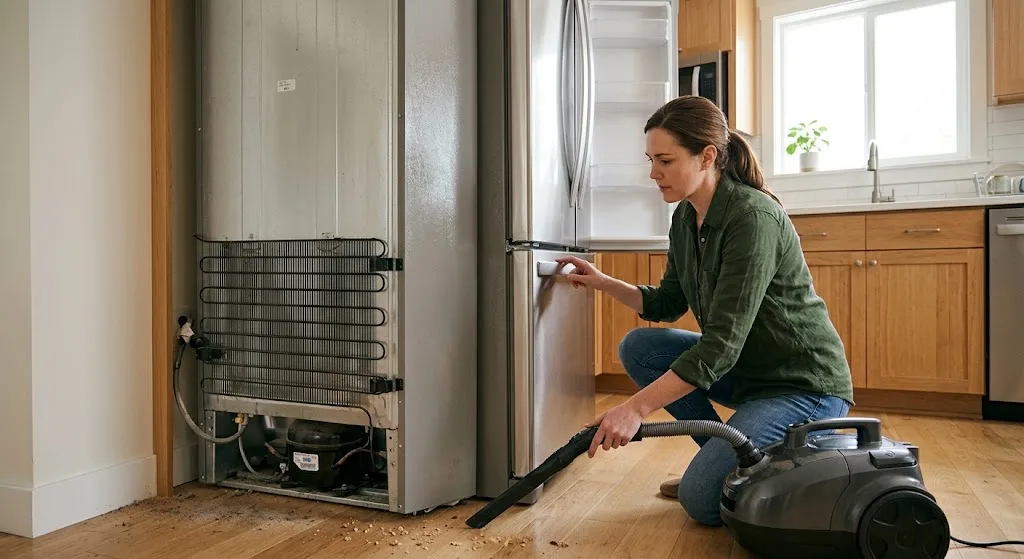
Fridges run warm near the motor and back coils, and that’s where roaches like to settle. Every few months, pull the fridge away from the wall. Vacuum the coils and the floor behind it. Wipe up any spills, then look closely at the rubber door seal. Food bits get stuck in the folds, and roaches use small gaps there to get in.
Check the drip pan if your model has one. Standing water gives roaches a drink, so empty and dry it each time you clean. Inside the fridge, wipe the shelves with warm soapy water and toss anything that leaks or spoils. Store open food in airtight containers.
If your fridge has a water dispenser or ice maker, look for drips around the line. A small leak creates a steady water source, and you may never notice it. Fix leaks quickly or call a repair technician.
Protect the Dishwasher and Washing Machine
These two appliances stay wet, which makes them popular with roaches. For the dishwasher, scrape plates before loading and clean the filter and drain area once a week. Food bits in the drain feed roaches all night long. Running the hottest cycle with a cup of white vinegar on the top rack helps flush out debris, and roaches don’t handle extreme heat well. Keep the door closed when dirty dishes are inside, and run the machine on a regular schedule instead of letting dishes sit for days.
For the washing machine, leave the door or lid open after each load so the drum can dry. Wipe the rubber gasket on front-load machines, because water and lint collect there. Check the hoses and the floor under the machine for leaks. Keep dirty laundry in a hamper, since food stains on clothes can draw roaches too. If your laundry area stays humid, a small dehumidifier will help.
Care for Small Kitchen Appliances and Electronics
Toasters, coffee makers, microwaves, air fryers, and slow cookers are easy to overlook. Warm motors and loose crumbs make them a good hiding place. Empty the toaster crumb tray often. Wipe the microwave inside and out, and clean the vents and the space behind it. Coffee makers hold water, so empty the reservoir at night and wipe the base where drips land. When possible, store small appliances in a closed cabinet.
Treat the stove with the same care. Grease and burnt food gather under the burners and in the drawer below the oven. If your cooktop lifts, clean what’s underneath. Wipe the oven door seal and the sides. Roaches love old grease, and a clean stove takes it away.
Electronics need special handling. TVs, game consoles, and routers give off heat and have small openings. Dust them with compressed air, keep food and drinks away from them, and store them off the floor. If a roach runs into a device, unplug it right away and never spray liquid into it, since moisture can cause damage. Seal it in a plastic bag if you can, then call a pest professional.
Seal the Gaps Roaches Use to Get In
Cleaning removes the reason roaches come. Sealing removes the way in. Walk through your kitchen with a flashlight and look at every place where pipes, wires, and cabinets meet the wall. Check under the sink, behind the stove, around the dishwasher, and along the baseboards. Even a thin crack deserves attention, since adults fit through gaps smaller than you might expect.
Use caulk for small cracks and expanding foam or pipe sealant for wider gaps. Appliance experts suggest a thin line of sealant around cracks and around pipes under the sink. Add door sweeps to exterior doors and repair torn window screens. Fix peeling wallpaper and loose tile, since roaches hide behind both. If you already have an active problem, treat it first and seal afterward, so you don’t lock roaches inside your walls.
Control Moisture Everywhere
Roaches need water, and your kitchen offers plenty if you don’t watch for it. Fix dripping faucets and leaky drain lines as soon as you spot them. Dry the sink and the counter around it before bed. Wipe the cabinet floor under the sink once a week, and check it for damp spots or soft wood. Run the exhaust fan while you cook and for a few minutes after.
Appliances such as fridges and washing machines create humid spots, so drying them out and removing water sources makes them less attractive. If your home stays damp, a dehumidifier makes a clear difference. Aim for dry surfaces at night, because that’s when roaches are most active.
Use Safe Baits and Traps Near Appliances
Even careful homes sometimes need extra help. Extension experts favor baits over sprays because baits work where roaches hide and keep poison out of your kitchen. Gel baits go on as small dots in cracks and corners where roaches travel, such as behind the fridge, under the sink, and along cabinet hinges. Bait stations are a smart pick around children and pets because they’re enclosed and harder to reach.
Never put bait inside the food areas of an appliance. Place it in cracks nearby and follow the label. Avoid spraying insecticide into fridges, ovens, microwaves, or dishwashers. Sprays can leave residue on surfaces that touch food, and they may push roaches deeper into hiding.
A thin layer of boric acid behind and beside appliances is another option. Roaches walk through the powder, swallow it, and die over the next few weeks. Keep the layer thin, because roaches avoid thick piles. Keep powders away from vents, motors, and electronics, and store them out of reach of children and pets.
Sticky traps help you learn where roaches are active. Place them along walls and behind appliances, then check them weekly. If one spot catches many roaches, put your bait there. Some roach populations refuse certain baits, so if they ignore yours, try a different product.
Know When to Call a Professional
Sometimes the problem is bigger than a weekend of cleaning. Call a professional if you see roaches during the day, find droppings that look like ground pepper, notice a musty smell, or keep catching roaches after several weeks of effort. Daytime sightings often mean hiding spots are crowded.
Some German cockroach populations resist common insecticides, and professionals can rotate products to get around that. They also check wall voids and neighboring units, which matters in apartments because roaches travel between homes through cracks and pipes. Tell the technician which appliances are affected so they choose safe treatments. Ask what they plan to use, where they’ll place it, and how long you should wait before cleaning those areas.
A Simple Plan to Keep Appliances Roach-Free
Good habits work better than big one-time efforts. Every day, wipe counters, store food in sealed containers, take out the trash, and dry the sink. Once a week, clean the dishwasher filter, empty crumb trays, check sticky traps, and look under the sink for leaks or damp spots. Once a month, pull out the fridge and stove, vacuum behind them, wipe the door seals, and refresh any bait that has dried or been eaten.
Twice a year, do a full walk-through with a flashlight. Look for new cracks, gaps around pipes, worn door sweeps, and signs of moisture. Seal what you find and write down what needs a repair. A little time spent on these checks costs far less than replacing a damaged appliance or throwing out contaminated food.
Cockroaches only stay where they find food, water, and cover. Take those away, close the gaps, and check your appliances on a regular schedule. Do that, and your kitchen will stay yours.