

What Is an Undermount Sink?
An undermount sink is a basin installed beneath the countertop surface, creating a smooth, seamless look with no visible rim on top. Unlike drop-in sinks that sit above the counter, this design allows you to wipe crumbs and spills directly into the basin — making daily cleanup noticeably faster. Known for its seamless integration with countertops, minimalist aesthetic, and easy maintenance, the undermount style continues to dominate modern kitchen trends heading into 2026.
They pair best with solid countertop materials like granite, quartz, and solid surface composites. The sink is bonded with epoxy or two-part adhesive and sealed with silicone, with stone fabricators often adding clips or rails for extra safety. If you’re remodeling a kitchen or bathroom with long-term value in mind, an undermount sink is one of the smartest investments you can make.
Undermount Sink vs. Drop-In Sink: Which One Wins?
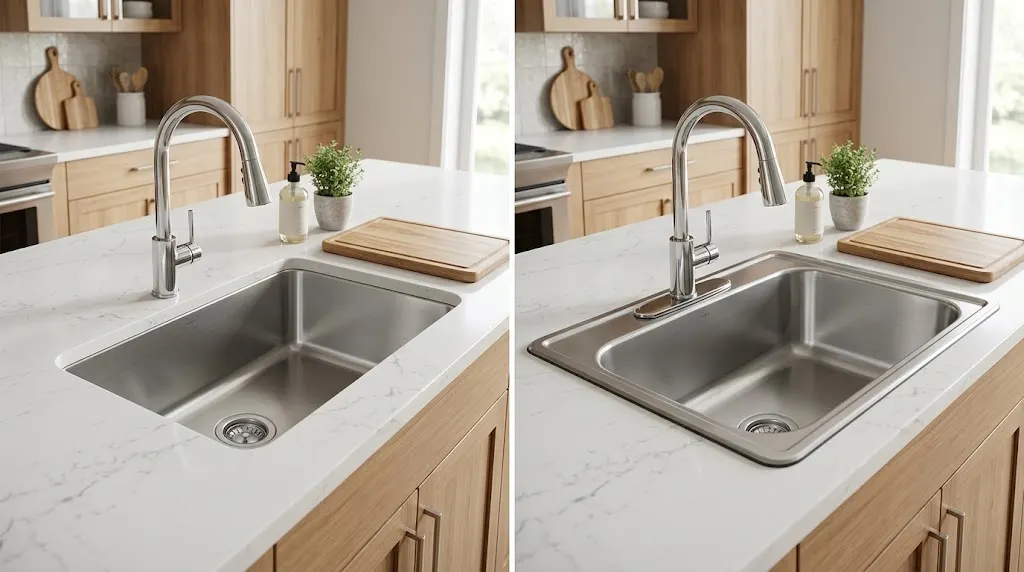
This is the debate every homeowner faces during a kitchen remodel. Both styles serve the same function, but the differences in cleaning ease, aesthetics, and cost are significant.
Unlike top-mounted sinks, undermount sinks have no edges or seams around the countertop — this design prevents food particles, liquids, and crumbs from accumulating in hard-to-reach corners, making cleanup faster and easier.
| Feature | Undermount Sink | Drop-In Sink |
|---|---|---|
| Cleaning Ease | Seamless — wipe debris straight into basin | Rim collects grime and debris |
| Counter Space | Maximized — no visible lip | Slightly reduced by the rim |
| Installation | Professional recommended, uses clips/epoxy | DIY-friendly, simpler cutout |
| Cost | Higher upfront (sink + labour) | Budget-friendly |
| Countertop Compatibility | Granite, quartz, solid surface only | Works with laminate, wood, any surface |
| Aesthetics | Modern, sleek, minimalist | Traditional, more visible hardware |
| Resale Value | Boosts home value | Neutral impact |
For private homes with solid surface countertops, undermount sinks can provide a premium look and easier cleaning despite higher initial costs, while top-mount sinks offer practical advantages for rental properties and budget-conscious projects.
What Are Undermount Sinks Made Of? Top Materials Compared
The material of your sink determines its durability, maintenance needs, noise level, and overall look. Here’s what you need to know before buying:
1. Stainless Steel Undermount Sink
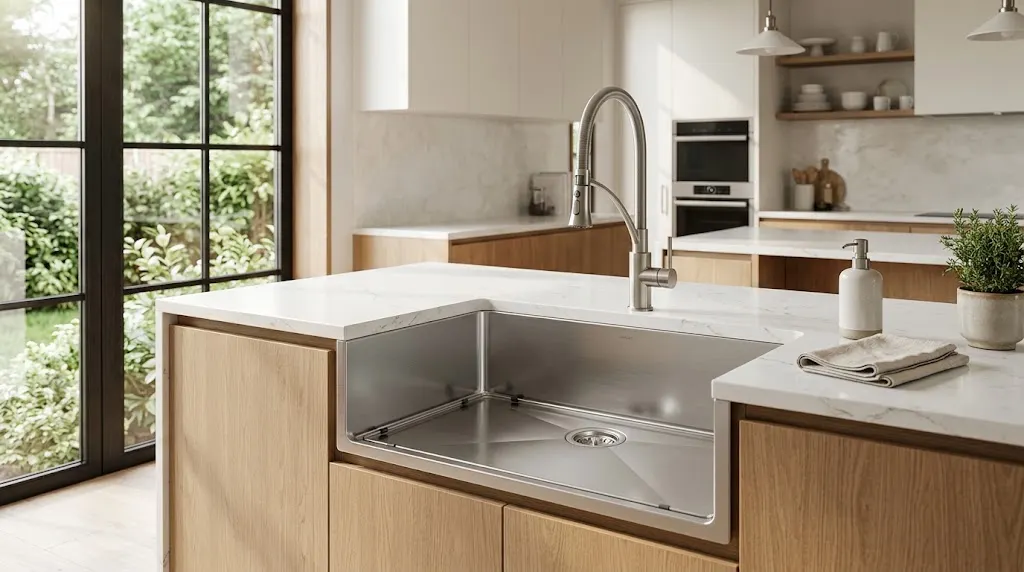
Stainless steel is one of the most durable materials for kitchen sinks — it resists scratches, stains, dents, and corrosion, making it an excellent choice for busy kitchens. Look for 16-gauge over 18-gauge for better thickness and quieter operation. Most quality models come with sound-dampening pads and undercoating to cut down on noise from running water and clattering dishes.
2. Granite Composite Sink
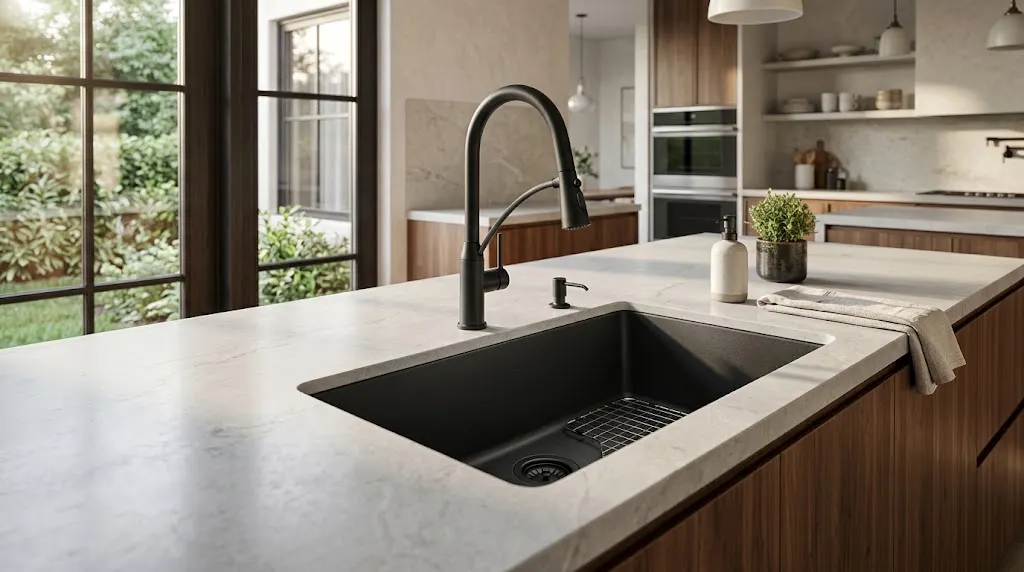
Granite composite sinks mix stone and resin — they bring a matte look, colour options, and good heat and scratch resistance, and they also soften noise well due to dense material. They’re available in black, grey, and white finishes, making them a strong choice for coloured kitchen aesthetics.
3. Fireclay Undermount Sink
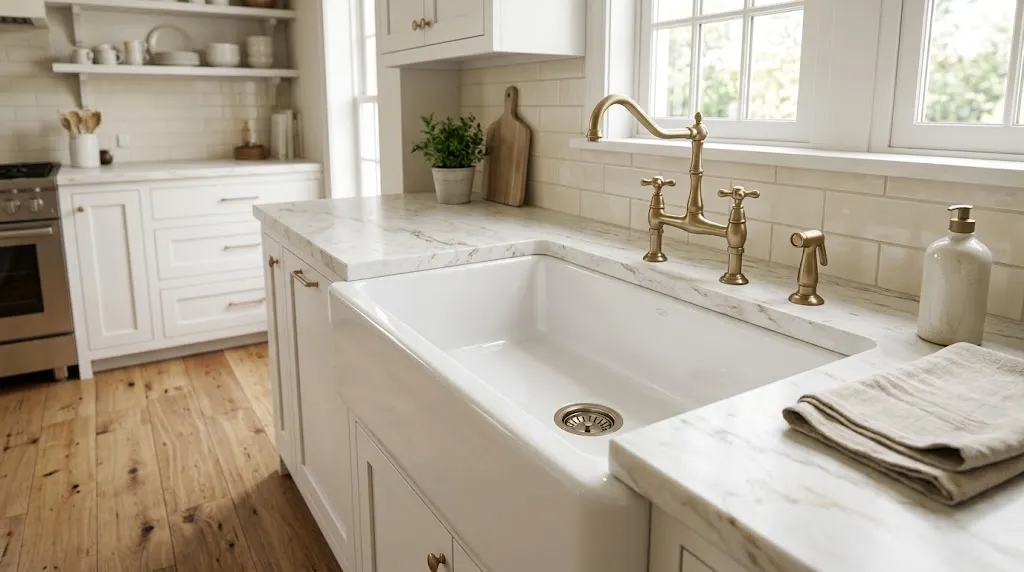
Fireclay sinks are fired at high heat with a glass-like glaze, delivering a smooth, bright finish with classic style. They’re heavy and need strong cabinetry support. Ideal for farmhouse or traditional-style kitchens.
4. Quartz Composite Sink
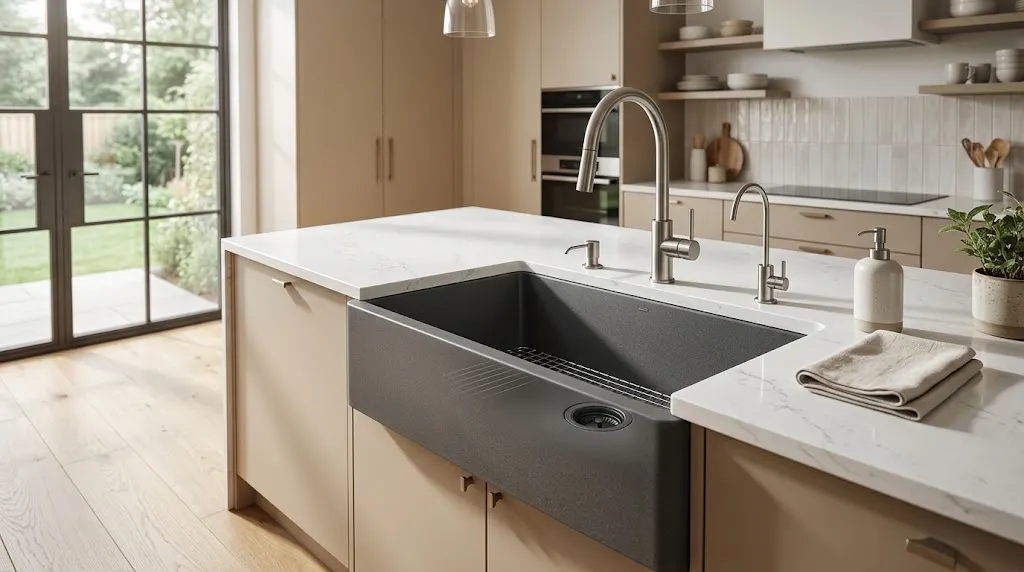
Similar to granite composite but slightly lighter. Great heat resistance, scratch-proof, and available in bold colour options. Newer quartz composite options offer bold aesthetics with excellent durability and are increasingly popular for contemporary remodels.
5. Cast Iron (Enamelled)
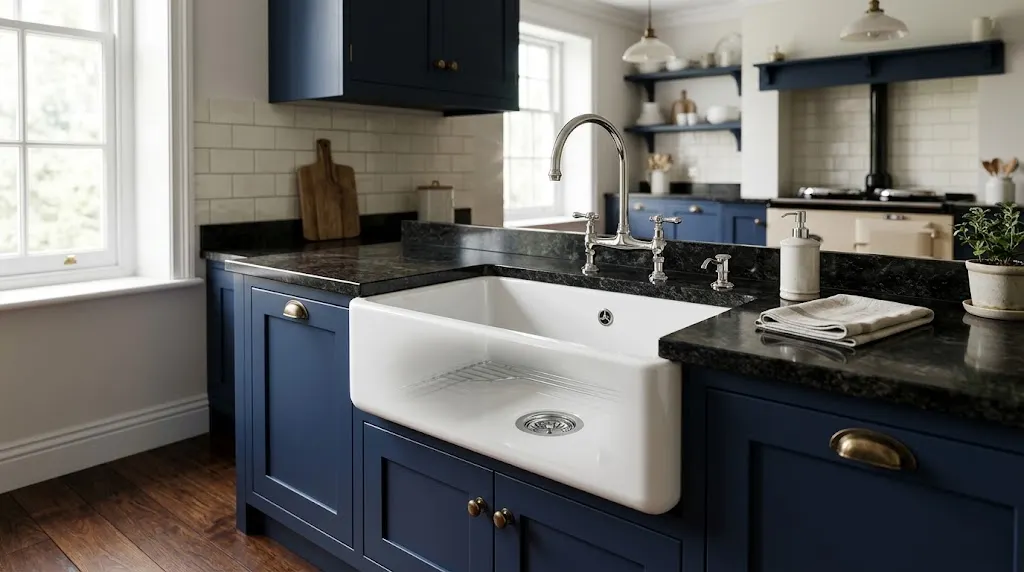
Heavy-duty and visually striking. Classic enamel coating resists staining but can chip if heavy cookware is dropped. Best for traditional or vintage kitchen styles.
Material Comparison at a Glance
| Material | Durability | Noise Level | Heat Resistance | Best For |
|---|---|---|---|---|
| Stainless Steel | ⭐⭐⭐⭐⭐ | Medium (with pads: low) | Good | Modern, everyday kitchens |
| Granite Composite | ⭐⭐⭐⭐⭐ | Low (dense material) | Excellent | Coloured, contemporary kitchens |
| Fireclay | ⭐⭐⭐⭐ | Low | Excellent | Farmhouse, traditional kitchens |
| Quartz Composite | ⭐⭐⭐⭐ | Low | Very Good | Minimalist, bold aesthetics |
| Cast Iron (Enamel) | ⭐⭐⭐⭐ | Very Low | Good | Vintage, traditional kitchens |
Key Features to Look for in an Undermount Sink
Not all undermount sinks are built equally. Here are the features worth paying attention to:
- Sink Gauge (Stainless Steel): Lower number = thicker metal. 16-gauge is thicker than 18-gauge — thicker bowls feel more solid and run quieter, especially when paired with sound-dampening pads and undercoating.
- Basin Depth: Deep basin designs (8–10 inches) handle large pots and baking sheets without splashing.
- Zero-Radius Edges: Squared-off corners for a sharp contemporary look.
- Workstation Ledges: Built-in accessories like cutting boards, drying racks, and colanders that slide across integrated ledges transform the sink into a full prep station.
- Antimicrobial Coating: Some models feature surface coatings that reduce bacteria buildup — a great addition for hygiene-focused kitchens.
- Sound-Dampening Pads: Rubber padding bonded to the underside reduces noise from water flow and dish clatter.
- Eco-Friendly Materials: Recycled content composites are increasingly available for sustainable home builds.
How to Install an Undermount Sink: Step-by-Step Guide
Undermount sink installation is more involved than a drop-in, and in most cases it’s best handled by a professional — especially when working with stone countertops. That said, here’s a clear overview of the process:
Step 1 — Measure Your Cabinet Measure the inside of the cabinet, the countertop opening, and the sink itself. Make sure there’s enough space for the water pipe, drain pipe, and faucet opening.
Step 2 — Dry Fit the Sink Turn the sink upside down on the countertop and trace the outline for a custom sink cutout. Use the manufacturer’s template if provided.
Step 3 — Cut the Opening Use a jig saw to carefully cut along the traced line. Work slowly and steadily to avoid cracking stone.
Step 4 — Apply Epoxy Adhesive and Silicone Sealant For granite or quartz countertops, apply epoxy sink adhesive around the cutout edge. Add a bead of silicone sealant as a water barrier.
Step 5 — Position and Secure Place the sink in position and secure it using mounting clips. Tighten evenly to compress the sink firmly against the underside of the counter.
Step 6 — Connect Plumbing and Test Hook up the drain and water supply. Run water and check carefully around the perimeter for any leaks before finishing.
Pro Tip: Never attempt undermount installation on laminate countertops. Traditional laminate counters have a particleboard core that swells when wet, making classic undermount installs risky.
Benefits and Drawbacks of Undermount Sinks
Benefits
- Cleaner Countertops: No rim means no grout line for grime to hide in.
- More Counter Space: Since there’s no lip resting on the counter, undermount sinks provide more usable counter space around the sink area — perfect for meal prep, small appliances, or drying dishes.
- Boosts Resale Value: Premium look that appeals to buyers during home inspections and viewings.
- Flexible Faucet Placement: No rim restrictions give you more freedom with faucet positioning.
- Modern Aesthetic: Complements quartz and granite countertops with seamless, clean lines.
Drawbacks
- Professional Installation Required: HomeAdvisor averages roughly $399 for a standard sink install, and stone cutting adds more cost.
- Countertop Compatibility: Only works with solid surface materials — not laminate or unsupported wood.
- Higher Upfront Cost: Sink itself plus professional labour makes the total budget larger than drop-in.
- Risk of Sagging Over Time: If clips or adhesive fail, the sink can separate — always use high-quality mounting hardware.
Best Undermount Sinks for 2026: Top Picks
Technology, design expectations, and homeowner preferences have evolved — today, buyers aren’t just looking for a sink but a multifunctional workstation that elevates the kitchen experience. Here are the top styles leading the market in 2026:
🥇 Stainless Steel Workstation Sink (16-Gauge) Best overall pick for most kitchens. Comes with integrated ledges for cutting boards and drying racks. Look for models from brands like Ruvati, which typically construct their sinks from premium 16-gauge stainless steel with gently sloped bottoms and channel grooves that help water and debris drain efficiently, plus heavy-duty sound guard padding to minimise noise.
🥈 Black Quartz Composite Undermount Sink The matte black finish adds a touch of modern elegance to any kitchen — and being constructed from high-quality quartz composite, it’s resistant to scratches, stains, and high temperatures.
🥉 Farmhouse Fireclay Undermount Sink Farmhouse and undermount sinks remain top choices in 2025 and 2026 due to their stylish looks and functionality. Fireclay farmhouse undermounts are especially popular for white shaker or transitional kitchen designs.
Smart-Ready Undermount Sinks As we move further into 2025 and 2026, undermount stainless steel kitchen sinks continue to evolve with new technologies and design innovations that enhance hygiene, sustainability, and smart home integration. Some newer models now support sensor-activated faucet hookups and filtered water integration directly from the basin.
Undermount Sink Maintenance Tips
Keeping your sink in top condition doesn’t require much — just a consistent routine:
- Wipe the basin daily with mild dish soap and a soft cloth.
- For stainless steel, dry after use to prevent water spots and mineral deposits.
- For granite composite, avoid harsh abrasives — use non-scratch pads only. Darker colours can show limescale if water is hard, so add a weekly wipe to your routine.
- Re-seal the perimeter silicone sealant every 1–2 years to prevent moisture seeping between the sink and countertop.
- Check mounting clips annually to ensure the sink remains firmly secured.
- Use a sink grid or protective mat at the bottom to prevent scratches from pots and pans.
Is an Undermount Sink Right for You?
If your counters can support it and you’re comfortable with professional installation, the benefits are real: an uncluttered look, simpler cleaning, and better use of space around the bowl. If you have laminate countertops, want the lowest install cost, or plan to DIY, a drop-in may be the better value.
For anyone remodelling a kitchen with quartz or granite countertops, an undermount sink is almost always the right move. It’s cleaner, sleeker, and adds measurable value to your home.
Frequently Asked Questions
Q: Can I install an undermount sink myself?
Technically yes, but it’s not recommended for stone countertops. The cutting and bonding process requires specialist tools and experience. DIY is more viable with solid surface countertops.
Q: How long does an undermount sink last?
A well-installed stainless steel or granite composite undermount sink can last 15–30 years with proper maintenance.
Q: Does an undermount sink reduce countertop strength?
Not significantly when installed correctly. The cutout is reinforced with epoxy adhesive, silicone sealant, and mounting clips that distribute weight evenly.
Q: What gauge stainless steel is best for undermount sinks?
16-gauge is the gold standard. It’s thicker, quieter, and more durable than 18-gauge options.
Q: Can I use an undermount sink with laminate counters?
In most cases, no. Laminate’s particleboard core absorbs moisture and can fail over time. Stick to a drop-in sink for laminate surfaces.
Conclusion
An undermount sink isn’t just a functional upgrade — it’s a design statement that transforms how your kitchen looks and works every single day. Whether you’re choosing a stainless steel workstation sink or a matte black quartz composite basin, the key is matching the right material and gauge to your countertop and cooking habits.