

Luxury living beside the lake means owning or renting a high-end home on the water, with private views, dock access, quiet surroundings, and resort-style comfort. Buyers pay a clear premium for this lifestyle, but they gain daily access to nature, recreation, and a slower pace that city homes rarely offer.
Picture a Saturday morning. You walk out your back door with a coffee, and the water sits maybe thirty steps away. A few boats move across the surface, and the only sound is a loon or a distant engine. That picture sells a lot of homes, and it is the reason so many people search for luxury living beside the lake.
This guide explains what that life involves. You will see what buyers pay, which lake markets lead the pack, what the homes look like, and what daily life feels like once the excitement of moving settles. You will also learn about the costs and rules that listings rarely mention. Read it before you tour your first property.
What Luxury Living Beside the Lake Really Means
Luxury at the water’s edge has little to do with square footage alone. It starts with the setting. A true lakefront home gives you direct access to the shore, a view that no neighbor can block, and a private spot where you can step onto a dock or beach. Many buyers also count privacy, quiet, and clean air as part of the package.
The home itself matters too, of course. Most luxury lake houses use large windows, open living spaces, and outdoor rooms that make the water feel like part of the floor plan. Kitchens are built for hosting. Primary suites face the view. Garages hold boats, jet skis, and sometimes a vintage car or two.
Services complete the picture. Some communities offer gated entry, a private marina, a golf course, or a clubhouse with a restaurant. Others stay simple and rely on location alone. Both versions count as luxury, as long as the setting, the build quality, and the privacy match the price.
Why Buyers Pay So Much for Water
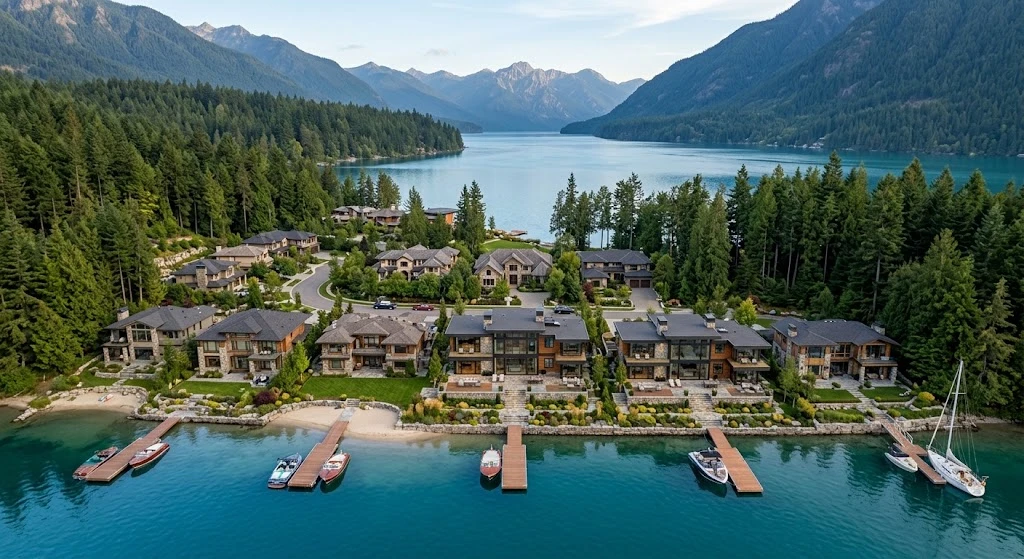
Waterfront land is limited. Nobody can build more shoreline, and many lakes now restrict new docks and new lots. When supply stays fixed and demand grows, prices climb. That simple rule explains most of the premium you see in listings.
The size of that premium is large. Across the United States, lakefront houses list at a typical $328 per square foot, compared to $214 for non-lakefront properties, a 53% premium. You pay roughly half again as much for the same space once water touches the property line.
Buyers accept this because the lake changes how they spend their time. They swim before breakfast, fish at dusk, and host friends on weekends without booking a restaurant. Many say they use the home more than any other property they have owned. That daily use is what turns a high price into something that feels worth it.
What the Numbers Say About Lake Home Prices
Prices vary widely by region, so the lake you choose matters as much as the home. In Texas, for example, lakefront homes across the state list at a typical $338 per square foot, compared to $191 for homes a short drive from the same shore. That gap is wide, and it gets wider at the top end.
Lake Austin shows how far it can go. There, buyers can expect to pay $811 per square foot, 200% more than non-lakefront homes in the same community. That is triple the price of a similar home a few streets back from the water.
The premium does not always rise in a straight line, though. A June 2026 analysis of West Michigan found that the lakefront premium shrinks in the middle of the market, where new inland subdivisions compete. Once prices pass about $675,000, lakefront tips into teardown-and-rebuild on frontage that can’t be replicated, and the premium rebounds to roughly 24%. In plain terms, buyers at the high end pay for the land first and the house second.
Famous Lake Markets for Luxury Buyers
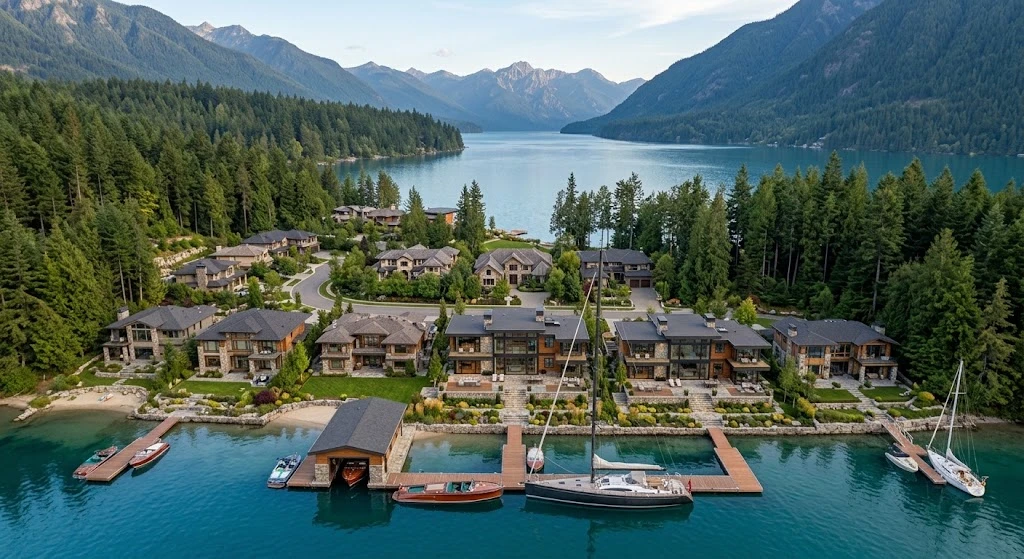
Some lakes have built a reputation that holds up year after year. Lake Tahoe is the best known in the United States. On its Nevada north shore, Incline Village sits at the top of the market. A 2026 local report puts the median for luxury homes that are not directly on the lake near $3.2 million, at roughly $1,014 per square foot. Lakefront estates there run from $15 million to $49 million and above, and the report notes that the best of them often trade off-market.
Europe offers its own favorites. Lake Como in Italy draws buyers who want historic villas with terraced gardens and boat houses. Lake Geneva in Switzerland attracts those who value privacy, strong banking links, and mountain views. Lake Garda and the Swiss lakes near Lucerne and Zurich also draw steady attention from international buyers.
Closer to many readers, the Great Lakes, the Finger Lakes, Lake Norman, and the Texas Hill Country lakes all support serious luxury markets. Each one offers a different mix of climate, price, and culture. Some are quiet and wooded, while others have busy marinas and lively summer weekends. Visiting in more than one season helps you see which one fits.
The Homes: Style, Space, and Setting
Luxury lake homes come in several styles, and the best ones match their surroundings. Mountain lakes favor timber, stone, and steep roofs that handle snow. Southern lakes lean toward wide porches and shaded decks. Modern builds in places like Tahoe or Lake Austin often use glass walls, flat roofs, and steel details that frame the view.
Inside, designers aim to keep the eye on the water. Great rooms face the shoreline, and kitchens open to patios. Many homes add a boathouse with living space above it, a guest cottage near the dock, or a screened porch for summer evenings. Outdoor kitchens and fire pits extend the season by several weeks.
Smart features have become standard in new builds. Owners control lighting, heating, and security from their phones. Whole-house generators protect against storm outages. Heated floors and radiant patios make cold-weather stays comfortable. These details matter because many lake homes sit in areas where winters can be harsh or power lines are long.
Daily Life on the Water
The routine of lake living differs from city life in ways that surprise first-time owners. Mornings start earlier because the light is better and the water is calm. Afternoons often involve boats, paddleboards, or fishing rods. Evenings tend to center on the deck, where neighbors drop by and dinner stretches long.
Many owners say they sleep better and spend less time on screens. Kids and grandkids visit more often because the house offers something to do. Dogs get more exercise. Even simple routines, like a walk along the shoreline, give the day a steady rhythm that is hard to find in town.
Seasons change the experience. Summer brings crowds, boat traffic, and long days. Autumn brings color, quiet water, and fewer visitors. Winter can mean ice fishing, skating, or simply a warm fire and an empty shore. Owners who learn to enjoy each season tend to love their homes for years.
Amenities, Services, and Community
A luxury lake address often includes more than a house. Many communities build around a marina, a yacht club, or a private beach. Some include golf courses, tennis courts, spas, and fitness centers. Others hire concierge teams that handle everything from grocery stocking to boat cleaning before you arrive.
Community culture also shapes the experience. Some lakes attract families who return every summer for generations. Others draw retirees, remote workers, or investors who rent the home part of the year. Before you buy, ask how many neighbors live there full time, because that number affects everything from road upkeep to the mood at the local market.
Dining and shopping matter too. Lake towns like Como, Lake Geneva in Wisconsin, and Incline Village have built small but strong local economies around visitors and part-time residents. A good restaurant within ten minutes by boat or car adds more value than most buyers expect. Medical care and airport access deserve the same attention, especially if you plan to retire there.
Wellness, Nature, and Quiet
Many buyers choose the lake because it supports health. Swimming, rowing, and paddling build strength without pounding the joints. Open views and natural light can ease stress, and regular time outdoors helps many people sleep and focus better. Doctors often recommend more outdoor time, and a lakefront home makes that advice easy to follow.
Wildlife adds to the appeal. Herons, eagles, otters, and deer show up near many shorelines, and some owners keep binoculars and bird guides by the window. Gardens and native plantings help protect the shore and attract more of these visitors. Healthy shorelines also reduce erosion, which protects your investment.
Quiet is the feature that surprises people most. After a week at the lake, the noise of a city feels louder than before. Many owners treat the house as a place to reset, and some work from it for part of the year. Fast internet has made that choice more realistic than it was even five years ago.
The Costs Beyond the Purchase Price
The sticker price is only the starting point. Waterfront homes cost more to insure, especially in flood-prone areas. Docks, seawalls, and boat lifts need regular repair, and storms can damage them quickly. Septic systems, wells, and long driveways add maintenance that city owners never think about.
Property taxes vary by region and can change sharply after a purchase. Some lakes charge fees for dock permits, boat storage, or shoreline work. Homeowner associations may add dues for roads, security, and shared amenities. Ask for a full list of annual costs before you make an offer, and get quotes from local insurers early.
Rules on the water deserve attention as well. Many lakes limit boat size, wake height, or the number of docks per lot. Some ban short-term rentals, which matters if you hope to earn income when you are away. A local real estate attorney can confirm what you may build, rent, or change, and that advice usually costs far less than fixing a mistake later.
How to Choose the Right Lake and the Right Home
Start with how you plan to use the property. If you want a weekend retreat, drive time matters more than anything else. A three-hour drive feels fine in summer and tiring in winter. If you plan to live there year-round, look closely at schools, healthcare, and winter road conditions.
Next, match the lake to your activities. Deep lakes suit big boats and swimming, while shallow lakes warm up faster and suit smaller craft. Some lakes allow fast boats and water skiing, and others limit engines to protect quiet. Visit during a busy weekend and a quiet weekday to hear both versions of the place.
Finally, study the lot itself. Check the slope, the shoreline type, the sun direction, and the depth at the dock. A home on a gentle, sandy shore feels very different from one on a rocky bank. Hire an independent inspector who knows lake properties, and ask a surveyor to confirm exactly where your property line meets the water.
Start Your Search With Clear Priorities
Luxury living beside the lake rewards buyers who plan carefully. The premium is real, and the national figure of 53% shows how much extra you may pay for the same square footage. At the same time, owners get daily access to water, privacy, and a home that invites people to stay. For many families, that return is hard to measure in money.
Write down your top three priorities before you visit any property. Pick a lake, tour it in two seasons, and talk to neighbors about what they love and what they would change. Then bring in a local agent, an inspector, and an insurance broker before you sign anything. With the right preparation, you can find a home that fits your budget and your lifestyle, and you can enjoy the water for decades.