

Insect home proofing means sealing cracks, gaps, and openings around your house so bugs can’t get inside. Focus on doors, windows, vents, and utility lines. Use caulk, weatherstripping, and door sweeps. Combine sealing with good sanitation habits, and you’ll cut down insect problems without relying on constant spraying.
Nobody wants to find a line of ants marching across the kitchen counter. Or a spider dropping down from the ceiling while you’re trying to relax. Insects have a way of showing up uninvited, and once they find a way in, they tend to stick around.
The good news is that you can stop most of them before they ever cross the threshold. Insect home proofing isn’t about spraying chemicals everywhere. It’s about closing the tiny doors bugs use to sneak inside your house. Once you understand where those doors are, the job gets a lot easier.
This guide walks you through the whole process, room by room and gap by gap. By the end, you’ll know exactly where to look and what to do about it.
Why Bugs Get Into Your Home in the First Place
Insects come inside for the same reasons you do. They want food, water, and a safe place to rest. Your home offers all three, especially when the weather outside turns hot, cold, or dry.
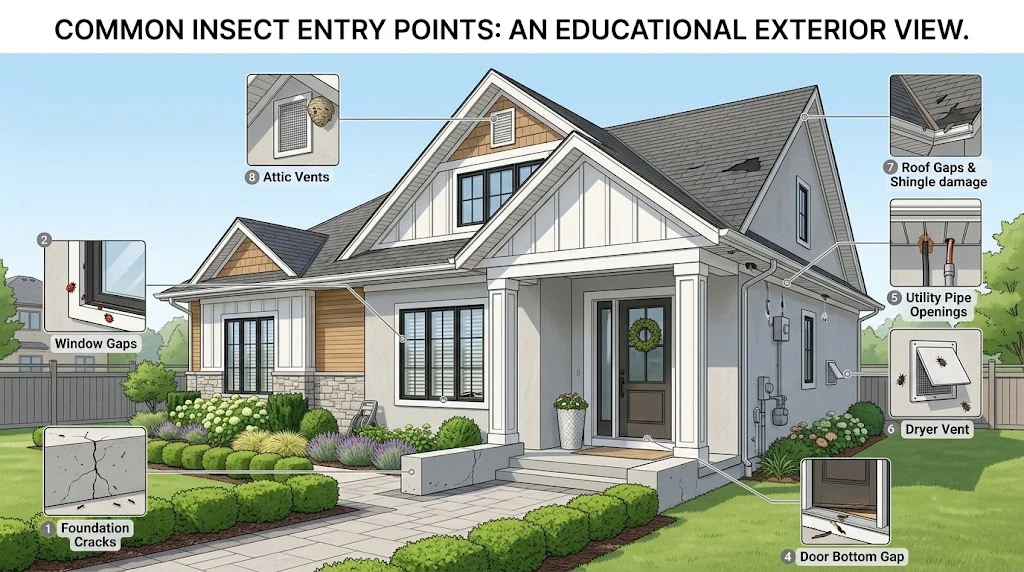
A tiny crack near your foundation might look harmless to you. But to an ant or a spider, it’s a wide-open front door. Most insects can squeeze through gaps as small as one-sixteenth of an inch. That’s about the thickness of a pencil line. Even a well-built home has dozens of these small openings, especially around places where pipes, wires, and vents pass through the walls.
Once pests find a reliable entry point, they tell their colony, or they simply keep coming back on their own. That’s why sealing gaps early makes such a big difference. You’re not just removing one bug. You’re closing the path that dozens more would have used.
Start With a Walk Around Your House
Before you buy any supplies, take a slow walk around the outside of your home. Look closely at the foundation, the siding, and every spot where something enters the wall, like a pipe, cable, or vent.
Run your hand along the base of the house and check for cracks. Look at the corners of windows and doors too. Small gaps often hide in plain sight, especially around older trim or aging caulk that has started to crack and pull away.
A helpful trick is to do this walk at night. Turn on your porch light and turn off the lights inside. Then look for spots where light seems to leak through gaps around doors or windows. If light can get through, so can a bug.
Sealing Doors and Windows
Doors and windows are the most common way insects get inside, so this is where you’ll want to spend the most time.
Check the bottom of every exterior door for gaps. If you can see daylight underneath, install a door sweep. This is a simple strip that attaches to the bottom of the door and blocks the gap completely. It’s inexpensive, and most people can install one in under ten minutes with a screwdriver.
Next, look at the weatherstripping around your doors and windows. Over time, this material dries out, cracks, or falls off entirely. Replace anything that looks worn. Fresh weatherstripping creates a tight seal and also helps with heating and cooling bills, so it pays for itself twice.
Window screens deserve attention too. Even a small tear can let in flies, mosquitoes, and other flying insects. Patch small holes with a screen repair kit, or replace the whole screen if the damage is extensive. Make sure every screen fits snugly in its frame with no gaps along the edges.
Finally, use caulk to seal any remaining cracks around window and door frames. Clean the area first so the caulk sticks properly. A smooth, even bead works better than a thick, sloppy one, so take your time and use a damp cloth to smooth it out as you go.
Closing Off Gaps and Utility Openings
Doors and windows aren’t the only entry points. Pipes, cables, and vents create small gaps in your walls that are easy to overlook.
Walk around your home and find every spot where a pipe, wire, or cable passes through an exterior wall. These openings often have a small gap around the edge, even after construction is finished. Fill these gaps with caulk if they’re small, or use expanding foam if the opening is larger.
For bigger holes, especially near the foundation or crawl space, steel wool or copper mesh works better than foam alone. Insects and rodents can chew through foam, but they can’t get through metal mesh. Stuff the mesh into the gap first, then seal over it with caulk or foam for a finished look.
Don’t forget about your vents. Attic vents, crawl space vents, and dryer vents all need some kind of screen or mesh cover. Use quarter-inch hardware cloth for larger vents. This keeps out insects while still allowing proper airflow, which matters for your home’s overall condition.
Protecting Your Roof and Chimney
Bugs don’t just crawl in through the ground floor. Many find their way in through the roof, especially in the fall when they’re searching for a warm place to spend the winter.
Check your roofline for gaps where the roof meets the walls. Look at your soffits and fascia boards too, since these areas often develop small openings as the wood ages. If you find gaps, seal them with caulk or cover them with mesh, depending on the size.
A chimney cap is one of the best investments you can make for pest proofing. It blocks insects, birds, and small animals from getting into your chimney while still letting smoke escape properly. If you don’t already have one, it’s worth adding.
If any of this work involves climbing on your roof, consider hiring a professional. It’s not worth risking a fall to save a small amount of money on caulk.
Keeping the Inside of Your Home Less Attractive to Bugs
Sealing your home from the outside is the biggest step, but a few habits inside your house make a real difference too.
Store food in sealed containers instead of leaving bags or boxes open in the pantry. Crumbs and spills draw ants and roaches fast, so wipe down counters and sweep floors regularly. Take out the trash often, and make sure your trash cans close tightly.
Fix leaky faucets and pipes as soon as you notice them. Standing water, even a small puddle under the sink, gives insects exactly what they need to survive. Basements and bathrooms tend to stay damp, so a dehumidifier can help keep these areas less appealing to pests.
Clutter gives bugs a place to hide, especially in basements, garages, and closets. Clearing out boxes, old newspapers, and unused items removes hiding spots and makes it easier to spot a problem early if one develops.
Taking Care of the Yard
Your yard plays a bigger role in pest proofing than most people realize. Insects often live in the grass, mulch, or woodpiles just outside your home before they ever try to get inside.
Keep tree branches and bushes trimmed back so they don’t touch your house. Branches that brush against your siding or roof act like a bridge for insects, giving them an easy path straight to your walls.
Move firewood piles away from your foundation, and keep at least a few feet of clearance between mulch beds and the base of your home. Damp mulch piled against the foundation is a favorite hiding spot for ants, termites, and other insects.
Clear away piles of leaves and yard debris regularly. These spots stay moist and shaded, which makes them perfect breeding grounds for many common pests.
Keeping Up With Maintenance
Insect home proofing isn’t something you do once and forget about. Homes shift and settle over time, weatherstripping wears out, and caulk can crack after a few seasons of temperature changes.
Set a reminder to walk around your home twice a year, ideally in spring and fall. Check the same spots you sealed before and look for any new gaps or damage. After a major storm, it’s smart to check again, since strong wind and heavy rain can loosen siding or shift trim boards.
If you notice a pest problem despite your best efforts, it might be worth calling in a professional. They can spot entry points you may have missed and offer treatment options for problems that have already taken hold.
Final Thoughts
Keeping insects out of your home doesn’t require constant chemical treatments or expensive equipment. Most of the work comes down to a few afternoons spent sealing cracks, fixing screens, and clearing away the things that attract bugs in the first place.
Once you’ve sealed the major entry points, the rest is just maintenance. Check your work each season, keep your kitchen clean, and take care of your yard. Do that consistently, and you’ll spend a lot less time chasing bugs out of your house and a lot more time enjoying it.