

Apron-front and farmhouse sinks are often the same thing — both have a large, deep basin with an exposed front panel. The key difference is in style: “farmhouse” suggests rustic, traditional designs, while “apron-front” covers modern variations too. Installation for both requires custom cabinetry and typically costs $500 to $5,000 total.
You’ve been scrolling Pinterest for an hour, saving photos of beautiful kitchens, and you keep seeing two terms pop up — apron-front sink and farmhouse sink. They look almost identical. So are they actually the same thing, or is there something important you’re missing before you spend $1,000 or more on a new sink?
Here’s the honest answer: they are mostly the same, but with a few real distinctions worth knowing. Let’s break it all down so you can shop with confidence.
What Is a Farmhouse Sink?
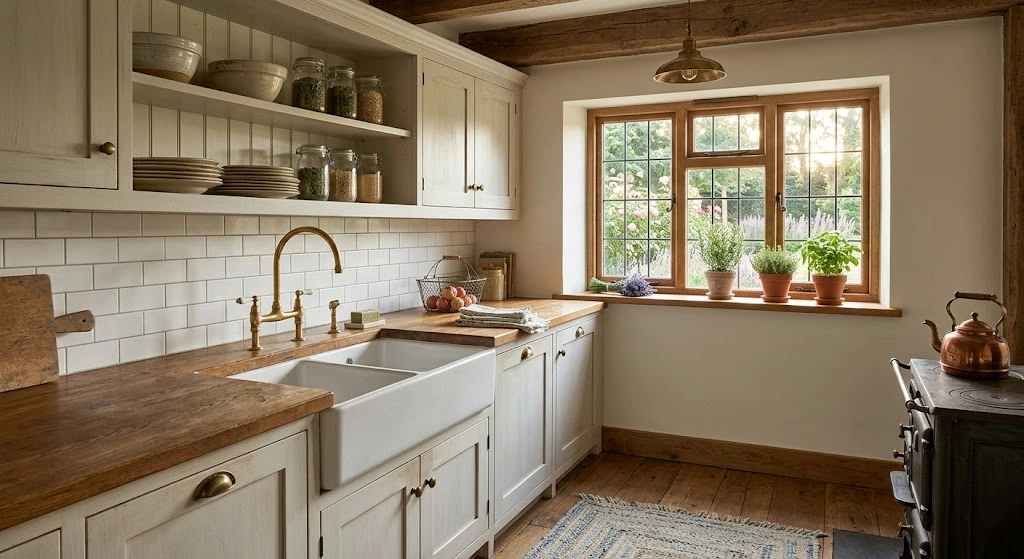
A farmhouse sink is a deep, wide basin with an exposed front panel — called an apron — that faces outward toward you instead of being hidden behind a cabinet door. The design goes back centuries, when rural homes needed large, deep sinks for washing everything from dishes to vegetables to laundry.
Today, the term “farmhouse sink” carries a specific style connotation. It points toward a rustic, traditional, country-kitchen look. Think rounded corners, white fireclay or enameled cast iron, and a warm, vintage feel. These sinks are heavy — some cast iron models tip the scales at over 120 pounds empty — and they anchor a kitchen with real visual weight.
The material choice for true farmhouse sinks leans toward fireclay, cast iron, and porcelain. Fireclay in particular is the classic pick. It’s made by firing clay at temperatures above 1,800 degrees Fahrenheit, which creates a dense, non-porous surface that resists stains, heat, and scratches extremely well. That’s why a quality fireclay farmhouse sink can last decades with minimal fuss.
What Is an Apron-Front Sink?
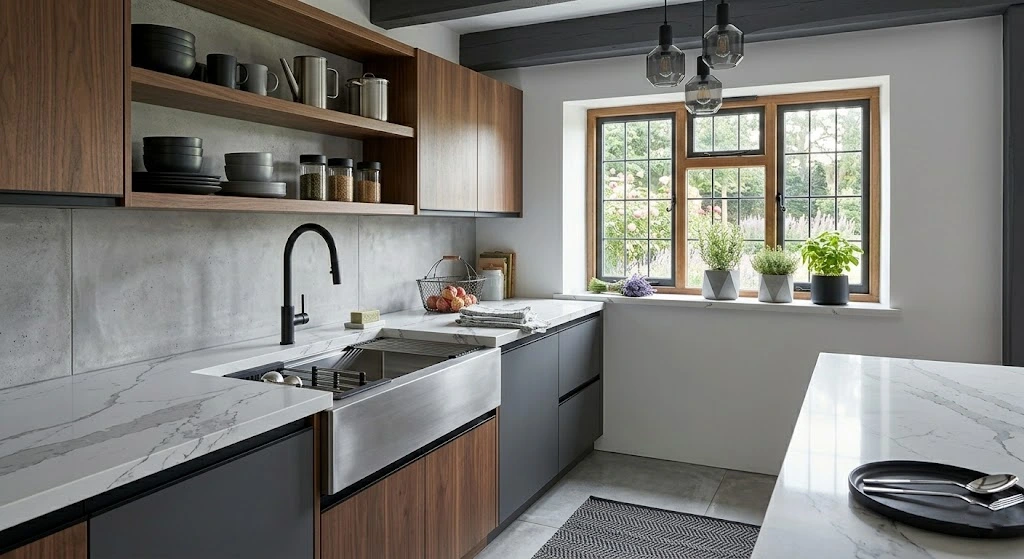
An apron-front sink shares the same defining feature — the exposed front panel. The difference is that “apron-front” is a broader, style-neutral term. It includes not just the rustic farmhouse look but also modern, industrial, and minimalist versions made from stainless steel, composite materials, or engineered stone.
So if you see a sleek, flat-front stainless steel sink with a big exposed face, that’s an apron-front sink. If you see a white fireclay sink with a fluted front in a cottage kitchen, that’s also an apron-front sink — and many people would call it a farmhouse sink too.
The short version: every farmhouse sink is technically an apron-front sink, but not every apron-front sink has that farmhouse aesthetic. The terms overlap heavily, and many retailers use them interchangeably. What matters more for your decision is the material, the finish, and how it fits your kitchen’s personality.
How They Actually Differ: Design and Style
The clearest difference between apron-front and farmhouse sinks is what they communicate visually. A farmhouse sink says warm, cozy, and country. An apron-front sink in brushed stainless steel says clean, modern, and professional.
Farmhouse sinks tend to have softer edges, more decorative apron faces — sometimes fluted or scalloped — and a finish that leans toward classic white. Apron-front sinks in their modern form often feature sharp corners, flat apron faces, and finishes like matte black, brushed nickel, or polished stainless.
If your kitchen has shaker cabinets, subway tile, and warm wood accents, a farmhouse-style fireclay sink fits naturally. If your kitchen is more contemporary — flat-panel cabinets, quartz countertops, minimal hardware — a stainless steel apron-front sink will feel more at home.
Materials: What Each Sink Is Made From
This is where the decision gets practical. The material you choose affects cost, maintenance, weight, and how the sink holds up to daily use.
Fireclay is the traditional farmhouse sink material. It’s beautiful, non-porous, and resistant to heat and staining. Stainless steel won’t show water spots the same way fireclay stays cleaner between sessions. The trade-off is cost — fireclay sinks typically start around $600 and can run well past $1,400. They’re also very heavy, which makes installation more involved.
Stainless steel is the go-to material for modern apron-front sinks. It’s lighter, more affordable, and easier to install. Basic stainless steel sinks start around $250. The downside is that brushed finishes can show water spots and, over time, show light scratches. Choosing a 16-gauge stainless steel — rather than thinner 18-gauge — gives you noticeably better durability and less flex under heavy pots.
Enameled cast iron sits between the two. It has the classic look and weight of a traditional farmhouse sink, great durability, and a smooth enamel finish that’s easy to clean. It’s also expensive, and the enamel can chip if you drop something heavy into it.
Composite materials like quartz and granite composite are gaining ground. They offer a look somewhere between fireclay and stainless, with good durability and a range of color options. They’re also lighter than fireclay, which makes installation somewhat easier.
Installation: What You Need to Know Before You Buy
This is the part most buyers underestimate. Both apron-front and farmhouse sinks require custom cabinet work, and that adds real money to your project.
Because the exposed front panel extends beyond or sits flush with your cabinetry, you need a sink base cabinet specifically designed for this style. A standard cabinet won’t work without modification. The cabinet opening needs to be cut to the exact dimensions of your sink, and the base needs to be reinforced — especially for heavy fireclay or cast iron models.
Most installations also involve both a plumber and a cabinet installer. The total cost for a farmhouse or apron-front sink — including the sink itself and professional installation — typically runs between $500 and $5,000. Labor alone for installation often adds $300 to $1,500 on top of the sink price, depending on your location and how much cabinet work is needed.
If you’re replacing an existing apron-front or farmhouse sink with a new one of the same dimensions, the process is much simpler. If you’re converting from a standard undermount or drop-in sink, budget for more work.
One practical upside to both styles: the apron front actually helps protect your cabinet face from water splashes. A traditional sink with no apron lets water run down the cabinet front over time. The apron catches that water and directs it away, which can extend the life of your cabinets.
Ergonomics and Daily Use
Both sink types bring the basin closer to you compared to a standard undermount sink. You don’t have to lean as far forward to reach the bottom of the basin, which makes a real difference during long cooking sessions — especially for people on the shorter side.
The deep basin is genuinely useful. You can fit large stock pots, sheet pans, and baking dishes without fighting the sides of the sink. It also makes washing bulky items like cast iron pans or Dutch ovens much less awkward.
The one trade-off is counter space. Because the apron front takes up room where the cabinet door would normally be, you lose a bit of under-sink accessibility. You’ll want to make sure the plumber routes your drain and supply lines in a way that still allows storage in the base cabinet.
Which One Should You Choose?
The decision comes down to three things: your kitchen’s style, your budget, and how much maintenance you want to take on.
Go with a traditional farmhouse sink in fireclay or enameled cast iron if your kitchen leans rustic, cottage, or country-classic. It will look like it belongs there, and a quality fireclay sink will hold up for 20-plus years with basic care. Just be ready for the higher upfront cost and the heavier installation requirements.
Go with a modern apron-front sink in stainless steel or composite if your kitchen is more contemporary or if you want lower cost without giving up the style impact of an exposed front. A well-built 16-gauge stainless steel apron sink gives you the visual punch of the farmhouse look with easier maintenance and a lower price tag.
If you’re stuck between the two styles, look at the rest of your kitchen. Your cabinets, countertop material, and hardware finish will tell you which sink belongs there. The sink should feel like a natural part of the room, not something that stands out awkwardly.
Either way, you’re getting a sink that makes a statement — one that turns a purely functional fixture into something people actually notice when they walk into your kitchen.