

Spider control around home starts with removing what spiders need — food, shelter, and entry points. Seal cracks, reduce outdoor lighting, clear clutter, and use peppermint oil or insecticide sprays at entry points. Consistent prevention keeps most spiders away without professional help.
Spiders don’t need an invitation. They find gaps you never noticed, hitch rides on your firewood, and set up webs in corners you haven’t cleaned in months. Most are harmless — but that doesn’t make them welcome houseguests.
The good news is you don’t need to live with them. Understanding why they come in and what keeps them out makes all the difference.
Why Spiders Keep Showing Up in Your Home
Before you grab a spray can, it helps to know why spiders are there in the first place.
The short answer is food. Spiders eat insects — flies, mosquitoes, ants, moths, cockroaches. If your home has a steady supply of bugs, spiders will follow. They don’t care about your leftovers or crumbs the way roaches do. They care about live prey.
Beyond food, spiders look for warmth and shelter. During colder months, your heated home becomes an appealing hideout. Dark corners, cluttered garages, undisturbed closets, and damp basements all check the boxes spiders are looking for. Moisture is a big draw too — leaky pipes and humid bathrooms attract the insects that spiders feed on, which pulls spiders closer.
They also get inside more easily than you’d think. Tiny cracks around window frames, gaps under doors, torn screens, and even the gap around utility pipes are all open doors for spiders. Some hitchhike inside on firewood, potted plants, or cardboard boxes stored outdoors.
Common Spiders You Might Find Indoors
Most spiders you’ll encounter at home are completely harmless. The common house spider builds messy webs in corners and feeds on whatever flies or crawls nearby. Wolf spiders look intimidating because of their size, but they don’t spin webs and are not a threat to people.
Two species deserve real attention, though.
The brown recluse has a violin-shaped marking on its back and tends to hide in closets, attics, shoes, and old clothing. Its venom is necrotic, meaning it can damage tissue around the bite site. Bites usually happen when someone accidentally presses the spider against their skin — like pulling on a jacket that’s been sitting in a pile for weeks.
The black widow is recognized by the red hourglass marking on the underside of its abdomen. Its venom is neurotoxic and significantly more potent than most people realize. Black widows prefer dark, undisturbed spots like sheds, under outdoor furniture, and woodpiles near the house.
If you spot either of these two, don’t handle them yourself. That’s when professional help makes sense.
Seal Every Entry Point You Can Find
The most effective long-term strategy is keeping spiders out before they get in. Walk around your home with fresh eyes and look for gaps — around window frames, along the bottom of exterior doors, where pipes and cables enter the wall, and around foundation vents.
Use caulk to seal cracks in walls and around window and door frames. Add door sweeps to exterior doors if there’s a visible gap at the bottom. Replace any torn or ill-fitting window screens. These small fixes block spiders and also cut off the insects they feed on, which works in your favor twice over.
Pay special attention to the basement and garage. These areas tend to stay undisturbed longer and offer exactly the kind of dark, quiet shelter spiders prefer. Keep garage doors closed when you’re not actively using the space, and check the weatherstripping along the bottom regularly.
Cut Off Their Food Supply
If spiders are showing up in large numbers, there’s usually a bug problem underneath it. Spiders follow their food source. Eliminate the insects, and spiders lose their reason to stay.
Fix any moisture issues around the home. Leaky pipes, standing water, and high humidity attract insects like gnats, drain flies, and mosquitoes — all of which are spider food. Running a dehumidifier in the basement can make a noticeable difference, both in insect activity and spider presence.
Outdoor lighting is another factor people overlook. Bright white lights attract flying insects, and where insects gather, spiders follow to feed. Switching to yellow sodium vapor bulbs or using motion-activated lights reduces insect congregation near entry points. Less insects at your doorstep means fewer spiders trying to get inside.
Clean and Declutter Regularly
Spiders love undisturbed spaces. A corner that doesn’t get vacuumed, a pile of boxes in the basement, old shoes in a closet — these are prime real estate for a spider looking to settle in.
Regular vacuuming picks up spiders, egg sacs, and webs before populations grow. Focus on corners at ceiling height, behind furniture, under beds, and along baseboards. Don’t forget storage areas and rarely opened cabinets.
Outside, keep vegetation trimmed back from the house. Overgrown shrubs and plants pressed against exterior walls give spiders a direct bridge inside. Move firewood away from the house — stacking it against the wall is a common mistake that creates a spider hotel right next to your entry point. Clear leaf piles, ground debris, and mulch away from the foundation perimeter.
Natural Remedies That Actually Help
If you prefer to start with non-chemical methods, a few natural options work reasonably well as deterrents.
Peppermint oil is one of the most widely used. Mix 15 to 20 drops with water in a spray bottle and apply it around window frames, door frames, and any spots where you’ve seen spiders. Spiders dislike strong scents and tend to avoid treated areas. You’ll need to reapply every week or two to keep it effective.
White vinegar diluted with water works on a similar principle. It won’t kill spiders on contact, but regular application at entry points helps repel them over time.
Diatomaceous earth is another solid option, especially for garage floors, basement perimeters, and under appliances. It’s a fine powder made from fossilized algae that damages the exoskeleton of spiders and insects, dehydrating them. Sprinkle it along walls and in corners where you’ve noticed activity. Use food-grade diatomaceous earth and avoid breathing it in during application.
Chemical Treatments for More Serious Problems
When natural methods aren’t cutting it, targeted insecticide use can bring the situation under control.
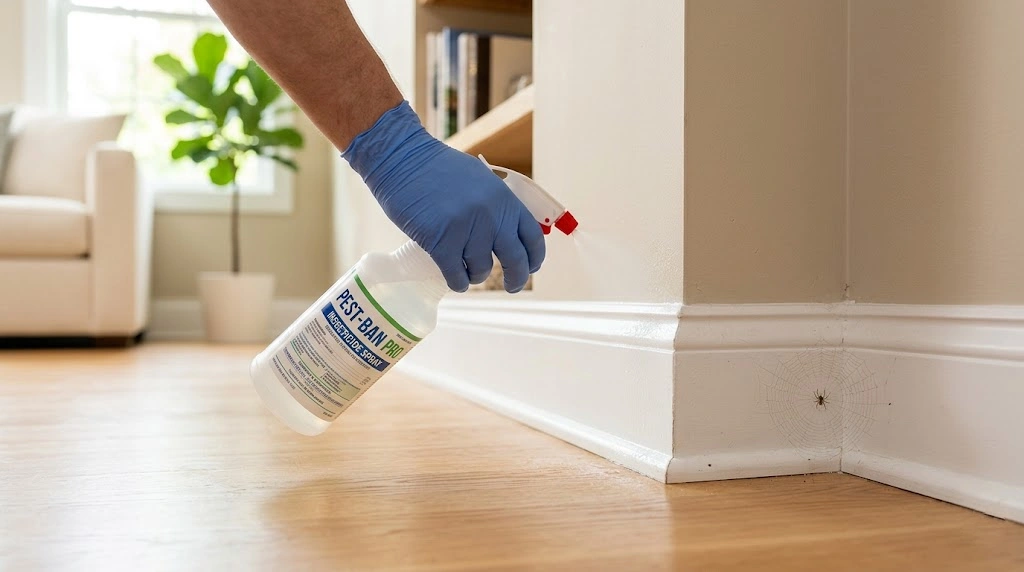
Aerosol sprays labeled for spider control work well for direct application — spraying into cracks, under furniture, and in corners where spiders hide. For longer-lasting results, look for a residual liquid insecticide you can apply along baseboards, around windows, and at exterior entry points. These products remain active for weeks after application, killing spiders that cross treated surfaces.
Sticky traps are worth adding to the mix. Place them along walls in the garage, basement, and any room where you’ve seen activity. They catch spiders that are actively moving through the space and help you identify exactly where the problem is concentrated. Using several traps across the home gives you a clearer picture of which areas need the most attention.
Always follow label instructions on chemical products, especially in homes with children or pets. Keep treated areas ventilated, and avoid applying insecticides near food preparation surfaces.
When to Call a Professional
Most spider situations respond well to the steps above. But there are times when getting a professional involved is the right call.
If you’re finding black widows or brown recluses regularly — not just once or twice — that points to an established population that DIY methods may not fully address. A pest control technician can identify entry points you’ve missed, treat areas that are difficult to access, and apply professional-grade products with longer residual effects.
The same applies if you’ve done everything right and the problem keeps coming back. A persistent spider presence often signals an underlying insect infestation that needs to be addressed at the source. A professional can inspect the full picture and treat accordingly.
Stay Consistent — That’s the Real Secret
Spider control isn’t a one-time project. It’s a habit.
Seal gaps when you spot them. Vacuum corners regularly. Keep clutter down. Manage moisture. Trim your yard. Check entry points seasonally, especially in early fall when spiders move indoors as temperatures drop.
None of these steps requires special equipment or a big budget. What they require is consistency. A home that stays clean, sealed, and free of the insects spiders eat is a home spiders have very little reason to enter.