

To install a range vent hood, turn off the power at the breaker, cut a vent hole through the wall, install an exterior vent cap, secure the hood to the wall or cabinet, connect the ductwork with aluminum tape, wire the electrical connections, then test all fan speeds and lighting.
Your kitchen fills with smoke every time you sear a steak or fry up some bacon. The air gets thick, the walls collect grease, and your smoke detector becomes the loudest thing in the room. A range vent hood fixes all of that — and you can install one yourself in a single afternoon.
This guide walks you through every step, from cutting the vent hole to testing the fan. You don’t need to be a contractor, but you do need a few basic tools, a helper for the heavy lifting, and about three to four hours of your Saturday.
Know Your Hood Before You Buy One
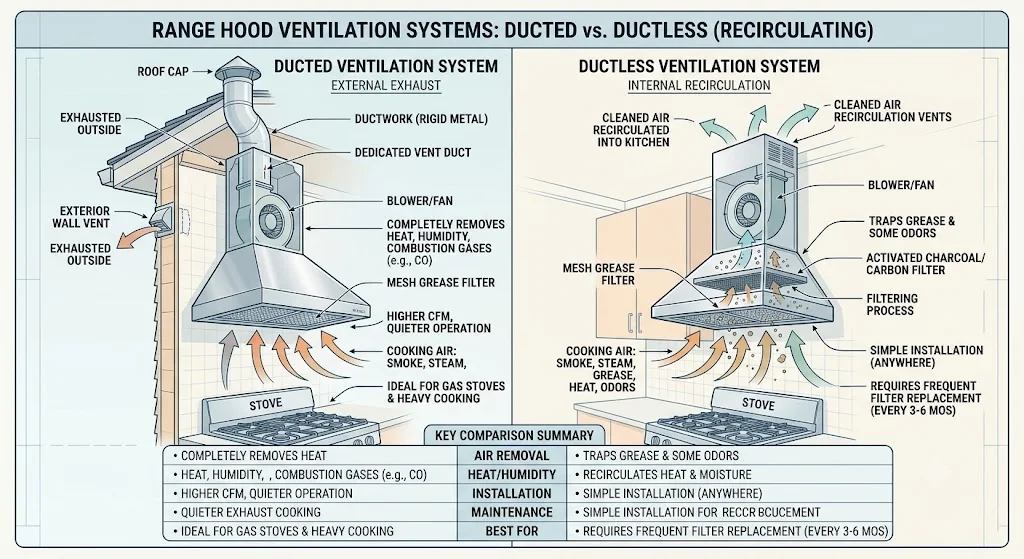
Not every range vent hood works the same way. Ducted venting expels air outside the home through ductwork, providing the most effective removal of cooking byproducts. Ductless venting filters the air and returns it to the kitchen — less effective, but easier to install where external venting isn’t possible.
If you have the option, go with a ducted hood. It pulls grease, heat, and odors out of the house entirely instead of recycling them through a filter.
For CFM — cubic feet per minute — you want a rating roughly three times the square footage of your stovetop area. A 100-square-foot cooking area needs at least a 300 CFM hood. Gas stovetops generally require a higher CFM than electric ranges because they produce more heat and combustion byproducts.
Mount the hood 26 to 30 inches above an electric cooktop and 30 to 36 inches above a gas one. Mounting it too high reduces how effectively it captures smoke. Too low and it becomes a hazard.
Gather Your Tools and Materials
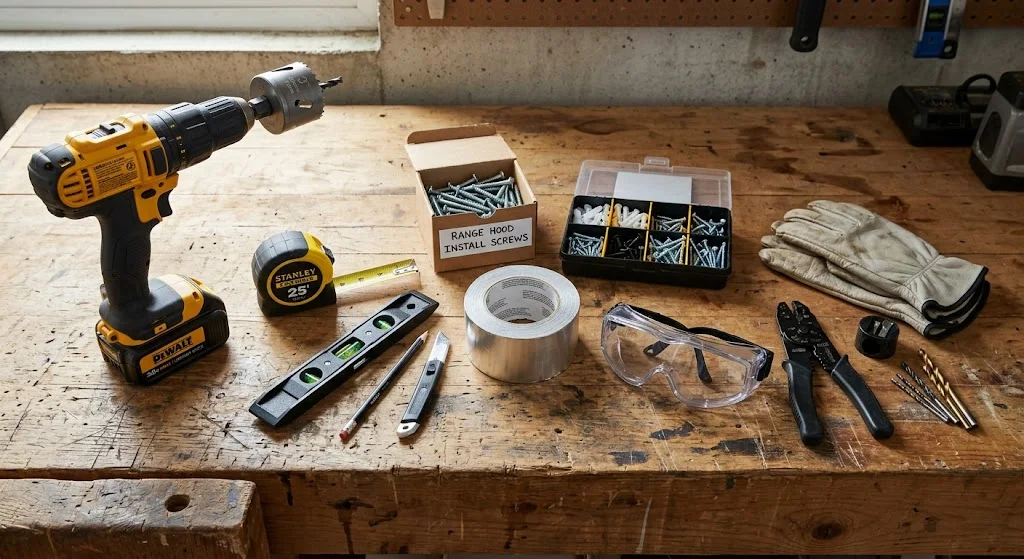
You won’t get far without the right gear. Here’s everything you need before you start:
A drill with standard and long drill bits. A 6-inch hole saw for cutting through the wall. A reciprocating saw or jigsaw for trimming siding. A stud finder, tape measure, and level. A wire stripper and voltage tester. Wire connectors and aluminum HVAC tape. Safety goggles, work gloves, and a dust mask.
Most residential range hoods operate on 120 volts and draw between 1.5 and 7.5 amps. Higher CFM models may need a dedicated 15 to 20 amp circuit, so confirm your electrical setup before you start.
Also pull out your hood’s instruction manual before you do anything else. Manufacturers include specific measurements and mounting diagrams that are unique to your model. Following those details saves you from making mistakes that are hard to undo.
Turn Off the Power and Remove the Old Hood
Safety comes first. Shut off the power to the range hood at the breaker box before you touch anything electrical. Use a voltage tester to confirm the power is actually off — don’t just trust the switch.
If you’re replacing an existing hood, unplug the hood and disconnect all electrical wires and wiring connectors. Have a helper support the weight of the hood cover as you remove the support screws, then lift the old range hood away.
Set the old unit aside and take a look at what’s left behind. Check whether the ductwork is in good shape or needs to be replaced. This is also a good time to inspect the wall cavity for any hidden wiring or plumbing before you start cutting.
Plan the Vent Route and Cut the Interior Hole
The best vent route is the shortest one. If your stove sits against an exterior wall, you can vent straight through that wall. If it doesn’t, you may need to extend the duct through the roof — in that case, consulting a professional is a smart move.
Before you cut, check for plumbing or electrical wiring behind the wall where the vent will go. Cut a small inspection hole first so you’re not drilling blind.
Once you’re sure the path is clear, mark your vent location on the interior wall. Use a 6-inch-diameter hole saw to cut through the interior wall surface above the range. Have a helper hold a wet/dry vacuum nearby to collect dust while you cut. If the hole saw can’t go all the way through in one pass, remove the material in layers and keep drilling.
Drill locator holes at each corner of the vent opening all the way through to the exterior wall. From outside, connect the dots with a pencil, then use the 6-inch hole saw to cut through the siding and wall sheathing.
Install the Exterior Vent Cap
The exterior vent cap keeps rain, debris, and animals out of your ductwork. It’s a small piece with a big job.
Install PVC trim to act as a mount for the ductwork on the outside of the house. Cut a 6-inch hole through a piece of PVC trim, hold it against the siding, and trace around it. Cut the siding to match that outline, then slide the vent cap into place and secure it with screws.
Run a bead of exterior caulk around the perimeter of the vent cap to seal it against moisture. This step gets skipped more often than it should, and it leads to water damage inside the wall over time.
Mount the Range Hood to the Wall or Cabinet
Now you’re ready to hang the hood. This part goes much smoother with two people.
Insert the interior damper into the back of the range hood, making sure it faces the right direction, then attach it with screws and use HVAC foil tape to hold everything together and make it airtight.
Set the hood in place, use your hands near the back to find where the ductwork goes through the wall, and get it to fit flush against the surface. Make sure it’s centered, then mark your mounting holes.
Secure the mounting brackets to the wall studs or cabinet using the provided screws. Double-check alignment with a level before fully tightening everything. If you’re drilling into drywall without a stud behind it, use appropriate wall anchors rated for the hood’s weight.
Connect the Ductwork
This is where your kitchen ventilation system actually comes together.
Measure the range hood to determine where the vent exits on the unit and mark that position on the wall. Take the interior duct damper, size it to the hole, and confirm you have the right amount of space for the ducting.
Connect the duct from the hood to the exterior vent cap. Keep the run as straight and short as possible — shorter, straighter runs move more air. Seal all duct joints with aluminum tape to prevent grease and moisture from leaking into the wall cavity.
Never use flexible vinyl ductwork for a range hood. It traps grease, creates fire risk, and restricts airflow. Use rigid metal duct — either round or rectangular — and match the diameter your hood requires. Never reduce the duct size from what the manufacturer specifies.
Wire the Electrical Connections
If your hood plugs into an outlet, this step is straightforward — just make sure a grounded outlet is within reach. If it’s hardwired, here’s what to do.
Run the electrical line from where it exits the range hood into the junction box. Strip the wires with a wire stripper, then connect white to white, black to black, and copper ground to ground. Use wire connectors to secure each pair, then tuck them back into the junction box.
Use wire nuts and secure all connections properly. Always follow local building codes, and consult a licensed electrician if you’re uncertain about any part of the wiring process.
If the hood feels like a stretch for your electrical knowledge, hire an electrician for just this one step. The rest of the job you’ve already done.
Test Everything Before You Close Up
Once mounted, connect the wires to ensure everything works correctly. Tighten any loose screws or rivets to avoid vibrations when the hood runs.
Turn the breaker back on. Run the fan on every speed setting. Hold a tissue or piece of paper near the intake — it should pull firmly toward the hood. Turn on the lights and check that every bulb works.
After installation, use smoke or a tissue near the intake to verify strong airflow and capture. Perform a functional test by running the fan on all settings.
If the fan runs but airflow feels weak, check for gaps in the ductwork or too many bends in the run. Both kill CFM fast.
Common Mistakes That Catch People Off Guard
A few errors show up often enough to be worth calling out directly.
Mounting the hood too high significantly reduces smoke capture efficiency. Always stay within the manufacturer’s recommended height range. Venting into your attic instead of outdoors is a serious mistake — moisture and grease will build up and damage your home structure over time.
Skipping the aluminum tape on duct joints lets smoke and grease leak into your walls. And using a duct that’s smaller than what the hood requires chokes the airflow and makes the fan work harder than it should.
Take your time with measurements. A range hood installed at the wrong height or off-center is annoying to look at every day — and fixing it means pulling the whole unit down and starting over.
Installing a range vent hood is one of the more satisfying home projects you can tackle. The work is concrete, the result is immediate, and your kitchen will run cleaner and cooler from day one. Follow each step carefully, keep a helper nearby, and you’ll have it done before dinner.