

To get rid of acrobat ants, find and seal their entry points, fix any moisture problems that draw them indoors, and use a non-repellent insecticide or bait to treat trails and nests. Clearing damp or rotting wood outside and keeping food sealed will stop them from coming back.
You spot a line of small ants marching across your kitchen counter. When you reach for a paper towel, they panic and lift their rear ends straight up over their heads. That odd little move is the giveaway. You’re dealing with acrobat ants.
These ants get their name from that exact trick. It looks strange, but it’s just how they defend themselves when they feel threatened. Once you know what to look for, getting rid of them is a lot more manageable than it sounds. This guide walks you through how to spot them, why they showed up, and what actually works to send them packing.
What Are Acrobat Ants?
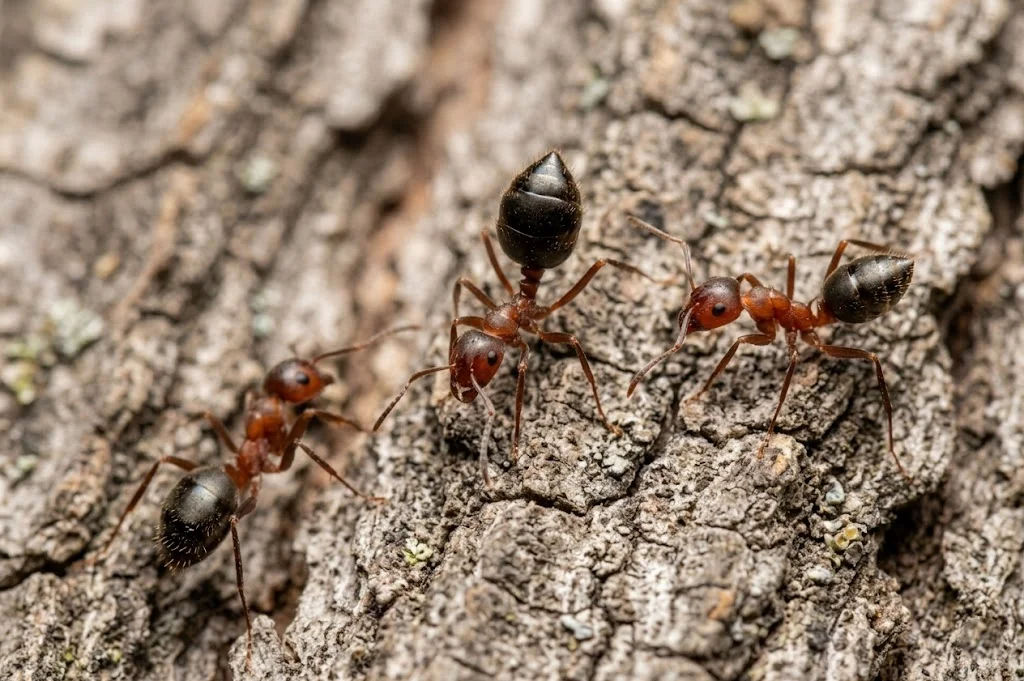
Acrobat ants are small, dark insects that measure between one eighth and one quarter of an inch long. Their color ranges from light brown to black, and some have a reddish tint. The easiest way to know you’ve found one is to watch how it moves when disturbed. It raises its heart-shaped abdomen high above its head and thorax, almost like it’s doing a backbend.
These ants live in colonies that can hold a few hundred to a few thousand workers. They eat almost anything, including sweets, proteins, and the sugary honeydew left behind by aphids. Outdoors, they often tend aphid colonies on rose bushes and fruit trees just to harvest that honeydew.
Acrobat ants aren’t aggressive toward people. They can deliver a small sting if you handle them, but the pain fades fast. The bigger concern is what they do to your house, not your skin.
How to Tell Acrobat Ants Apart From Other Ants
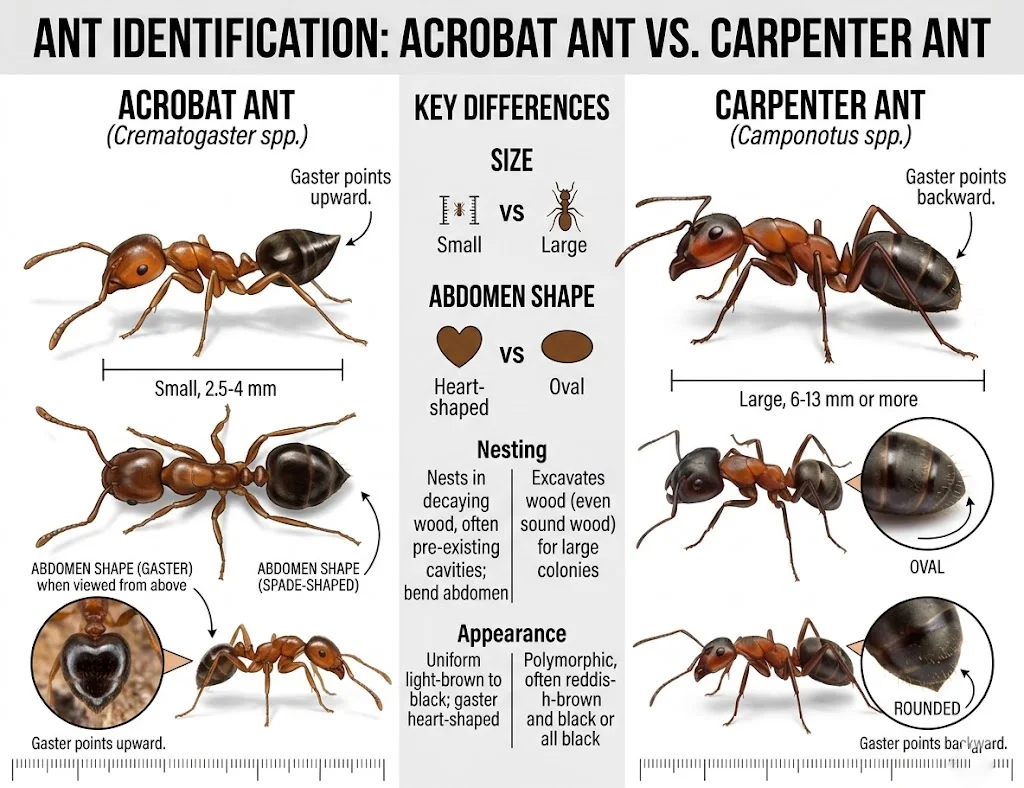
Homeowners mix up acrobat ants with carpenter ants all the time, mostly because both species like damp, decaying wood. A few details make it easy to tell them apart once you know what to check.
Size is the first clue. Acrobat ant workers stay small, topping out around a quarter inch, while carpenter ants can grow close to an inch long. Shape is the second clue. Acrobat ants have a heart-shaped or pointed abdomen when you look at them from above, while carpenter ants have a more rounded one.
Behavior seals the deal. If you tap the trail and watch the ants throw their abdomens up over their backs, you’re looking at acrobat ants. Carpenter ants don’t do this. That single habit makes identification far simpler than comparing color or leg length.
Why Acrobat Ants Move Into Your Home
Acrobat ants chase two things: moisture and food. They build their nests in wood that’s already soft from water damage, fungus, or old termite and carpenter ant tunnels. A leaky pipe, a damp window frame, or a soggy attic vent gives them exactly what they need to settle in.
Once a colony forms nearby, worker ants head indoors to forage. Your kitchen counters, pantry shelves, and trash cans look like a buffet to them. They’re especially drawn to anything sweet, so spilled juice or open sugar containers will pull them in fast.
Trees and shrubs touching your house act like a bridge for these ants. Branches that brush against your siding or roofline give them a direct path inside, so trimming that greenery back removes one more reason for them to visit.
Where Acrobat Ants Build Their Nests
Outdoors, acrobat ants nest in dead tree branches, old stumps, fallen logs, and stacked firewood. They favor wood that’s already rotting or hollowed out, since it’s softer and easier to tunnel through than healthy wood.
Indoors, they tend to settle in wall voids around doors and window frames, especially where water has caused damage over time. They’ll also move into insulation, attic spaces, and any abandoned termite or carpenter ant galleries they happen to find. Bathrooms and kitchens, where moisture builds up regularly, are common indoor nesting spots too.
One habit makes acrobat ants more than just a nuisance. They sometimes chew through the insulation on electrical wires while building their tunnels, which can lead to short circuits. That risk is one more reason to deal with an infestation quickly instead of waiting it out.
Signs You Might Have an Acrobat Ant Infestation
The clearest sign is a visible trail of ants moving along a baseboard, countertop, or window sill, usually heading toward a food or water source. Watch them closely and you’ll likely catch a few raising their abdomens when you get close.
Winged ants appearing indoors, especially in spring or early summer, can mean a colony has matured enough to send out new queens and males to start fresh nests. You might also notice small piles of debris near wood that looks chewed or crumbly, which often points to a nest forming nearby.
Flickering lights or a tripped breaker with no clear cause is worth investigating too. While it doesn’t happen in every case, ant damage to wiring insulation is a real possibility once a colony has been active for a while.
Natural Ways to Get Rid of Acrobat Ants
If you’d rather avoid heavy chemicals, a few natural methods work well for smaller problems. Diatomaceous earth is a fine powder made from fossilized algae, and it damages the outer shell of ants that crawl through it. Sprinkle a thin layer along entry points, trails, and cracks where you’ve seen activity.
Sealing cracks and gaps around windows, doors, pipes, and the foundation removes the easiest paths into your home. A simple silicone caulk works fine for most small openings. Fixing leaks and improving drainage around your foundation also takes away the moisture these ants depend on, which makes your house far less appealing to them in the first place.
Moving firewood away from the house, at least twenty feet if possible, and removing old stumps or rotting logs in your yard cuts off common outdoor nesting spots. These changes won’t wipe out an established colony on their own, but they make a real difference alongside other treatment steps.
Using Ant Bait the Right Way
Bait can work against acrobat ants, though results vary more than they do with some other ant species. Look for a bait that mixes sweet and protein-based attractants, since acrobat ants switch between both depending on the season and what they’re feeding their colony at the time.
Place small amounts of bait directly on the ant trails you’ve spotted, not just near the entry point. Worker ants carry the bait back to the nest and share it with the rest of the colony, including the queen. This process takes patience. Give it several days to a week before judging whether it’s working, and resist the urge to spray insecticide near the bait, since that will scare ants away before they can carry it back.
If you can’t find an obvious trail, try setting out a small dab of honey and a dab of peanut butter side by side in a few spots around the house. Acrobat ants forage for both sugars and proteins, so this combination often reveals where they’re coming from.
When You Need Insecticide Spray or Dust
For an active nest you can reach directly, a residual insecticide spray or dust gives you faster results than bait alone. Non-repellent products work especially well because the ants don’t notice the treatment right away, so they keep walking through it and carry it back to the colony instead of avoiding the area.
If you find a nest inside a wall void, a dust formula reaches deep into the gap and stays active for months without being disturbed. This makes it a smart choice for spots you can’t access again easily, like the space behind a window frame or inside an attic wall.
Always read the product label before applying anything, since coverage area and safety instructions vary between brands. If pets or kids spend time in the treated area, choose a product labeled safe for that use and follow the listed precautions closely.
How to Keep Acrobat Ants From Coming Back
Prevention comes down to removing the conditions these ants need to survive near your home. Fix leaky faucets, pipes, and gutters as soon as you notice them, since standing water is one of the biggest draws for a new colony. Running a dehumidifier in damp basements or crawl spaces helps too.
Trim back any branches or shrubs touching your siding or roof, and keep mulch a few inches away from your foundation. Store food, including pet food, in sealed containers so foraging ants can’t find an easy meal once they’re inside.
Walk the outside of your house once or twice a year and reseal any new cracks you find around windows, doors, and utility lines. This small habit catches new entry points before a colony has the chance to use them.
When to Call a Pest Control Professional
Most small acrobat ant problems respond well to the steps above, especially when you catch them early. If you’ve tried sealing entry points and using bait or dust for a few weeks without seeing improvement, the nest is likely hidden somewhere you can’t reach on your own.
A pest control professional can inspect your home’s interior and exterior, locate hidden nests in wall voids or wood damage, and apply treatments that go beyond what’s available to homeowners. This matters most if you suspect wiring damage, since faulty electrical insulation is a fire risk worth addressing right away.
Acrobat ants are stubborn, but they’re not impossible to beat. Once you cut off their food, water, and easy entry points, most colonies lose interest in your house fast. Stay consistent with the steps in this guide, and you’ll notice the trails disappearing within a few weeks.