

To get rid of carpet beetles naturally and permanently, vacuum thoroughly every day, apply food-grade diatomaceous earth or boric acid to infested areas, wash all fabrics in hot water, steam clean carpets, freeze non-washable items, and seal entry points. Consistent cleaning is the single most important long-term step.
You opened your closet one morning and found tiny holes in your favorite wool sweater. Or maybe you spotted small, oval-shaped bugs crawling near your window sill. Either way, that sinking feeling is familiar — you’ve got carpet beetles.
These tiny pests cause real damage. They chew through wool, silk, leather, cotton, and even pet fur. The good news is you don’t need to call an exterminator right away or drench your home in harsh chemicals. You can get rid of carpet beetles naturally and permanently — if you’re consistent about it.
This guide walks you through every step, from spotting the signs early to keeping them from ever coming back.
What Are Carpet Beetles and Why Are They a Problem?
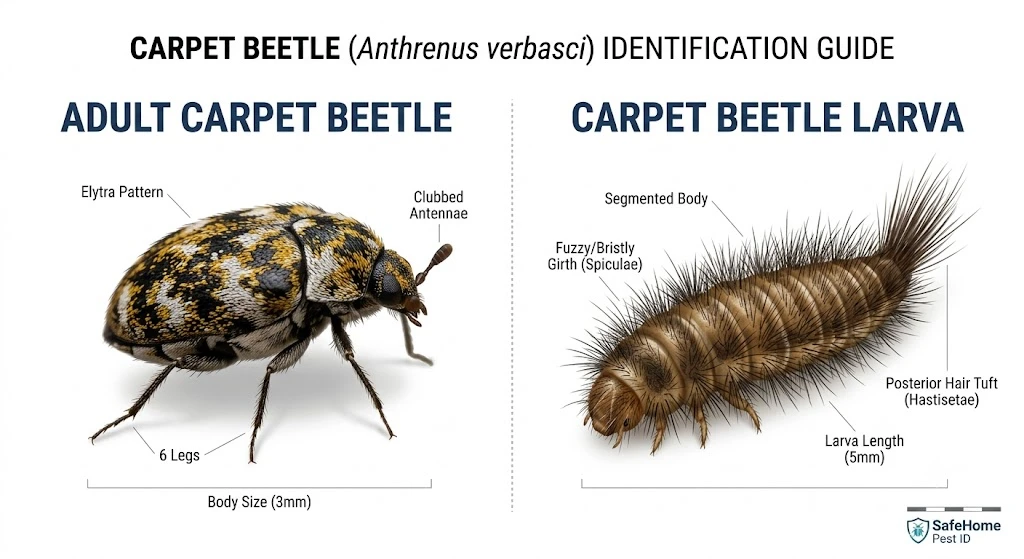
Carpet beetles belong to a family of beetles known as dermestids. Three types show up most often in homes: the varied carpet beetle, the furniture carpet beetle, and the black carpet beetle. They’re small — usually less than a quarter inch long — and easy to miss until the damage is already done.
Their larvae, often called “woolly bears,” are the real troublemakers, feeding on natural fibers like wool, silk, leather, pet hair, and feathers. Adult carpet beetles are mostly harmless and spend their time near flowers outdoors. But once they get inside, they lay eggs — and that’s when your fabrics start paying the price.
Adults can deposit more than 100 eggs, which hatch within 7 to 35 days. That’s a fast-growing problem if you don’t catch it early.
How to Spot a Carpet Beetle Infestation Early
Catching an infestation early saves you a lot of trouble. The most obvious sign is irregular holes in clothing, rugs, or upholstered furniture. Carpet beetles thrive in dark, undisturbed areas such as closets, under furniture, or in air ducts, which makes early detection difficult.
Keep an eye out for shed skins — larvae leave behind dry, brown, molted skins as they grow. You might also spot tiny white or cream-colored egg clusters in dark, hidden areas like closets or under carpets. Dead adult beetles near windows or light fixtures are another clear sign.
Carpet beetles tend to congregate around windows and doorways, so check these areas first if you suspect an infestation. The sooner you confirm it, the faster you can act.
Start with a Thorough Vacuum — Every Single Day
Vacuuming is the foundation of any carpet beetle removal plan. It physically removes adult beetles, larvae, eggs, and the shed skins that can trigger skin irritation. Don’t just run the vacuum over the center of the room and call it done.
Vacuum all area rugs, carpets, furniture, and crevices. Pay close attention to baseboards, closets, and storage areas where carpet beetle larvae hide. These are their favorite hiding spots — dark, undisturbed, and full of debris.
After discovering an active infestation, vacuum every day for at least a week. Depending on how bad the infestation is, you may need to vacuum several times a day in the early days. Toss the vacuum bag outside immediately after each session so you’re not just relocating the problem.
Apply Diatomaceous Earth to Kill Larvae Naturally
Diatomaceous earth — often just called DE — is one of the most effective natural weapons against carpet beetles. It’s made from the fossilized remains of tiny aquatic organisms, and it works by dehydrating insects on contact.
Food-grade diatomaceous earth will kill crawling pests like carpet beetle larvae. Sprinkle it over the affected area and leave it in place for up to 48 hours, then vacuum thoroughly. You’ll want to wear a dust mask when you apply it, since inhaling fine powder isn’t good for your lungs.
Always buy food-grade diatomaceous earth, which is safe for both people and pets. It can also be used in hard-to-reach areas like the back of cupboards. Repeat the process every week until you see no more signs of activity.
Use Boric Acid for Stubborn Infested Areas
Boric acid is another natural substance that works well on carpet beetles. It acts as a slow-acting poison on insect metabolism. It’s only hazardous to humans if ingested or inhaled in large quantities. You can find it in powder form at pharmacies or in the laundry aisle of supermarkets.
Sprinkle it lightly and evenly on the carpet, then use a broom or brush to work it into the fibers. Wait several hours, then vacuum thoroughly. You can also make a spray by dissolving 1 tablespoon of boric acid in 2 cups of hot water, then misting it onto curtains, upholstery, baseboards, and dark corners.
Keep boric acid away from food prep surfaces and out of reach of children and pets. It’s a great option for baseboards, closet edges, and the underside of rugs where larvae like to feed.
Wash and Steam Clean Everything You Can
Heat is one of the most reliable ways to kill carpet beetles at every stage of their life cycle. Wash fabrics in hot water to kill beetles and larvae. This includes clothing, bedding, curtains, and any fabric item that fits in your washing machine.
Steam clean your carpeting — heat kills pests. Check rug manufacturer labels beforehand, as some rugs or carpets shouldn’t be cleaned with steam. A steam cleaner reaches temperatures that destroy both eggs and larvae hiding deep in carpet fibers, well beyond what a regular vacuum can reach.
Wash infested items in hot water or dry-clean them to kill all stages of the insect. For items that can’t go in the wash and are too delicate for steam, dry cleaning is a solid choice.
Freeze Items That Can’t Be Washed
Some items — think decorative pillows, stuffed animals, antique textiles, or clothing with delicate embellishments — can’t handle hot water or steam. For those, the freezer is your friend.
Seal contaminated items in airtight bags and place them in the freezer for at least 48 hours. The extreme cold kills eggs, larvae, and adult beetles without damaging the fabric. Make sure items are completely sealed before they go in, or you’ll risk contaminating other things in your freezer.
This method works especially well for small rugs, scarves, hats, and heirloom items you can’t risk damaging with heat. After the 48-hour freeze, let items come to room temperature inside the sealed bag before opening them, then vacuum away any remains.
Seal Entry Points to Stop Them Getting In
Killing the beetles inside your home only solves half the problem. You also need to stop new ones from getting in. Look for the source of your carpet beetle infestation — torn screens, damaged weatherstripping, or cracks where adult beetles may be gaining access. Repair screens, install new weatherstripping, and seal cracks.
Inspect and close gaps in windows, doors, and wall cracks. Install bug screens to keep flying beetles outdoors. Carpet beetles can fly, which makes open windows without screens a direct highway into your home.
Store seasonal clothing, blankets, and fabrics in airtight bins to prevent carpet beetles from getting to them. Regularly inspect storage areas for signs of pests. Airtight plastic bins are far more reliable than cardboard boxes, which offer no protection at all.
Use Natural Repellents to Keep Them Away
Once you’ve cleared out an infestation, natural repellents help make sure carpet beetles don’t want to come back. Several essential oils work as effective deterrents.
Cedar oil dissolves larvae and eggs and dehydrates adult beetles. Eucalyptus oil is also effective — carpet beetles perceive the pungent smell as hazardous and avoid it. You can add a few drops of either oil to water in a spray bottle and mist it around window sills, door frames, and the edges of carpets.
Combine equal parts white vinegar and water for a natural deterrent. Spray around window sills, door frames, and other entry points. The acidity of vinegar repels carpet beetles and also helps clean surfaces where eggs might have been laid. It’s cheap, safe, and easy to make at home.
When Natural Methods Aren’t Enough
Natural methods handle most carpet beetle problems well — especially when you’re consistent. But sometimes an infestation has gone too far for home remedies alone.
If you’re dealing with a stubborn carpet beetle infestation and natural repellents aren’t doing the trick, consider an insecticide. Apply it to infested areas, paying close attention to cracks, crevices, and baseboards. Look for products that list cyfluthrin, bifenthrin, or deltamethrin on the label, and always follow the instructions carefully.
If the infestation is severe, it might be time to call in a professional team of experts. Carpet beetle extermination services can provide thorough treatment, making sure every corner of your home is covered. If you’re finding damage in multiple rooms or the problem keeps returning after treatment, that’s a clear sign to bring in a professional.
Make Prevention a Habit, Not a One-Time Fix
Getting rid of carpet beetles naturally and permanently comes down to one thing: consistency. Vacuuming regularly, washing fabrics in hot water, sealing storage containers, and blocking entry points are not one-time tasks. They need to become part of your normal home care routine.
Vacuum at least once or twice a week, particularly in high-traffic or hidden areas. Deal with dirty laundry quickly instead of letting it pile up — damp, unwashed fabrics are a prime feeding ground for larvae.
The more attention you give your home — especially the dark, quiet corners — the less likely carpet beetles are to move in and make themselves comfortable. Stay consistent, act fast at the first sign of trouble, and your fabrics will thank you.