

The most effective fire ant control method is the Two-Step approach. First, broadcast bait across your entire yard to wipe out hidden colonies. Then treat individual mounds directly for fast results. This combination kills the queen and stops new mounds from forming.
Nobody likes stepping outside and finding a fresh mound of dirt in the middle of the lawn. Fire ants build fast, sting hard, and spread quickly if you don’t deal with them. The good news is you don’t need to guess your way through this problem. There’s a proven system that works, and it doesn’t require constant mound-by-mound battles.
This guide walks you through everything you need to know about fire ant control. You’ll learn how to spot an infestation, why fire ants are such a problem, and which treatment methods actually get results.
What Are Fire Ants and Why Are They a Problem
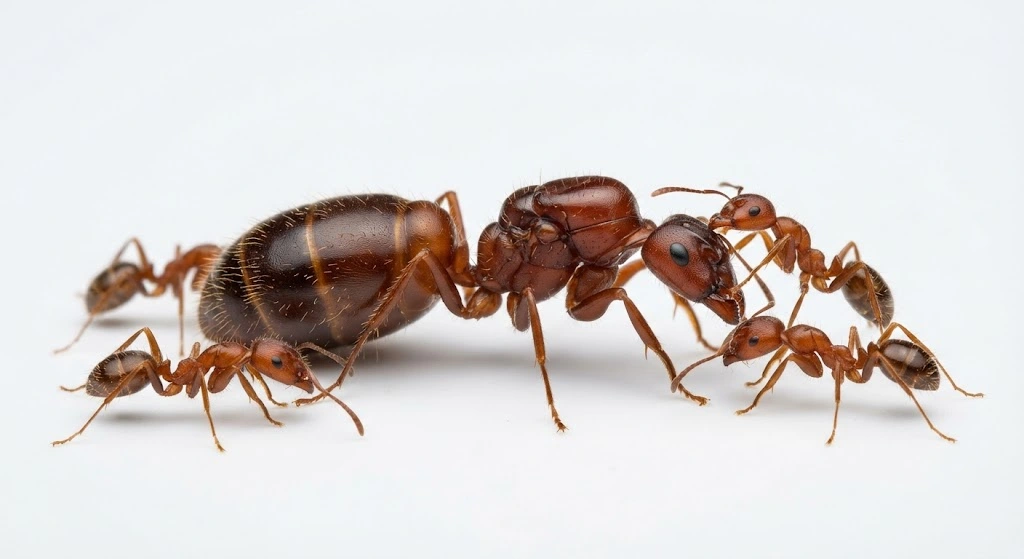
Fire ants are small, reddish-brown insects with a darker rear section. Worker ants measure about 1/8 to 1/4 inch long. Queens grow a bit bigger, closer to 1/3 inch. They may be tiny, but don’t let the size fool you.
A single colony can hold anywhere from a few thousand to over a million ants. Each colony has one or more queens, and those queens can live for several years. That’s why a mound you ignore in spring can turn into a full-blown infestation by summer.
Fire ants earned their name for a reason. When they sting, it feels like a burning pinch, and the spot often turns into an itchy, fluid-filled blister within a day. Most people recover fine, but some have severe allergic reactions that need medical attention. Pets and livestock face the same risk, and fire ants can also damage electrical equipment, irrigation systems, and crops.
These ants used to stick mostly to southern states. That’s changing. Warmer weather patterns have pushed fire ants further north than they used to travel, so more homeowners are dealing with them for the first time.
How to Tell If You Have a Fire Ant Infestation
Mounds are the clearest sign. Fire ant mounds look like loose, fluffy piles of dirt with no visible entry hole on top. That’s different from many other ant species, which build mounds with a clear opening in the center. Fire ants tunnel out sideways instead.
Mounds tend to pop up fast, sometimes overnight after rain. They’re often found in sunny, open areas like lawns, garden beds, and along sidewalks or driveways. If you disturb a mound, expect an aggressive response. Worker ants will swarm out within seconds and sting anything that touches them.
If you see several mounds spread across your yard, you’re likely dealing with more than one colony. That changes how you should approach treatment, since spot-treating a single mound won’t touch the ones you can’t see.
The Two-Step Method for Fire Ant Control
Entomologists and pest control experts consistently point to the same strategy: the Two-Step Method. It combines broad, yard-wide bait treatment with targeted mound treatment. This pairing is what makes it so effective.
Step One: Broadcast Baiting
Broadcast baiting means spreading fire ant bait across your entire lawn, not just around visible mounds. The bait combines a food source, usually soybean oil or another attractant, with a slow-acting insecticide.
Here’s why the slow action matters. Foraging worker ants pick up the bait and carry it back to the colony, where they share it with other workers, the larvae, and eventually the queen. Because the poison works gradually, the ants don’t realize it’s dangerous and keep spreading it deeper into the colony. Within days to a couple of weeks, the whole colony collapses, including the queen.
This step also targets colonies you haven’t spotted yet. Fire ants sometimes build satellite nests underground with no visible mound. Broadcast bait reaches those hidden colonies, which spot treatments simply can’t do.
Apply bait on a dry day when rain isn’t expected for at least 24 hours. Moisture breaks down the bait and makes it less effective. Early morning or evening works well, since that’s when ants are most active and searching for food.
Step Two: Direct Mound Treatment
Once you’ve handled the broader lawn with bait, treat any remaining visible mounds directly. This step gives you faster results for the ants causing the most immediate trouble, like a mound near a walkway or a play area.
You can use a granular insecticide drenched into the mound with water, or a liquid drench poured straight into the center. Some products come as mound injections, which push insecticide underground where the ants actually live. Direct treatments usually kill a colony within a day or two, much faster than bait alone.
Avoid disturbing the mound before you treat it. Poking or kicking a fire ant mound triggers the colony to relocate a few feet away, and then you’re back to square one. Approach mounds calmly and treat them without agitating the ants first.
Natural and DIY Fire Ant Control Methods
Some homeowners want to try a natural approach before reaching for chemical treatments. These methods can offer short-term relief, though they usually fall short of long-term control.
Boiling water poured directly into a mound kills a portion of the colony on contact. It works best on smaller, shallow nests, but larger colonies often survive underground and rebuild. You may need to repeat the process several times.
Diatomaceous earth is another common option. This powder is made from fossilized algae and works by damaging the ants’ exoskeletons, which dries them out. Sprinkle it around the mound and along ant trails. It’s slower than chemical bait, and rain washes it away, so you’ll need to reapply often.
Citrus oil, made from d-limonene, is sometimes used as a natural mound drench. It disrupts the ants’ respiratory system on contact. Like boiling water, it tends to work better on smaller colonies than large, established ones.
These natural methods are worth trying if you’re dealing with just one or two small mounds and want to avoid chemical treatments. For larger infestations, though, pairing a natural approach with broadcast baiting gives you much better odds.
Preventing Fire Ants From Coming Back
Getting rid of an active infestation is only half the job. Keeping fire ants from returning takes some ongoing attention.
Check your yard regularly, especially after heavy rain, since new mounds often appear within days of a storm. Catching a new colony early makes it much easier to treat before it grows.
Keep your lawn mowed and remove piles of debris, wood, or leaves where ants like to nest. Fire ants are drawn to moist, undisturbed areas, so reducing hiding spots makes your yard less appealing to new colonies.
Reapply broadcast bait on a schedule, typically twice a year in spring and fall. This proactive approach catches colonies before they establish themselves and keeps your yard protected year-round instead of reacting mound by mound.
Seal gaps around your home’s foundation, since fire ants sometimes nest close to structures and can make their way indoors looking for food or water. A few minutes of caulking can prevent a much bigger headache later.
When to Call a Professional
Some infestations are simply too large or too widespread for DIY methods to handle well. If you’re seeing mounds across a large property, if a colony keeps coming back after treatment, or if you have young kids, pets, or family members with allergies, it may be time to bring in a professional.
Pest control companies use EPA-approved products and often follow up with ongoing inspections. That kind of consistent monitoring catches new colonies before they spread, which is hard to replicate on your own if you’re not checking the yard often.
Professional treatment also makes sense for large rural properties, farms, or pastures, where fire ants can damage equipment and put livestock at risk. In these cases, a broader program that includes regular monitoring and treatment usually pays off compared to constant DIY attempts.
Final Thoughts
Fire ants are stubborn, but they’re not unbeatable. The Two-Step Method gives you the best shot at long-term control by combining broadcast bait with direct mound treatment. Natural remedies can help with small, isolated mounds, but they rarely handle a full infestation on their own.
Stay consistent with prevention, check your yard often, and treat new mounds quickly before they spread. With the right approach, you can keep your lawn a place where your family and pets can walk barefoot without worry.