

Professional rat control is a service where licensed technicians inspect your property, find how rats get in, remove them with traps or bait stations, seal entry points, and monitor the site afterward. This approach treats the cause of the problem, so rats are far less likely to return.
Imagine you wake up at 2 a.m. to a soft scratching sound inside your wall. You lie still and listen. It stops, then starts again. By morning, you tell yourself it was the pipes. Two days later, you find dark droppings behind the toaster.
That moment is when most people realize they have a rat problem. The next question comes fast: should you buy a few traps and handle it yourself, or call a professional? This guide explains how Professional Rat Control works, what it costs, and how to choose a good company. You will also learn what you can do at home to keep rats away.
The goal goes past removing the rats you can see. A trained technician also looks for the reasons they came in, such as food, water, shelter, and gaps in your walls. When you fix those causes, you stop the next group before it arrives.
How Fast Rats Multiply
Rats do not stay a small problem for long. A female rat has litters of six to 12 young, and the average female has four to six litters per year. Young rats reach breeding age in about three months. So two rats in your attic can become dozens before the year ends.
Getting in is easy for them. Rats can enter a building through any opening larger than half an inch. Pest professionals say rats can squeeze through a hole about the size of a quarter. Gaps under doors, cracks in foundations, and loose vents all give them a way inside.
Food and shelter keep them there. Open trash bins, pet food left out overnight, and cluttered garages give rats everything they need.
Health and Property Risks
Rats carry germs, and you cannot tell which ones by looking at them. The CDC explains that rodents can spread disease through their droppings, urine, saliva, and bites, and that infestations in and around the home are the main reason these diseases reach people. Military public health guidance lists murine typhus, leptospirosis, salmonellosis, and rat-bite fever among the diseases rodents and their fleas can spread. Singapore’s National Environment Agency also names hantavirus.
Rats damage your home as well. Their front teeth never stop growing, so they must gnaw all the time. They chew on wiring, which creates a fire hazard, and they contaminate stored food. Repairs after months of hidden gnawing can add up fast.
Signs You Have a Rat Problem
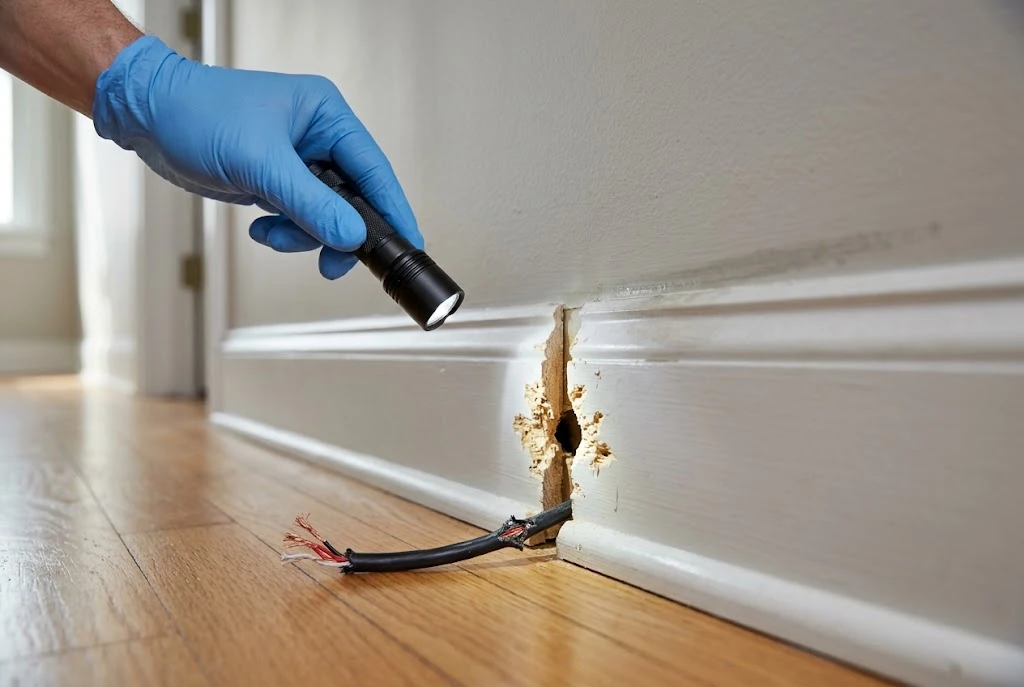
Rats mostly come out at night, so you may never see one. Look for clues instead. Dark droppings about one to two centimeters long are a common sign. You may also hear scratching in walls or floors, and you may notice a sharp ammonia smell in closed spaces.
Check for gnaw marks on cables, wood, and food packaging. Look for greasy smudges along walls and baseboards, too. Outside, watch for round burrows about two to four inches wide near foundations, drains, and tree roots. A rat seen in daylight matters as well, because it signals a significant population.
Act when you notice any of these signs. The CDC says rodents are easier to control before they establish themselves in your home.
Why DIY Rat Control Often Fails
Many people start with a hardware-store trap. That seems reasonable, but rats behave differently from mice. Rats are neophobic, which means they avoid new objects in their environment, and it is common for them to wait two weeks before they touch traps or bait. So a homeowner sets one trap, sees nothing for a week, and decides it does not work.
Store-bought products also tend to miss the source. They may reduce visible activity, but they rarely address nesting areas or entry points, so infestations often return. Poison adds another risk. Penn State Extension notes that consumer-ready poisons may be ineffective and can poison pets and wildlife such as hawks. New York City’s health department adds that poisons applied by untrained people have killed pets and wildlife.
Placement matters too. Rats travel along walls and follow the same paths night after night. A trap set out in open space gets ignored.
How Professionals Handle Rat Control
A good company starts with an inspection, not with poison. The technician walks your property inside and out. They look for droppings, burrows, gnaw marks, and greasy rub marks. They also identify the species and find the entry points.
Most reputable companies then follow Integrated Pest Management, which some call Integrated Rodent Management. It has four steps: exclusion, restriction, treatment, and monitoring.
Exclusion comes first. The technician rodent-proofs the building by closing windows and doors and sealing gaps in floors, walls, and ceilings. Without this step, new rats simply replace the old ones.
Restriction comes next. You remove food sources, keep the space clean, and clear the places rats use for shelter. The technician tells you exactly where to start.
Treatment follows. This is where traps and bait stations come in. Professionals let rats get used to bait boxes before adding bait, and one industry expert says success depends less on how many stations you install than on putting them in the right spots. Rodenticide labels require tamper-resistant stations, and Penn State recommends that only pest management professionals apply these poisons. That keeps children and pets safer.
Monitoring finishes the job. The technician tracks rat activity after the infestation drops to a manageable level, sometimes with motion-sensor cameras. Rat control rarely ends after one visit. Expect several visits over a few weeks.
What Professional Rat Control Costs
Prices depend on where you live, but a US example helps. HomeAdvisor reports that professional rat extermination costs between $189 and $655, with an average of $395. Sealing entry points adds about $200 to $600.
Severity changes the total. A heavy infestation needs more follow-up visits, and fumigation, which is a last resort, can cost roughly $2,000 to $6,000 for a 2,000-square-foot home. Ask for a written quote that lists the inspection, treatment, sealing work, and follow-up visits. Then ask what happens if the rats come back.
How to Choose a Rat Control Company
Not every company does the job well. Start by asking whether the technicians are licensed and trained. New York City’s health department says rat control is a poor fit for technicians with minimal training who get supervised by phone.
Next, ask whether the company follows Integrated Pest Management and seals entry points. A company that only sets traps will see you again next month. Ask which products it uses around children and pets. Ask for a written plan that lists the number of visits, and ask about guarantees.
Read recent reviews and look for comments about follow-up service. Be careful with any company that promises to clear rats in a single day. Real control takes time, because rats avoid anything new.
What You Can Do Between Visits
Your habits matter as much as the technician’s work. Store food, including pet food, in sealed containers. Take out the trash often and use bins with tight lids. Trim tree branches that touch your roof, and keep firewood and clutter away from your walls. Fix leaking pipes, since rats need water.
Seal small gaps as you find them. Do not sweep or vacuum droppings, because that can put dust into the air. Wet them with disinfectant and wipe them up while wearing gloves. Do not try to catch or handle rats yourself.
Take the Next Step
Rats do not leave on their own. They breed fast, damage property, and put your health at risk. Professional rat control gives you an inspection, a treatment plan, sealed entry points, and follow-up checks, so the problem stays fixed.
If you hear scratching tonight or find droppings tomorrow, call a licensed pest professional this week. Ask for an inspection, get a written plan, and start protecting your home today.