
Bed bugs are the pest nobody believes they have — until the bites line up. The good news: a bed bug problem is beatable without burning the mattress or moving out. The catch: half-measures fail. Bed bugs hide in seams and screw heads, their eggs survive most sprays, and one pregnant female can restart the whole infestation. This guide shows you exactly how to get rid of bed bugs, step by step — how to confirm you have them, how to prepare, which treatments actually work, and how to keep them from ever coming back.
Bed Bugs at a Glance
| Question | Quick answer |
|---|---|
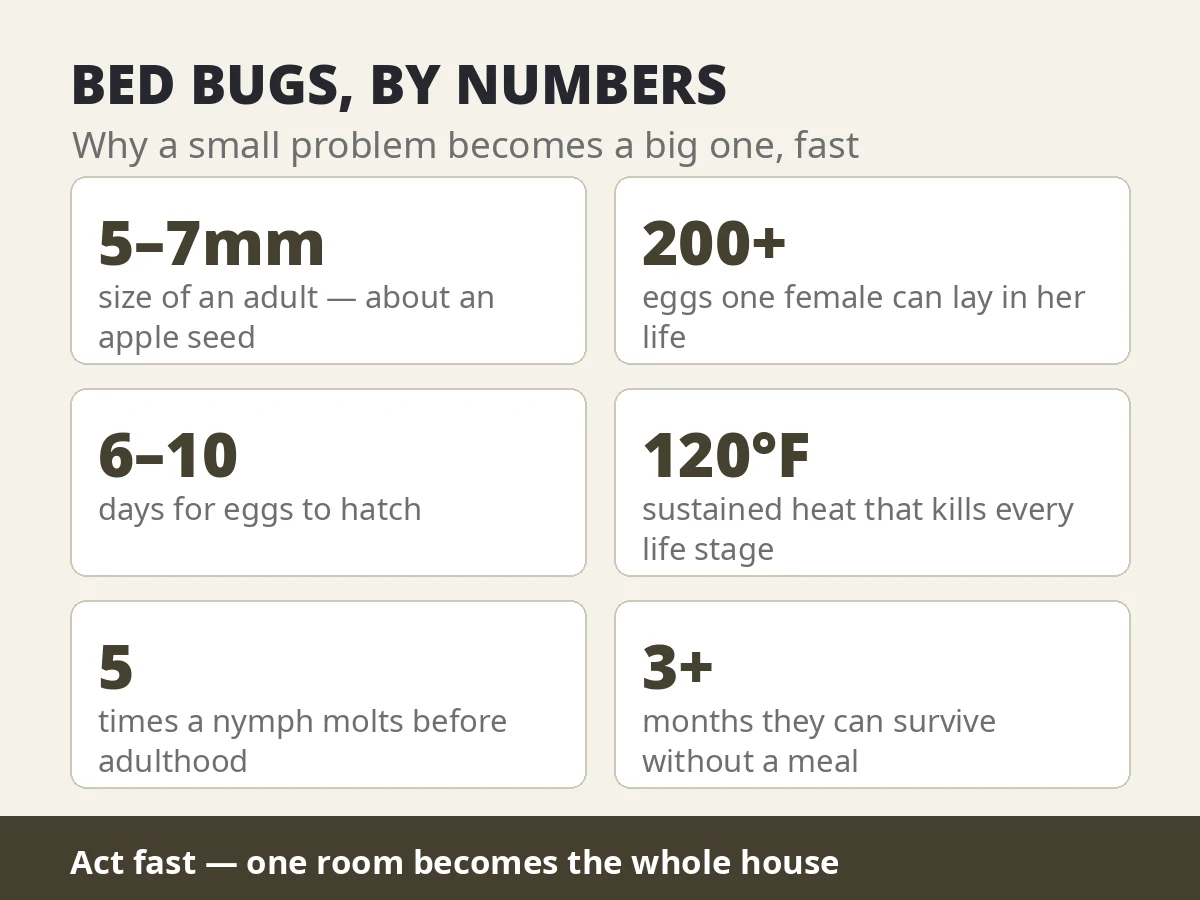
| What do bed bugs look like? | Reddish-brown, flat, oval — about the size of an apple seed (5–7mm) |
| Where do they hide? | Mattress seams and piping, box springs, headboards, nightstands — within a few feet of the bed |
| What kills them reliably? | Sustained heat (120°F / 49°C+), steam, hot washing and drying, and thorough professional treatment |
| How long does it take? | Typically 2–4 weeks of consistent work; pros may need 2–3 visits |
| Do they spread disease? | No known disease transmission — but bites, lost sleep and stress are bad enough |
Step 1: Confirm It’s Really Bed Bugs
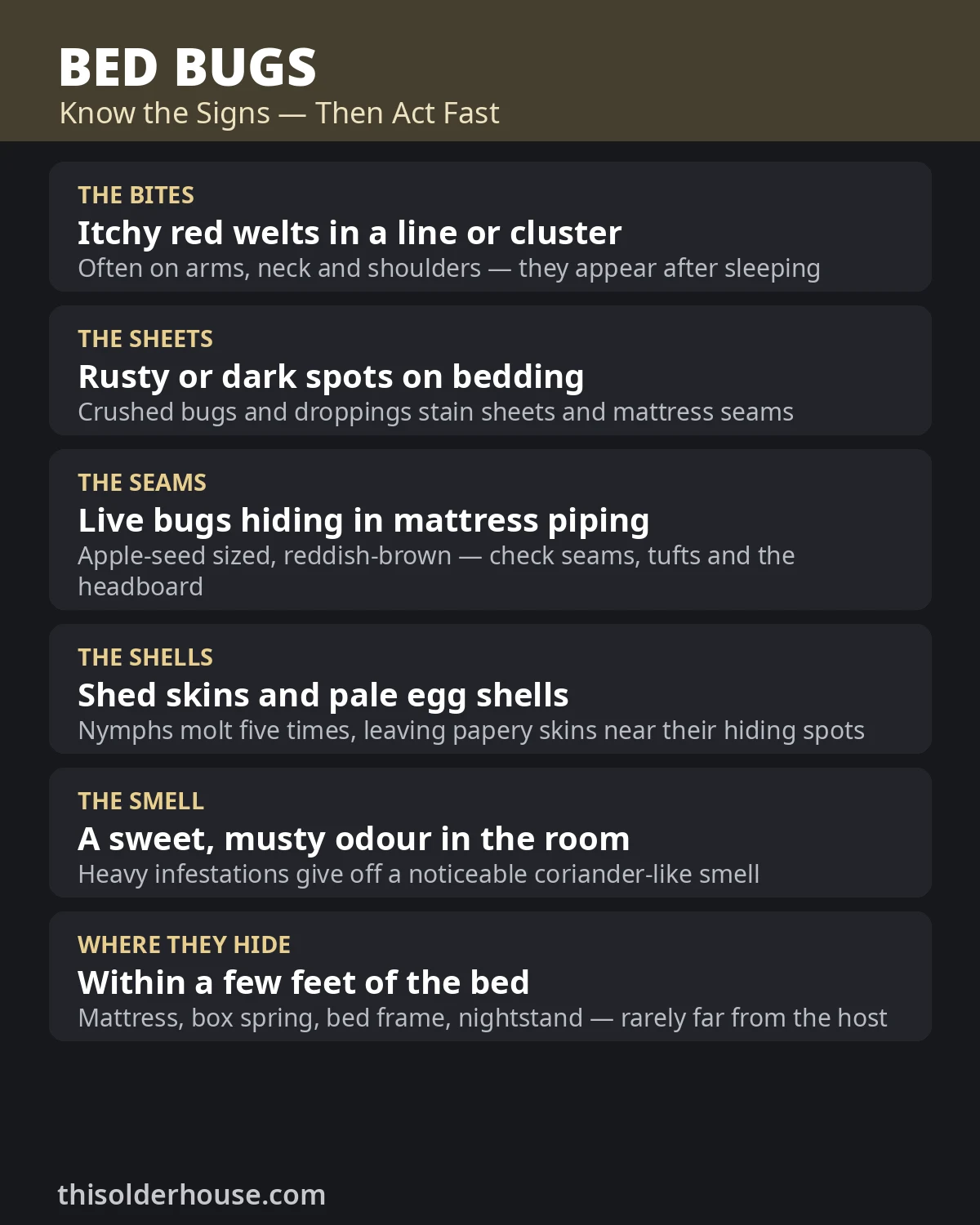
Not every bite is a bed bug, and treating for the wrong pest wastes weeks. Strip the bed and inspect with a flashlight: mattress seams and piping, the corners of the box spring, behind the headboard, and the joints of the bed frame. You are looking for live reddish-brown bugs, rusty or dark spotting (their droppings), and papery shed skins. Bites alone — itchy welts in lines or clusters on skin that touches the bed — are a clue, not proof. Find a bug or the spotting before you start treatment.
Step 2: Prep the Room (This Is Where Most People Fail)
Preparation decides whether treatment works. Bag all bedding and clothing from the room in sealed plastic bags and carry them straight to the washing machine — never shake them out indoors. Wash on the hottest cycle the fabric allows (60°C / 140°F is ideal) and tumble-dry on high heat for at least 30 minutes; heat is what kills every life stage. Vacuum the mattress, frame, baseboards and carpet edges thoroughly, then empty the vacuum into a sealed bag and take it outside immediately. Reduce clutter around the bed — every book stack and storage box is a hiding place — and pull the bed a few inches away from the wall.
Step 3: Treat With Heat, Steam and Targeted Products
Start with what physics guarantees. A garment steamer run slowly along mattress seams, upholstery and baseboards kills bugs and eggs on contact — move slowly, about an inch per second. After treatment, seal the mattress and box spring in bed-bug-proof encasements with locking zips, and leave them on for at least a year; trapped bugs starve, and new ones lose their best hiding place. Interceptor cups under the bed legs catch climbers and tell you if activity continues.
For cracks and joints you cannot steam, food-grade diatomaceous earth or a silica dust applied thinly in voids (never where children or pets contact it, and never on bedding) keeps killing for months as bugs cross it. If you use a spray, choose one labelled for bed bugs and for indoor crack-and-crevice use, and follow the label exactly — bug bombs are a classic mistake: they scatter bed bugs deeper into walls and neighbouring rooms instead of killing them.
Step 4: Repeat, Monitor, and Know When to Call a Pro
Eggs hatch over 6–10 days and shrug off many treatments, so repeat your inspection and treatment weekly for at least three weeks. Keep checking the interceptors; two full weeks with no catches and no new bites is a good sign you are winning. Call a professional if the infestation has spread to multiple rooms, if you rent (landlords often carry legal responsibility), or if two honest DIY rounds have not reduced activity. Wondering what that costs? See our breakdown of bed bug exterminator costs before you book.
How to Keep Bed Bugs From Coming Back
Most infestations start with travel or second-hand furniture. Inspect hotel beds before unpacking, keep suitcases off beds and sofas, and heat-treat luggage contents on your return. Never bring home a discarded mattress or upholstered chair, however clean it looks. At home, keep the encasements on, vacuum mattress seams monthly, and fold these checks into your wider routine — our year-round pest prevention guide covers the rest of the house.
Explore More Pest Control Guides



FAQs About Getting Rid of Bed Bugs
What kills bed bugs instantly?
Direct heat. Steam, a hot wash and a high-heat dryer cycle kill bed bugs and eggs on contact. No spray matches it for instant, guaranteed results on the items you can treat this way.
Can I get rid of bed bugs myself, or do I need a professional?
A small, single-room infestation caught early is often DIY-able with heat, steam, encasements and patience. Multi-room infestations, heavy infestations and rental properties are usually best handled by a professional.
How long does it take to get rid of bed bugs completely?
Plan on 2–4 weeks of weekly treatments and monitoring. The eggs’ 6–10 day hatch cycle means activity must be checked across several weeks before you can call it done.
Do bed bug bombs work?
No — foggers rarely reach the cracks where bed bugs hide and typically scatter them into walls and other rooms, making the problem worse and harder to treat.
Should I throw away my mattress?
Almost never. A mattress in reasonable condition can be vacuumed, steamed and sealed in a bed-bug encasement. Throwing it out risks spreading bugs through the building on the way to the curb.