

To kill fleas fast, treat every pet with a vet-approved flea product, wash all bedding in hot water, vacuum daily, and apply a flea spray with an insect growth regulator indoors. Treat shady, damp areas of your yard the same day. Repeat for three to four weeks to break the flea life cycle.
Fleas move fast, and they multiply even faster. One female flea can lay more than twenty-five eggs a day, and those eggs scatter across your carpet, your couch, and your yard before you even notice a problem. If you’ve spotted fleas on your dog or cat, you’re probably dealing with them in three places at once: your pet, your home, and your yard.
The good news is that fleas are beatable. You just need to hit all three areas at the same time, because treating only one spot lets the others restock the population. Here’s a clear, step-by-step plan that works.
Why Fleas Are So Hard to Get Rid Of
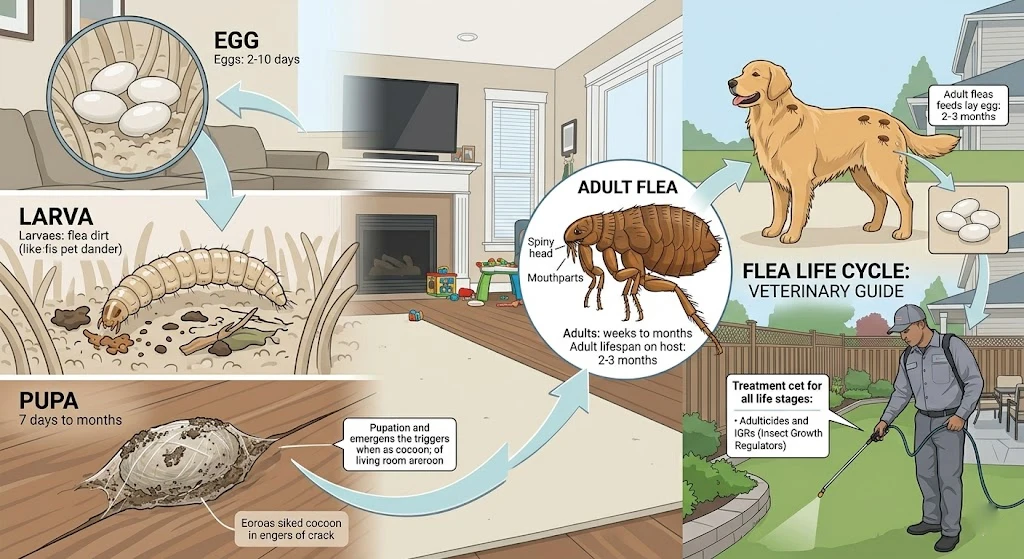
Fleas go through four life stages: egg, larva, pupa, and adult. The adults are the ones you actually see jumping around, but they only make up a small slice of the total population at any given time. Most of the flea colony hides as eggs and larvae buried deep in carpet fibers, pet bedding, and soil.
This matters because most sprays and treatments only kill adult fleas. The pupae are especially tough. They wrap themselves in a protective cocoon and can sit dormant for weeks, waiting for the vibration of footsteps or the warmth of a nearby pet before they hatch. That’s why a flea problem can seem to disappear and then come roaring back two weeks later. You’re not dealing with a new infestation. You’re dealing with the next generation finally hatching.
Knowing this life cycle changes how you treat the problem. Instead of a one-time spray, you need a plan that keeps working for several weeks straight, so you catch each new wave of fleas as it hatches.
How to Kill Fleas in Your House
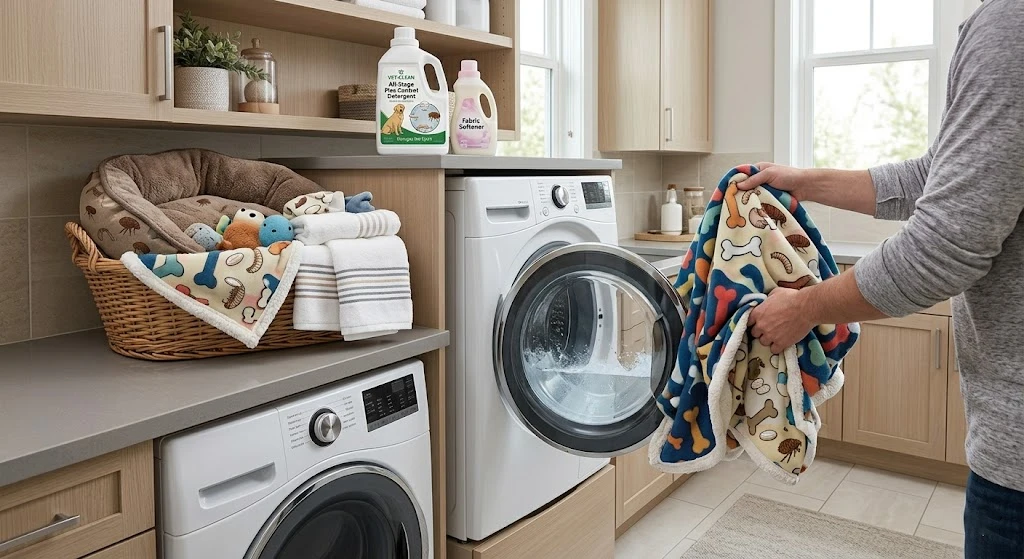
Start with the washing machine. Pull every blanket, sheet, pillowcase, and piece of pet bedding your animal touches and wash it in the hottest water the fabric allows, then dry it on high heat. Heat kills fleas and their eggs at every stage, so this single step wipes out a large chunk of the population hiding in fabric.
Next, vacuum like you mean it. Run the vacuum over carpets, rugs, couch cushions, and the cracks along baseboards every single day for the next two to three weeks. Vacuuming physically pulls out eggs, larvae, and flea dirt, and the vibration also tricks dormant pupae into hatching early. That’s actually helpful, because it means more fleas die from your treatments instead of waiting in their cocoons. Empty the canister or toss the bag outside right after each pass so nothing crawls back out.
Once the floors are vacuumed, treat carpets and furniture with an indoor flea product that combines two ingredients: an adulticide, which kills the adult fleas you see, and an insect growth regulator, which stops eggs and larvae from maturing. Methoprene and pyriproxyfen are common growth regulators, and they’re the reason this combination works so much better than a basic spray alone. Read the label, keep kids and pets out of the room until everything dries, and pay extra attention to dark corners, under furniture, and pet resting spots.
If you’d rather skip chemicals on certain surfaces, sprinkle plain table salt or baking soda over carpets and let it sit for a full day before vacuuming. Both work by drying out the fleas and their eggs. Diatomaceous earth does the same job and is safe to use around pets once it’s brushed in and left for a few days, though you’ll want to keep pets and people from breathing in the dust while applying it.
How to Kill Fleas in Your Yard
Fleas in your yard don’t spread out evenly. They cluster in shady, damp spots, think under the porch, beneath shrubs, or wherever your dog naps in the afternoon. Start by clearing out leaf piles, grass clippings, and any wood debris from those areas, since fleas use that clutter as cover.
Mow your lawn short and keep it that way. Short grass lets more sunlight reach the soil, and fleas can’t survive long under direct sun. Cutting back on watering also helps, since fleas thrive in humid, moist ground and struggle in dry conditions.
For active treatment, apply a yard insecticide labeled for fleas directly to the shady, high-traffic spots rather than blasting the whole lawn. Plan on treating weekly for about a month, since the spray kills adult fleas and larvae but won’t touch the eggs right away. Keep pets off the treated grass until it’s completely dry. Beneficial nematodes are a chemical-free option worth trying too; these microscopic worms feed on flea larvae in the soil and are completely harmless to pets, kids, and plants.
How to Kill Fleas on Your Pet
Treating your pet is the step that breaks the cycle for good, since fleas hop right back onto an untreated animal no matter how clean your house gets. If you have more than one pet, treat every single one on the same day, even animals that rarely go outside. A flea will happily hide on your indoor cat while you focus all your effort on the dog.
For a fast knockdown of adult fleas, a flea bath with a pet-safe shampoo works within minutes, and a flea comb pulled through the neck, tail, and belly area will physically remove fleas and their eggs. Dipping the comb in soapy water as you go helps drown what you catch instead of letting it jump back into the fur.
For lasting protection, talk to your vet about a prescription option, since these products are far more reliable than anything sold over the counter. Oral chews in the isoxazoline class start killing fleas within hours and keep working for a full month, regardless of bathing or swimming. Topical spot-on treatments spread across the skin and kill fleas on contact, and medicated collars can offer months of coverage. Never use a dog product on a cat. Permethrin, found in many dog treatments, can cause tremors, seizures, or worse in cats, so always check that any product is labeled specifically for your pet’s species.
How Long It Takes to Get Rid of Fleas for Good
Most flea infestations take three to four weeks to fully clear, even when you do everything right from day one. That timeline matches the flea life cycle, since you need enough time for every hidden egg and pupa to hatch and get killed before the population truly disappears.
Don’t stop treatment early just because you stop seeing fleas. A quiet week often means the pupae are still waiting it out in their cocoons. Keep vacuuming daily, keep your pet on its preventive, and re-treat your carpets and yard on the schedule listed on the product label. If fleas are still active after a full month of consistent treatment, it’s worth calling a licensed pest control company to treat the yard and home professionally.
How to Keep Fleas From Coming Back
Once you’ve cleared an infestation, year-round prevention is what keeps it from returning. Fleas don’t disappear in cold weather the way they used to, since many regions now stay warm enough for fleas to stay active through all twelve months. Keep your pet on a monthly preventive even during winter, rather than starting and stopping with the seasons.
Stay on top of routine cleaning too. Vacuum a couple of times a week, wash pet bedding regularly, and keep your yard mowed and free of debris. These habits cost you almost no extra time, and they make your home a much harder place for fleas to settle into in the first place. A little consistency now saves you weeks of frustration later.