

Fungus gnats are tiny black flies that breed in damp potting soil and drains. South Florida’s warm, humid climate lets them breed all year, with no winter slowdown like colder states get. The fix is simple: dry out the soil, fix leaks, and target the larvae directly instead of just swatting the adults.
What Are Fungus Gnats, Really?
If you’ve ever spotted a small black fly buzzing around a houseplant or hovering near a lamp at night, you’ve probably met a fungus gnat. These insects look a little like tiny mosquitoes, with long legs and thin antennae, but they don’t bite and they don’t carry disease. They’re mostly just annoying.
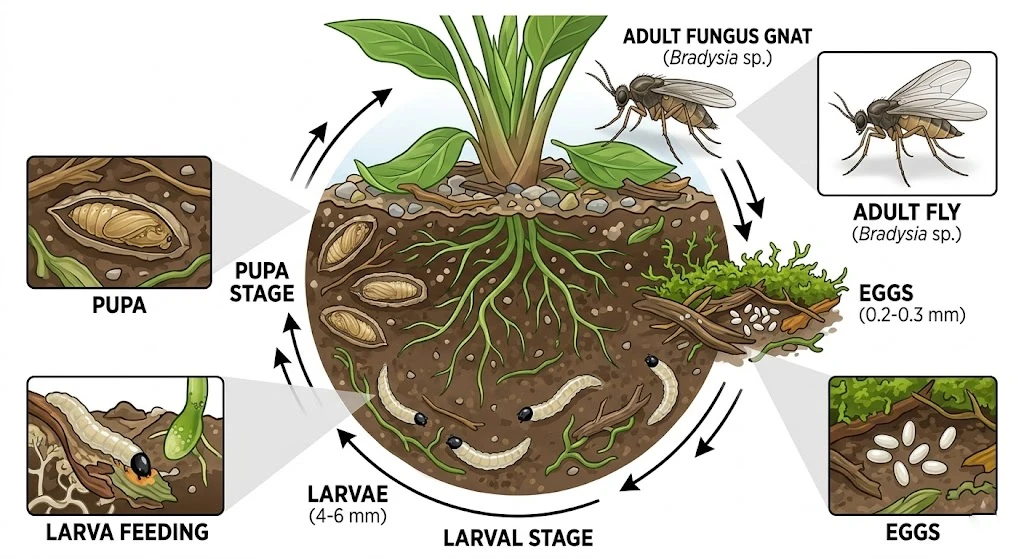
The adults live for about a week. During that short life, their only job is to mate and lay eggs in moist soil. Once the eggs hatch, the larvae go to work feeding on fungi and decaying plant matter sitting in the dirt. Most of the time, this doesn’t hurt your plants. But if the population gets large enough, the larvae can start chewing on roots, and that’s when you’ll notice wilting, yellow leaves, or a plant that just won’t grow.
Why South Florida Is Such a Perfect Home for Them
Every pest has a favorite climate, and fungus gnats love what South Florida offers. The region stays warm and humid for most of the year, which means the soil in potted plants rarely gets a chance to dry out completely. Add in regular rain showers during the wet season, and you’ve got ideal breeding conditions sitting right on your windowsill or patio.
Homeowners in northern states usually get a break once temperatures drop. Cold weather slows insect activity and can wipe out a generation of pests before they multiply. South Florida doesn’t offer that kind of relief. The warmth sticks around, so fungus gnats can keep breeding through every month of the year, including the middle of winter. That’s why so many local gardeners and houseplant owners say the problem feels constant instead of seasonal.
How to Tell Fungus Gnats Apart from Fruit Flies and Drain Flies
A lot of people lump every small flying bug into one category, but South Florida homes often deal with three different pests that look similar at a glance. Fruit flies are light brown with reddish eyes, and they show up around overripe produce, sticky trash cans, or kitchen counters. Drain flies are fuzzy and moth-like, and they build up inside dirty pipes and slow drains.
Fungus gnats look darker and more delicate, with long legs and see-through wings. You’ll usually spot them near houseplants, potting soil, or anywhere organic matter stays damp for too long. Knowing which pest you’re dealing with matters because the fix is different for each one. Spraying vinegar traps near your fruit bowl won’t do much if the real problem is sitting in a plant pot across the room.
A simple way to test this at home is to cover a suspect plant or drain with a piece of cheesecloth overnight. Check it the next morning, and whichever spot has the most flies trapped underneath is probably your breeding source. This little test saves a lot of guesswork and stops you from treating the wrong area while the real infestation keeps growing somewhere else in the house.
Signs You Have a Fungus Gnat Problem
The first clue is usually movement. You water a plant, and suddenly a small cloud of black flies lifts off the soil surface. That’s a classic fungus gnat reaction, and it’s a good sign the population has grown large enough to notice.
A closer look at the soil can confirm it. Fungus gnat larvae look like tiny, clear worms with a shiny black head, and they often leave faint slime trails across the top of wet dirt. If you tap the side of the pot and watch adults fly up, or if you find larvae wriggling near the surface after watering, you’re dealing with an active infestation rather than just a stray bug that wandered indoors.
The Fungus Gnat Life Cycle and Why It Matters
Understanding the life cycle helps explain why swatting adults never really solves the problem. After mating, a female lays her eggs directly on moist soil, and those eggs hatch within a few days. The larvae stage lasts the longest, usually around two weeks, while they feed on fungi and organic debris in the dirt.
Once the larvae pupate and emerge as adults, the cycle starts over almost immediately. In Florida’s warm climate, that whole process can take as little as two to three weeks from egg to adult, and warmer temperatures push that timeline even faster. Because the adults only live about a week, killing the flies you see in the air barely slows things down. The real population is hiding in the soil, and that’s where any real fix needs to focus.
This is also why a single overwatered plant can turn into a house-wide nuisance so quickly. One female can lay well over a hundred eggs in her short life, and with several generations overlapping at once, the numbers add up fast. Breaking the cycle means hitting the soil directly instead of chasing flies around the room with a fly swatter.
How to Get Rid of Fungus Gnats in Your Home
The single biggest factor in any fungus gnat problem is moisture, so that’s where you start. Let the top two inches of soil dry out completely between waterings. Fungus gnat larvae can’t survive in dry conditions, so this one change often cuts the population down within a couple of weeks.
Check your saucers and drip trays too. Standing water under a pot gives gnats another place to breed even if the soil itself dries out on schedule. Empty any trapped water right after you water your plants, and consider swapping to pots with better drainage if you’re dealing with a repeat problem. Yellow sticky traps placed near the soil line will catch adults and give you a way to track whether your population is shrinking or holding steady.
Natural and DIY Remedies That Actually Work
If you’d rather skip chemical sprays, a few simple home remedies hold up well against fungus gnats. A vinegar trap works by mixing apple cider vinegar with a drop of dish soap in a small cup, then covering it with plastic wrap poked full of tiny holes. The smell draws adults in, and the soap keeps them from escaping once they land.
The potato trick targets larvae instead of adults. Slice a raw potato and lay the pieces on top of the soil for a few hours. Larvae are drawn to the starch and will gather underneath, making it easy to toss the slice and a good chunk of the population at once. For longer-term control, beneficial nematodes like Steinernema feltiae can be watered into the soil. They hunt down fungus gnat larvae naturally and won’t harm your plants, pets, or family. Bacillus thuringiensis israelensis, often sold as Bti, works in a similar way and is widely available as a soil drench at garden centers.
When to Call a Pest Control Professional
Most fungus gnat problems clear up with consistent watering habits and a little patience. But if you’ve tried drying out the soil, using traps, and treating with nematodes or Bti and the gnats keep coming back, something else might be feeding the problem. A cracked pipe, a hidden leak, or even a neighboring plant with its own infestation can keep reintroducing gnats no matter what you do to one pot.
A local pest control company can inspect your home, identify every breeding source, and apply targeted treatments that go beyond what a homeowner can easily reach, especially in drains or wall voids. This is usually worth doing if the infestation has spread across multiple rooms or plants, or if you’re seeing gnats from drains rather than soil.
Keeping Fungus Gnats Away for Good
Long-term control in South Florida really comes down to routine. Check your plants regularly, let the soil dry between waterings, and remove dead leaves or debris before they start decomposing in the pot. Going into the rainy season, it helps to lower indoor humidity where you can and double-check that drip trays aren’t collecting standing water.
It also helps to rethink how you water in the first place. Instead of a fixed schedule, stick your finger an inch into the soil and only water when it actually feels dry. This single habit change does more to prevent fungus gnats than any spray or trap ever will, since it removes the moisture they depend on before they even get a chance to lay eggs.
Because the climate here doesn’t give gnats a natural off-season, prevention has to become part of normal plant care rather than a one-time fix. Stick with the habit, and you’ll spend a lot less time swatting flies and a lot more time actually enjoying your plants.