
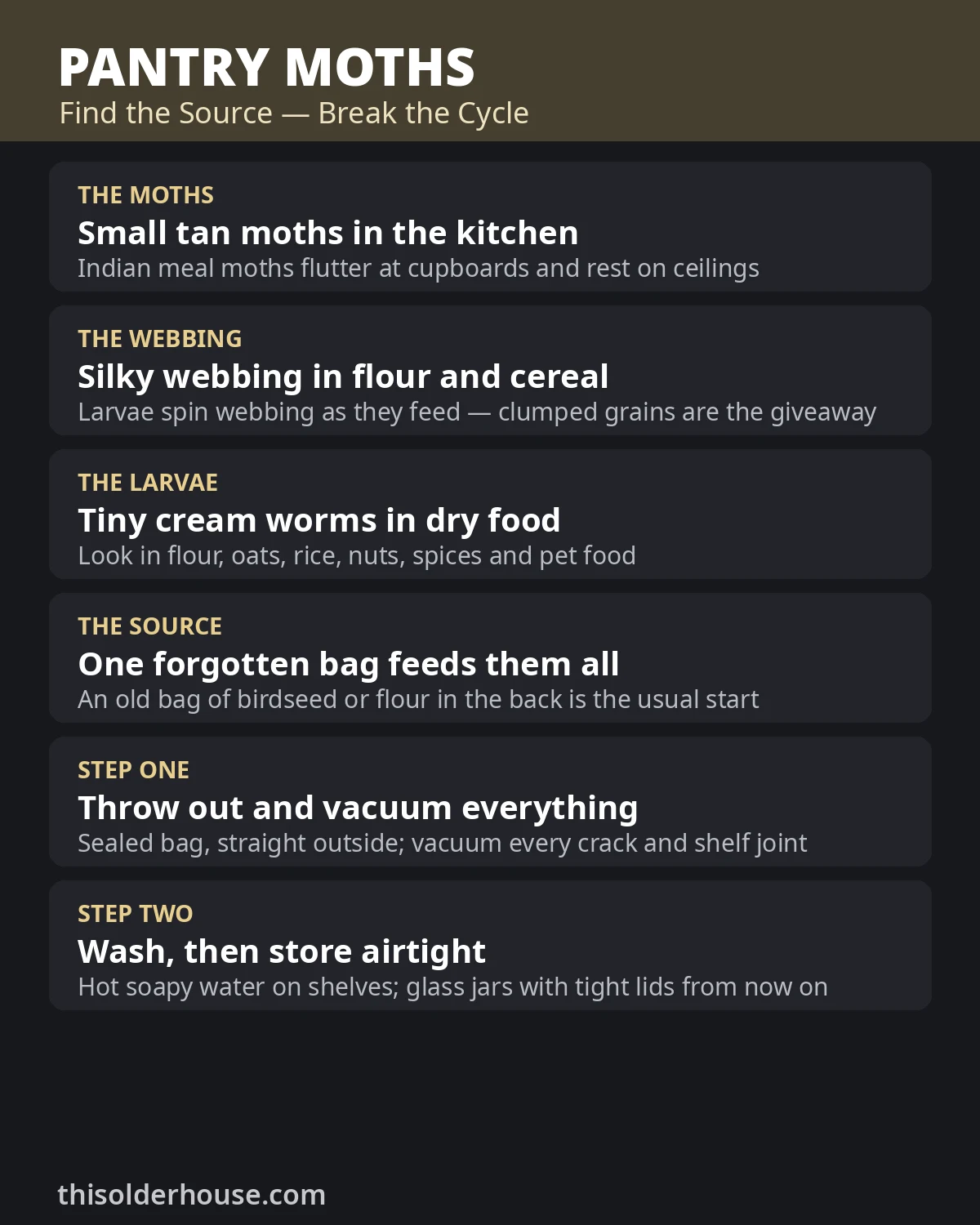
A small tan moth flutters out of the cupboard. Then another. Then you find webbing in the flour and tiny worms in the cereal — and suddenly every bag in the pantry looks suspicious. Pantry moths (usually the Indian meal moth) are among the most common kitchen pests in the world, and almost every infestation starts the same way: one infested bag from the shop. The fix is not spray — it’s a proper clean-out and airtight storage. Here is how to get rid of pantry moths, end the cycle, and make sure they never get a second act.
Pantry Moths at a Glance
| Question | Quick answer |
|---|---|
| What are they? | Usually Indian meal moths — small (about 1/2 inch), tan and copper-brown |
| What do they eat? | Flour, cereal, rice, oats, nuts, dried fruit, spices, chocolate, pet food and birdseed |
| Key signs | Webbing and clumping in dry food, tiny cream larvae, moths resting on cupboard walls and ceilings |
| What actually works? | Throw out infested food, vacuum and wash the cupboard, freeze new stock, store everything airtight |
| Are they harmful? | They don’t bite or spread disease, but infested food should be discarded |
Step 1: Find the Source (Everything Else Depends on It)
Take every dry food item out of the cupboard — every single one. Inspect each bag and box in bright light, looking for silky webbing, clumped grains that hang together, tiny cream-coloured larvae (up to 1/2 inch) and fine webbing along the folds of packaging. Check the forgotten corners hardest: the old bag of birdseed, the bulk-bin nuts, the flour from two holidays ago and the open pet food are the classic starting points. One infested item is the nursery for the whole cupboard — find it, bag it sealed, and take it straight to the outside bin. Anything open and suspect goes too; when in doubt, throw it out.
Step 2: The Full Clean-Out
With the cupboards empty, vacuum every shelf, crack, hinge and shelf-pin hole — larvae hide and pupate in the joints, which is why a wipe-down alone fails. Then wash all surfaces with hot soapy water (a vinegar solution works as well) and dry thoroughly. Pay attention to the undersides of shelves and the gap where the cupboard meets the wall; wandering larvae crawl away from food to pupate, so check walls and ceiling corners nearby too, and remove any cocoons you find. Skip insecticide sprays inside food cupboards entirely — they are unnecessary here and do not belong where food lives.
Step 3: Freeze, Decant, and Reset the Pantry
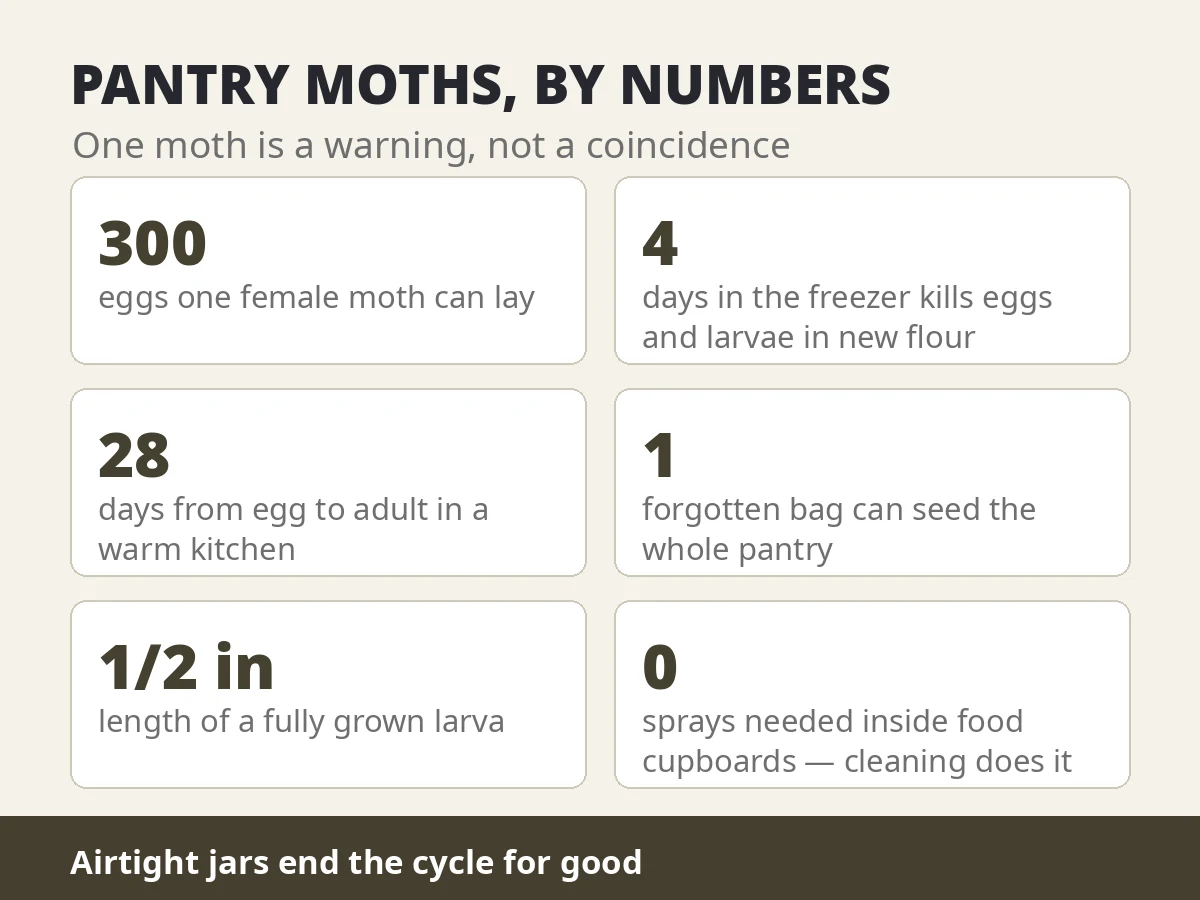
Before new or surviving dry goods go back, freeze them: four days in the freezer kills eggs and larvae you cannot see, and it’s the single best habit for bulk flour, rice and nuts. Then decant everything into glass jars or hard plastic containers with tight, gasket-sealed lids — this is the step that ends the cycle, because even if one item arrives infested, the moths cannot spread jar to jar, and you’ll spot the problem inside one jar instead of the whole pantry. Label and date the jars, put oldest stock in front, and your pantry comes out of this better organised than it went in. (For similar tiny cupboard pests that love humidity, see our booklice control guide.)
Step 4: Trap the Stragglers and Prevent Round Two
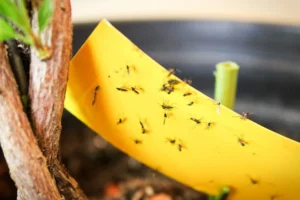
A few adult moths may drift around for a week or two after the clean-out — these are stragglers, not a new infestation. Pheromone traps (sticky traps sold for pantry moths) catch the males, confirm activity is falling, and break the breeding cycle; replace them as directed. Going forward: inspect bulk and sale items before they enter the cupboard, freeze flour and grains as a routine, wipe spills promptly, and rotate stock so nothing sits forgotten for a year. A bay leaf on a shelf is a traditional extra — harmless, though airtight jars do the real work. If moths persist after a full clean-out, widen the search: pet food stored in the garage, a birdseed bag, or a spill behind the cupboard unit is usually the missed reservoir. Note that the moths damaging jumpers in the wardrobe are a different species entirely — those are covered in our clothes moth control guide.
Explore More Pest Control Guides


FAQs About Getting Rid of Pantry Moths
How do pantry moths get into my house?
Almost always as eggs or larvae hiding in an infested bag of flour, grain, nuts or pet food from the shop. They rarely fly in from outside — they shop with you.
Can I still use flour that has webbing in it?
No. Webbing, larvae or clumping means the food is infested and should be sealed in a bag and thrown in the outside bin. Unopened items you’re unsure about can be frozen for four days to kill every life stage.
How long does it take to get rid of pantry moths?
The clean-out itself takes an afternoon. Expect to see occasional straggler moths for one to two weeks afterwards; pheromone traps help confirm the numbers are falling to zero.
Do I need to spray insecticide in the cupboards?
No — and you shouldn’t where food is stored. Thorough removal of infested food, vacuuming the cracks where larvae pupate, and hot soapy washing do the job without chemicals.
Will pantry moths spread to the rest of the house?
They stay near dry food, though wandering larvae may pupate on nearby walls and ceilings, and pet food or birdseed stored in a garage or utility room can harbour a second colony — check those too.