

If your siding is cracked, warped, rotting, or faded beyond a fresh coat of paint, replacement stops being a cosmetic upgrade and becomes protection for everything underneath it. The siding replacement cost for most US homes in 2026 falls into a predictable range once you know the material, the size of your walls, and how much prep work is hiding underneath. Angi’s national data puts a typical full replacement at about $5,550 to $17,700, with an average near $11,600. This guide breaks down those numbers by material and home size, and explains the extras that catch homeowners off guard.
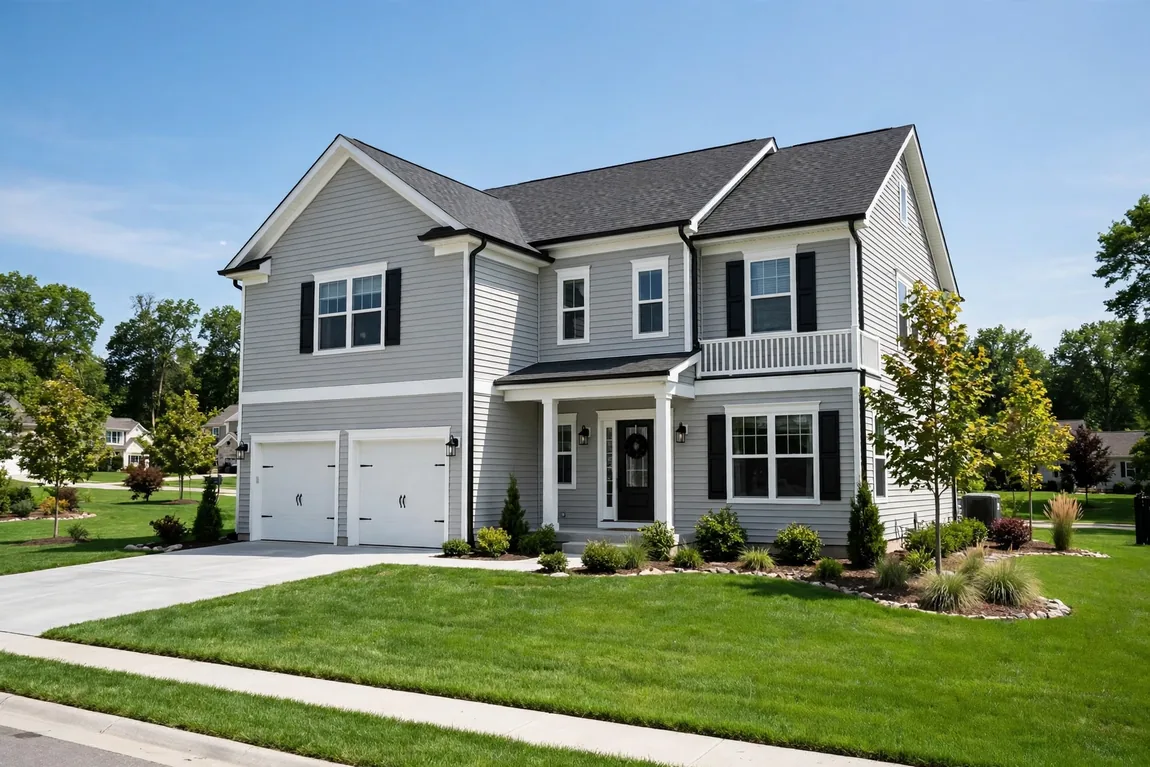
Fresh siding transforms curb appeal and seals the house against weather — material choice is the single biggest driver of total cost. (Illustrative image)
siding replacement cost by material
Material is the decision that moves your budget the most. Published 2026 guides from Angi, HomeAdvisor-style cost databases, and HomeGuide put most installed siding between roughly $4 and $15 per square foot of wall. The table below uses national planning ranges for materials and labor combined — treat them as budgeting ranges, not quotes.
| Material | Installed cost per sq ft | Typical lifespan | Notes |
|---|---|---|---|
| Vinyl | $4 – $12 | 20–40 years | Lowest cost, almost no maintenance |
| Fiber cement | $6 – $15 | 30–50 years | Fire- and pest-resistant, looks like wood |
| Engineered wood | $5 – $11 | 20–30 years | Wood look, better rot resistance |
| Wood (cedar and similar) | $6 – $15 | 20–40 years | Classic look, needs regular repainting |
| Metal (aluminum / steel) | $4 – $13 | 30–50 years | Durable and low maintenance; steel sits at the top of the range |
| Stucco | $6 – $12 | 50+ years | Best in dry climates; costly to remove |
Vinyl remains the budget benchmark and the most installed siding in the country. Fiber cement costs more because the boards are heavy and need dust-controlled cutting, but it usually outlasts vinyl. Engineered wood splits the difference: cheaper than fiber cement, warmer looking than vinyl, and lighter to hang. Natural wood and stucco are as much regional and architectural choices as budget ones, and both carry higher maintenance costs that belong in your comparison.
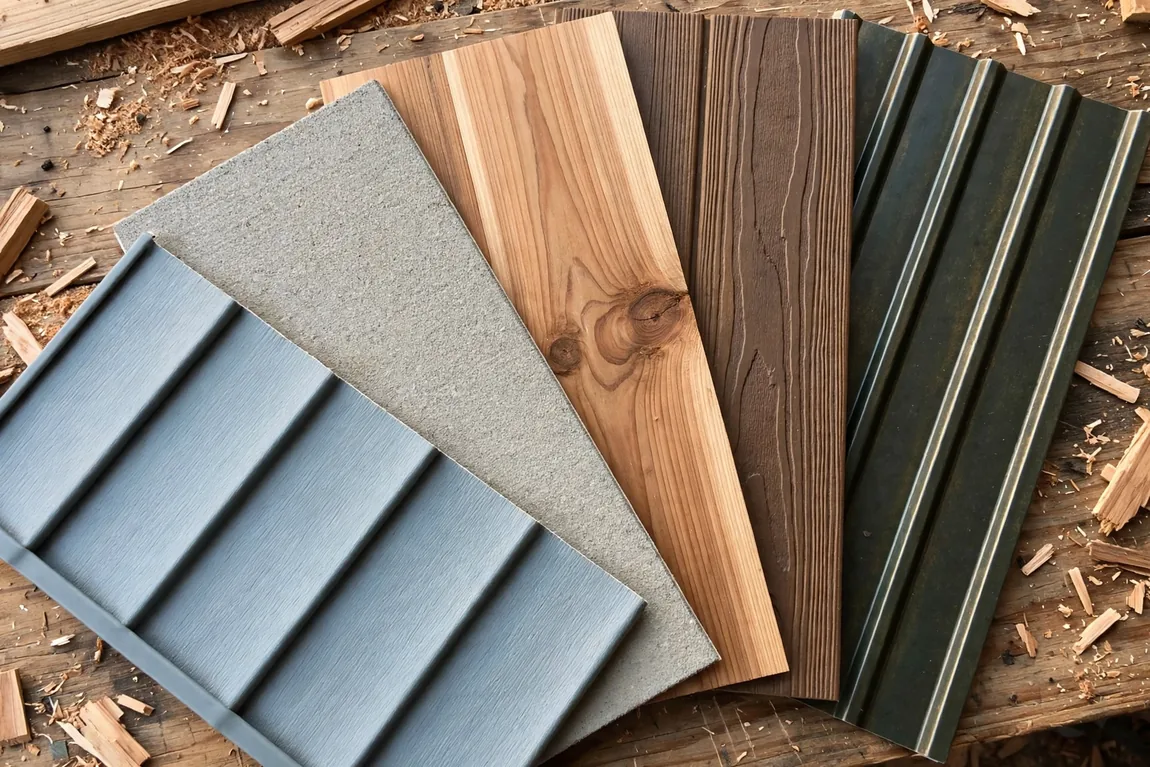
Comparing siding samples side by side — vinyl, fiber cement, wood, engineered wood, and metal differ as much in upkeep as in price. (Illustrative image)
Whole-house cost by home size
Contractors price by the square foot of wall, not floor space, but floor area is still a useful planning shortcut. A two-story home generally costs more than a one-story home of the same floor area, because it has more exterior wall and needs more scaffold work.
| Home size (floor area) | Typical whole-house range |
|---|---|
| 1,000 sq ft | $4,000 – $12,000 |
| 1,500 sq ft | $6,000 – $18,000 |
| 2,000 sq ft | $8,000 – $24,000 |
| 2,500 sq ft | $10,000 – $30,000 |
| 3,000 sq ft | $13,000 – $36,000 |
The low end assumes straightforward vinyl on a simple, single-story layout. The high end assumes a premium material such as fiber cement or wood, a taller or more complicated house, and some repair work once the old siding comes off. Homeowners already planning a window upgrade — such as choosing between single-hung vs double-hung windows — often save on scaffolding and trim work by coordinating both jobs.
The extras: removal, wrap, and repairs
The panel price is only part of the bill. Old siding removal and disposal typically adds about $1 to $2.50 per square foot, or roughly $1,000 to $3,000 on an average house. Ask every bidder whether tear-off and hauling are included, because a low quote that quietly excludes them is not actually low.
Once the walls are bare, most pros recommend new house wrap, and many homeowners add rigid foam or insulated siding at the same time — the cheapest moment you will ever get to improve the wall. Published guides put wrap and insulation upgrades at roughly $1 to $3 per square foot combined, or about $1,500 to $5,000 for a typical home. Better insulation also pays you back every winter, as the envelope fixes in our guide to winterizing your home explain. Budget a contingency too: rotted sheathing, mold, or pest damage commonly adds $500 to $5,000, and permits usually run about $100 to $500.
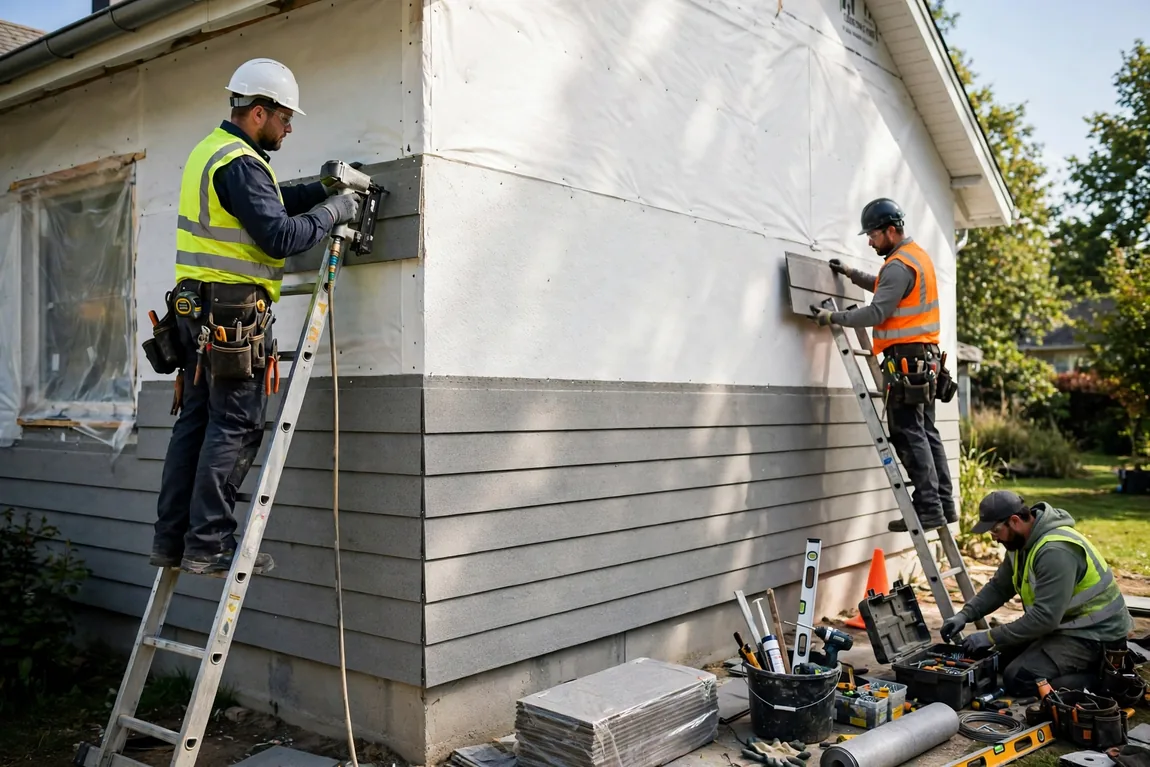
Installers fitting new boards over fresh house wrap — the one chance to inspect and repair the wall underneath. (Illustrative image)
Factors that affect the final price
Stories and height
Height costs money. Upper stories need scaffolding, lifts, and slower work, and Angi’s city data notes that homes taller than two stories can carry a premium of roughly 10% to 25% per square foot.
Layout and detail
Gables, dormers, bump-outs, and lots of corners and trim all slow installation. A plain rectangular house is the cheapest shape to side; a cut-up Victorian is the most expensive.
Region and labor
Labor is roughly half of a typical siding bill, and Angi puts it at about $1 to $4 per square foot nationally. High-cost coastal metros run far above rural and Midwestern rates for the same job.
Condition underneath
Siding installed over damaged sheathing fails early. If your old siding has been leaking, expect some carpentry in the quote — covering rot is the most expensive shortcut there is.
DIY vs hiring a pro
Doing it yourself removes most of the labor cost, saving several dollars per square foot. A confident DIYer with a helper, ladders or rented scaffolding, and one to two free weeks can reasonably tackle a simple one-story vinyl job. Professional crews usually finish a typical house in about one to two weeks, with far less disruption.
The risks are real, though. Siding is a water-management system, not just cladding: flashing, starter strips, and expansion gaps all have to be right, or water gets behind the panels and rots the wall quietly for years. Some manufacturers also require professional installation to keep the full warranty. A sensible middle path is to pay a pro to install, but handle your own tear-off where local rules allow.
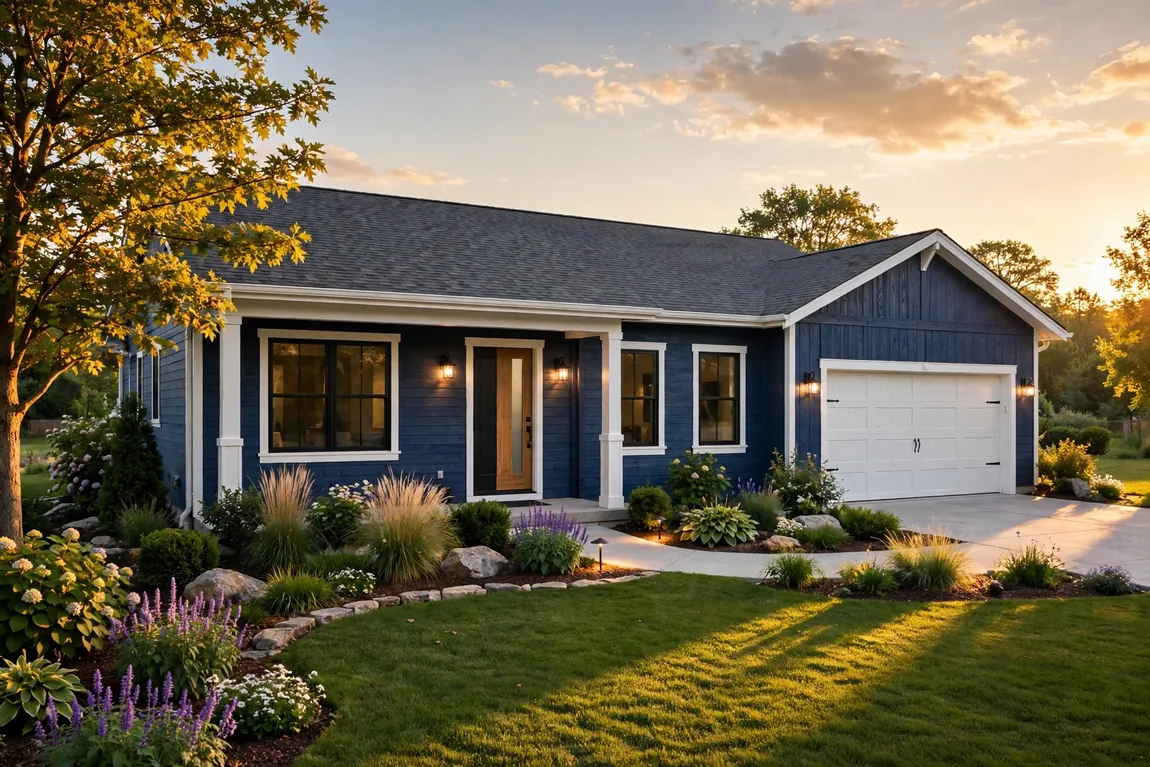
A finished engineered-wood re-side at golden hour — new siding plus a considered front entry color can reset a home’s whole first impression. (Illustrative image)
How to save money on siding replacement
Get at least three itemized quotes and compare line by line, especially for tear-off, wrap, and trim. Ask about scheduling in the late fall or winter shoulder season, when exterior crews in many regions are less booked and more flexible on price. Choose materials strategically: standard-profile vinyl or engineered wood in a stock color costs far less than special-order profiles, and mixing materials — fiber cement on the front, vinyl on the sides and back — keeps the look and cuts the bill. Pairing new siding with a well-chosen front door is a cheaper curb-appeal upgrade than architectural changes. And do not skip house wrap to save money — it is one of the cheapest lines in the quote.
Frequently asked questions
How long does new siding last?
Published lifespans run about 20 to 40 years for vinyl and wood, 20 to 30 years for engineered wood, 30 to 50 years for fiber cement and metal, and 50 years or more for stucco, assuming correct installation.
How long does siding replacement take?
A professional crew typically needs about one to two weeks for an average house, including tear-off. Large or detail-heavy homes take longer, and DIY usually takes several weekends.
Can new siding go over old siding?
Sometimes, with vinyl over flat, sound existing siding, but most pros recommend full removal. Tear-off is the only way to inspect the sheathing, fit proper house wrap, and avoid building up thickness around windows and doors.
Does new siding increase home value?
Yes, generally. Exterior replacements are consistently among the stronger-return projects in industry cost-versus-value reporting, because buyers read fresh siding as a well-maintained house.
Do I need a permit to replace siding?
Often, yes, though rules vary. Many towns require a permit for a full replacement, especially with structural work or a material change, and fees commonly run about $100 to $500.
Replacing siding is one of the biggest exterior checks a homeowner writes, but also one of the most predictable once you separate material, wall area, and prep work. Use these ranges to set a realistic budget, get itemized quotes that name the tear-off and wrap, and choose the best material you can maintain — not just the cheapest one you can hang.