

Adding whole-house cooling is a big home improvement decision, so understanding the central air installation cost before you request quotes helps you compare bids fairly and budget without surprises. For most US homes with ductwork already in place, homeowners plan for roughly $5,500 to $14,000 total in 2026, while homes that also need new ducts often plan for $8,000 to $18,000 or more. All prices in this guide are typical US planning estimates and ranges for 2026, not quotes, because your home, climate, and system choice will move the final price up or down.
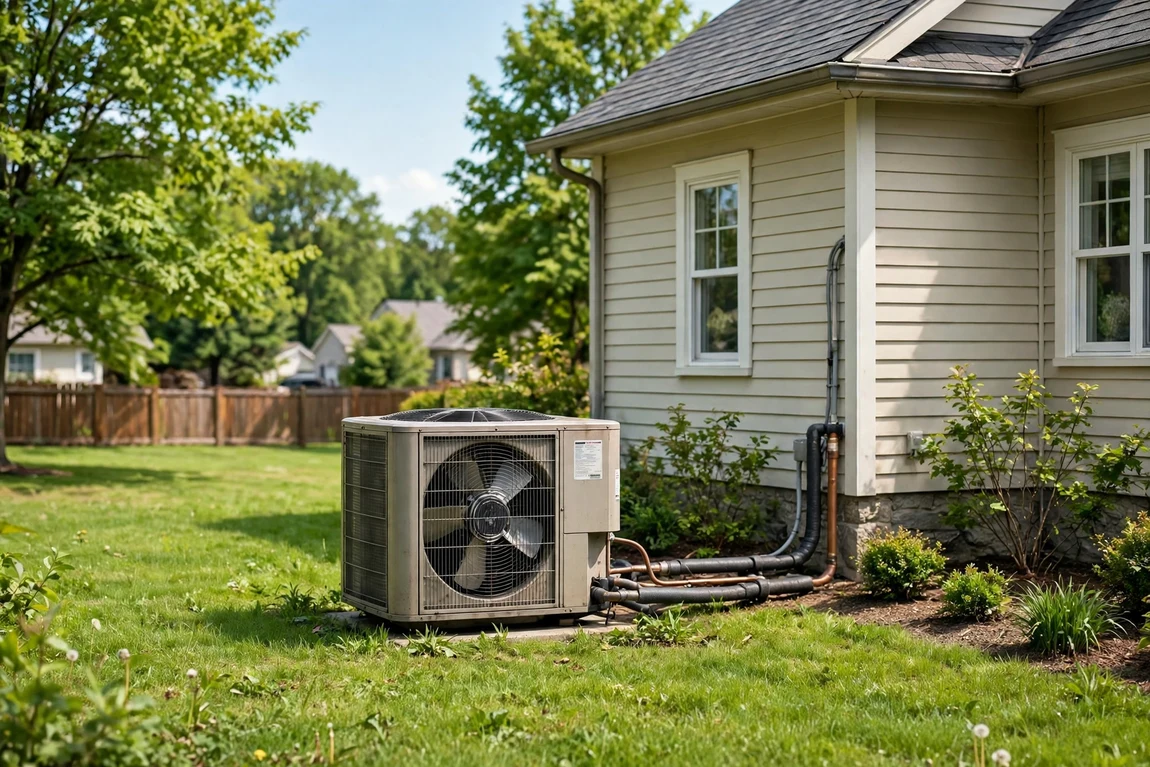
An outdoor condenser is only one part of a full central air system. (Illustrative image)
What Does Central Air Installation Involve?
A central air system cools air at one central point and moves it through the house using ducts and vents. A standard split system has an outdoor condenser unit, an indoor evaporator coil that usually sits with your furnace or air handler, refrigerant lines connecting the two, a condensate drain, electrical work, and a thermostat. If your home already has a forced-air furnace, the new system can often share the existing blower and ductwork, which is the simplest and cheapest setup.
Installation starts with a load calculation, where the contractor measures your home, insulation, windows, and layout to size the system in tons. Most single-family homes need 2 to 5 tons. The crew sets the outdoor unit on a level pad, installs the indoor coil, connects and tests the refrigerant lines, wires the thermostat, charges the system, and checks airflow. A straightforward install with good ducts often takes one to two days. New ductwork, electrical upgrades, or inspections can take longer.
central air installation cost breakdown by home size and system
The table below gives planning ranges for a complete installation with existing, usable ductwork. It includes the outdoor unit, indoor coil, standard labor, a basic thermostat, and start-up testing. It does not include brand-new ductwork, major electrical panel upgrades, or structural work if an older home needs it.
| Home size | Typical system size | Basic single-stage system | Mid-range two-stage system | Premium variable-speed system |
| Up to 1,000 sq ft | 2 tons | $5,500 – $7,500 | $6,500 – $9,000 | $8,000 – $11,000 |
| 1,200 – 1,500 sq ft | 2.5 to 3 tons | $6,500 – $9,000 | $8,000 – $11,500 | $10,000 – $14,000 |
| 1,800 – 2,200 sq ft | 3 to 3.5 tons | $8,000 – $11,000 | $10,000 – $13,500 | $12,500 – $16,500 |
| 2,400 – 3,000 sq ft | 4 to 5 tons | $10,000 – $13,500 | $12,500 – $16,000 | $15,000 – $19,000 |
Equipment is usually the largest share, followed by labor. As a rough planning guide, the condenser and coil often account for about half the bill, labor for roughly a quarter to a third, and the rest covers lines, pad, drain, thermostat, permits, and disposal of an old unit. Higher-efficiency systems cost more up front, but can run more quietly and manage humidity better. If you also want heating, compare these figures with our guide to heat pump installation cost.
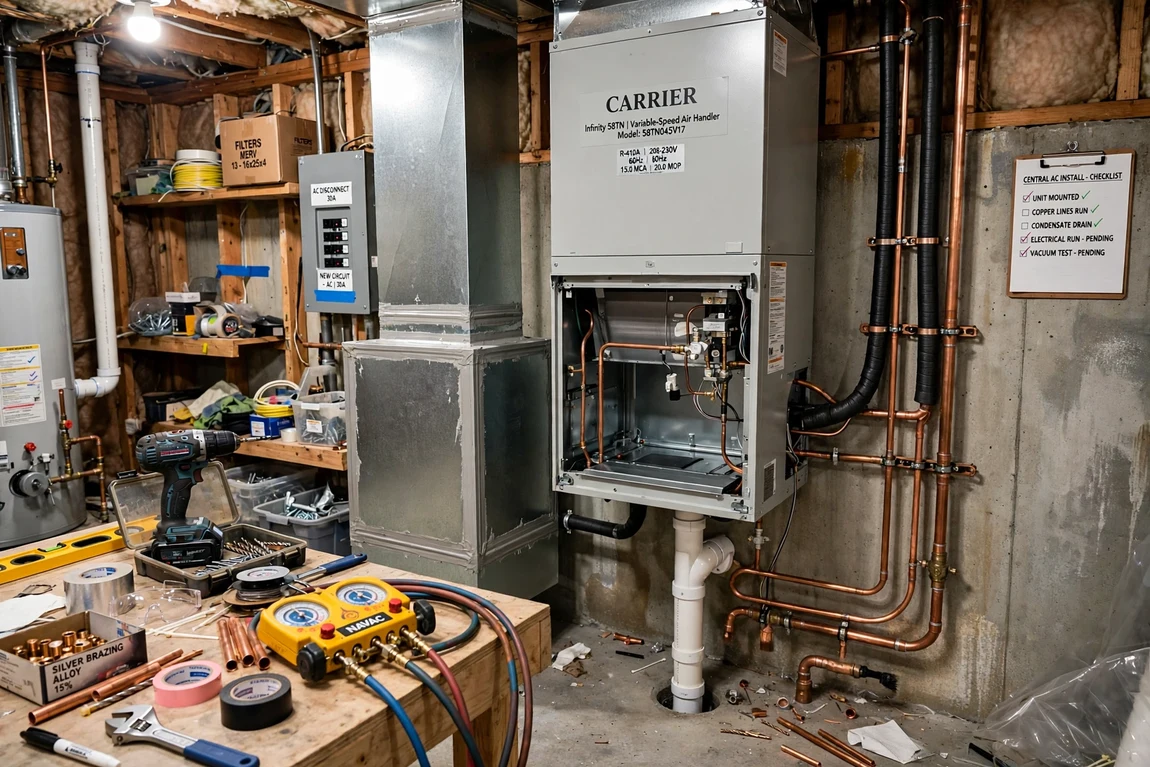
The indoor coil and air handler do as much work as the outdoor unit. (Illustrative image)
Factors That Change the Price
- System size: a larger home needs larger tonnage, and each step up adds cost.
- Efficiency rating: higher SEER2 ratings cost more, and your region may set a minimum.
- Home layout: two-story homes, long duct runs, and tight attics or crawl spaces add labor.
- Electrical condition: some older homes need a panel upgrade or dedicated circuits first.
- Insulation: a poorly insulated home may need a bigger system, so check our guide to attic insulation cost.
- Region and season: labor rates vary by area, and demand peaks in early summer.
- Brand and warranty: premium brands and longer warranties can raise the quote.
Ductwork: The Hidden Cost in Many Homes
Ductwork is the factor most likely to change a quote after the first visit. If your ducts are correctly sized, sealed, and in good condition, you may only need minor changes at the coil connection. If ducts leak or are undersized, the new system will struggle no matter how efficient it is, and the contractor may recommend sealing, resizing, or replacing sections. As a planning range for 2026, duct repairs and sealing often run about $500 to $2,500, while a full new duct system can add roughly $3,000 to $7,000 or more depending on size and access.
Homes with no ducts at all, such as older houses with radiators or baseboard heat, face the biggest decision. Adding ducts means opening walls or ceilings, adding construction cost on top of the HVAC work. Get a separate ductwork line item in every bid.
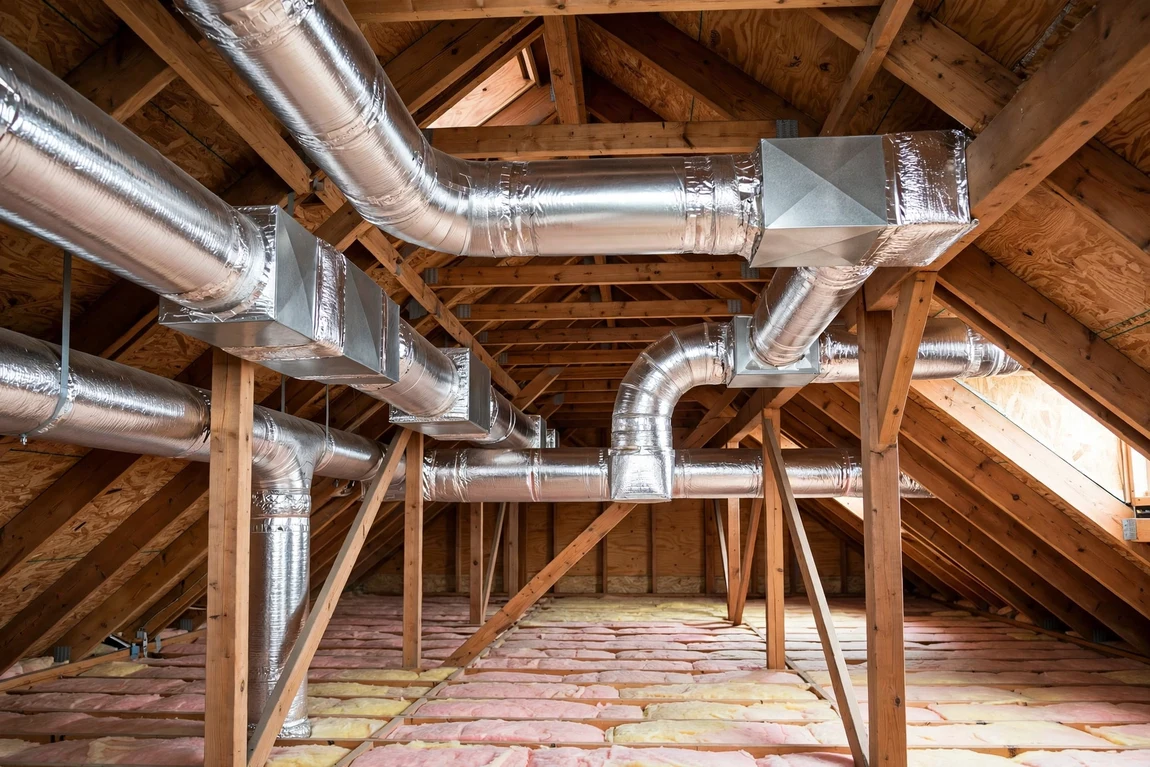
Sealed, correctly sized ducts protect both comfort and efficiency. (Illustrative image)
Why Central Air Is Not a DIY Job
This is professional work, not a weekend project. Installing central air involves handling refrigerant, which requires federal certification, plus high-voltage electrical connections, condensate drainage that can damage a home if done wrong, and gas furnace connections on many combined systems. The system also has to be sized correctly. An oversized unit cools fast but leaves humidity behind and cycles too often, while an undersized unit runs constantly on hot days and still falls behind.
A licensed installer also handles permits, code requirements, pressure testing, and warranty paperwork, which often depends on professional installation. Homeowners can clear space for the outdoor unit or improve insulation themselves, but core system work should stay with a licensed contractor.
How to Save Without Cutting Corners
- Get at least three written quotes with the same tonnage, efficiency, and scope.
- Ask for duct sealing instead of full replacement when existing ducts are sound.
- Book outside peak season if possible, when schedules are more flexible.
- Check for utility rebates and manufacturer offers, and ask bidders to note any that apply.
- Keep your existing thermostat or furnace if the contractor confirms they are compatible.
- Do not pay for the highest efficiency tier automatically. Ask what it buys in your climate.
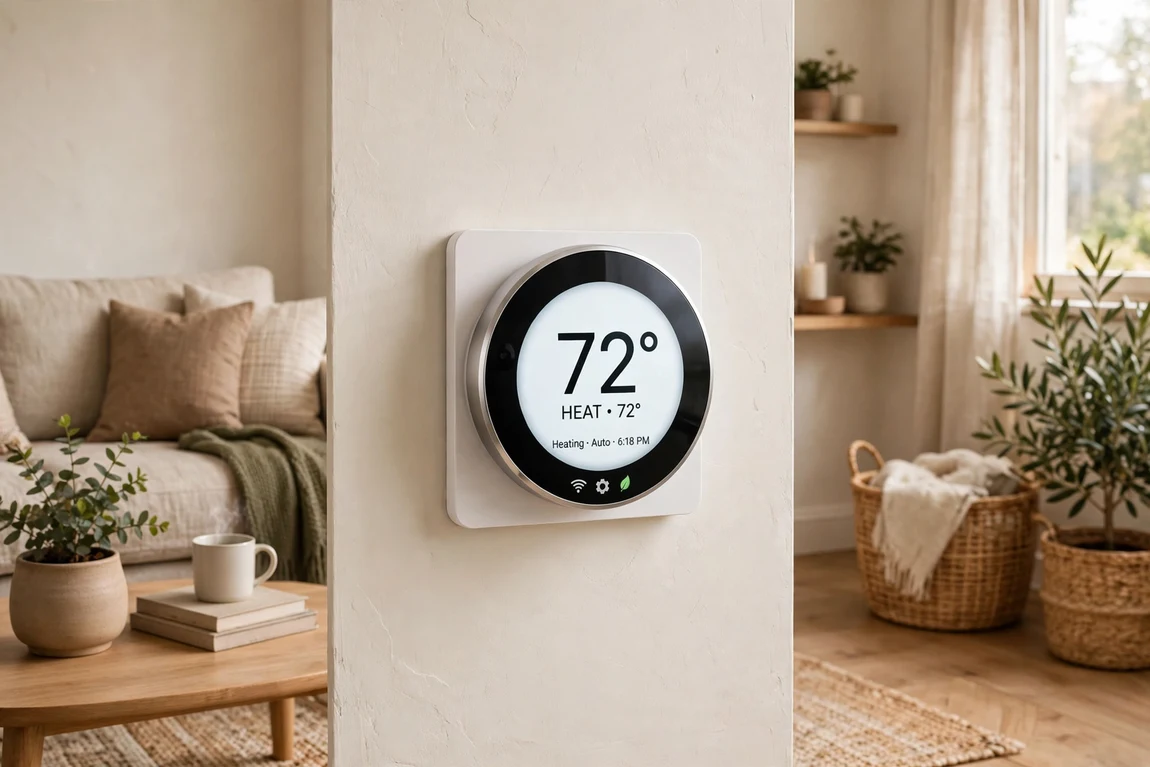
A good thermostat helps a new system run steadily and efficiently. (Illustrative image)
Hiring Red Flags to Watch For
- A phone quote from square footage alone, with no visit or load calculation.
- Pressure to sign the same day, or a discount that disappears if you ask in writing.
- No license, insurance, permit, or warranty details on the proposal.
- A much lower bid that leaves out duct, electrical, permit, or disposal work.
- A much larger system than others quoted, with no measurement-based explanation.
Ask every contractor for model numbers, efficiency rating, warranty terms, and a full scope of work in writing. A clear, detailed bid is a good sign, even when it is not the cheapest one.
Maintenance After Installation
A new system should be serviced once a year, ideally in spring before the cooling season. A tune-up usually includes cleaning coils, checking refrigerant and electrical connections, testing the drain, and replacing or cleaning the filter. Between visits, follow the filter schedule your installer recommends, keep at least two feet of clear space around the outdoor unit, and keep vents unblocked. Our guide to what HVAC maintenance costs explains typical service pricing in more detail.
Clean ducts also help a new system perform as designed. See our breakdown of air duct cleaning cost to budget for that step. With correct sizing, sealed ducts, and regular maintenance, the planning ranges in this guide will help you judge whether your quotes are realistic.