

When a garage door stops halfway, grinds loudly, or will not open at all, the first question is price. Knowing the typical garage door repair cost before you call helps you spot a fair quote fast. Most simple repairs are affordable. A broken spring or a damaged panel costs more, but usually far less than many homeowners fear.
This guide covers repairs only: springs, cables, openers, rollers, tracks, and panels in 2026. Replacement is mentioned only to help you judge when a repair stops making sense.
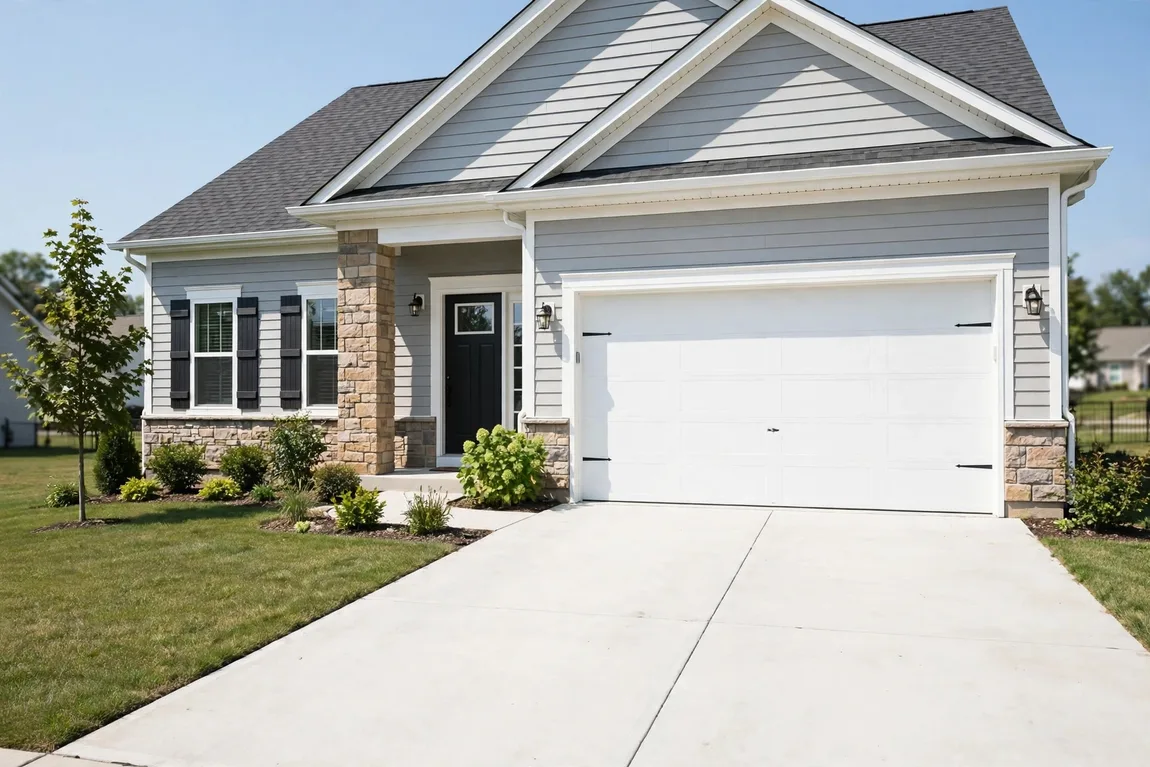
Garage Door Repair Cost at a Glance
Most homeowners pay $150 to $350 for a typical repair, with an average bill around $264, according to Angi customer data compiled with HomeGuide figures in the InsiderCost 2026 garage door pricing guide. Small jobs sit at the low end. Larger mechanical failures sit higher.
A service call alone usually runs $50 to $95, and many companies credit that fee toward the repair if you hire them. Labor is commonly $75 to $150 per hour. After-hours and emergency visits can add $50 to $150, or be billed at a higher hourly rate.
| Repair | Typical Cost in 2026 | Notes |
|---|---|---|
| Torsion spring replacement (pair) | $150 – $350 | Most common major repair |
| Extension spring replacement (pair) | $120 – $200 | Common on older tilt-up doors |
| Cable repair (both cables) | $150 – $350 | Often done with springs |
| Spring and cable combined | $200 – $500 | Common combined service call |
| Opener repair | $100 – $500 | Gear, board, sensors, or motor |
| Panel replacement (per panel) | $250 – $1,000 | Steel is cheapest, wood is higher |
| Track repair or realignment | $125 – $300 | Often after a vehicle bump |
| Roller replacement (set of 10) | $90 – $200 | Nylon rollers run quieter |
| Weatherstrip and bottom seal | $170 – $490 | Stops drafts and water entry |
| Sensor realignment or replacement | $125 – $300 | Try cleaning the lenses first |
| Tune-up and inspection | $100 – $250 | Lubrication and balance check |
Ranges above include parts and labor for standard doors during normal business hours, based on the sources cited in this guide. Heavy insulated doors, custom wood doors, and high-cycle springs cost more. Get the failed part named in writing before you approve any work.
Spring and Cable Repairs
Springs do the heavy lifting. They counterbalance a door that can weigh 150 to 250 pounds, so the opener only guides the movement. When a spring snaps, you may hear a loud bang. The door then feels extremely heavy or will not lift at all.
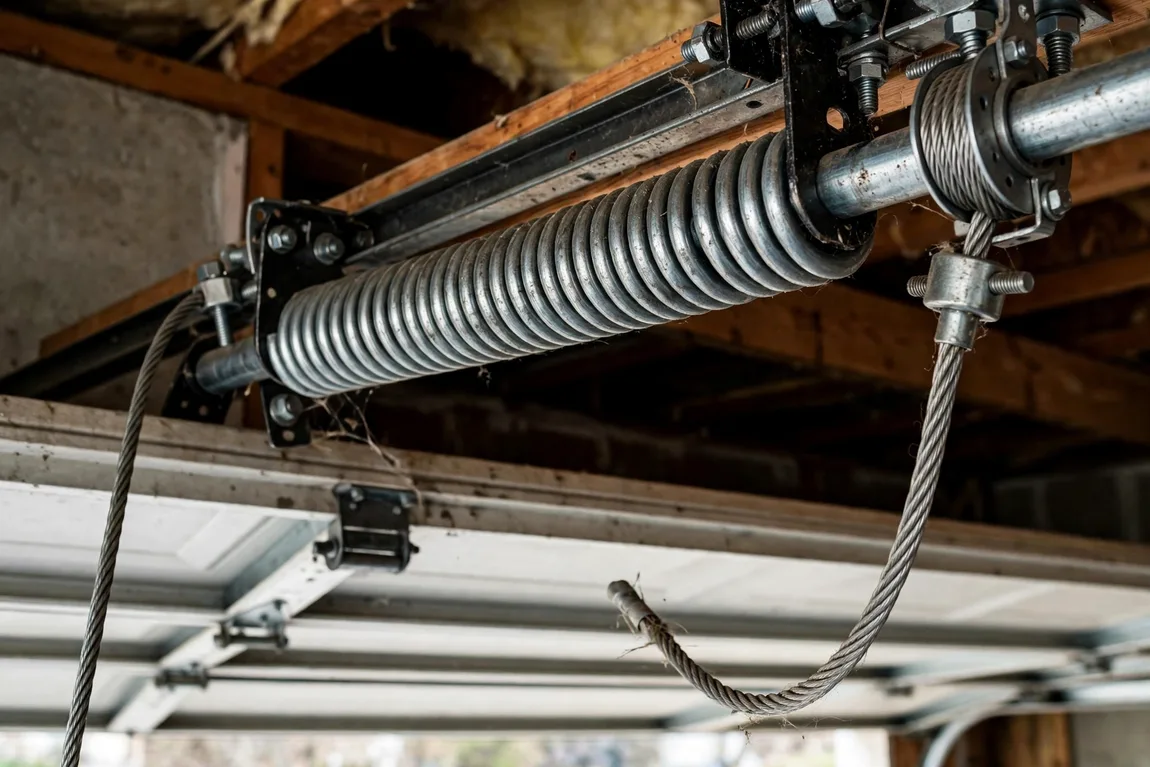
Torsion springs sit on a bar above the door. Extension springs stretch along the tracks on each side. In both systems, replacing springs as a pair is usually smarter. The surviving spring has done the same number of cycles and is likely close to failing too.
Cables work with the springs to lift the door evenly. A frayed or snapped cable can leave the door crooked in the opening. Because they work as one system, many technicians recommend servicing them together.
Do not treat spring work as a casual weekend job. A wound torsion spring stores serious energy. Using the wrong tools, or improvised winding bars, causes severe injuries every year. This is one repair where paying a professional is the safe and sensible choice.
Opener, Roller, Track, and Panel Repairs
Opener problems show up differently. The motor may hum while nothing moves. The door may reverse for no clear reason. Or the remote and wall switch may stop responding. Common causes include worn gears, a failed logic board, a bad capacitor, or misaligned safety sensors.
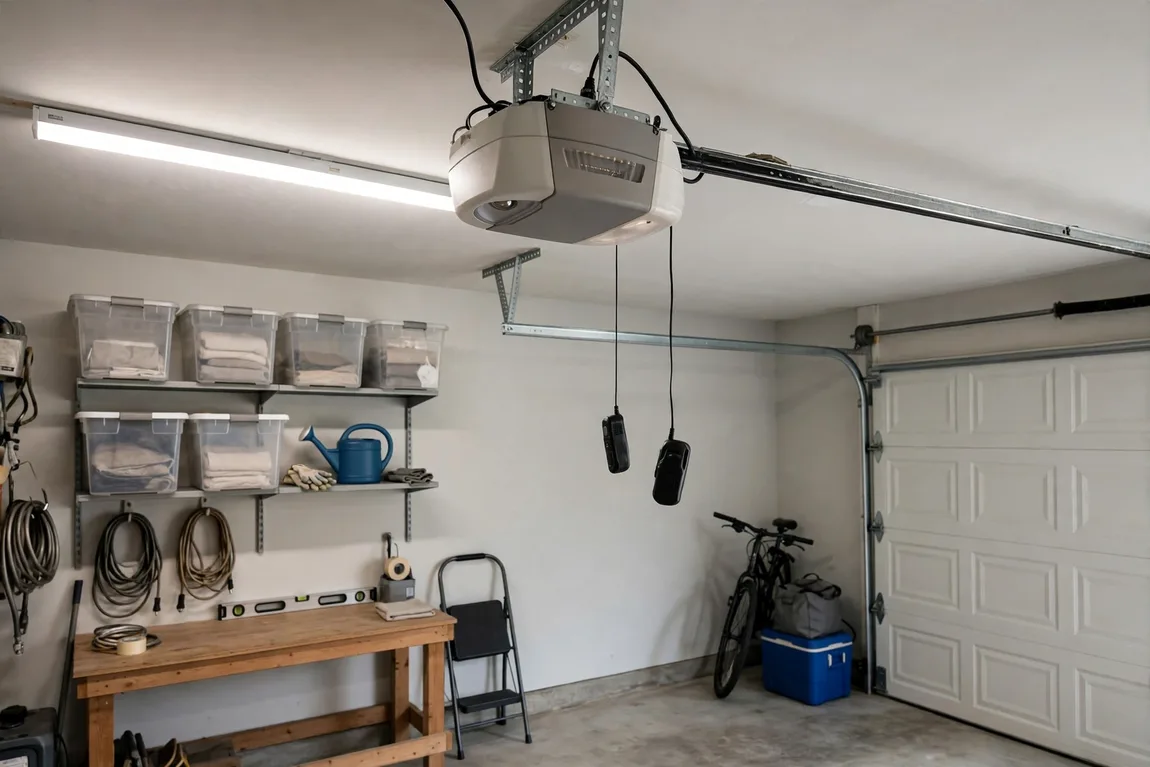
Start with simple checks. Clean the photo-eye sensors near the floor and make sure they face each other. Replace the remote battery. Check that the opener is plugged in and the lock feature is off. If those steps fail, a technician can test the motor and electronics properly.
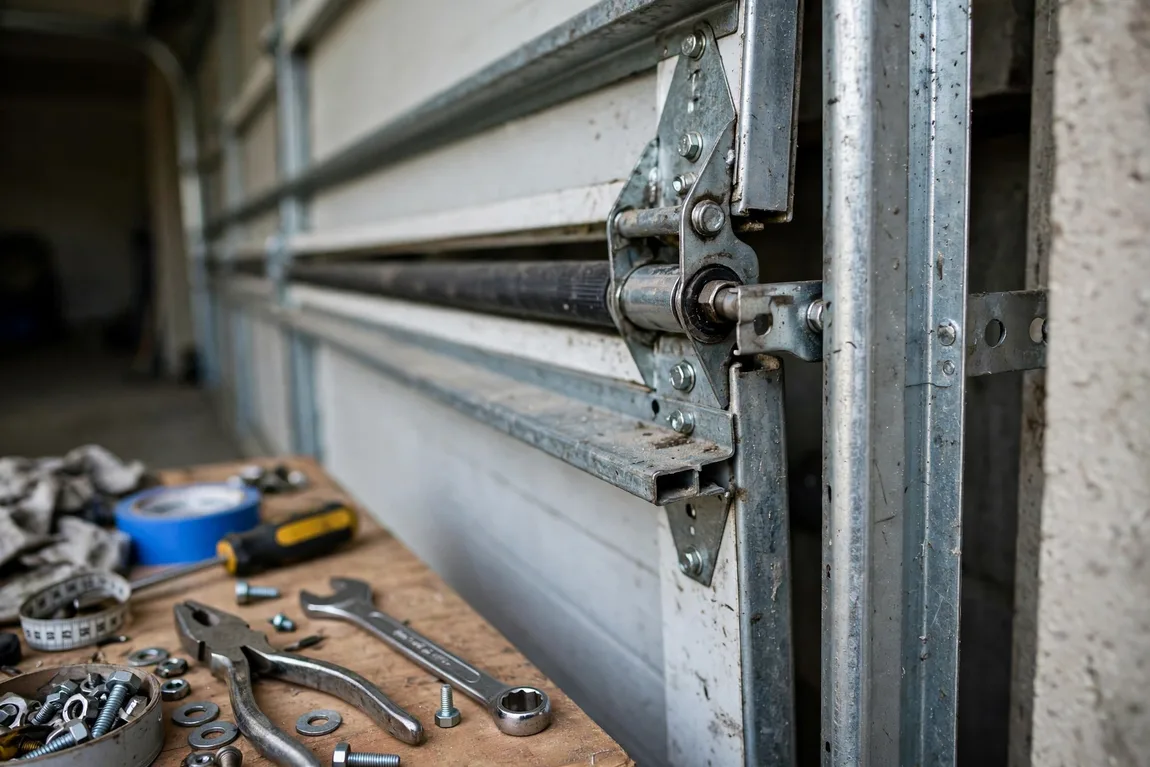
Rollers, hinges, and tracks affect how smoothly the door travels. Worn steel rollers get noisy and can be upgraded to nylon for $90 to $200 a set. A bent track from a minor vehicle bump usually costs $125 to $300 to repair or realign.
Panel damage is mostly priced by material. A standard steel panel is the cheapest to replace. Wood and carriage-style panels cost much more, and older models can be hard to match. If only one panel is damaged and the rest of the door is sound, a panel swap is often the right repair.
Factors That Affect Cost
Several details move your final garage door repair cost up or down, even for the same failed part. Understanding them helps you compare quotes fairly.
Door size and weight. A double or insulated door needs stronger springs and more labor than a light single door. Heavier doors also wear rollers and openers faster.
Part quality and cycle rating. Standard springs are often rated for about 10,000 cycles. Higher-cycle springs cost more upfront but last longer. For a busy household, that upgrade can be good value.
Timing. A planned weekday repair is cheapest. Nights, weekends, and holidays bring emergency fees. If the door is safely closed, waiting until morning can save real money.
Local labor rates. Large metro areas charge more per hour than smaller markets. Travel distance can also matter for rural homes.
How many parts failed together. One failure often strains the parts around it. A spring, cable, and roller package costs more than a spring alone, but it is cheaper than three separate visits.
DIY vs. Professional Repair
Some tasks are safe for a careful homeowner. Cleaning sensors, replacing remote batteries, and lubricating rollers and hinges with garage door lubricant are good examples. Replacing a worn bottom seal is also manageable for many people.
Other jobs belong to a professional. Spring and cable work is dangerous under tension. Opener electrical repairs, track realignment, and panel replacement also need the right tools and experience. A mistake can damage the door or leave it unsafe.
Compare the saving honestly. Your likely garage door repair cost for a pro visit includes diagnosis, the correct part, and a workmanship warranty. A failed DIY attempt can add damage on top of the original fault, which erases any saving.
How to Get a Fair Quote and Save Money
Describe the symptoms clearly when you call. Note any loud bang, visible gap in a spring, hanging cable, or blinking sensors. Good information helps the technician arrive with the right parts.
Ask for an itemized written quote. It should name the failed component and separate parts from labor. Ask about the trip fee, the warranty on parts and labor, and whether both springs are included where relevant.
Get two or three quotes for larger jobs. Be cautious with a flat price quoted before anyone identifies the failed part. Also be cautious if a technician pushes a full new door without explaining which structural part failed.
Simple maintenance lowers your future garage door repair cost more than most people expect. Test the door balance twice a year. Keep tracks clean, tighten visible hardware, and book a $100 to $250 tune-up if the door gets loud or jerky.
When a Repair Stops Making Sense
Repair is usually the right call for a door under 12 to 15 years old with one clear failure. The structure, tracks, and panels are likely still sound. One good repair can add years of reliable use.
Pause and get a replacement quote as well if several systems are failing at once. Repeated repairs in a short period, rusted-through sections, or discontinued parts are warning signs. In that case, compare the repair quote against replacement pricing before you decide. Do not let anyone rush that decision on the spot.
Frequently Asked Questions
What is the average garage door repair cost?
The average is about $264, and most homeowners pay $150 to $350 for a typical job, based on Angi data cited in this guide. Springs, panels, and opener electronics can push a bill higher.
How much does it cost to replace a broken spring?
Expect $150 to $350 for a pair of torsion springs, including labor. Extension springs run $120 to $200 a pair. Replacing both springs together is usually better value than replacing one.
Is it safe to replace a garage door spring myself?
No, not for most homeowners. Torsion springs are under high tension and can cause serious injury. Hire a trained technician for spring and cable work.
Why does my door reverse as soon as it starts closing?
Dirty or misaligned safety sensors are the most common cause. Clean both lenses and check that they face each other. If the problem continues, the opener force settings or electronics may need professional testing.
Should I repair or replace an old opener?
Repair makes sense when the unit is fairly new and the fault is a gear, sensor, or board. If the opener is 10 to 15 years old and needs a major motor repair, replacement often gives better long-term value.