

Booklice control means lowering indoor humidity below 50%, since these bugs cannot survive in dry air. Clean and vacuum affected areas, fix any leaks, and store books and food in airtight containers. Most infestations clear up within two to three weeks once the moisture problem is solved.
Found tiny pale bugs crawling near your bookshelf or bathroom tile? You are probably dealing with booklice. They are not dangerous, and they will not bite you or your pets. But nobody wants them in their home, and a large infestation can damage books, wallpaper, and stored food.
The good news is that booklice control is simple once you understand what draws them in. This guide walks you through everything you need to know, from spotting them to keeping them out for good.
What Are Booklice
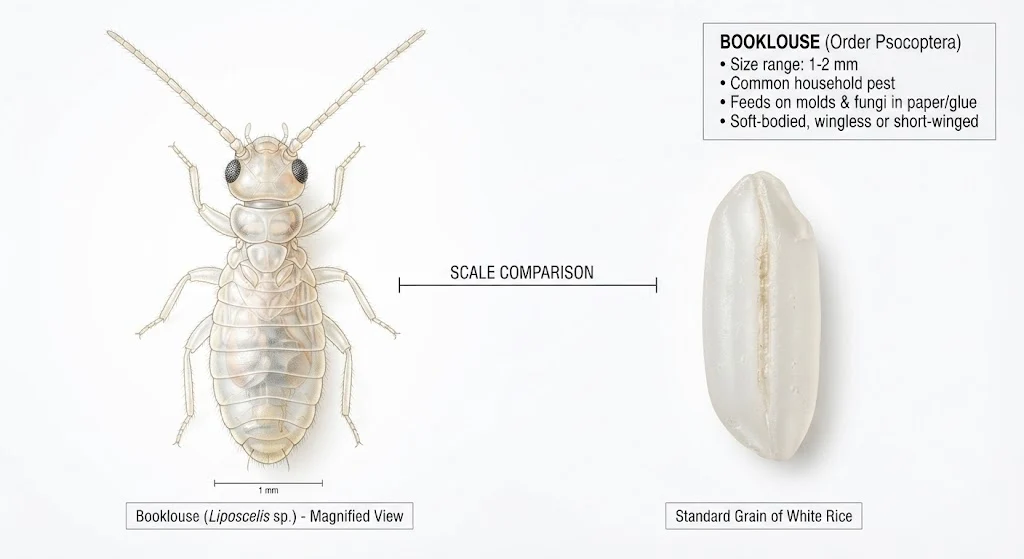
Booklice are tiny insects, usually between 1 and 2 millimeters long. That is smaller than a grain of rice. They range in color from pale white to light brown or gray, and they have soft, flat bodies with no wings. Despite the name, they are not actual lice. They do not feed on blood, and they pose no health risk to people.
The name comes from where they like to hang out. Booklice gather around old books, paper, wallpaper glue, and cardboard boxes. They chew on starchy materials and, more importantly, on the mold and mildew that grow on damp paper. Where you find mold, you will often find booklice close behind.
What Causes a Booklice Infestation
Moisture is the root cause behind nearly every booklice problem. These bugs need humid air to survive, and they cannot live long in a dry environment. Basements, bathrooms, kitchens, and closets with poor airflow are prime real estate for them.
Booklice feed on mold spores and fungi that grow on paper, cardboard, wallpaper paste, and even dry pet food. So any spot in your home with both moisture and an organic food source becomes a magnet for them. Leaky pipes, condensation on windows, damp walls, and poorly ventilated storage areas all raise your risk.
They often arrive in your house without you noticing. A box of old books from a damp storage unit, a bag of grain past its expiration date, or a houseplant with soggy soil can all carry booklice eggs inside.
Signs You Have Booklice
Spotting booklice with the naked eye can be tricky since they are so small. Many homeowners notice them first on windowsills, in kitchen cupboards, or crawling across the pages of an old book. They move slowly and do not jump or fly, which sets them apart from fleas.
If you are not sure what you are looking at, place a few sticky traps in the areas where you suspect activity. Bathrooms, basements, and pantry shelves are good starting points. Check the traps after a day or two. Finding several tiny, pale, wingless bugs stuck to the trap is a strong sign of a booklice problem.
A musty smell or visible mold in the same area backs up the diagnosis, since booklice and mold almost always show up together.
How to Get Rid of Booklice
Booklice control comes down to one main goal: dry out the environment they depend on. Chemical sprays can help in stubborn cases, but they rarely work long term unless you also fix the moisture issue.
Lower the Humidity
Start by getting your indoor humidity below 50 percent, and ideally between 30 and 50 percent. A dehumidifier works well in basements and bathrooms where dampness tends to build up. Open windows when weather allows, run exhaust fans during and after showers, and keep an eye on any room that feels sticky or smells musty. Booklice usually die off within two to three weeks once the air around them stays consistently dry.
Clean and Vacuum Thoroughly
Vacuum shelves, baseboards, cupboards, and any spot where you have spotted activity. A vacuum with a crevice attachment reaches tight corners where booklice like to hide. If your vacuum has a HEPA filter, even better, since it will also pick up the mold spores they feed on. Wipe down shelving afterward with a household cleaner to remove any leftover spores or debris.
Fix Leaks and Address Damp Spots
Walk through your home and check for leaky pipes, dripping faucets, and condensation around windows or in the attic. Even a small, slow leak under a sink can create enough moisture to support a booklice colony. Repair these issues as soon as you spot them, since they are usually the root cause of the whole problem.
Treat Books and Paper Items Carefully
For books, documents, and other paper goods that cannot go in the wash, move them to a dry, well-ventilated space and let them air out for several days. Sunlight and airflow both help draw out moisture. Once the items are dry, store them somewhere cool and dry going forward, away from basements or damp closets. Avoid packing books tightly against a wall, since trapped air holds onto moisture.
Use Diatomaceous Earth or Silica Gel
Food-grade diatomaceous earth is a fine powder that works by drying out the outer layer of soft-bodied insects like booklice. Dust a light layer in cracks, along baseboards, and in cupboard corners where you have seen activity. Silica gel packets work in a similar way and are handy for tucking inside book boxes or storage bins. Both options are low-risk and do not involve harsh chemicals.
Reach for Pesticides Only as a Last Resort
If humidity control, cleaning, and drying out your belongings have not solved the problem after a few weeks, a pesticide labeled for booklice can help finish the job. Read the label closely and follow every instruction, especially around food prep areas and spaces where kids or pets spend time. Spot-treat rather than spraying your whole home, and give the area time to dry before anyone touches it.
How to Prevent Booklice From Coming Back
Once you have cleared an infestation, keeping booklice away comes down to maintaining a dry home. Check problem areas like bathrooms, basements, and closets on a regular basis for early signs of dampness. A small dehumidifier left running in a damp basement can prevent the problem from ever starting again.
Store pantry food, cereal, and dry goods in airtight containers rather than their original paper or cardboard packaging. Do the same with books and important documents if they live in a storage area prone to humidity. When bringing secondhand books or boxes into your home, inspect them first and let them sit in a dry spot for a few days before shelving them with the rest of your collection.
Regular cleaning also goes a long way. Dust and vacuum shelves, baseboards, and storage bins every few weeks so mold spores never get the chance to build up. Since booklice feed on mold, no mold means no food source, and no food source means no infestation.
When to Call a Pest Control Professional
Most booklice problems clear up with humidity control and basic cleaning, so a call to a professional usually is not necessary. That said, if you have addressed the moisture issue and the bugs keep coming back, or if the infestation covers a large area like an entire basement or storage room, it may be worth bringing in a pest control expert. A professional can pinpoint hidden moisture sources you might have missed and recommend a treatment plan suited to your home.
Final Thoughts
Booklice are not harmful, but they are a clear signal that something in your home is too damp. Fix the moisture, clean up the mold they feed on, and store your books and food properly, and you will solve the problem at its source. Stay consistent with humidity control, and these tiny bugs will not have a reason to stick around.