

What is the difference between a German roach and an American roach? German roaches are small (about ½ inch), light brown, and have two dark stripes behind the head. They live indoors and breed fast. American roaches are larger (1½–2 inches), reddish-brown, and often live in damp outdoor spaces. They breed more slowly and can fly.
You flip on the kitchen light at midnight and something scurries across the counter. Your heart jumps. Was that a tiny roach or a big one? The answer matters more than you might think.
German roaches and American roaches are the two most common roaches in North American homes. They look different, live in different places, and breed at very different speeds. If you guess wrong, you might buy the wrong product and waste weeks. This guide will help you tell them apart and know what to do next.
Start With Size: The Fastest Way to Tell Them Apart
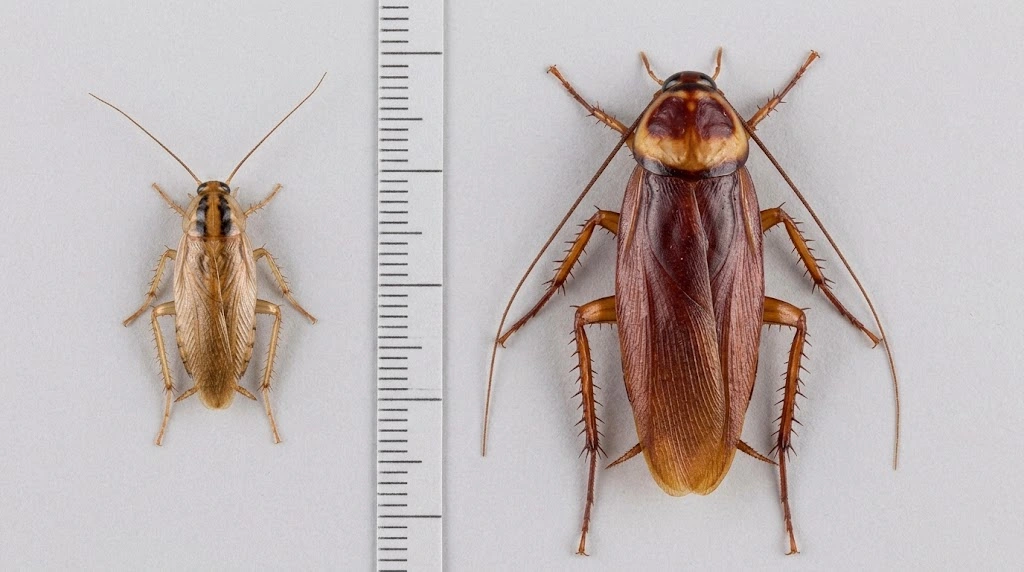
Size is the first clue, and it is the easiest one to use. A German roach is small. Adults measure about ½ to ⅝ of an inch long. An American roach is much bigger at roughly 1½ to 2 inches.
That is a three- to four-times difference in length. If the roach in front of you looks big enough to make you gasp, you are probably looking at an American roach. If it looks like a tan seed with legs, think German.
Keep one thing in mind. Young roaches are small no matter what species they are. A baby American roach can look tiny, and it may fool you. When size feels unclear, check the color and markings next.
Color and Markings: Look Closer
German roaches are tan to light brown. The best clue sits right behind the head. You will see two dark, parallel stripes running down the shield-like plate there. No other common household roach has that exact pattern, so it is easy to remember.
American roaches look reddish-brown. They have a yellowish, pale outline around the plate behind the head. That outline can look like a faded halo or a figure-eight shape, depending on the light. The pale edge helps you pick an American roach out of a group of brown insects.
Wings give you one more hint. American roaches have long wings that reach to the end of the body, or past it. German roaches have wings too, but they rarely use them. Most people never see a German roach fly.
Where Each Roach Lives
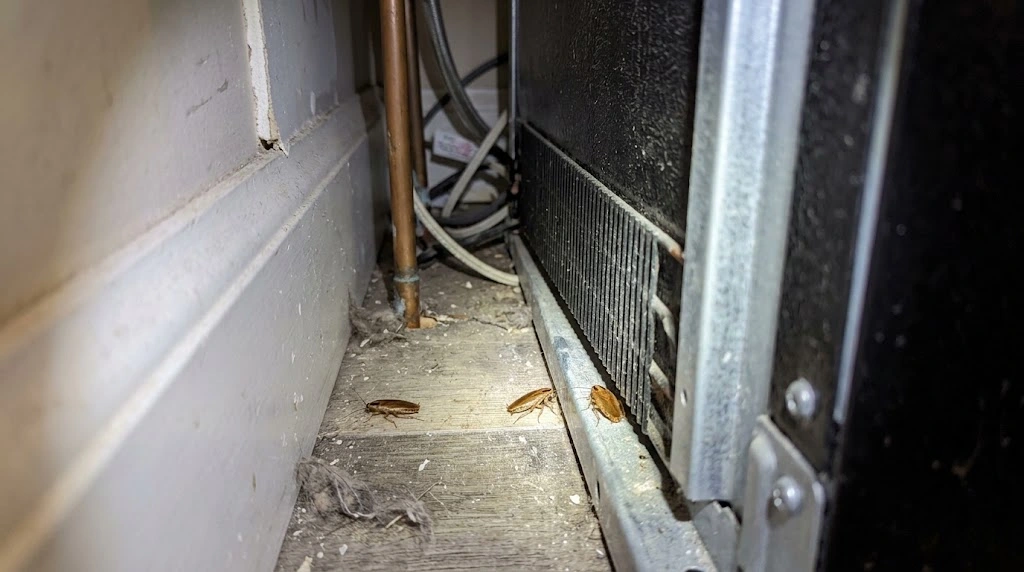
This is where the two species split the most. German roaches live almost entirely indoors. They want warmth, water, and food, and a kitchen offers all three. You will find them behind refrigerators, under sinks, inside cabinet hinges, and near dishwashers. Bathrooms rank second on their list because of the moisture.
German roaches also travel well. They ride in grocery bags, cardboard boxes, used appliances, and luggage. That is why apartment buildings struggle with them. A single unit can pass roaches through shared walls and pipes in a matter of weeks.
American roaches prefer damp, dark places, and many of them live outside. Sewers, storm drains, mulch beds, woodpiles, and crawl spaces are common homes. They come inside when the weather turns hot, dry, or cold. You tend to find them in basements, garages, laundry rooms, and around floor drains.
Because of this, an American roach in your house does not always mean your home is dirty. It may mean a nearby drain or a gap around a pipe gave it a way in. A German roach, on the other hand, usually means a colony is already living with you.
How Fast They Breed
Breeding speed explains why German roaches cause so much stress. A German female carries her egg case, called an ootheca, on the back of her body. She keeps it there until just before the eggs hatch. That protects the eggs from cold, dry air, and many treatments.
Each case holds roughly 30 to 40 eggs, though sources report a range from 18 to 50. The young reach adulthood in about 50 to 60 days under good conditions. Then they start breeding too. One female can turn into hundreds of roaches in a few months.
American roaches work on a slower schedule. A female makes an egg case holding around 16 eggs, then drops it or glues it in a hidden spot. She may do this many times over her life. But the young take much longer to grow up. A full cycle can last anywhere from 6 to 26 months, depending on temperature and food.
This difference changes how you plan. A German problem grows fast, so you need to act fast. An American problem moves slowly, which gives you more time to find the entry point and fix it.
Can They Fly?
American roaches can fly, though not well. They glide or flutter short distances, mostly in warm weather. You may see one drop from a ceiling or land on a wall. That is a common reason people scream and reach for a shoe.
German roaches have wings but almost never fly. When you turn on a light, they run. They move fast, and they squeeze into cracks the width of a coin. If you see one racing across the floor, it is likely German.
Health Risks of Both Roaches
Neither roach is harmless. Both walk through trash, drains, and waste, and then walk across your counters. They can carry bacteria on their legs and bodies. They can also spread germs to food and surfaces without you noticing.
The bigger concern for many families is allergies. Roach droppings, shed skins, and saliva break into tiny particles that float in the air. People breathe them in. Cockroach allergens are a known trigger for asthma, especially in children and in crowded urban housing.
Which species is worse? Most pest experts point to the German roach. It lives closer to your food, it breeds faster, and its colony stays hidden inside your walls and appliances. The American roach is more startling to see, but it spends more time outside your kitchen.
How to Get Rid of German Roaches
German roaches need a steady, layered plan. A single spray rarely works. Many populations have built up resistance to common insecticides, and some roaches even avoid certain baits. Here is the approach most professionals use.
Start with sanitation. Wipe counters every night. Wash dishes before bed. Take out trash daily. Store dry food in sealed containers. Fix leaks under sinks, because roaches can survive weeks without food but only days without water.
Next, use gel baits. Place small dots in cracks, along hinges, and behind appliances. Roaches eat the bait, return to the nest, and spread it to others. Rotate bait brands every few months so the roaches do not adapt.
Add an insect growth regulator, or IGR. This product stops young roaches from maturing, so they cannot breed. Pair it with bait for the best results. Sticky traps help too. They will not remove a colony, but they show you where the roaches travel and whether your plan works.
If you still see roaches after three or four weeks, call a licensed pest control company. Heavy German infestations often need professional tools and repeat visits.
How to Get Rid of American Roaches
American roaches call for a different plan. The goal is to block their path and dry out their hiding places. Start by finding how they enter. Check door sweeps, window screens, vents, pipe openings, and cracks in the foundation. Seal each gap with caulk or steel wool and caulk.
Then check moisture. Fix leaky pipes. Run a dehumidifier in the basement. Clean out floor drains and flush them with water a few times a week so the trap stays full. Move firewood and mulch away from your walls, ideally a foot or more.
You can add bait stations near entry points and along the outside of the house. Dust products work well in wall voids and crawl spaces. Because these roaches often come from sewers or neighboring areas, a professional perimeter treatment can make a big difference.
Expect a slower payoff than with a German problem. American roaches are bigger and tougher, but you only have to remove a smaller number. Most people see steady improvement within a few weeks once the entry points are closed.
Prevention Tips That Work for Both
A few habits protect your home from either species. Do not leave pet food out overnight. Rinse recycling bins before you store them. Keep your trash can lidded. Clear clutter, since stacks of cardboard and paper give roaches a place to hide and lay eggs.
Check what you carry in. Inspect boxes, used furniture, and secondhand appliances before you bring them inside. Shake out luggage after trips. A few minutes of checking can save you months of cleanup.
Finally, inspect once a month. Use a flashlight to look under sinks, behind the stove, and inside the basement. Early signs include droppings that look like black pepper, a musty smell, and smear marks in damp spots. Catching a problem early makes every treatment easier.
When to Call a Professional
Call for help when you see roaches in daylight, when you find egg cases, or when you see roaches in several rooms. Daytime sightings often mean the hiding spots are full. A pro can confirm the species, find the source, and build a plan that fits your home.
Ask any company you hire what they will use, how many visits are included, and what you should do between visits. A good technician will explain the plan and answer your questions plainly.
The Bottom Line
Size, color, and habit tell you most of what you need to know. Small, tan, two stripes, and living in your kitchen means German. Big, reddish-brown, pale outline, and coming from drains or basements means American. Once you know which one you face, you can pick the right tools and get results sooner.
Act quickly on German roaches. Seal and dry out the spaces around American roaches. Keep your home clean and check it often. Roaches are common, and they are fixable.