

Tile and grout cleaning removes dirt, mold, and stains trapped in porous grout lines using scrubbing, steam, or professional extraction. Regular cleaning every one to two weeks, paired with a deep clean once or twice a year, keeps floors sanitary and prevents costly regrouting or tile replacement down the road.
Your tile floor might look clean from a distance. Get down on your knees, though, and the grout tells a different story. Those thin lines between your tiles soak up spills, soap scum, and moisture like a sponge. Over time, that turns into stains, mold, and smells you can’t scrub away with a regular mop.
This guide walks you through why grout gets so dirty, how to clean it yourself, when to call a professional, and what it all costs. By the end, you’ll know exactly how to bring your tile back to life.
Why Grout Gets Dirty Faster Than Tile
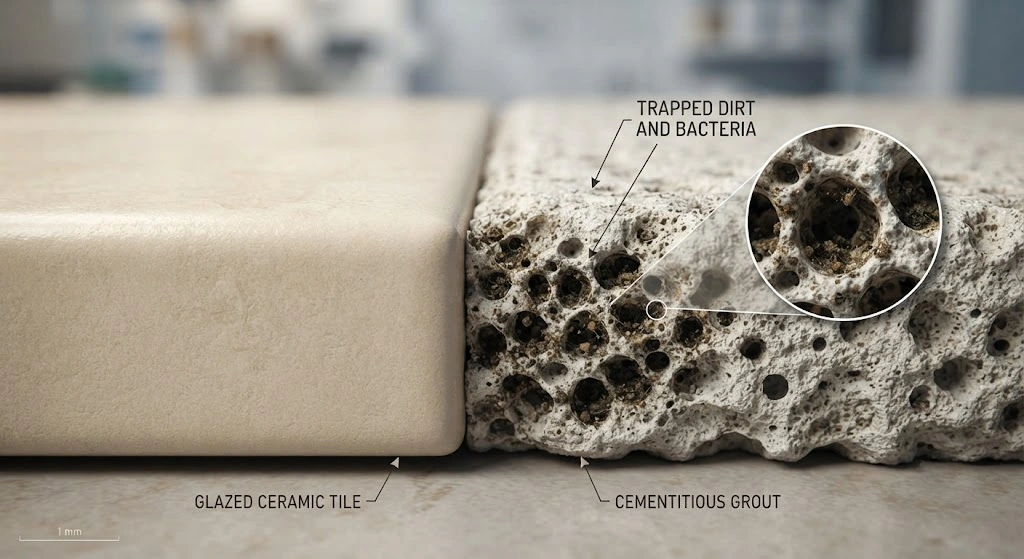
Tile itself is usually ceramic or porcelain. Both materials are hard and mostly non-porous, so dirt sits on the surface and wipes away easily. Grout is a different animal entirely.
Grout is a mix of sand, cement, and water. That mixture creates a porous surface full of tiny gaps. Dirt, grease, and moisture sink into those gaps instead of staying on top. Once trapped, they feed mold and mildew, which is why grout often looks gray or black even after you’ve mopped the floor.
Bathrooms suffer the most because of constant humidity. Kitchens come in second thanks to grease and food spills. Entryways collect dirt and grit tracked in from outside, which acts like sandpaper on grout lines every time you walk over them.
Signs Your Tile and Grout Need Cleaning
Discoloration is the most obvious clue. Grout that started white or light gray slowly shifts to a dingy tan or dark gray as grime builds up layer by layer.
A musty smell in your bathroom, even after cleaning the tile surface, usually means mold has taken hold in the grout itself. You might also notice the floor feels sticky or slightly gritty no matter how often you sweep it. Water that no longer beads up on the grout, but soaks in instead, is a sign the sealant has worn off and dirt has an open path underneath.
If you’re seeing any of these signs, it’s time for more than a quick mop pass.
DIY Tile and Grout Cleaning Methods
You don’t always need a professional to get decent results. Several DIY methods work well for light to moderate buildup, especially when you catch the problem early.
Baking Soda and Vinegar
This classic combination breaks down grease and lifts light stains. Sprinkle baking soda directly onto the grout lines, then spray or pour white vinegar over it. The mixture will fizz as it works. Let it sit for ten minutes, then scrub with a stiff brush and rinse with warm water.
Oxygen Bleach Solution
Oxygen bleach, sold as a powder, is gentler than chlorine bleach but still effective against mold and stains. Mix it with warm water according to the package directions, apply it to the grout, and let it sit for fifteen minutes before scrubbing. It’s safe for colored grout, unlike chlorine bleach, which can lighten it unevenly.
Steam Cleaning
A steam mop or handheld steamer uses heat and pressure to loosen dirt without chemicals. This method works especially well on sealed tile and grout, since the heat lifts grime that regular scrubbing misses. Steam also kills mold spores on contact, which chemical cleaners don’t always do.
The Right Tools Matter
A stiff-bristled grout brush or an old toothbrush gets into the narrow lines better than a sponge or mop ever will. For larger areas, an electric grout cleaning brush saves your knees and cuts scrubbing time significantly. Always rinse thoroughly after cleaning, since leftover cleaner residue attracts dirt just as fast as before.
When to Call a Professional
DIY methods handle everyday grime well, but they have limits. Deep-set stains, years of neglected buildup, or mold that keeps coming back usually need professional-grade equipment.
Professional cleaners use hot water extraction systems that combine high heat, pressure, and suction to pull dirt out of grout pores rather than just pushing it around. They also carry commercial-strength cleaners that aren’t sold to the public, along with tools built specifically for grout lines rather than general household cleaning.
Professionals can also spot problems you might miss, like cracked grout that needs repair before cleaning, or tile that’s showing early signs of water damage underneath. Catching these issues early saves you from a full floor replacement later.
How Much Does Professional Tile and Grout Cleaning Cost
Pricing varies by region, tile size, and how dirty the grout has become, but there are clear averages to work from. Professional tile and grout cleaning typically costs between $285 and $676 for a full project, with most homeowners paying around $480 total.
Most companies price the job by square footage. Expect to pay somewhere between $0.50 and $3.50 per square foot, depending on the cleaning method and how much grime has built up.Smaller tiles cost more to clean than larger ones, since smaller tiles mean more grout lines packed into the same space.
If you’re paying hourly instead of by square footage, professional cleaners generally charge between $30 and $50 per hour, though rates run higher in some markets. Most companies also set a minimum charge, often between $100 and $200, to cover the cost of showing up.
Sealing usually costs extra unless it’s bundled into the package. Adding sealant after cleaning protects the grout from future stains and typically adds a modest amount per square foot on top of the base cleaning price. If your grout hasn’t been touched in years, expect an additional charge for the extra time and product needed to break through built-up grime.
Sealing: The Step Most People Skip
Cleaning grout without sealing it is like washing your car and leaving the windows down before a storm. Sealant creates a protective barrier that keeps moisture, dirt, and stains from soaking back into the grout right after you’ve just cleaned it.
Most sealants last one to two years before they need reapplying, though this depends on foot traffic and how often the area gets wet. Bathrooms and kitchens wear through sealant faster than hallways or living rooms. A simple test tells you if it’s time to reseal: drop a small amount of water on the grout. If it beads up, the seal is still working. If it soaks in within a few seconds, it’s time for a fresh coat.
Preventing Future Buildup
The best way to avoid a deep cleaning bill is to stay ahead of the dirt in the first place. A few small habits make a real difference over time.
Wipe up spills as soon as they happen, especially in the kitchen where grease and food particles sink into grout fast. Use a squeegee on shower tile after every use to cut down on soap scum and moisture buildup. Sweep or vacuum high-traffic tile floors a few times a week to keep grit from grinding into the grout lines. Mop with a pH-neutral cleaner rather than harsh chemicals, which can wear down sealant faster than normal wear and tear.
None of this takes much time, but it adds up. A floor that gets light, regular attention rarely needs the kind of deep intervention that costs hundreds of dollars and hours of scrubbing.
Choosing Between DIY and Professional Cleaning
Think about how bad the buildup actually is before deciding which route to take. Light discoloration and everyday grime respond well to baking soda, vinegar, or a good steam mop, and you can knock it out in an afternoon.
Deep stains, visible mold, or grout that hasn’t been cleaned in several years call for professional equipment that reaches deeper than anything you’ll find at a hardware store. Weigh the cost of a professional visit against the time and effort a DIY deep clean would take, especially across a large floor. For most homeowners, a mix of both works best: handle routine maintenance yourself, and bring in a professional once a year for a thorough reset.
Clean grout does more than make your home look better. It keeps mold and bacteria from building up in a space you walk through every day. Whether you grab a scrub brush this weekend or book a professional next month, the payoff is a floor that actually looks as clean as it feels.