

Prefab cabinets cost $80 to $300 per linear foot and install fast, making them great for tight budgets. Custom cabinets cost $500 to $1,500 per linear foot but fit your space exactly and use higher-grade materials. Choose prefab for speed and savings, custom for a tailored, long-lasting kitchen.
Picking new cabinets feels like a bigger decision than it should be. You want something that looks good, holds up over time, and doesn’t blow your budget. The problem is, “custom” and “prefab” get thrown around so much that it’s hard to know what you’re actually paying for.
This guide breaks it all down in plain language. We’ll cover real costs, what each option looks like in your home, and which one makes sense for your project. By the end, you’ll know exactly what to ask your contractor or cabinet dealer.
What Are Prefab Cabinets?
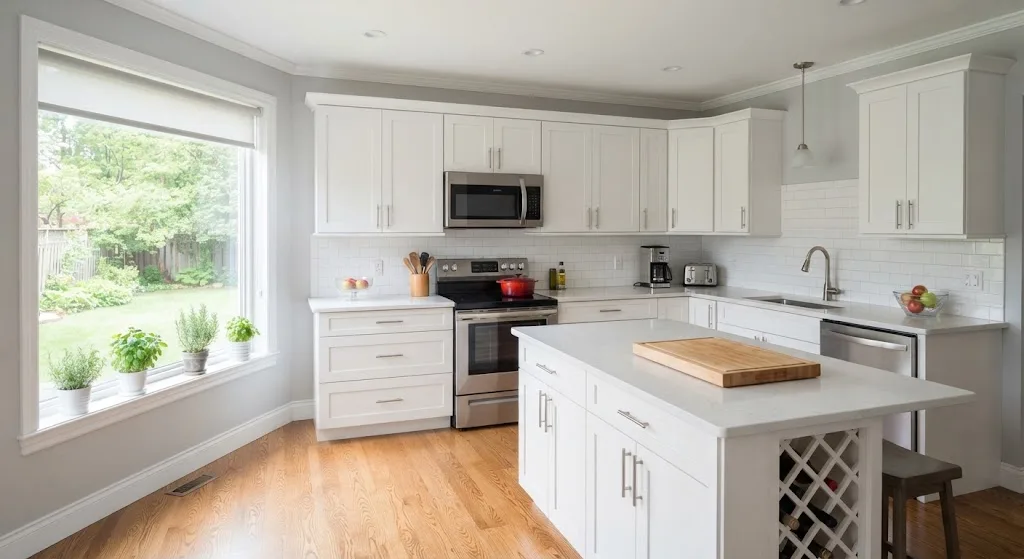
Prefab cabinets, also called stock or RTA (ready-to-assemble) cabinets, are made in a factory in standard sizes. Think of them like clothes off a store rack. They come in common widths and heights, so they fit most kitchens without much fuss.
Big-box stores and online retailers sell these by the box. Some arrive fully assembled, while RTA versions ship flat and need a screwdriver and a free afternoon. Either way, you’re choosing from a set list of colors, finishes, and door styles rather than designing from scratch.
Prefab cabinets work well when your kitchen has a fairly standard layout. If your walls are square and your space matches common dimensions, you won’t notice much difference between prefab and pricier options.
What Are Custom Cabinets?
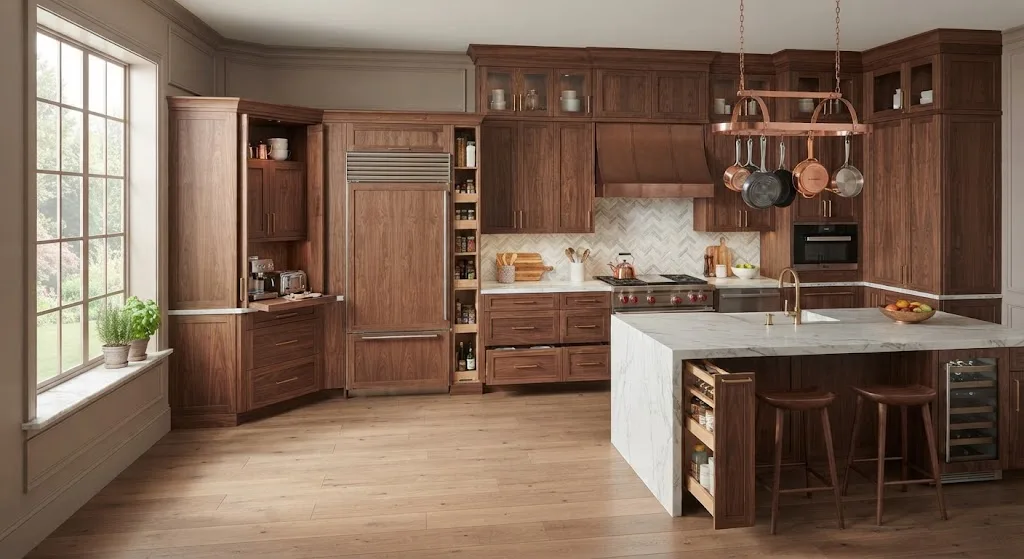
Custom cabinets are built specifically for your space, from the ground up. A cabinetmaker measures your kitchen, then designs and builds each piece to match those exact dimensions. Nothing gets forced to fit. Instead, the cabinets are shaped around your walls, your appliances, and your storage needs.
This matters most in kitchens with odd angles, sloped ceilings, or tight corners. It also matters if you want specific features, like a pull-out spice rack next to the stove or a hidden charging drawer for your phone. Custom cabinets can include almost anything you can dream up, as long as your budget allows for it.
Material choice is wide open too. You can pick solid maple, cherry, walnut, or marine-grade plywood, along with the exact stain or paint color you want. That level of control is the whole point of going custom.
Custom Cabinets vs Prefab Cost Breakdown
Cost is usually the deciding factor, so let’s get specific. Stock cabinets run $80 to $120 per linear foot, while semi-custom lands between $150 and $300 per linear foot. For a standard 10×10 kitchen with about 20 linear feet of cabinetry, that puts prefab cabinets in the $1,600 to $6,000 range before installation labor.
Custom cabinets sit in a different league. Custom cabinets typically cost between $500 and $1,200 or more per linear foot, depending on materials and how complex the design gets. For that same 10×10 kitchen, most homeowners end up spending $12,000 to $20,000 on custom cabinets alone. Larger kitchens or premium wood choices can push that number well past $30,000.
Why such a big gap? On average, custom cabinetry costs two to four times more than prefab cabinetry per linear foot, and the exact multiplier depends on the materials you choose. You’re paying for skilled labor, one-of-a-kind design work, and materials that aren’t mass-produced. Every custom box is built by hand instead of stamped out on an assembly line.
There’s a middle path worth mentioning too. Semi-custom cabinets start as factory-made boxes but allow changes to size, finish, and storage inserts. They split the difference in both price and flexibility, which is why so many remodels land in that category.
Pros of Prefab Cabinets
The biggest advantage is price. Prefab cabinets cost a fraction of custom work, which frees up your budget for countertops, flooring, or appliances. If you’re remodeling on a set budget, this savings can make or break the whole project.
Speed is the other major win. Prefab cabinets typically ship within a week or two, and a two-person crew can install a full kitchen’s worth in just a few days. If you’re flipping a house or need your kitchen back in service quickly, this turnaround is hard to beat.
Quality has also improved a lot in recent years. Many prefab lines now use real plywood boxes instead of thin particleboard, and the finishes look closer to custom work than they used to. You’re no longer stuck with the flimsy options from a decade ago.
Cons of Prefab Cabinets
The tradeoff is flexibility. You’re working within a set list of sizes, so awkward kitchen layouts often end up with filler panels or wasted gaps. That’s not a dealbreaker, but it’s not a perfect fit either.
Material quality can still be a concern on the lower end. Cheaper prefab lines lean on MDF or particleboard with a laminate wrap, and these materials are more sensitive to moisture. Over time, they can swell, chip, or peel, especially near the sink or dishwasher.
You also lose some say over the finished look. Custom hardware, unique storage solutions, and specialty finishes usually aren’t available with prefab lines. If you have a very specific vision for your kitchen, prefab might feel limiting.
Pros of Custom Cabinets
Fit is the number one reason people choose custom. Every inch of your kitchen gets used well, since the cabinets are designed around your actual walls and appliances instead of a generic template. This is especially valuable in older homes, where walls are rarely perfectly square.
Custom cabinets also let you build in exactly the storage you need. You can add pull-out drawers, spice racks, corner storage, hidden bins, and dividers built to match your specific habits. If you cook often and need easy access to certain tools, a custom cabinetmaker can design around that.
Material quality tends to be higher across the board too. Custom cabinets generally use solid wood or marine-grade plywood with professional-grade finishes, which hold up far better over time than budget prefab materials. That durability often means custom cabinets outlast prefab options by a decade or more.
Cons of Custom Cabinets
The price tag is the clear downside. Custom cabinets can easily cost three or four times what prefab options run, and that gap adds up fast on a full kitchen. For many homeowners, this pushes custom cabinets out of reach entirely.
Lead time is another factor to plan around. Custom cabinetry typically takes eight to twelve weeks to arrive, compared to just one to three weeks for RTA cabinets. If you’re on a tight renovation timeline, that wait can throw off your whole schedule.
Changes are also harder once production starts. With prefab, swapping a cabinet size is usually as simple as ordering a different box. With custom work, changing your mind partway through often means extra cost and delay, since each piece is already being built to spec.
Timeline Differences
Timing plays a bigger role in this decision than most people expect. A two-person crew can install a full kitchen of stock or semi-custom cabinets in just two to three days. Add in countertop template and fabrication time, and you’re usually looking at three to six weeks from start to finish.
Custom projects move at a slower pace by nature. Between design meetings, material sourcing, and handcrafted construction, a custom kitchen can stretch the total project timeline to twelve to twenty weeks. If you need your kitchen finished by a certain date, this difference alone might settle the decision for you.
Which One Should You Choose?
If your budget is tight, your layout is fairly standard, or you need the kitchen done fast, prefab cabinets make a lot of sense. You’ll get a clean, functional kitchen without draining your renovation budget, and you’ll be cooking in it again within weeks instead of months.
If you have an unusual layout, specific storage needs, or you plan to stay in your home for many years, custom cabinets are worth the extra cost. You’re not just buying cabinets. You’re buying a kitchen built around how you actually live, made from materials that will still look sharp in twenty years.
Semi-custom is worth a serious look if you’re stuck between the two. You get more flexibility than prefab without the full custom price tag, which is why it’s become the most popular choice for mid-range remodels.
Whatever you choose, get quotes from at least two or three local cabinet companies before you commit. Prices vary a lot by region and by exactly what “custom” or “semi-custom” means to each company. A quick round of quotes will show you exactly where your money goes, and it’ll help you walk into your remodel with real numbers instead of guesswork.