

A thick, green lawn takes work. Then one morning you spot a patch of yellow flowers or a clump of grass that looks slightly off, and you know weeds have moved in. Left alone, they spread fast and steal water, nutrients, and light from your turf.
This guide walks you through the most common lawn weeds, how to tell them apart, and what actually works to control them. You’ll also learn why weeds show up in the first place, so you can fix the root cause instead of fighting the same battle every season.
What Counts as a Lawn Weed?
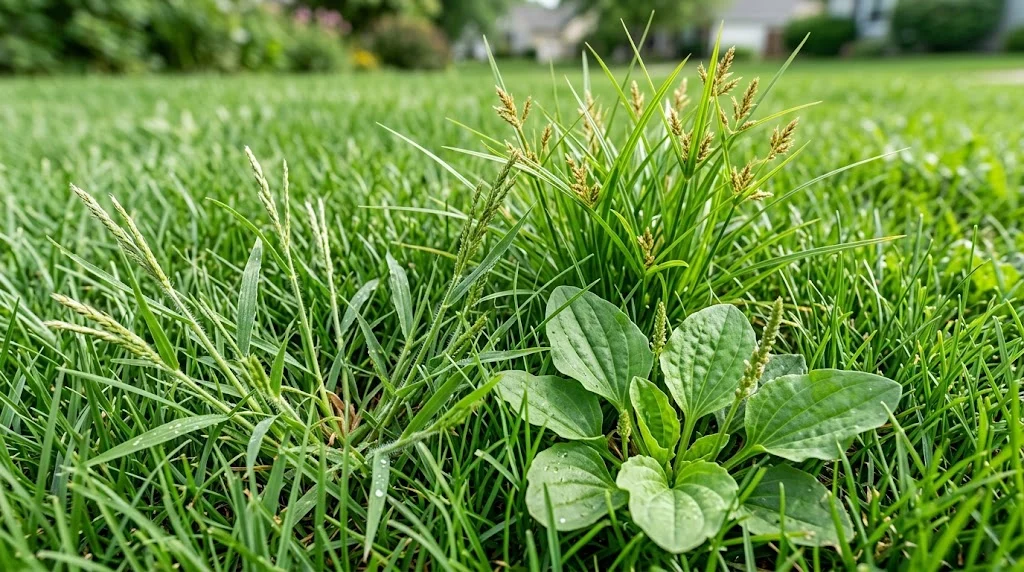
A lawn weed is any plant growing in your grass that you didn’t plant and don’t want. That’s it. Some are aggressive spreaders. Others just look out of place. Either way, they compete directly with your turf for resources.
Lawn weeds fall into three broad categories:
- Grassy weeds — look like turf grass but grow differently
- Broadleaf weeds — flat, wide leaves that stand out from grass blades
- Sedges — grasslike plants with triangular stems
Each category needs a different control approach, which is why identification matters before you buy any product.
Why Weeds Take Over a Lawn
Weeds don’t invade healthy turf for no reason. They show up when conditions favor them over your grass. In most cases, that means your lawn has an underlying problem.
Common triggers include:
- Compacted soil that blocks root growth
- Mowing too short or too infrequently
- Watering too much, too little, or too often in light amounts
- Low fertility or poor nutrient balance
- Standing water or drainage issues
Think of weeds as a symptom, not the disease itself. A dandelion patch usually means your turf is thin. Nutsedge often points to a drainage problem. Treat the soil and mowing habits, and you’ll see far fewer weeds long-term — with or without herbicide.
The Three Types of Lawn Weeds, Explained
Broadleaf Weeds
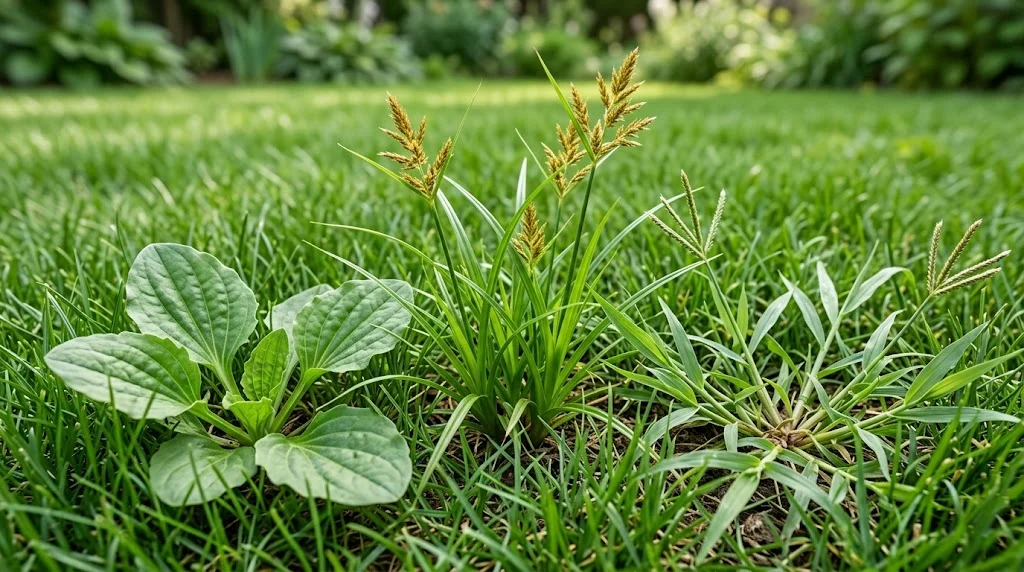
Broadleaf weeds are the easiest to spot. Their leaves are wide and flat, nothing like the narrow blades of turf grass, and many produce visible flowers. Dandelions, clover, and plantain fall into this group. They tend to move into lawns that are thin, undernourished, or stressed from heat and drought.
Grassy Weeds
Grassy weeds are trickier because they mimic your lawn. Crabgrass and quackgrass both have long, narrow leaves that blend in until they mature. These weeds usually gain a foothold when grass is cut too short or watered lightly and frequently instead of deeply.
Sedges
Sedges look like grass at a glance, but their stems are triangular instead of round — roll one between your fingers and you’ll feel the edges. Yellow nutsedge is the most common example, and it loves wet, poorly drained soil or compacted ground that holds moisture near the surface. Because sedges spread through underground tubers, they’re some of the hardest weeds to eliminate completely.
10 Common Lawn Weeds You’re Likely to Find
1. Chickweed
This low-growing annual has small oval leaves and tiny white flowers. It spreads across moist, shaded, compacted soil, often in early spring or fall. Aerate the area, cut back on watering, and apply a pre-emergent herbicide before the growing season starts.
2. Crabgrass
Crabgrass is an annual grassy weed that reproduces through thousands of seeds per plant. It thrives when lawns are mowed under two inches or watered lightly and often. Keep your turf thick, water deeply and less frequently, and apply a pre-emergent once soil temperatures hold steady around 60°F in spring.
3. Dandelion
Bright yellow flowers and a low rosette of jagged leaves make dandelions easy to identify. Their wind-carried seeds travel far, so one plant can seed an entire yard. Dig out young plants before they flower, and spot-treat stubborn patches with a selective broadleaf herbicide.
4. Ground Ivy (Creeping Charlie)
Ground ivy has square stems and rounded, scalloped leaves, and it spreads along the ground in shaded, damp spots. Improve drainage, reduce shade where possible, and pull young growth by hand. Established patches usually need a targeted post-emergent treatment.
5. Plantain
Plantain grows as a rosette of oval or lance-shaped leaves and favors compacted, poorly drained soil. Aerating your lawn and correcting mowing height goes a long way toward prevention. Use a selective broadleaf herbicide on existing plants if manual removal isn’t keeping up.
6. Quackgrass
This perennial grass spreads through underground rhizomes, which makes it aggressive and hard to remove by hand. Dig out the entire root system — any leftover rhizome fragments can regrow into new plants. Severe patches may require a non-selective herbicide, applied carefully to avoid killing surrounding turf.
7. Spotted Spurge
Spotted spurge forms dense, low mats with small leaves marked by a reddish-brown spot. Snap a stem and you’ll notice a milky sap, a reliable way to confirm identification. Keep your lawn thick and well-fed, and apply a pre-emergent to stop seeds from germinating in bare spots.
8. White Clover
White clover has the classic three-lobed leaf and small white flower clusters. It moves into thin, undernourished turf, especially in areas with excess moisture. Fertilize with nitrogen, water deeply rather than often, and avoid over-applying phosphorus, which clover tolerates better than grass does.
9. Yellow Nutsedge
Yellow nutsedge spreads through both seeds and underground tubers, making it one of the toughest lawn weeds to eliminate. Improve drainage, water deeply and infrequently, and use a post-emergent product labeled specifically for nutsedge — standard broadleaf herbicides won’t touch it.
10. Yellow Woodsorrel
This weed looks similar to clover but has heart-shaped leaflets and small yellow flowers. It spreads by both seed and root, so pulling it by hand rarely finishes the job. A combination of pre-emergent and post-emergent treatment, paired with better fertilization, works best.
How to Identify a Lawn Weed Correctly
Before treating anything, confirm what you’re dealing with. Misidentifying a weed means wasting time and money on the wrong product. Check these three things:
Growth pattern. Does it spread flat across the ground, grow upright, or send out runners? Weeds that spread through rhizomes or tubers need different handling than ones that spread by seed alone.
Season. Crabgrass is a summer annual. Chickweed often appears in cooler months. Knowing when a weed typically germinates helps you time pre-emergent applications correctly.
Leaf and flower details. Look closely at leaf shape, edges, and vein patterns. Note flower color and size. These small details are usually enough to tell two similar-looking weeds apart.
Effective Weed Control Strategies
Cultural Control
The single best weed prevention tool is a thick, healthy lawn. Mow at the correct height for your grass type, water deeply but infrequently, fertilize on a regular schedule, and overseed thin patches before weeds fill the gap. A dense lawn simply leaves weeds nowhere to grow.
Mechanical Removal
For small infestations, pulling weeds by hand is often the fastest fix — as long as you remove the entire root. This works especially well on perennial taproot weeds like dandelions. A weed puller tool makes the job easier on compacted soil.
Natural and Organic Options
If you’d rather skip synthetic chemicals, a few organic methods can help:
- Corn gluten meal acts as a natural pre-emergent. Apply it in early spring before weed seeds sprout.
- Vinegar-based sprays (vinegar, salt, and dish soap) work as a spot treatment, but use them carefully. They can damage nearby plants and shift soil pH if overused.
- Ground covers and beneficial insects in garden beds can suppress weed growth around your lawn’s edges naturally.
Chemical Control
When cultural and manual methods aren’t enough, herbicides fill the gap. There are two main types:
- Pre-emergent herbicides stop weed seeds from germinating and should go down before the weed’s typical growing season.
- Post-emergent herbicides target weeds that are already growing.
Choose selective formulas that target specific weed types without harming your turf, and always follow label directions exactly — overapplication is a common cause of lawn damage.
Preventing Future Weed Infestations
Maintain proper mowing height. Most lawns do best between 2.5 and 3.5 inches. Taller grass shades the soil, which limits weed seed germination.
Water deeply, not often. Frequent shallow watering encourages shallow grass roots and gives weed seeds an easy environment to sprout in. Deep, infrequent watering builds a stronger root system that outcompetes weeds.
Test and improve your soil. Compacted, poorly drained, or nutrient-poor soil practically invites weeds in. Aerate once or twice a year, test your soil’s pH, and correct nutrient deficiencies based on the results.
Overseed thin spots. Bare patches are an open invitation for weed seeds. Overseed with a grass variety suited to your climate to fill gaps before weeds can claim them.
When to Call a Lawn Care Professional
Some situations call for expert help rather than more DIY attempts:
- Weeds keep coming back. If the same weeds return season after season despite consistent effort, a professional can identify the underlying soil or drainage issue you might be missing.
- The infestation is widespread. Once weeds cover a large share of your yard, a full renovation or professional treatment plan is usually faster and more effective than spot treatment.
- You’re dealing with a stubborn or regulated species. Some weeds require restricted-use herbicides or specialized application methods that homeowners can’t access or safely apply.
A healthy lawn isn’t about eliminating every weed forever — it’s about creating conditions where grass wins the competition. Get the fundamentals right, and most weed problems solve themselves.