

If you are pricing rooftop solar this year, the honest answer is that solar panel cost depends far more on your roof, your electricity use, and your installer than on the panels alone. Most homeowners need a system sized to their bills, priced clearly, and installed well — not the biggest one offered. This guide covers typical US planning ranges for 2026, what a quote includes, and how to compare offers. Every price below is a planning estimate, not a quote: your final price will come from a site survey and a written proposal for your own home.
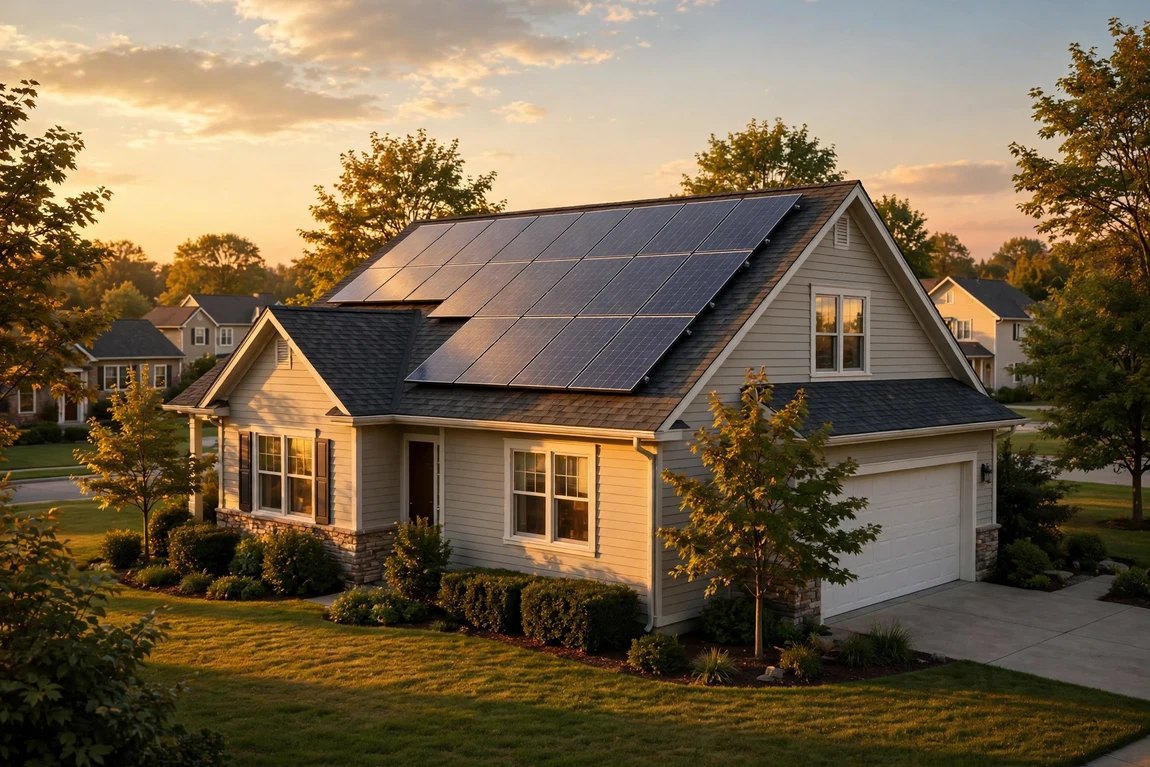
Rooftop panels on a suburban home at golden hour. (Illustrative image)
What a residential solar system includes
A complete quote should normally include:
- The solar panels themselves, usually in one or more roof arrays
- An inverter (a single string inverter, or microinverters behind each panel) that converts the panels’ DC power into household AC
- Racking and mounting hardware, plus flashing and roof sealing
- Wiring, a monitoring app or display, and connection to your electrical panel
- Design work, permits, inspections, and the utility interconnection application
- Optional extras priced separately, most often a home battery, an electrical panel upgrade, or a ground-mounted array
If an item on that list is missing from a quote, ask why — leaving out permit fees or a panel upgrade is a common way to make a headline price look lower than the real one.
Typical prices by system size in 2026
Installers usually price residential systems per watt of capacity. For planning in 2026, a typical installed range is about $2.50 to $3.50 per watt before any state or local incentives, with simple roofs at the lower end and complex jobs higher. The table turns that into rough totals by system size. Treat these as planning ranges only — not averages from a survey, and not a promise of what you will pay.
| System size | Planning estimate (before incentives) | Approximate price per watt |
|---|---|---|
| 4 kW | $10,000 – $14,000 | $2.50 – $3.50 per watt |
| 6 kW | $15,000 – $21,000 | $2.50 – $3.50 per watt |
| 8 kW | $20,000 – $28,000 | $2.50 – $3.50 per watt |
| 10 kW | $25,000 – $35,000 | $2.50 – $3.50 per watt |
| Battery add-on (one unit) | $8,000 – $15,000 installed | Priced per battery, not per watt |
A battery is the single biggest optional extra. One wall-mounted battery, installed with the system, commonly adds roughly $8,000 to $15,000 as a planning range, and a second battery adds more again. Batteries rarely pay for themselves on bill savings alone — most owners buy them for backup power during outages, a resilience decision as much as a financial one. If backup is the main goal, it is worth comparing a battery with the best standby generator for your home before you decide.
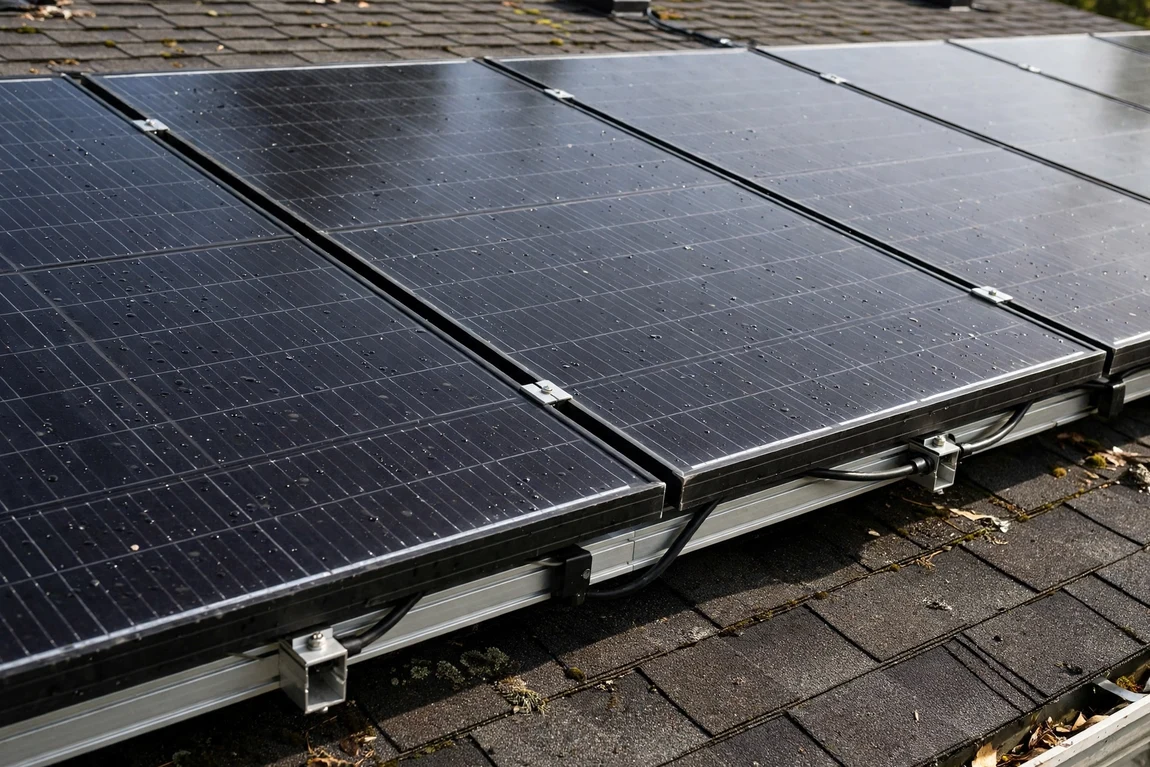
A close look at a rooftop panel array and its mounting. (Illustrative image)
Where the money goes: the cost breakdown
Panels are the largest single equipment cost, but only part of the bill. The inverter is the next major component: microinverters usually cost more upfront than a single string inverter but handle shaded or multi-direction roofs better. Labour — design, roof work, and electrical work — is a substantial share of any installed price, alongside mounting hardware, permits, inspections, and the utility connection. Panel upgrades for older homes should be itemised here, not discovered later.
What installation involves
The process runs in stages. First, a site survey: the installer measures the roof, checks its condition and shading, and reviews your bills. Next comes design and permitting, then the installation itself, often completed in a few days for a straightforward rooftop job. Inspection and utility approval follow, and only then is the system switched on — permission to operate.
What drives solar panel cost up or down?
Roof type is one of the biggest factors. A simple asphalt shingle roof with a clear, unshaded, south-facing slope is the cheapest to work on; steep pitch, multiple roof faces, dormers, and heavy shading all add labour. Tile and metal roofs need different mounting methods — if you are also weighing roof work, our guide to new roof cost covers that side of the budget. An ageing roof matters too: replacing it later means paying to remove and refit the array. Ground mounts avoid the roof but add trenching and racking, so they usually cost more. A battery, as noted above, is the other big step up.
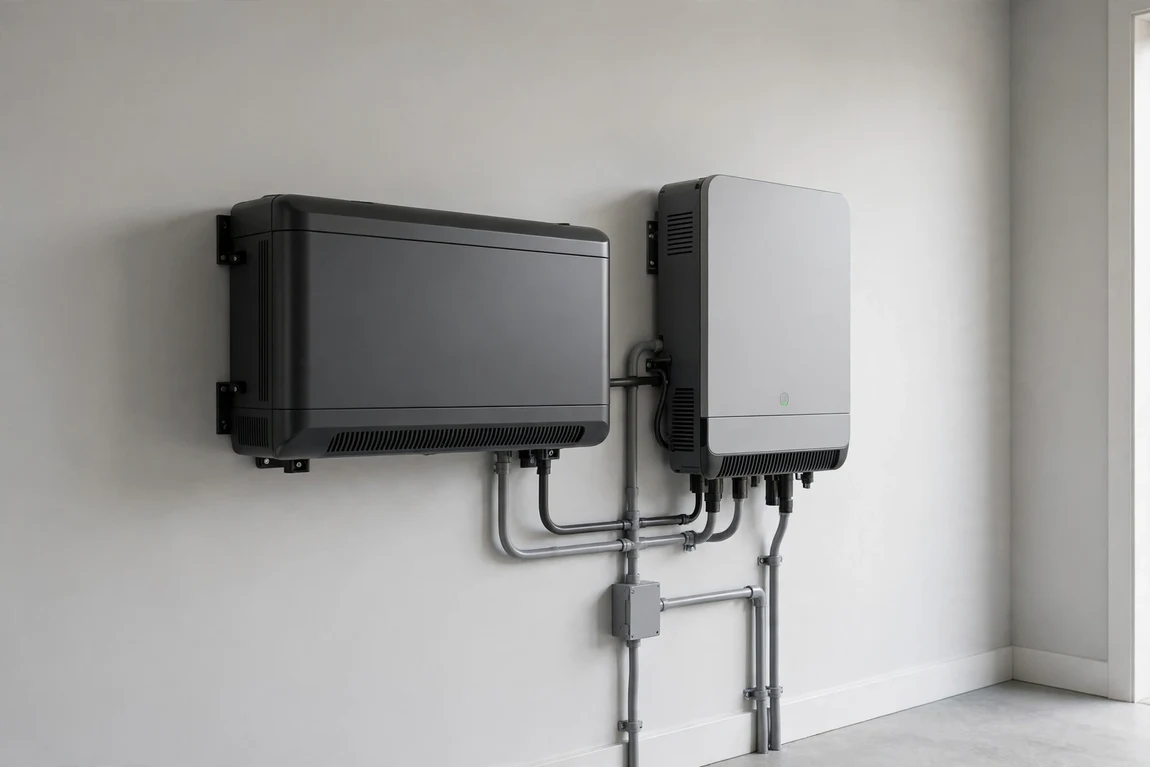
A home battery and inverter installed on a garage wall. (Illustrative image)
Tax credits and incentives in 2026: read this first
Do not let any quote assume a 30% federal tax credit. The federal residential clean energy credit ended for systems placed in service after December 31, 2025, so there is no current federal residential credit to count on for a 2026 installation. Some sales material still leads with the old credit — if a proposal subtracts it, ask for the numbers redone without it. State and local incentives, utility rebates, and net metering rules still exist in many places, but they vary by location and change often. Check your state’s current programmes and your utility’s current export rates before signing, and verify independently anything an installer mentions.
Payback, in plain terms
Payback is simply the installed cost divided by what the system saves you each year. Those savings depend on how much electricity you use, what your utility charges, how much solar power you use at home rather than export, and what your utility pays for exported power. Rather than trusting a single payback year in a brochure, ask each installer to show their assumptions — your usage, their production estimate, and the rate used — so you can judge whether it is realistic. Our balanced rundown of the pros and cons of solar panels is a useful next read.
Buying vs leasing and power purchase agreements
Buying — outright or with a loan — means you own the system, carry the maintenance responsibility, and keep all the bill savings. Leasing and power purchase agreements (PPAs) usually mean a company owns the panels on your roof and you pay monthly, or per unit of power, often with little or nothing upfront. The trade-off is long-term value and control versus a lower entry cost: a lease or PPA can complicate a future house sale, since the agreement must usually transfer to the buyer. Read the yearly escalation clause built into many agreements as carefully as the starting price.
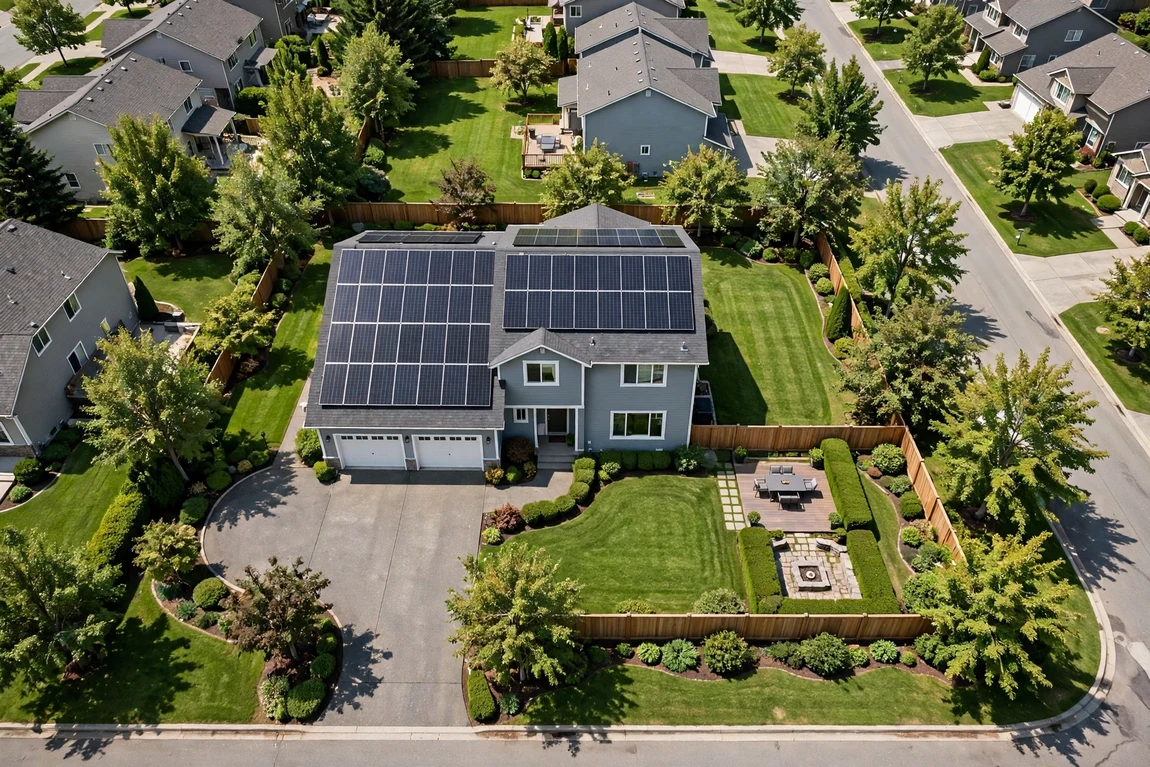
An aerial view of a home fitted with rooftop panels. (Illustrative image)
How to compare quotes
- Get at least three written quotes, and compare price per watt, not just the total.
- Check that each quote is sized from your actual electricity bills, not roof size alone.
- Confirm what is included: permits, inspections, panel upgrades, monitoring, and equipment and workmanship warranties.
- Compare production estimates cautiously; an unusually high estimate can make a weak system look cheap.
- Read the payment schedule — most money should change hands as work is completed.
Red flags to walk away from
- Quotes that subtract the old 30% federal credit, or pressure you to sign today
- A firm price offered with no site survey
- Refusal to itemise equipment, labour, permits, and extras in writing
- Very large deposits demanded before any work begins
- Payback promises stated as guarantees rather than estimates
- No clear answer on warranties or servicing if the installer closes
Solar can be a sound purchase for the right roof and the right electricity bill — but start from a realistic price, built from your home and usage, with no expired credits propping up the maths. Get the quotes, compare them per watt, and let the numbers make the decision.