

Raised ridges snaking across the lawn and fresh soil mounds by morning mean one thing: a mole is hunting under your turf. Learning how to get rid of moles in your yard starts with a fact many guides get wrong. Moles are insectivores, not rodents, and they are down there chasing food, not eating your plants.
This guide follows Penn State Extension advice. It explains how to find the tunnels a mole actually uses, why most repellents and gadgets fail, and when a small barrier beats treating the whole lawn.
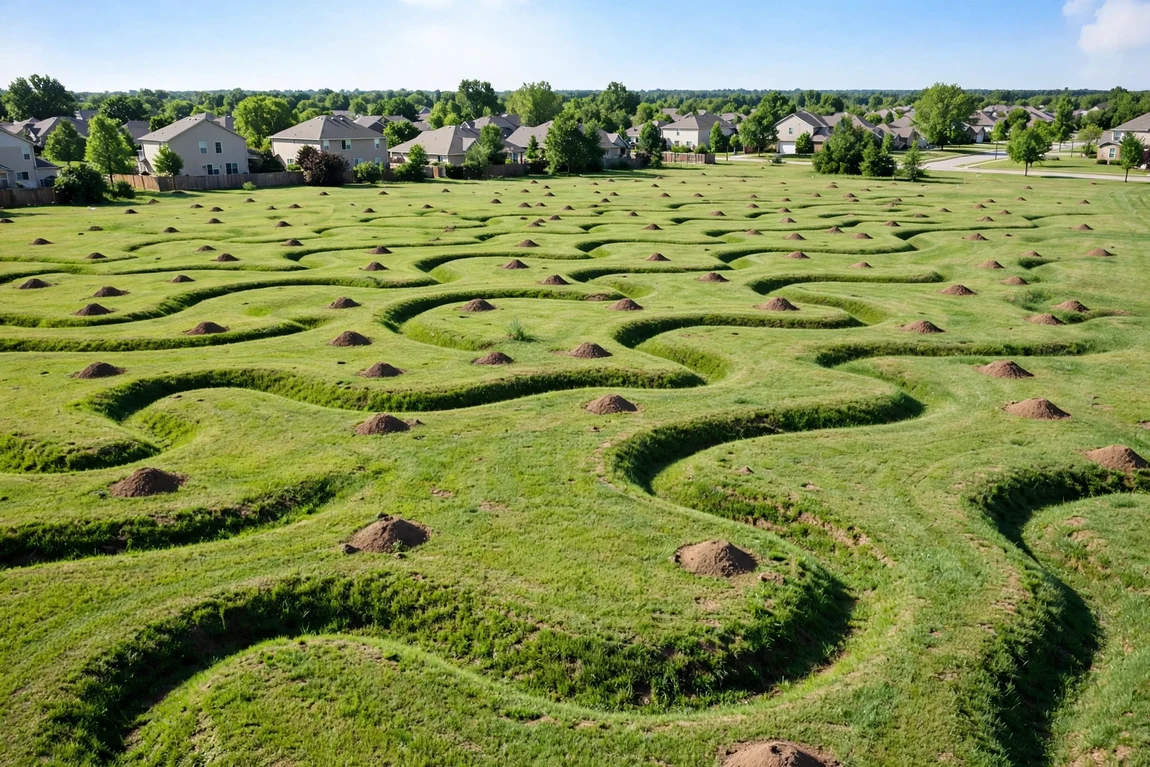
Signs of Moles: Molehills, Ridges, and Runways
Penn State Extension describes molehills as circular mounds of dirt around a vertical shaft, often showing round ripple marks from each new load of soil pushed to the surface. A fresh mound means deep digging is happening below.
Surface runways heave the turf into soft ridges that make mowing difficult and can leave brown traces where grass roots are damaged or exposed to air. These hunting tunnels are only about 1¼ to 1½ inches across.
A mole’s den is a set of chambers 12 to 18 inches below the surface, connected to the hunting grounds by deep travel tunnels. The molehills are often the only surface evidence of that deeper system.
Voles are the usual source of confusion. They clip grass to form above-ground runways and eat seeds, roots, and tubers. Moles rarely eat plants at all, and plant damage near tunnels is usually from other small mammals using the passages, or from roots disrupted by digging.
Why Moles Move Into a Lawn
Food is the whole reason. Penn State Extension states that moles eat mainly grubs, beetles, beetle larvae, and worms, and consume 70 to 100 percent of their body weight each day. That appetite forces them to tunnel constantly in search of prey.

Soil conditions complete the picture. Moles prefer loose, moist soil rich in grubs and earthworms, which is exactly what an irrigated, healthy lawn provides. Three to five moles per acre is considered a high population, so a surprising amount of damage can come from just one or two animals.
Moles are also not purely harmful. Their tunneling aerates the soil, helps dry out sod, and mixes organic matter deeper into the ground.
How to Get Rid of Moles in Your Yard: Step by Step
Trapping is the method extension services rank first. Penn State Extension calls trapping the most successful and practical method of controlling moles, and the steps below follow that guidance. Anyone working out how to get rid of moles in your yard should master the activity test before buying anything.
Step 1: Find the active tunnels. Many surface tunnels are used once and abandoned, so trapping a random ridge wastes effort. Flatten several sections of tunnel with your foot, mark them, and check again in 24 hours. A section that has been pushed back up is an active runway.
Step 2: Choose a proven trap type. The three common designs are the harpoon trap, the scissor-jaw trap, and the choker loop trap, all described in the Penn State Extension mole guide. Each is set over a depressed section of an active surface tunnel, so the mole trips it by pushing up to reopen the passage.
Step 3: Set the trap on a straight, active run. Pick a straight stretch of runway with fresh activity. Dig out a small section, repack fine soil firmly where the trigger pan will rest, and set the trap exactly in line with the tunnel so the mole must pass through it.
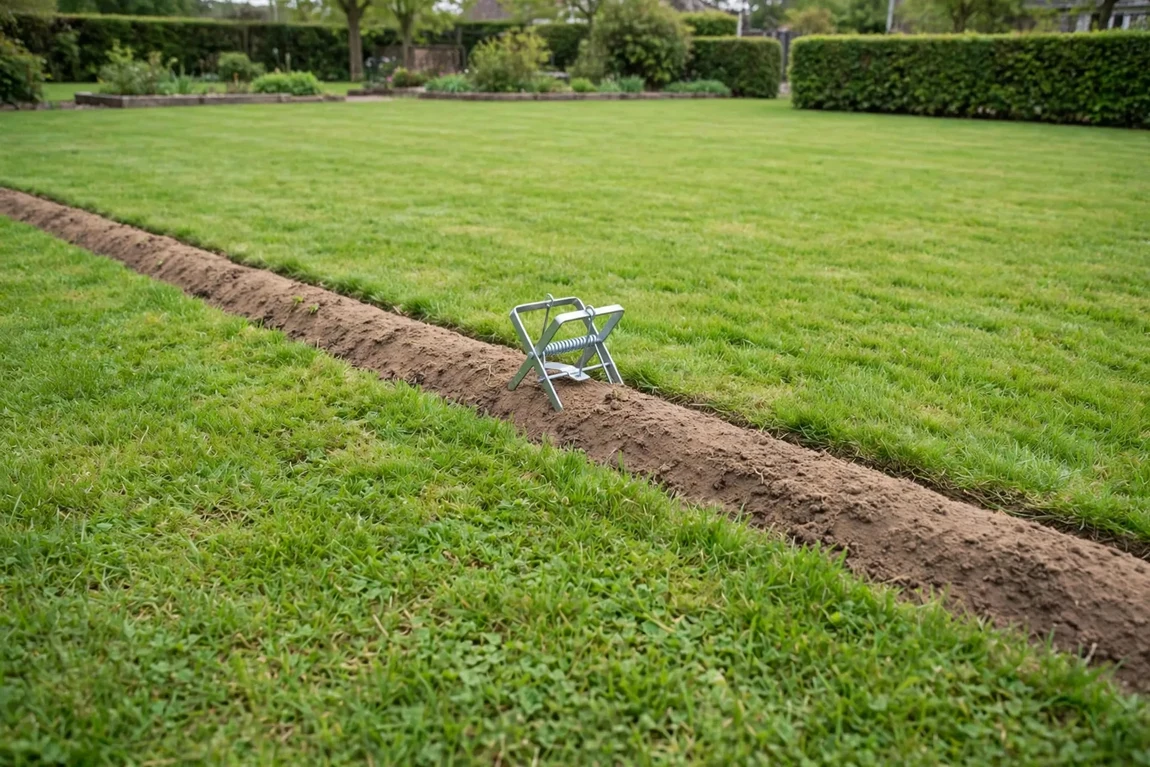
Step 4: Check and move traps as needed. Check traps daily and handle them carefully, following the manufacturer’s safety steps. If a trap sits unsprung for a couple of days, repeat the flattening test and move it to a runway that is being repaired.
Step 5: Protect small, high-value areas with a barrier. For a flower bed or seed bed, Penn State suggests 24-inch-wide sheet metal or hardware cloth bent into an L shape. Bury it in a trench 12 inches deep and 12 inches wide, with the foot of the L facing away from the bed, so moles cannot tunnel under it.
Step 6: Repair the lawn. Press raised ridges back down, reseed bare patches, and water lightly so roots reconnect with the soil. Much surface damage recovers once the mole is gone, because the grass itself was lifted, not eaten.
Grubs, Repellents, and Gadgets: What Extension Says
Grub control alone rarely solves a mole problem. Moles eat earthworms and many other soil insects, so removing white grubs does not remove the food supply. Penn State also cautions that when food is reduced, moles may dig more at first while searching, which can temporarily increase damage.
If you do treat for grubs, confirm grubs are actually present first, and see our guide to getting rid of lawn grubs for identification and timing. Treat the grub problem for the lawn’s sake, not as a guaranteed mole cure.
Repellents and frightening devices have a poor record. Penn State Extension states that no chemical repellents are currently registered for moles, and that electronic, magnetic, and vibration devices have not been proven effective. Castor bean and mole plant borders are also doubtful, and both plants are poisonous to people.
Poison baits disappoint for a simple dietary reason. Because moles feed almost entirely on live insects and worms, they do not readily take grain or peanut-based baits. Penn State concludes that poisoning is usually not as effective as trapping, and fumigants are largely ineffective because moles wall off gassy tunnels.
Prevention and Long-Term Lawn Care
Keep expectations realistic: a lush lawn will always be good hunting ground. The practical goal in how to get rid of moles in your yard for the long term is fast detection, quick trapping of new arrivals, and barriers around the beds you value most.
Walk the lawn weekly in spring and after rain, when moles are busiest. Flatten new ridges promptly and watch which ones return.

Avoid overwatering where you can. Constantly wet soil brings earthworms close to the surface and makes digging easy, which concentrates mole activity in the top layer of turf.
Coordinate with neighbours on small lots. A mole’s runway system can cross several lawns, so trapping and monitoring work best when adjoining yards act at the same time. Our wider guide to chipmunk control covers the same identify-first approach for other lawn diggers.
DIY vs. Hiring a Professional
For most homeowners, how to get rid of moles in your yard comes down to DIY trapping. The traps are inexpensive, reusable, and effective once they are placed on truly active runways. Most failures come from placement, not the trap, so patience with the activity test is the main skill to learn.
Hire a licensed pest or wildlife operator when tunnels cover a large property, when damage returns immediately after each catch, or when you are not comfortable setting spring-loaded traps. A pro can map the runway system across the whole yard and service multiple traps daily.
Rules vary locally, so check before you act. Some products, including certain toxicants and fumigants, are restricted-use and can only be applied by a certified applicator. Always follow label directions exactly, keep baits underground only, and keep children and pets away from set traps.
Handled in order, how to get rid of moles in your yard is a short project: confirm the animal, find the active run, trap it, and repair the turf. Skipping the identification step is what turns a one-mole problem into a season of frustration.
Frequently Asked Questions
Do moles eat plant roots and bulbs?
Rarely. Penn State Extension notes that moles are insectivores that feed on grubs, beetles, larvae, and worms. Root and bulb damage near tunnels is usually caused by voles or mice travelling through the mole runways.
Will grub killer get rid of moles?
Not reliably. Grubs are only part of the diet, and earthworms remain. Penn State warns that reducing food can even increase digging at first, and that chemical control of soil insects can harm ground-feeding birds and other wildlife.
What is the most effective mole control method?
Trapping, according to Penn State Extension, provided the trap is set in an active tunnel. Use the flatten-and-recheck test over 24 hours to find runways in regular use before you set anything.
Do vibrating stakes or castor oil work?
Extension testing does not support them. Penn State states that electronic, magnetic, and vibration devices have not been proven effective, and no chemical repellents are currently registered for use on moles.
How many moles are usually in a yard?
Often just one or two. Moles are solitary animals, and Penn State Extension notes that three to five moles per acre is a high population. Extensive fresh ridges do not necessarily mean a large infestation.