
A bamboo house sounds like a beach novelty — until you run the numbers. Bamboo is stronger by weight than steel, grows to full height in three to five years (against decades for hardwood), and has quietly become one of the most practical materials in home design: flooring that outlasts oak, cabinetry, screens, furniture and full structural systems. This 2026 guide covers what a bamboo house really is, where bamboo earns its place inside and outside a home, what it costs, and why the material makes particular sense in hot-climate cities like Dallas.
Last updated: October 23, 2026.
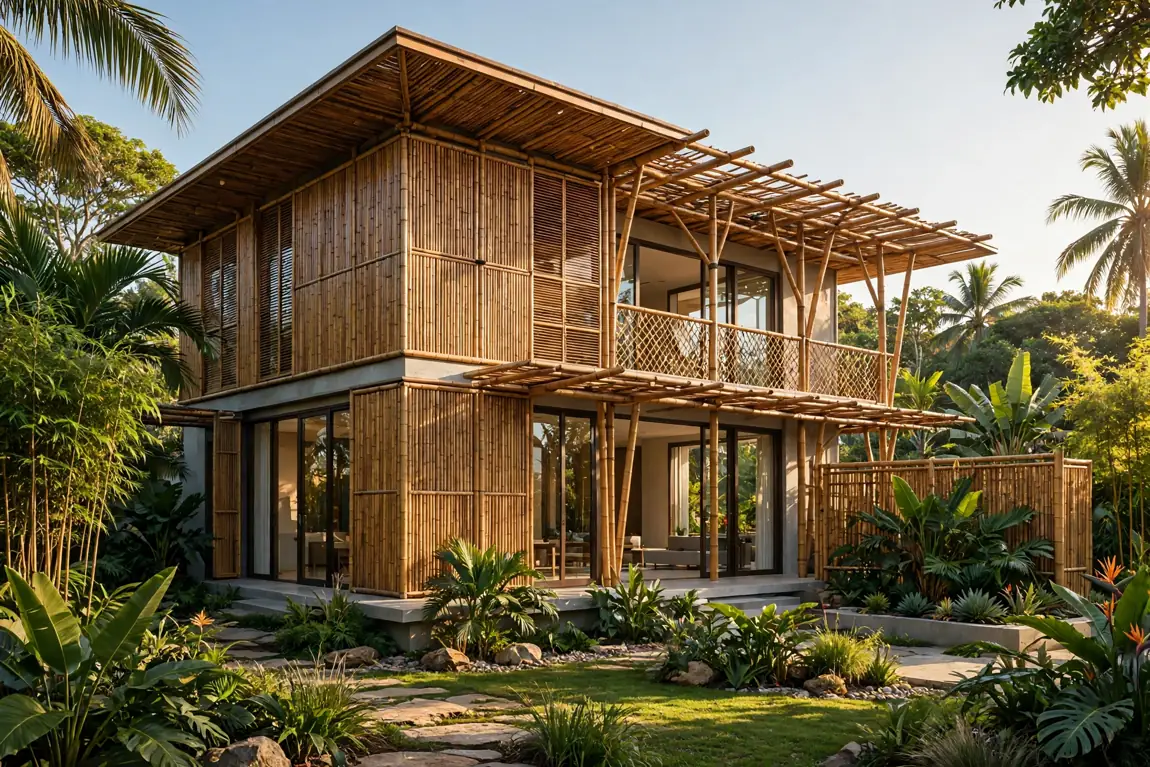
What Is a Bamboo House, Exactly?
The term covers three things. At one end are structural bamboo homes, built for centuries across Asia and now engineered in the West with treated, laminated bamboo poles and panels that meet modern codes in some regions. In the middle are hybrid homes — conventional framing with bamboo doing visible work: floors, stairs, cabinetry, ceilings, screens. And at the everyday end is the bamboo interior, where the material shows up as flooring, furniture, blinds and decor. Most North American readers will live in the second and third categories — and that is where the value is easiest to capture.
Why Bamboo Wins: Strength, Speed, Sustainability
Three facts drive the boom. Strength: strand-woven bamboo flooring rates harder than red oak on the Janka scale, and structural bamboo has a tensile strength comparable to mild steel at a fraction of the weight. Speed: bamboo is a grass, not a tree — some species grow a foot a day and reach harvest maturity in 3–5 years, then regrow from the same root without replanting. Sustainability: that growth rate makes bamboo one of the most carbon-friendly building materials available, provided it is FSC-certified and treated/finished without harsh formaldehyde — check for FloorScore or equivalent low-VOC certification when you buy. It is the same logic driving the wider shift toward smarter, lower-impact homes covered in our look at the future of home electronics: better performance, smaller footprint.
Bamboo Flooring: The Gateway Upgrade
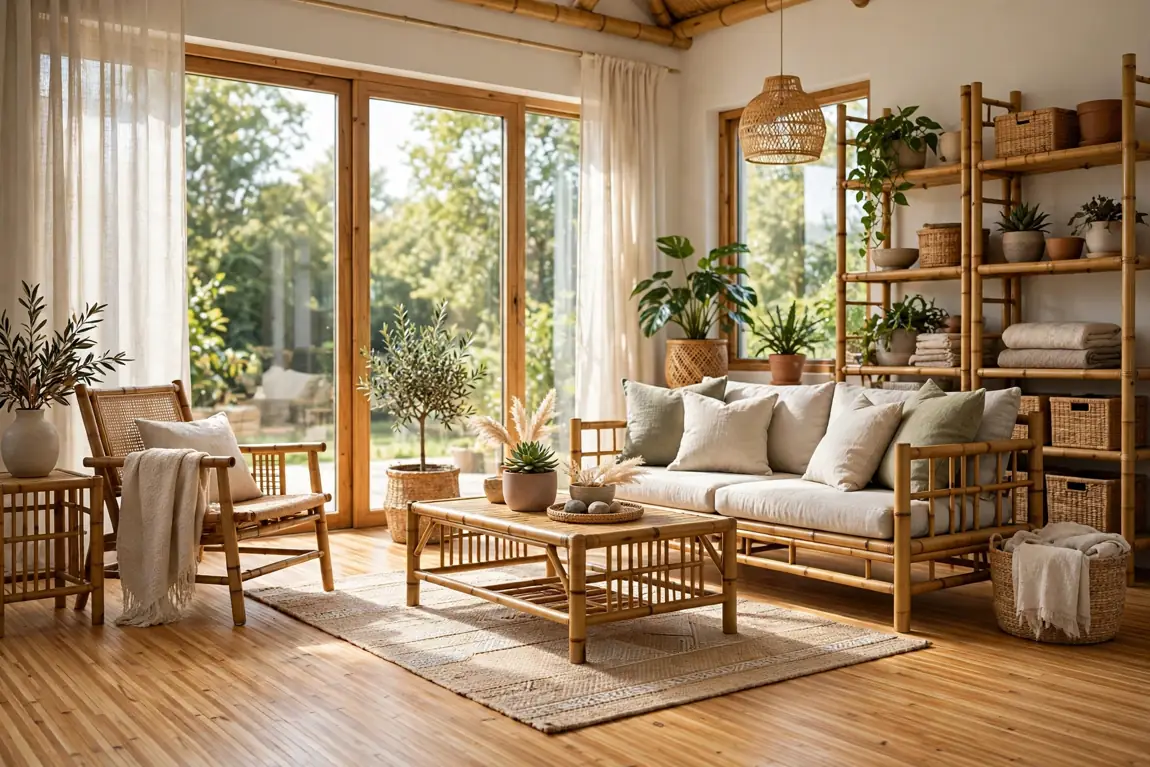
Flooring is where most bamboo houses start. Three grades matter: horizontal/vertical grain (classic look, mid hardness), strand-woven (shredded fibers compressed in resin — the hardest, most dent-resistant, and the one to choose for busy homes and big dogs), and bamboo-look engineered planks for basements and moisture-prone rooms. Installed costs in 2026 typically run $5–$11 per square foot — under comparable hardwood — with the caveats that bamboo dislikes standing water and wants humidity kept in the 40–60% band to avoid cupping. In kitchens and entries, strand-woven with a quality finish handles real life well; in full bathrooms, choose tile and let bamboo visit as the vanity instead.
Bamboo Interiors: Warmth Without Weight
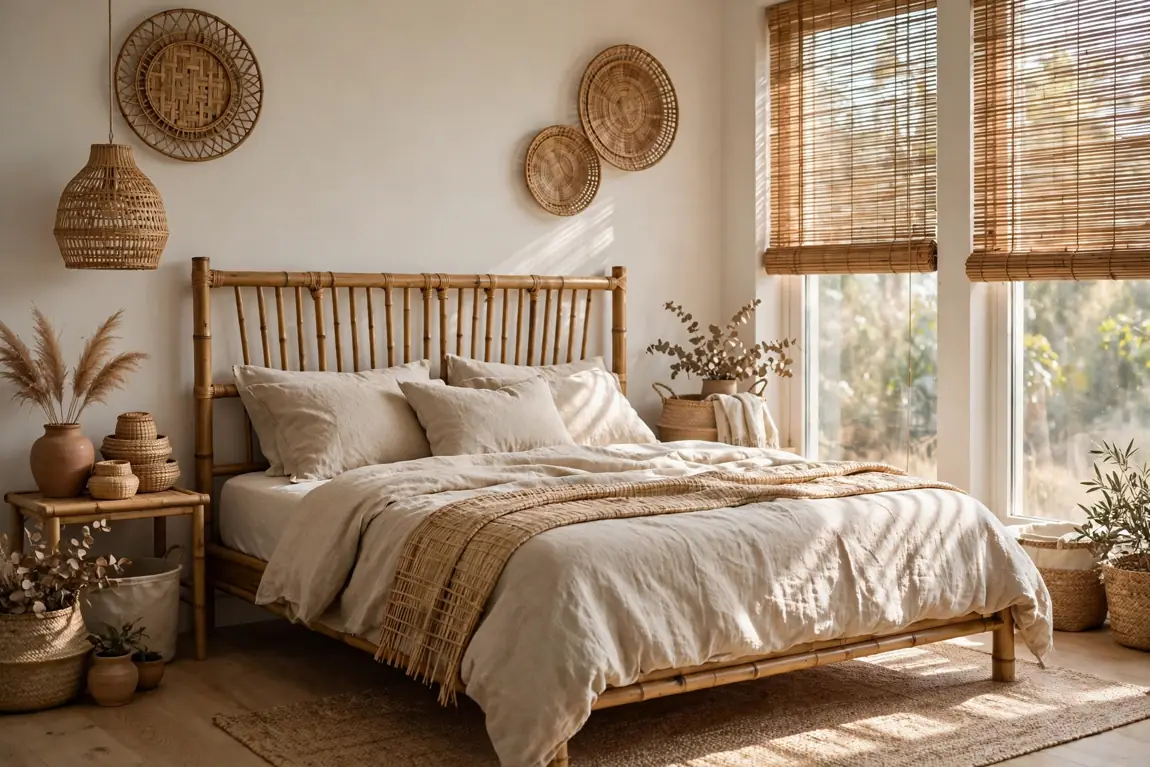
Inside, bamboo’s gift is texture. Bed frames and headboards, woven pendant lights, blinds that filter light into stripes, wall paneling in a hallway, a bamboo bath mat and ladder shelf in the bathroom — each piece adds warmth that reads modern rather than tiki, especially paired with white, black or concrete. Bamboo furniture is light, strong and inexpensive, which makes it a favorite for refresh projects; and like any wood-tone piece, it takes paint and stain well when a room changes direction, as our furniture makeover guide shows. The design rule: bamboo as the texture, not the theme — two or three pieces per room, not twelve.
Bamboo Outside — and Why It Suits Dallas Homes
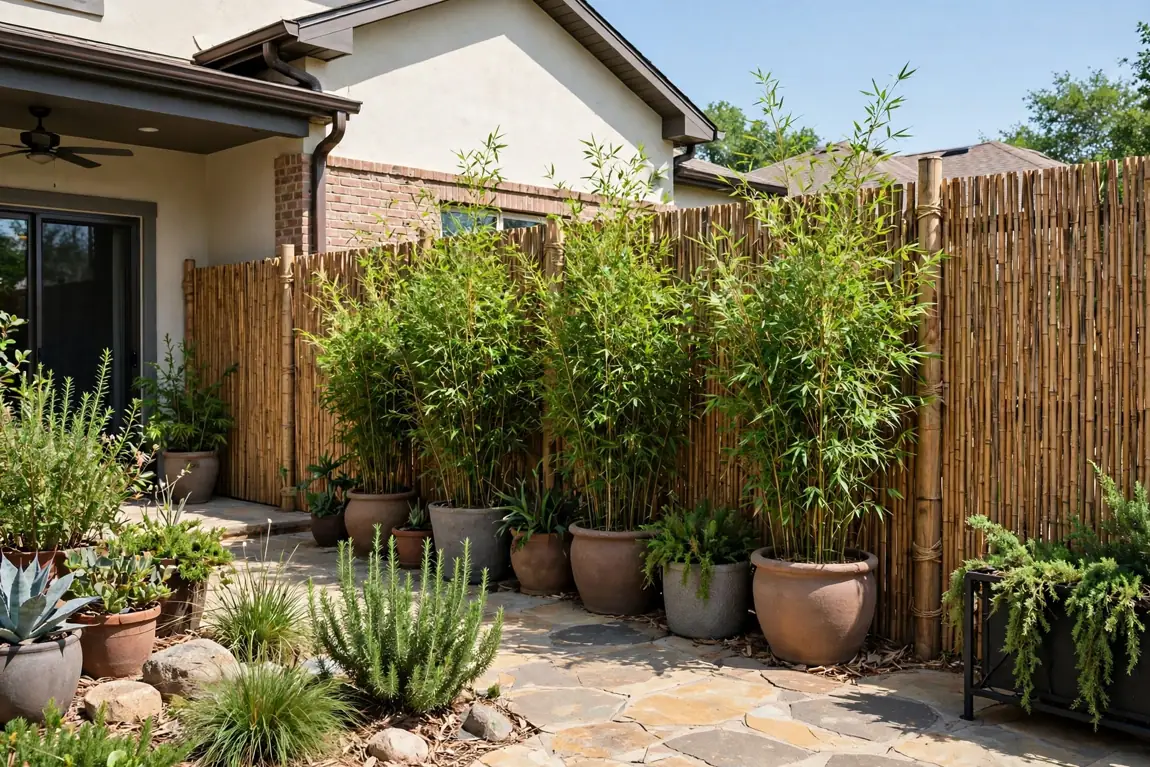
Outdoors, bamboo works two jobs: screens and shade (fences, pergola tops, patio covers that cool a Dallas backyard through the brutal summer) and living privacy from clumping bamboo varieties, which grow fast without the invasive spread of running types. Dallas and North Texas are genuinely well-suited to the material: bamboo tolerates heat and humidity, the growing season is long, and the city’s mid-century and contemporary housing stock pairs naturally with bamboo’s clean lines. The cautions are Texan too: choose clumping varieties or grow in containers and root barriers, water deeply through drought weeks, and expect some winter die-back in the hardest freezes, from which established clumps regrow in spring. For more low-effort outdoor upgrades, see our low maintenance landscaping ideas.
What Bamboo Costs in 2026
| Application | Typical 2026 Cost | Notes |
|---|---|---|
| Strand-woven bamboo flooring | $5–$11 / sq ft installed | Hardest grade; under hardwood pricing |
| Bamboo kitchen cabinets | $150–$400 / linear ft | Custom/semi-custom; plyboo panels |
| Bamboo privacy fencing | $8–$20 / linear ft | Rolled or panel; seal yearly outdoors |
| Clumping bamboo plants | $40–$120 per plant | 5-gallon; screens fill in 2–3 seasons |
| Full structural bamboo home | Varies widely by region | Engineered systems; check local codes first |
Frequently Asked Questions
Is a bamboo house durable?
The material is: strand-woven bamboo outlasts most hardwoods as flooring, and treated structural bamboo homes in Asia have stood for generations. The weak points are moisture and sun — keep bamboo dry, sealed and shaded outdoors, and it serves for decades.
Do termites eat bamboo?
Untreated bamboo’s starches attract insects, which is why reputable products are borate-treated during manufacture and finished/sealed at install. Buy treated, certified material and the termite question largely goes away; raw decorative poles for outdoor use should be treated or kept off the ground.
Is bamboo cheaper than hardwood?
Usually, yes — bamboo flooring typically installs for less than comparable oak or maple, and bamboo furniture and panels undercut their hardwood equivalents while matching or beating them on hardness. Imported specialty items can narrow the gap.
Will bamboo take over my yard?
Running bamboo can spread aggressively; clumping bamboo does not. Choose clumping varieties for in-ground planting, or use containers and root barriers for any type — especially in dense Dallas neighborhoods where your neighbor’s yard is close.
Conclusion: The Grass That Builds Houses
Bamboo asks you to update one assumption: that serious materials grow slowly. The bamboo house — structural, hybrid or simply bamboo-floored and bamboo-furnished — is stronger than expected, cheaper than hardwood, kinder to the planet, and at home in a Dallas summer. Start where most people do, with a floor or a room of texture, and let the grass prove itself one square foot at a time.