

To remove old carpet for new flooring, start at a corner, pull the carpet up with pliers, and cut it into 3-foot strips. Remove the padding, pull out staples, pry up tack strips, then clean and inspect the subfloor before installing your new floors.
You’ve picked out your new flooring. Maybe it’s hardwood, laminate, vinyl plank, or tile. Either way, before any of it goes down, the old carpet has to come out. The good news? You can do this yourself over a weekend. It takes some effort, but it’s straightforward work — and it can save you a few hundred dollars in labor costs.
This guide walks you through every step, from clearing the room to prepping the subfloor so your new flooring goes down right.
Why Removing Carpet Yourself Makes Sense
Hiring someone to pull up old carpet adds to your project cost. Most flooring contractors charge between $1 and $2 per square foot just for removal. On a 300-square-foot room, that’s up to $600 before they’ve laid a single plank.
Doing it yourself cuts that cost entirely. It also gives you a chance to see the subfloor with your own eyes before the new material goes down. You might find moisture damage, squeaky boards, or even original hardwood hiding underneath — things worth knowing about before you commit to a new installation.
What You Need Before You Start
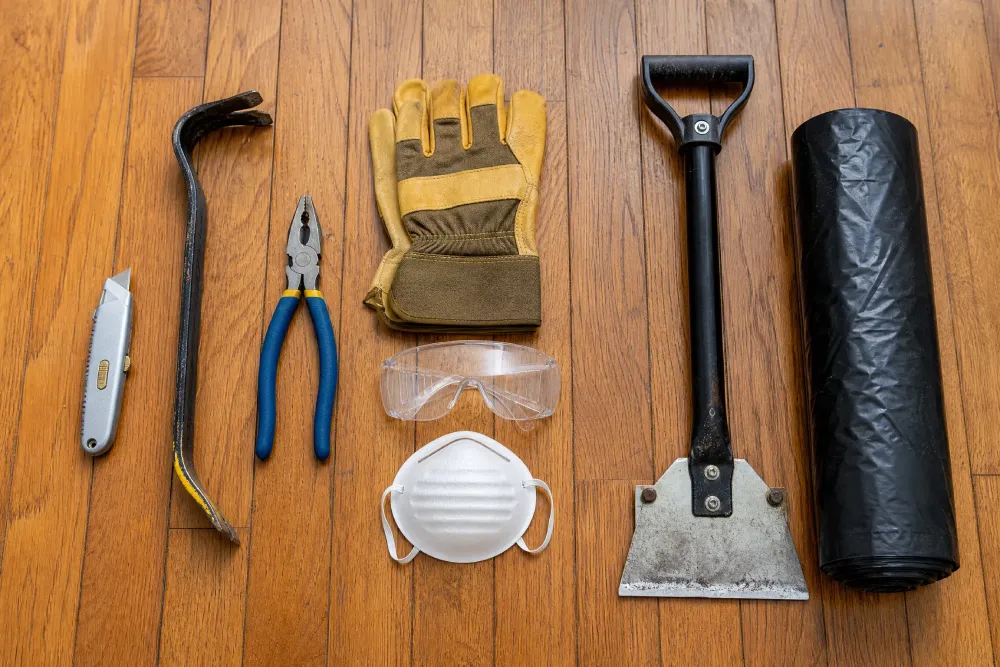
Getting the right tools together before you start saves a lot of back-and-forth. You’ll need a utility knife with fresh blades, a pry bar, a pair of pliers, heavy-duty work gloves, safety glasses, a dust mask, and heavy-duty trash bags. A floor scraper helps with stubborn adhesive residue if the padding was glued down.
Don’t skip the gloves and mask. Old carpet holds years of dust, allergens, and debris. When you pull it up, that stuff goes airborne fast.
Clear the Room First
Before you touch the carpet, move everything out of the room. Furniture, rugs, lamps — all of it. You need clear access to the entire floor, especially the corners and edges where tack strips hold the carpet in place.
If you’re removing carpet from several rooms, work one room at a time. This keeps the project manageable and your house livable while the work is happening.
How to Pull Up the Carpet
Start in a corner. Grab the carpet with your pliers and pull up firmly until it releases from the tack strip. Once you have a section free, use your hands to peel it back. You’ll get a feel for it quickly.
Tom Silva, general contractor at This Old House, recommends starting at a corner: grip the carpet with pliers, pull up, then peel back a small area of padding to get a look at the subfloor before going further. That quick look tells you a lot about what you’re working with.
Once you’ve detached a large section from the tack strip, cut the carpet into strips about 3 to 4 feet wide using your utility knife. Smaller strips are far easier to carry, roll, and haul out. Roll each strip tightly and secure it with tape or twine. This keeps the mess contained and makes disposal much easier.
When possible, cut from the back side of the carpet rather than through the pile — it’s easier on your blade and gives you a cleaner cut.
At doorways, cut the carpet cleanly at the threshold. Leave the metal transition strips in place if they’re in good shape. If you need to remove them, use a pry bar and watch for screws or nails holding them down.
Removing the Carpet Padding
Once the carpet is out, the padding is next. Most padding can be pulled up by hand — start at a corner and peel it back. The real challenge is the staples used to secure it to the subfloor.
Use pliers or a flat-head screwdriver to pull out every staple. This step feels tedious, but it matters. Even a small staple left behind can puncture new flooring or create an uneven surface that shows through over time. Work systematically across the floor so you don’t miss any.
If the padding is glued down, you may need to use a floor scraper to remove stubborn sections and adhesive residue. Take your time here. Rushing causes gouges in the subfloor that’ll need fixing later.
Roll the padding into sections just like the carpet and bag it up for disposal.
Taking Out the Tack Strips
Tack strips are the thin wooden boards nailed around the perimeter of the room. They have sharp angled nails pointing upward — those are what grip and hold the carpet edge in place. Handle them carefully. The nails are small but they will absolutely find your hand or foot if you’re not paying attention.
If you’re planning to install carpet again and the tack strips are in good condition, you can leave them in place. If they’re damaged, rusty, or you’re switching to a different flooring type, remove them with a pry bar.
Slide the flat end of the pry bar under the strip and apply steady pressure. Most strips pop up without much drama. Dispose of them carefully — wrap them in newspaper or cardboard before bagging so the nails don’t tear through.
Cleaning and Inspecting the Subfloor
This is the step that determines how well your new flooring performs. Once the carpet, padding, tack strips, and staples are all gone, sweep the entire subfloor and vacuum it thoroughly. You’re removing fine dust, debris, and anything that could create unevenness under your new material.
Examine the entire subfloor for signs of damage — water stains, mold, or soft spots in the wood. Address any issues before installing new flooring, as you may need to replace sections of subflooring or treat for mold.
Use a 6-foot straightedge or level to check for unevenness. Most flooring types require a tolerance of no more than 3/16 of an inch over 10 feet. If your subfloor doesn’t meet that, self-leveling compound can fix low spots before you proceed.
Moisture is a separate concern entirely. If you’re installing on a concrete slab, a moisture barrier is required. For other subfloors, check for any signs of moisture issues and consider whether your new flooring material needs that extra layer of protection.
Squeaky boards also deserve attention at this stage. Drive screws through the subfloor into the joists below to lock them down. It’s quick work now and saves you from noisy floors later.
What to Do if You Find Hardwood Underneath
Before ripping everything out, it’s worth noting that on several This Old House projects, crews discovered valuable hardwood flooring hidden beneath old carpet. If you spot wood planks when you peel back that first corner, slow down and take stock.
Original hardwood in decent shape can often be refinished rather than covered over. Pull the carpet carefully in that case, and use a small flat-blade screwdriver to remove staples without scarring the wood beneath.
Disposing of the Old Carpet
Old carpet is bulky and heavy. Most curbside pickup programs won’t take it in large rolls. Check with your local waste management department for disposal guidelines, as rules vary by area. Some flooring retailers will also take old carpet away when you purchase new material from them.
Your best bet is to call ahead and ask. Some municipalities allow carpet bundles at the curb if they’re cut to a certain length — typically 4 feet. Others require a special pickup or a trip to a disposal facility.
When to Call a Professional
Most carpet removal is a solid DIY job. But some situations call for outside help. If you discover water damage, mold, or wood rot during removal, those issues need to be addressed before new flooring goes in. Solving them upfront is far less expensive than dealing with them after the new floor is already installed.
Extensive adhesive or thinset left on the subfloor can significantly extend removal time. In those cases, renting a power scraper is worth considering. If the damage to the subfloor is structural — meaning joists or supports are compromised — that’s a job for a contractor.
Final Check Before New Flooring Goes In
Once the subfloor is clean, flat, dry, and free of debris, walk the entire room one more time. Press down at various spots to check for any soft areas you might have missed. Run your hand across the surface to feel for staples or nail heads that didn’t make it into the bag.
Taking photos of the subfloor condition before new flooring is installed can help protect you if warranty issues come up later. It takes 30 seconds and costs nothing.
When everything checks out, you’re ready. The hard part is done. Your subfloor is clean, level, and prepped — and your new flooring has the best possible foundation to last for years.