

Rodent control and exterminator services help homeowners and businesses eliminate rats and mice safely. Professionals use inspections, trapping, exclusion, and bait stations to remove active infestations and block re-entry—giving you a pest-free home and long-term protection.
You hear something scratching behind the wall at 2 a.m. You spot tiny droppings near the kitchen cabinet. You find a small hole chewed through the corner of your pantry. These are not coincidences—these are signs that rodents have moved in, and they are not planning to leave on their own.
Dealing with rats or mice is not just about the “gross” factor. It is a real health and safety issue. The good news is that professional rodent control and exterminator services exist to take this problem off your plate completely. This guide walks you through everything you need to know—from spotting the first signs to understanding what a pro actually does when they show up at your door.
Why Rodents Are More Dangerous Than You Think
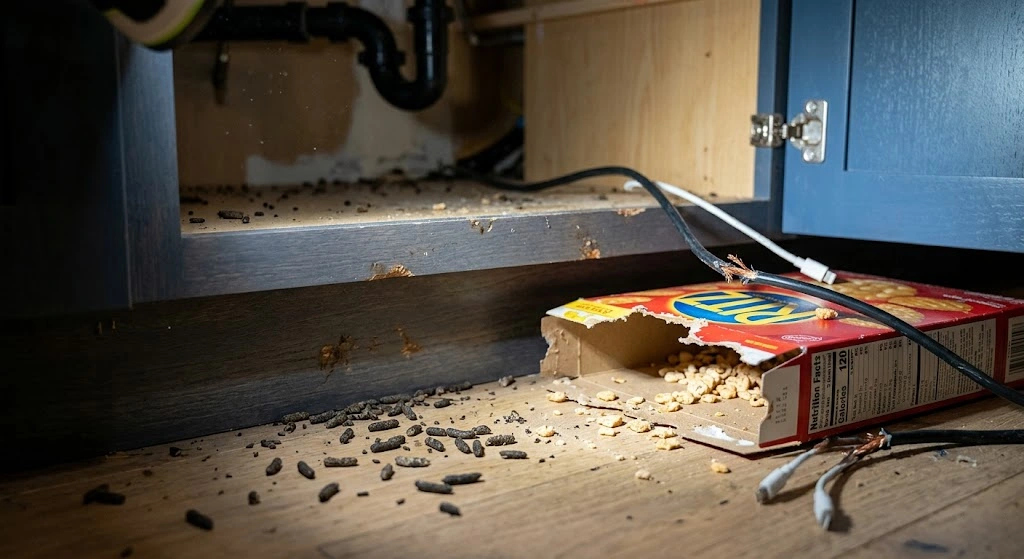
Most people underestimate how serious a rodent problem can get. A single mouse can seem like a minor annoyance, but mice and rats breed at an alarming rate. Rats can give birth to up to 10 pups every three weeks, while mice can produce up to 60 pups in a single year. What starts as one or two rodents can turn into dozens within weeks.
The health risks are just as serious. Rodents carry diseases including murine typhus, leptospirosis, rat-bite fever, and hantavirus pulmonary syndrome—and some of these diseases can result in death. They also contaminate food, leave droppings in hidden spaces, and carry fleas and mites into your home.
Beyond health, rodents cause real damage to your property. They chew through electrical wires, destroy insulation, and gnaw on wooden beams. A chewed wire inside a wall is a fire hazard that you may not even know exists until it is too late. This is why calling a professional rodent exterminator is not an overreaction—it is the smart move.
Signs You Actually Have a Rodent Problem
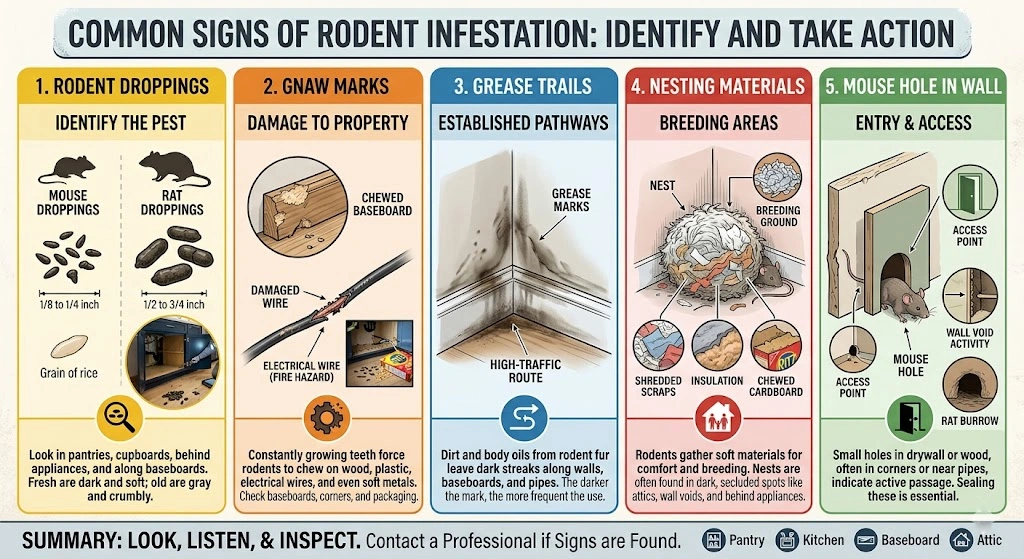
Catching a rodent infestation early makes a big difference. The sooner you act, the less damage there is to clean up—and the less it costs to fix.
Signs of a rodent infestation include droppings, scratching sounds in the walls and ceiling, and gnaw marks on baseboards, floors, and food containers. You might also notice grease marks along the walls where rodents travel, shredded paper or fabric used for nesting, or an unusual musky smell in confined spaces like closets or under the sink.
Pay close attention to areas where food is stored—the kitchen, pantry, and garage. Rodents are drawn to easy food sources, and they tend to nest close to where they feed. If you spot one of these warning signs, do not wait. Rodents reproduce fast, and a small issue becomes a large one quickly.
What Professional Rodent Exterminator Services Include
Hiring a professional is not just about having someone set a few traps. A proper rodent control service covers several steps from start to finish.
A targeted rodent pest control service starts with inspecting the home to find where rodents are nesting and how they are getting inside. From there, exterminators apply traps, baits, and safe treatment materials while sealing gaps and cracks to stop rodents from entering or reestablishing nests.
Most companies also install monitoring devices in key areas—like kitchens, utility rooms, and garages—to track ongoing activity. After each service visit, you receive a clear report detailing what was found, what treatments were applied, and the steps you can take to keep your home rodent-free going forward.
The best exterminator services also include exclusion work, which means physically closing off the entry points rodents use to get inside. This is what separates a one-time fix from a long-term solution.
The Methods Exterminators Use to Get Rid of Rodents
Professional exterminators do not rely on a single approach. They combine several methods based on the severity of the infestation and the layout of your home.
Exclusion is the foundation of good rodent control. Exclusion involves sealing cracks, gaps, holes, and crevices throughout your home. Mice can fit through spaces as small as ⅜” x ¼”, while rats can move through openings as small as ¾” x ½”—so even tiny gaps need to be addressed.
Trapping targets rodents that are already living inside. Your exterminator looks for the subtle signs rodents leave behind and places traps where they are most likely to be active—near nesting areas, food sources, and travel pathways. Snap traps, live traps, and electric traps are all common options depending on the situation.
Bait stations are sealed containers that hold rodenticide in a controlled way. They are placed in strategic spots around the property and replaced during follow-up visits. Rodenticides are effective but should be used with caution, especially in homes with pets or small children, and should always be placed in tamper-proof stations.
For severe cases, some companies offer fumigation, which involves sealing the structure and releasing a gas that reaches every hidden space. Fumigation starts around $1,500 and can run between $2,000 and $6,500 for an average-sized home. Most exterminators treat this as a last resort when other methods have not worked.
How Much Does Rodent Control Cost?
Cost is one of the first questions people ask, and the honest answer is that it depends on the situation.
Rodent removal costs $150 to $600 on average, depending on the animal, the method used, the size of the infestation, and your location. A rodent inspection alone typically costs $75 to $150, and rodent cleanup services run between $600 and $1,000.
Hiring a mouse exterminator costs about $350 on average, with some professionals charging between $75 and $125 per visit. Rat infestations tend to cost more. Rat extermination costs range from $395 to $1,500, depending on the size of the infestation.
The cost of doing nothing is always higher. Rodents cause structural damage that leads to expensive repairs—chewed wires, destroyed insulation, and damaged drywall all add up fast. Getting professional help early almost always saves money in the long run.
Why DIY Rarely Works for Rodent Infestations
Buying a few snap traps at the hardware store feels like a reasonable first step. For a very small problem—fewer than five mice—that might work. But for anything larger, DIY methods tend to fall short.
Mice infestations involving more than five rodents are much more difficult to eliminate without professional help. Store-bought traps catch individual rodents but do nothing to address the entry points where more are coming in. You end up playing a game you cannot win without addressing the root cause.
Professional services use high-quality materials to seal entry points that rodents cannot chew through—unlike many materials used in DIY attempts. Professionals also know where to look. Rodents hide in spaces most homeowners never inspect, like inside wall voids, under attic insulation, and behind large appliances.
How to Keep Rodents From Coming Back
Getting rid of rodents is only half the job. Keeping them out long-term requires some changes around your home.
Store food in sealed containers, avoid leaving pet food out overnight, empty garbage cans regularly, and clean crumbs from kitchen counters every day. These small habits remove the food sources that attract rodents in the first place.
Ask your exterminator about ongoing monitoring plans. Many companies offer quarterly or monthly visits to check bait stations, inspect for new activity, and re-seal any areas that rodents have attempted to breach. This kind of regular service is especially worth it if you live in an area with a known rodent population.
When Is the Right Time to Call an Exterminator?
The honest answer is: as soon as you spot the first sign. Do not wait until you see a rodent running across the floor in broad daylight. By that point, the population inside your home is likely already large.
If you notice multiple signs of a rodent infestation—droppings, gnaw marks, or strange noises—call a professional immediately. Rodents reproduce quickly, so addressing the problem early is essential to preventing further issues.
A professional exterminator gives you a fast, complete assessment of what you are dealing with. They find entry points you would never locate on your own, apply treatments that actually work, and give you a clear plan to prevent it from happening again. That peace of mind is worth every dollar.
If rodents have shown up in your home or business, do not let the problem grow. Reach out to a qualified rodent control and exterminator service today—and take back your space.