

Moving day feels chaotic enough without walking into a dark, freezing house because nobody called the electric company. Utility setup rarely makes it onto anyone’s list of exciting moving tasks. But skip it, or leave it too late, and you risk moving into a home with no power, no water, and no internet.
This guide breaks down exactly which utilities you need, when to call each provider, and what it will cost you. Follow it and you’ll walk into your new home with the lights on and the Wi-Fi working.
Your Utility Setup Checklist
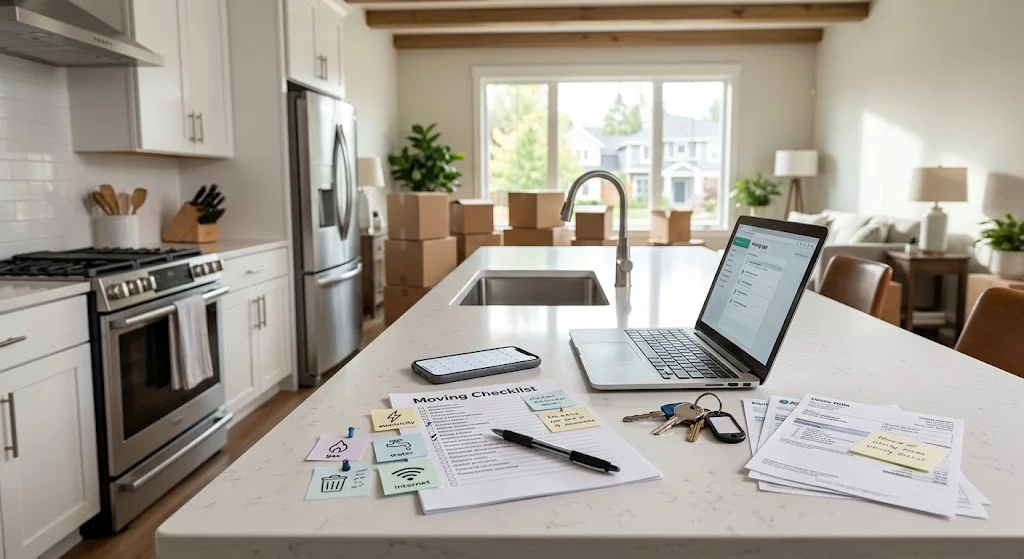
Setting up utilities comes down to four steps: list what you need, contact your current providers, schedule new service, and create your online accounts. Here’s how to handle each one.
Step 1: List Every Utility You Actually Use
Before you call anyone, write down every service tied to your current address. This list changes based on where you live, whether you rent or own, and what your lease covers. Most households need to track:
- Electricity
- Natural gas
- Water and sewer
- Trash and recycling collection
- Internet and cable or satellite TV
- Landline phone service
- Home security
- Lawn care
Don’t stop at the basics. Add anything else billed to your address, including pest control visits or a recurring cleaning service. Check your cell phone plan too. Your number moves with you, but a competing carrier might offer stronger coverage at your new address.
For each item, note three things: who’s responsible for paying it (you, a roommate, or your landlord), the account number, and the provider’s contact information. This ten-minute step saves you from scrambling through old bills later.
Step 2: Contact Your Current Providers
Call or go online to notify every current provider of your move-out date. Most companies want at least one to two weeks’ notice to schedule a final meter reading and close your account cleanly. Waiting until the last minute can mean an extra month of charges at a house you no longer live in.
Ask about final bills, deposit refunds, and whether you can transfer service if you’re staying with the same provider in a new location. Some companies will apply your existing deposit to the new address instead of charging you again.
Step 3: Schedule Service at Your New Address
Line up your new services to start the day you move in, not the day after. Utility companies typically need a business day or two to process a start order, so book electricity and water at least a week ahead. Internet installation often needs more lead time, especially if a technician has to run new lines.
Call, don’t just assume. A previous tenant’s working outlets don’t guarantee active service. Confirm the account is in your name before move-in day.
Step 4: Create Your Online Accounts
Once service is active, set up an online account with each provider. This gets you paperless billing, usage tracking, and a fast way to report outages. It also gives you a direct line to customer service if something goes wrong in your first few weeks.
Setting Up Electricity and Gas
Electricity and gas markets work differently depending on where you live. In a regulated market, one utility company controls the area and you simply sign up with them. In a deregulated (or competitive) market, several providers compete for your business, and rates can vary significantly between them.
Check your state’s public utility commission website to find out which type of market you’re moving into. If you’re relocating within the same regulated area, you can often just transfer your existing account. If you’re entering a deregulated market, compare rates, contract lengths, and any early cancellation fees before you commit.
Start this process at least two weeks before moving day. Comparing plans takes time, and finalizing a contract can take longer than you expect.
Budget for a deposit. Many providers charge $100 or more for first-time customers, particularly if you have limited credit history with them. A strong credit score can get this deposit waived or reduced, so it’s worth asking directly.
Setting Up Water and Sewer
If your new home relies on a private well or a storage tank, you likely won’t have a monthly water bill at all. Most homes, though, get water through a city or county utility. Your landlord, real estate agent, or a quick search of your local government’s website will confirm which applies to you.
Notify your current water provider of your move-out date at least a week ahead so they can schedule a final reading. Then contact the new provider to set up service starting on your move-in date. If you’re staying with the same municipal supplier and just changing addresses, this is usually a quick phone call.
Your bill is based on metered usage, so rates fluctuate with how much water you use. Many suppliers bundle water and sewer charges into a single bill, especially in areas without a private septic system.
Setting Up Internet and TV
Compare internet and TV providers in your new area before you commit. Coverage and speeds can differ block by block, so check what’s actually available at your new address, not just what’s popular nationally.
Watch for promotional pricing. Many providers advertise a low rate for new customers that jumps significantly after six to twelve months. Read the fine print so you’re not blindsided later.
Schedule installation at least a week before move-in, especially if a technician visit is required. Ask about:
- Early termination fees on your current contract
- Setup or activation fees for new service
- Equipment rental costs for your router, modem, or TV box
Deposits are rare for internet and TV, but activation fees are common. Getting these details upfront keeps your first bill from being a surprise.
Are Utilities Included in Rent?
Some landlords roll utilities like water or trash collection into your monthly rent. Others expect tenants to handle everything separately. Your lease should spell this out clearly, usually in a section labeled utilities or tenant responsibilities.
If your lease is vague, ask your landlord directly before move-in day. Knowing this upfront prevents you from paying double, or from missing a bill entirely because you assumed it was covered.
When utilities are bundled into rent, you’ll typically pay a fixed amount each month regardless of how much you actually use. That’s worth knowing if you’re a heavy water or electricity user.
How Much Does It Cost to Set Up New Utilities?
Setup costs depend on the utility type, your credit history, and where you live. Here’s a general breakdown:
Electricity and gas: Deposits commonly range from $50 to $250, based on your credit score and expected annual usage. Some deposits are refundable after a set number of on-time payments; others are non-refundable service fees.
Water: Deposits are less common but do happen, particularly for renters without a local payment history.
Internet and TV: Providers rarely charge deposits but often add a setup or activation fee, typically between $25 and $100.
Transfer fees: If you’re staying with your current provider but moving to a new address, expect a smaller administrative fee to update your account. This is usually far less than what a brand-new customer pays, and some providers waive it entirely as a goodwill gesture.
How to Transfer Utilities to a New Owner or Tenant
If you’re the one moving out, tell your utility providers your move-out date as early as possible. Ask about the exact process for closing your account and transferring service to the next occupant. If you’re a renter, your landlord may handle this on your behalf, but confirm it rather than assume.
Once your side is settled, pass along contact information for each provider to your realtor, landlord, or the new homeowner. A simple list with provider names and account numbers saves the next person hours of digging around.
Setting Up Utilities for a New Home Build
New construction adds a layer of complexity that existing homes don’t have. The infrastructure, poles, pipes, and lines, may not be in place yet, which means coordinating between you, your builder, and multiple utility companies.
Expect potential delays from permitting, inspections, or unforeseen site issues. You may also face additional costs for connecting utilities to your property, including fees for running new lines or burying them underground. Ask your builder early which utility hookups are included in your contract and which ones fall on you.
Final Thoughts
Setting up utilities is one of the least exciting parts of moving, but it’s also one of the easiest to get wrong if you leave it too late. Start two to three weeks before your move: list your utilities, notify current providers, schedule new service, and confirm every start date lines up with your move-in day.
Handle it early, and utility setup becomes a quick checklist item instead of a stressful scramble on move-in day.
FAQ: Setting Up Utilities When You Move
Which utilities are usually included in a lease?
Water, trash collection, sewer, electricity, and gas are the most common utilities landlords include. Internet, basic cable, and lawn care are sometimes bundled in too, though they’re not technically classified as utilities.
Is Wi-Fi considered a utility?
Not technically. Internet service doesn’t meet the formal definition of a utility, but most people treat it as one given how essential it’s become for daily life.
What’s a typical electric bill for an apartment?
The average U.S. electric bill runs around $137 a month, according to the U.S. Energy Information Administration. Apartments often run lower than that average, depending on square footage and energy efficiency.
How do I know if I need to set up gas service?
Ask your realtor, landlord, or the previous owner directly. You can also check the home for gas appliances, like a gas stove or furnace, and look for existing gas lines during a walkthrough.
What’s the best way to keep utility costs low?
Choose energy-efficient appliances and make sure your home is properly insulated. Small daily habits help too: adjust your thermostat by a few degrees, unplug electronics you’re not using, and run full loads in your dishwasher and washing machine instead of partial ones.