

An eco-friendly kitchen lowers your carbon footprint. It also cuts your water and energy bills. Your kitchen is the busiest, most resource-hungry room in your home, so small changes here add up fast.
Kitchen upgrades also pay off when you sell. Industry cost-versus-value reports often put the return on a kitchen remodel at around 70 to 80 percent of what you spend. Even if you plan to stay put, green updates make your home healthier and cheaper to run.
You don’t need a full renovation. Some of these ideas cost under $100. Others fit into a bigger remodel. Pick what suits your budget and start there.
1. Swap Your Old Light Bulbs for LEDs
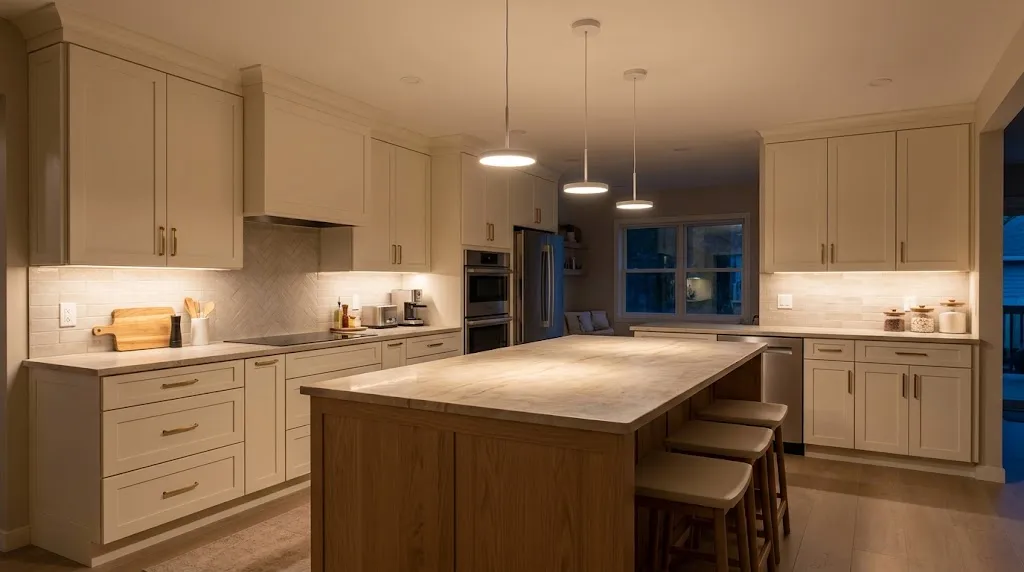
Lighting is the easiest place to start. Replace any incandescent bulbs in your kitchen with LEDs. Incandescent bulbs cost less to buy, but they cost more to run and burn out much sooner.
According to the U.S. Department of Energy, LED bulbs use at least 75 percent less energy than incandescent bulbs. They also last up to 25 times longer. Over ten years, a household can save roughly $1,000 on lighting, depending on how many bulbs it swaps and local power rates.
The shift is happening anyway. Federal efficiency standards that took effect in August 2023 effectively ended the sale of most standard incandescent bulbs in the U.S. Switching now means you won’t be caught buying leftover stock.
Check Your Fixtures First
Not every LED works in every fixture. LEDs make less heat than old bulbs, but they handle heat poorly. They need airflow to stay cool. In a closed fixture or a capped recessed light, trapped heat shortens the bulb’s life. It won’t cause danger, but you’ll replace it sooner than you should.
Read the package before you buy. Look for the words “enclosed fixture rated” if your light has a glass cover.
Quick Tip
A 60-watt equivalent LED uses only about 6 to 9 watts. That is up to ten times less power for the same brightness. Look for bulbs with the Energy Star label and a color temperature of 2700K to 3000K for a warm kitchen glow.
2. Replace Your Gas Stove With an Electric or Induction Model
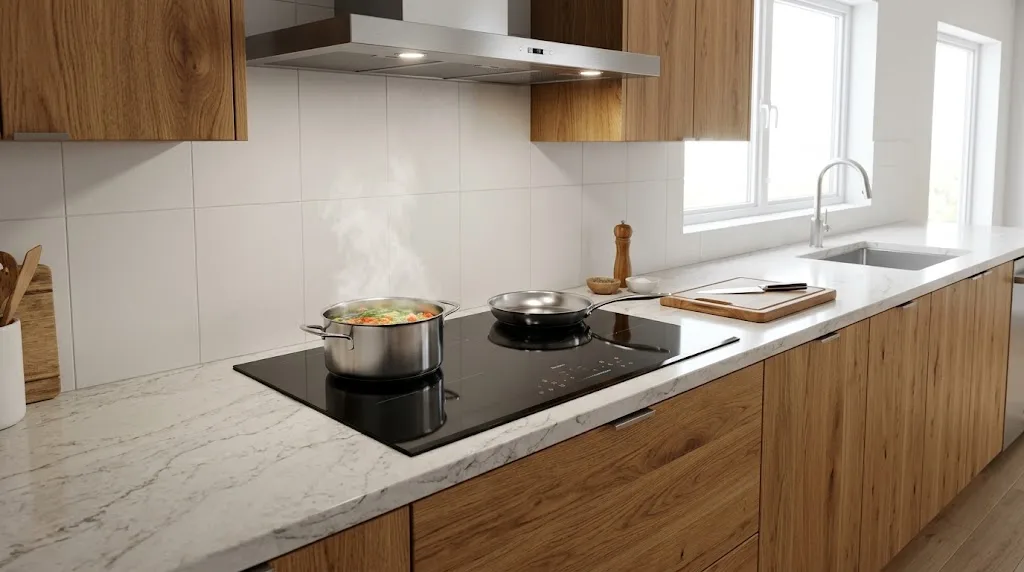
Many cooks love gas stoves for their fast heat and precise control. But gas stoves have clear downsides. Studies have found they leak small amounts of methane, even when turned off. Methane is a potent greenhouse gas.
Gas burners also release nitrogen dioxide and other pollutants into your indoor air. Research has linked this to a higher risk of childhood asthma. A good range hood helps, but it doesn’t fix the problem completely.
Electric stoves avoid those emissions at your home. If you want speed and control, look at induction cooktops. They heat the pan directly using magnets, so they boil water quickly, respond fast to temperature changes, and waste less heat. They also stay cooler on the surface, which is safer around kids.
Two things to know before you switch:
- Induction needs magnetic cookware. Cast iron and most stainless steel pans work. Test yours with a fridge magnet.
- Check your electrical panel. Some models need a 240-volt circuit, and an electrician can tell you if yours is ready.
Many areas also offer rebates for electric and induction ranges. Check your utility provider and your state’s energy office before you buy.
3. Install a Water-Saving Kitchen Faucet
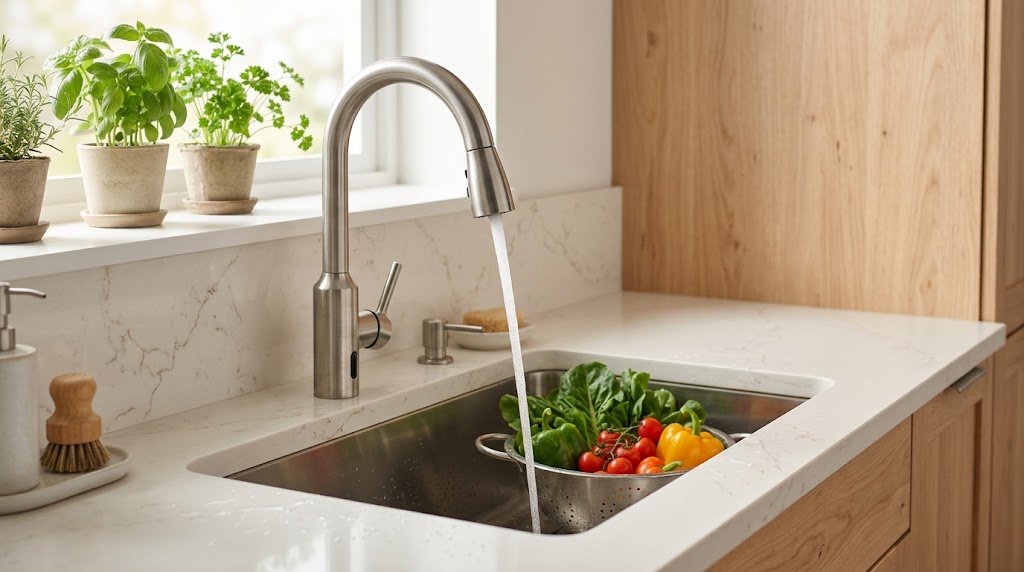
Water waste adds up in the kitchen. Washing dishes, rinsing produce, and filling pots all run through one faucet. A better faucet cuts that use without changing your habits much.
A touchless faucet, sometimes called a smart faucet, turns on and off with a motion sensor or a voice command. You never leave it running by accident. That helps if you get pulled away by a pan on the stove or a child who forgets to turn off the tap.
Touchless models have a second benefit. You don’t touch a handle with messy hands, so germs spread less while you cook. Keep in mind that these faucets need power from batteries or an AC adapter.
What to Look For
Check the flow rate, listed in gallons per minute (GPM). U.S. law caps kitchen faucets at 2.2 GPM. Choose a model well below that. Faucets with the WaterSense label use 1.5 GPM or less, and some aerators go lower. A lower flow rate can save thousands of gallons each year in a busy household.
If you don’t want a new faucet yet, a $5 low-flow aerator screws onto your current one and cuts water use right away.
4. Choose Sustainable Countertop Materials
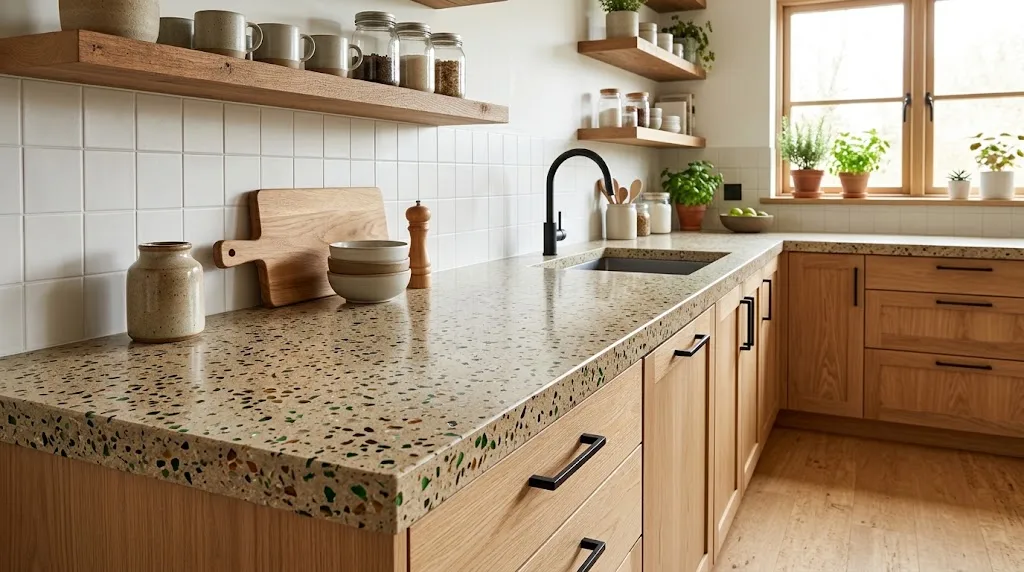
Countertops are a big purchase, and the material matters. Quarrying stone takes heavy machinery. Moving slabs, which are very heavy, burns a lot of fuel. Some engineered surfaces also contain resins and other chemicals.
You have better choices. Here are the main ones:
- Bamboo: It regrows in a few years, which makes it highly renewable.
- Reclaimed wood: Salvaged from old barns and buildings, it needs no new trees.
- Recycled glass: Often mixed with concrete or resin, it keeps glass out of landfills.
- Recycled paper composite: Made from paper pressed with resin, it is durable and heat resistant.
- Stainless steel: It lasts for decades and can be recycled at the end of its life.
- Secondhand slabs: Salvage yards and online marketplaces often sell granite, marble, and quartz that someone else removed.
If you love natural stone, look for a local quarry. A shorter trip means fewer emissions. Ask suppliers about their sourcing, and seal stone properly so it lasts.
5. Put in Sustainable Flooring
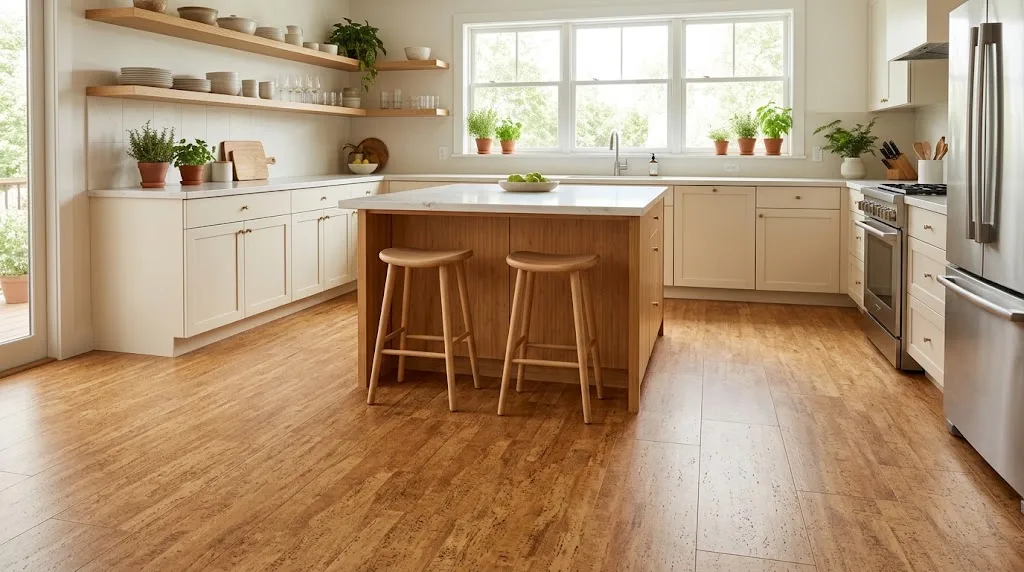
Your floor takes more abuse than any other surface in the kitchen. A durable, eco-friendly material keeps you from replacing it too soon, which is the greenest choice of all.
Bamboo and cork are two top options. Both regrow quickly. Cork is also soft underfoot, which helps if you stand and cook for long periods. Reclaimed wood and recycled tile give old materials a second life.
Linoleum also deserves another look. It has a dated reputation, but it is made from natural materials: linseed oil, cork dust, pine resin, limestone, and jute. It is biodegradable and holds up well in busy rooms.
Buy Mature Bamboo
Not all bamboo flooring is equal. Bamboo harvested too young is softer and less stable. Look for bamboo harvested after five to six years of growth. It handles dropped pans and daily traffic much better. Ask the seller about harvest age and look for low-emission adhesives and finishes, too.
6. Upgrade to Energy-Efficient Appliances
Appliances use more energy than any other part of a kitchen, so upgrades here make the biggest difference to your bills. Look for the Energy Star label. It means the model meets strict efficiency standards set by the U.S. government and is independently tested.
Energy Star dishwashers use about 12 percent less energy and 30 percent less water than standard models. Over its lifetime, one can save thousands of gallons of water. Certified refrigerators use roughly 9 percent less energy than the minimum standard.
You don’t have to replace everything at once. Follow these steps:
- Replace your oldest appliance first. A fridge from before 2000 uses far more power than a new one.
- Wait for a sale or a rebate. Many utilities offer cash back on certified models.
- Recycle the old unit. Many retailers and utilities will haul it away and handle it safely.
Small appliances count, too. Look at microwaves, kettles, and coffee makers. An electric kettle often boils water faster and with less energy than a stovetop kettle.
Keep Your Fridge Efficient
Clean the condenser coils twice a year. Dust blocks heat release and forces the compressor to run longer. Check that the door seal closes tightly, and set the fridge to 37 to 40°F and the freezer to 0°F.
7. Repaint Your Cabinets Instead of Replacing Them
Most cabinets pulled out in a remodel end up in a landfill. Repainting keeps them in use and gives your kitchen a fresh look. The cost is also small. A basic cabinet repaint can run around $100 in materials if you do it yourself, compared with thousands for new cabinets.
Choose your paint with care. Low-VOC acrylic paints are a good pick. They release fewer fumes, dry faster, and clean up with soap and water. Oil-based paints give off more harmful compounds.
For a lasting finish, follow these steps:
- Clean the doors well to remove grease.
- Sand lightly and wipe off the dust.
- Apply a primer made for cabinets.
- Brush or roll on two thin coats of paint.
- Replace old hinges and handles for a fresh look.
Bonus: Cut Waste Through Recycling, Composting, and Reuse
A recycling station is a good start. Set up separate bins for glass, metal, paper, and plastic, and place them where you cook so sorting is easy.
Food scraps are the next step. A countertop compost bin keeps scraps out of the trash. In landfills, food waste produces methane. In compost, it turns into soil. If you have no garden, check whether your city offers curbside pickup or whether a local farmers’ market accepts scraps.
Reuse also cuts waste:
- Wash and keep glass jars from sauce or jam for storing rice, beans, and pasta.
- Use cloth dishrags and towels in place of paper towels.
- Buy bulk foods with your own containers.
- Store leftovers in glass containers, not plastic wrap.
If you build your own outdoor compost bin, avoid pressure-treated lumber. It can leach chemicals into the compost over time. Use recycled plastic or reclaimed pallets that are heat-treated, not chemically treated.
Start Your Eco-Friendly Kitchen Today
A green kitchen doesn’t need a big budget or a full remodel. LED bulbs, a low-flow aerator, and a fresh coat of cabinet paint cost little and pay off quickly. Larger projects, like a new induction range or bamboo floors, make sense when you’re ready to renovate.
Start with the change that fits your budget, then add one more each year. Each upgrade lowers your bills, improves your indoor air, and shrinks your footprint. Pick one from this list and begin this week.