

Popcorn ceilings were once a quick way to hide flaws and soften sound, but today they can make a home feel dated, collect dust, and complicate repainting. If you are budgeting for an update, understanding popcorn ceiling removal cost before you scrape anything helps you plan for testing, labour, skim coating, and paint without surprises.
As a planning guide for 2026, professional removal and refinishing of a standard, non-asbestos ceiling typically falls in a broad range of about $3 to $9 per square foot. Covering the ceiling, or dealing with asbestos, costs more. The figures here are typical US planning ranges and estimates only, not quotes, so get written prices for your own rooms before you commit.
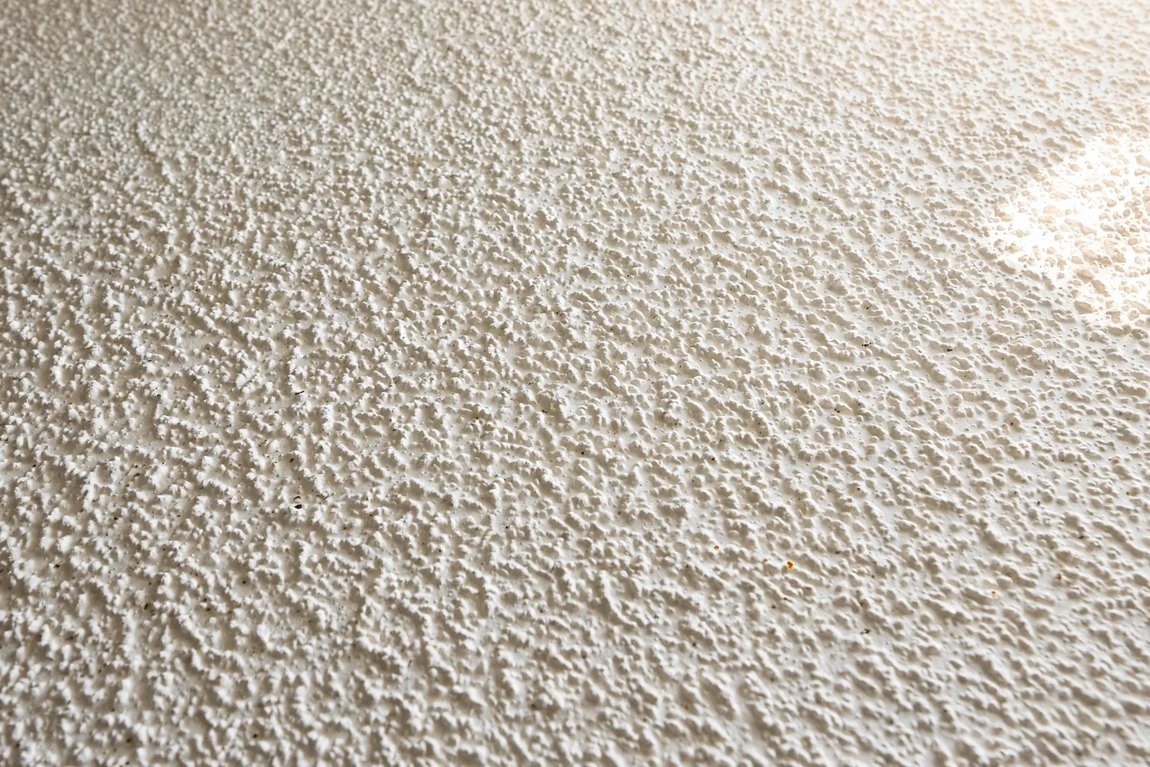
A close-up of the rough, bumpy texture that gives popcorn ceilings their name. (Illustrative image)
Why People Remove Popcorn Ceilings
The main reason is appearance. A smooth ceiling reflects light more evenly, makes rooms feel brighter, and fits the clean look most buyers now expect. Texture also traps dust and cobwebs, is hard to clean, and stains easily around vents, kitchens, and old leaks.
There are practical reasons too. Patching a textured ceiling so a repair blends in is difficult, and painting over texture takes more paint and effort. Removing it gives you a flat surface that is easier to maintain. If cracks or water damage are part of the problem, our guide on how to patch cracked drywall covers the repair steps that often follow removal.
Test First: The Asbestos Safety Step You Cannot Skip
Before any scraping, consider the age of the ceiling. For ceilings installed before the 1980s, the texture may contain asbestos. It must be tested before any scraping, because disturbing it can release fibres into the air.
- Do not scrape, sand, or cut a pre-1980s ceiling until samples have been tested.
- Use an accredited lab or a qualified testing professional, and follow their sampling instructions.
- If the test is positive, the job means licensed abatement, not DIY removal. A licensed contractor uses containment, protective equipment, and approved disposal.
- If the test is negative, keep the written result with your project records and proceed with normal dust control.
As a planning estimate, testing is roughly $30 to $80 per lab sample, with some homes needing more than one sample from different rooms or layers. A professional sampling visit can cost more. That money buys certainty and protects everyone in the house.
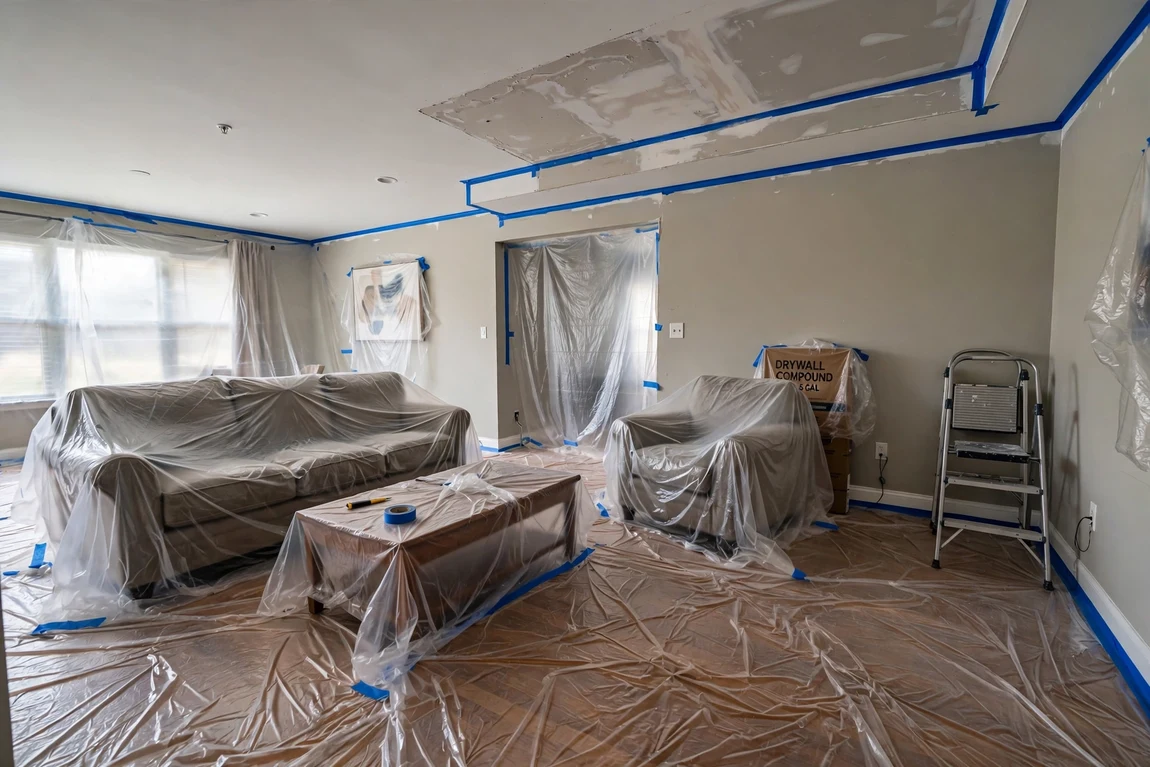
Plastic sheeting protects floors and furniture before any ceiling work begins. (Illustrative image)
What Removal Involves, Step by Step
First, furniture is removed or covered, floors are protected with sheeting, and vents and fittings are masked. Next, the texture is lightly wetted in small sections to soften it and reduce dust, then scraped off with a wide scraper.
The ceiling underneath is rarely perfect. Old joints, screw spots, stains, and minor damage usually need attention, so a skim coat of joint compound is applied to level the surface, left to dry, and sanded smooth. Some ceilings need a second skim coat. Finally, the ceiling is primed to seal the compound, then painted, usually with two coats of flat ceiling paint. Skipping primer is a false saving, because bare compound absorbs paint unevenly. For what the painting stage alone can cost, see our breakdown of how much interior painting costs.
Painted-Over Texture Is Harder to Remove
Unpainted texture usually softens quickly with water. Paint forms a skin that stops water reaching the material underneath, so painted texture is slower to scrape, may need scoring or repeated wetting, and some contractors will recommend covering it instead. Expect painted ceilings to sit at the higher end of any price range, and ask for a small test area before a firm quote.
What Is the popcorn ceiling removal cost by Method?
The table below compares the main routes as planning estimates for 2026, not promises. Figures include typical labour and materials for removal or covering, skim work where stated, priming, and repainting. Asbestos abatement is priced separately by licensed specialists and varies widely.
| Method | Per square foot | 200 sq. ft. bedroom | 500 sq. ft. living area | 1,000 sq. ft. |
| Scrape, skim, prime and repaint (unpainted) | $3 to $6 | $600 to $1,200 | $1,500 to $3,000 | $3,000 to $6,000 |
| Scrape, skim, prime and repaint (painted-over) | $5 to $9 | $1,000 to $1,800 | $2,500 to $4,500 | $5,000 to $9,000 |
| Cover with new drywall, finish and paint | $5 to $9 | $1,000 to $1,800 | $2,500 to $4,500 | $5,000 to $9,000 |
| Licensed asbestos abatement, then refinish | $9 to $18 or more | $1,800 to $3,600 or more | $4,500 to $9,000 or more | $9,000 to $18,000 or more |
Also allow for testing, repairs to the ceiling underneath, and waste disposal where a contractor charges it separately. Ask whether each quote includes skim coating and painting, because a low removal-only price can look cheap until finishing is added.
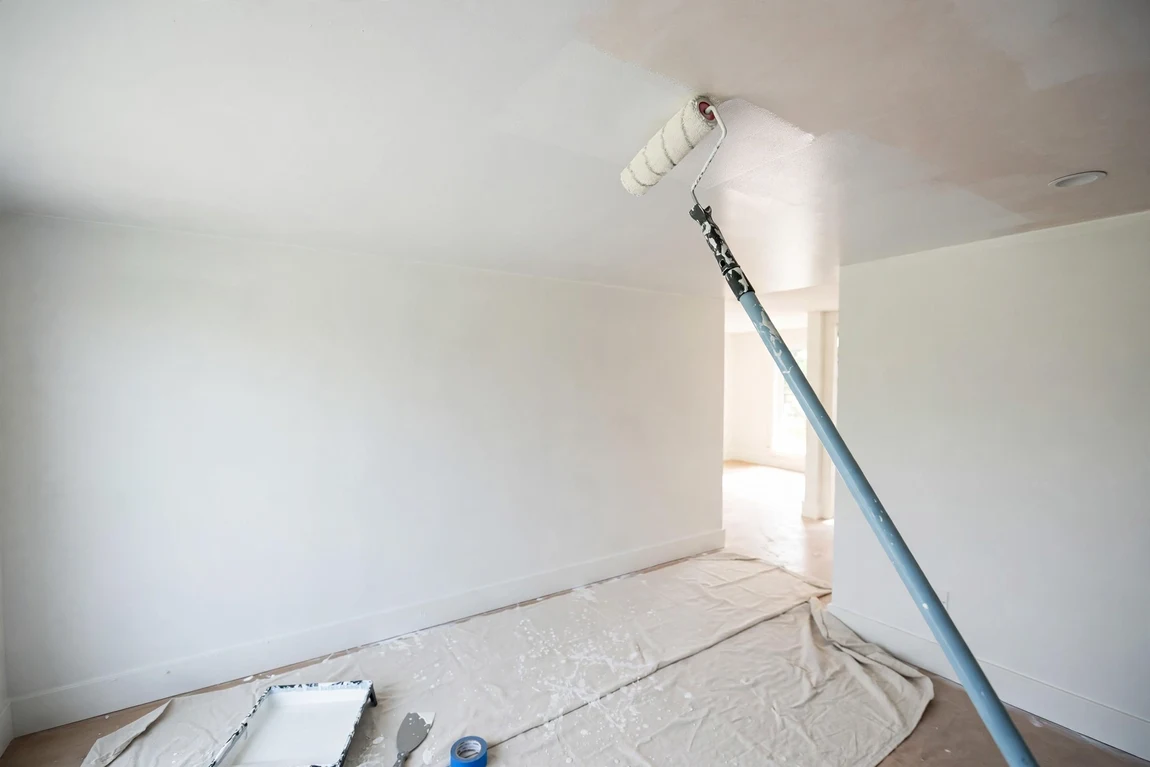
A smooth, skim-coated ceiling being primed and painted after the texture is gone. (Illustrative image)
Factors That Change the Price
- Room size and ceiling height: larger areas cost more in total but can cost less per square foot; high ceilings need more equipment and time.
- Painted or unpainted texture: painted texture is slower to remove and raises labour costs.
- Condition underneath: poor joints, cracks, stains, and water damage add repairs and extra skim coats.
- Finish level: bright side light shows every flaw, so a smoother finish takes more coats and sanding.
- Access and protection: stairs, tight hallways, and occupied homes add set-up time.
- Location: labour and disposal costs differ widely between areas.
DIY vs. Hiring a Professional
DIY materials for a straightforward, tested, non-asbestos ceiling might come to roughly $1 to $2 per square foot: a sprayer, scrapers, compound, primer, and paint. But the real cost is time, dust, and finish quality. Scraping is messy, skim coating is a skill, and mistakes show clearly on a ceiling.
A professional team brings speed, dust control, and a smoother finish. For one small bedroom with a negative test, confident DIYers sometimes take it on. For whole floors, painted texture, high ceilings, or any positive asbestos result, hiring the right professional is safer. A positive test means licensed abatement, never DIY.
Cover-Up Alternatives to Removal
Installing new drywall over the existing ceiling avoids scraping, keeps the old texture contained underneath, and gives a clean surface, at the cost of slightly lowering the ceiling and extra work around trims and fittings. Other options include ceiling planks, tiles, or panels made to go over an existing ceiling, and sometimes a heavy skim coat over stable texture by an experienced plasterer.
Covering does not remove asbestos from the home. If asbestos is present or suspected, get professional advice before covering it, follow local rules, and record clearly in your home documents what is underneath for future owners.
The finished result: a bright room with a clean, smooth white ceiling. (Illustrative image)
How to Save Without Cutting Corners
- Empty the room yourself, so you are not paying labour rates for moving furniture.
- Do several rooms in one visit, so set-up and protection costs are shared.
- Get at least three written quotes with the same scope: testing, scraping, skim coats, primer, paint, and disposal.
- Keep the existing light layout; moving fittings adds electrical work.
- Do the final painting yourself if you are confident, pricing paint with the same care we apply outdoors in our guide to exterior painting cost, and use flat or matte ceiling paint that hides minor flaws.
A smooth ceiling is an update you notice every day, in better light and cleaner lines. Budget for testing first, choose the method that fits the age and condition of your ceiling, and compare quotes on the full finished job, not just the scraping.