

Online shopping has become part of everyday life, and most of us open a delivery box without giving it a second thought. But that innocent looking parcel sitting on your doorstep may be carrying more than the item you ordered.
Bugs in packages are more common than most people realise, and they can travel from a warehouse, a delivery truck, or even a shipping container straight into your home. This guide walks through the pests most likely to hitchhike inside your post, the warning signs worth checking for, and simple steps you can take to keep your home pest free without giving up the convenience of online shopping altogether.
How Pests End Up Inside Your Delivery

Packages travel through a long supply chain before they reach your door. Goods move from factories to storage warehouses, onto pallets and crates, then into delivery trucks that stop at several depots along the way. At each stage, boxes sit in dark corners where pests like to hide from the cold or heat outside.
Cardboard boxes are especially inviting. Corrugated cardboard is made from a cellulose material, which happens to be a food source for several pest species. Add in the warmth of a busy warehouse and the shelter offered by stacked pallets, and it is easy to see why bugs treat outer packaging as a cosy hiding spot rather than something to avoid.
The Bugs Most Likely to Hitch a Ride
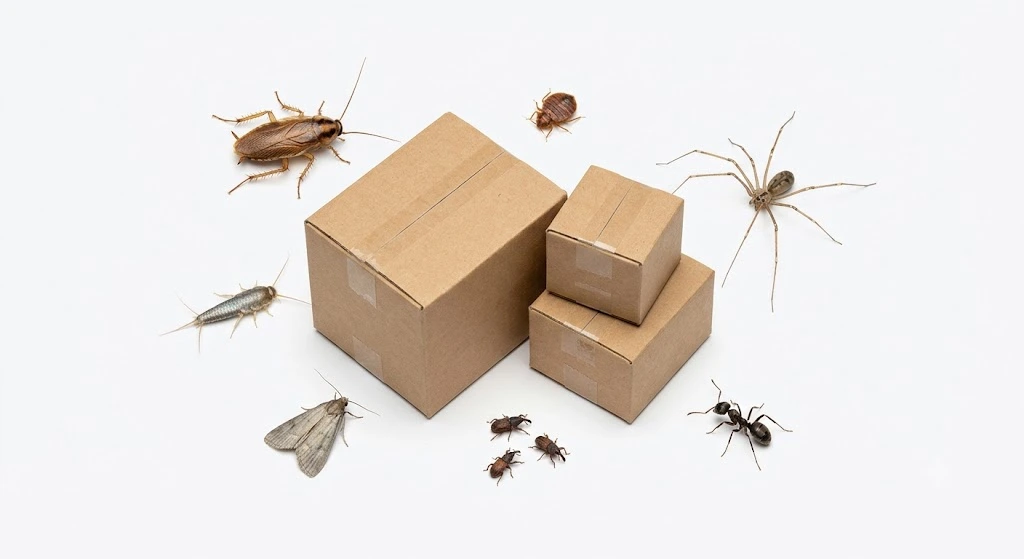
Cockroaches
German cockroaches are one of the most frequent stowaways in shipping materials. They are drawn to the dark, protected spaces created by folded flaps and tight seams, and they can survive for long stretches without food. A cockroach that boards a pallet at a distribution centre can easily ride along until the box lands on your porch.
Weevils, Flour Beetles and Grain Beetles
These small pests often arrive already living inside dry goods rather than the packaging itself. Rice, flour, pasta and pet food are common hosts, and they sometimes settle into the product long before it even reaches a delivery truck. That means the warehouse or grocery store, not the courier, is often where the trouble actually started.
Silverfish
Silverfish thrive in damp, dark conditions, which makes stacked cardboard an ideal home. They feed on paper, glue and starch, so a box that has spent time in a humid storage unit is a good candidate for carrying a silverfish passenger.
Pantry Moths
Pantry moths lay eggs inside packaging that contains cereals, flour or dried fruit. The eggs are tiny and easy to miss, and they can hatch days or weeks after the parcel arrives, leaving homeowners wondering how pantry moths appeared out of nowhere.
Bed Bugs
Bed bugs are among the most concerning hitchhikers, particularly in packages containing fabric, bedding or furniture covers. They can survive for months without feeding, tucking themselves into seams and folds until conditions are right to emerge.
Ants and Spiders
Ants often explore packaging while it sits outdoors or in a loading yard, sometimes settling into corners before a box is sealed for shipping. Spiders behave in a similar way, using the dark spaces inside crates and pallets as a temporary shelter during transit.
Mice and Rats
Rodents are less likely to travel inside a small parcel, but they are a genuine risk around larger shipments, pallets and storage crates. Mice and rats are drawn to the same warmth and shelter that attracts insects, and their presence is usually confirmed by droppings or gnaw marks on the packaging.
Which Deliveries Carry the Highest Risk
Not every parcel is equally likely to carry a pest. Grocery deliveries and dry goods orders top the list because weevils and pantry moths often travel inside the product itself. Furniture, rugs and bedding shipments carry a higher risk of bed bugs because fabric offers so many places to hide.
Packages that have been sitting in a shared hallway, a storage unit or a returns depot for an extended period are also worth extra attention. The longer a box sits in one place before it reaches you, the more time a pest has had to find its way inside or settle onto the outer packaging.
Second hand items bought online carry a similar level of risk, since they may have already spent time in someone else’s home before being repackaged for shipping. Anything arriving from a warehouse with poor stock rotation, where boxes sit untouched for months, deserves the same level of caution as furniture or bedding.
Signs Your Delivery Might Be Carrying More Than You Ordered
A quick visual check before you bring a parcel indoors can save a lot of hassle later on. Look out for the following before you open a box on your kitchen table:
- Small holes, tears or scratches on the outer packaging
- Tiny larvae, webbing or a powdery residue inside the box
- Egg cases tucked into seams, folds or corners
- Droppings that look like small dark specks near the flaps
- An unusual smell coming from the parcel
- Clumps of material that were not part of the original packing
If you notice any of these signs, it is worth inspecting the package outdoors before deciding whether to bring the contents inside.
The Packaging Materials Pests Love Most
Pests are not fussy about which part of a box they use for shelter. Corrugated cardboard offers layers that insects can nestle between, while pallets and crates create larger gaps that suit both insects and rodents. Seams, folds, flaps and corners are the tightest, darkest spots on any parcel, which is exactly why they are worth checking first.
Shipping materials that have travelled through several handoffs, such as a port, a depot and a delivery truck, have simply had more opportunities to pick up an unwanted passenger along the way. Even outer packaging that looks completely clean on the surface can still be hiding something in a fold you have not thought to check.
Pest Comparison at a Glance
| Pest | Common Hiding Spot | Most Likely Source | Risk Level |
| Cockroaches | Seams and folds | Warehouses, delivery trucks | High |
| Weevils and flour beetles | Inside dry goods | Grocery stores, warehouses | Medium |
| Silverfish | Damp cardboard layers | Storage units | Low |
| Pantry moths | Cereal and flour packaging | Warehouses | Medium |
| Bed bugs | Fabric seams | Furniture, bedding shipments | High |
| Ants and spiders | Crate corners | Outdoor loading yards | Low |
| Mice and rats | Pallet stacks | Storage crates | Medium |
How to Inspect and Dispose of Packaging Safely
Before you carry a parcel inside, take thirty seconds to look it over on the doorstep. Check the corners, flaps and seams for tears, holes or unusual residue. If everything looks fine, open the box outdoors or in a garage rather than on the kitchen table, just in case something is hiding inside.
Once you have removed the contents, dispose of or recycle the outer packaging quickly rather than leaving it stacked in a hallway or cupboard. Flattening boxes for recycling straight away removes the dark, sheltered spaces that pests are drawn to. If you are unpacking several deliveries at once, treat each box separately instead of piling them together.
When to Call a Pest Control Professional
Most package related pest encounters are a one off nuisance rather than a full blown infestation. However, if you spot live insects repeatedly, notice droppings in more than one delivery, or find bed bugs anywhere near soft furnishings, it is worth calling a pest control professional. They can inspect the affected areas, confirm what you are dealing with, and establish a treatment plan before a handful of stowaways turns into a lasting problem.
Frequently Asked Questions
Can bugs really survive a long delivery journey?
Yes. Many pests, including cockroaches and bed bugs, can go weeks without food or water. A journey through a shipping supply chain, even one that takes several days, is well within what these insects can handle.
Should I be worried about every single parcel?
No. The vast majority of deliveries arrive with nothing extra inside them. A quick doorstep check is enough for most packages, and closer inspection is really only needed for dry goods, furniture, bedding, or anything that has spent a long time in storage.
Do pest problems from packages count as a pantry pest infestation?
They can. Weevils, flour beetles and pantry moths that arrive inside dry goods are classic pantry pests, and if they are not caught early they can spread from one package to the rest of your cupboard.
Is it safe to reuse boxes that had pests in them?
It is best to avoid it. Even after the pests themselves are gone, eggs or larvae can remain tucked into the corrugated cardboard. Recycling the box rather than reusing it removes that risk completely.
Final Thoughts
Bugs in packages are an inconvenience rather than an inevitability. A quick inspection on the doorstep, opening boxes outdoors when something looks off, and getting rid of packaging promptly will handle most of the risk on their own. Pair those habits with a call to a pest control professional if anything looks serious, and your home should stay well protected from unwanted deliveries. A little bit of caution at the doorstep goes a long way toward keeping every future parcel a welcome one.
Stay Ahead of Home Pests and Property Tips
Want more practical guides like this one? Subscribe to Housing Market News for regular advice on home improvement, property maintenance and UK housing trends, delivered straight to your inbox so you never miss a tip for keeping your home in top shape.
Visit thisolderhouse for more home improvement guides.