

There is no single Edward Hopper house, and that is exactly what makes the story interesting. The painter of Nighthawks and Early Sunday Morning is tied to three homes, and each one shaped a different part of his work: the family house in Nyack, New York, where he was born, the modest top-floor studio on Washington Square in New York City where he lived and worked for more than five decades, and the simple summer house he built in South Truro on Cape Cod in 1934. This updated 2026 guide separates the three, sticks to what reputable sources actually report, and explains which of them you can still visit today.
Edward Hopper (1882–1967) painted quiet houses, empty streets, and solitary figures better than almost any American artist of his time. He was a private man who kept the same New York studio for 54 years, returned to the same Cape Cod village almost every summer, and held on to his Nyack birthplace for his entire life.
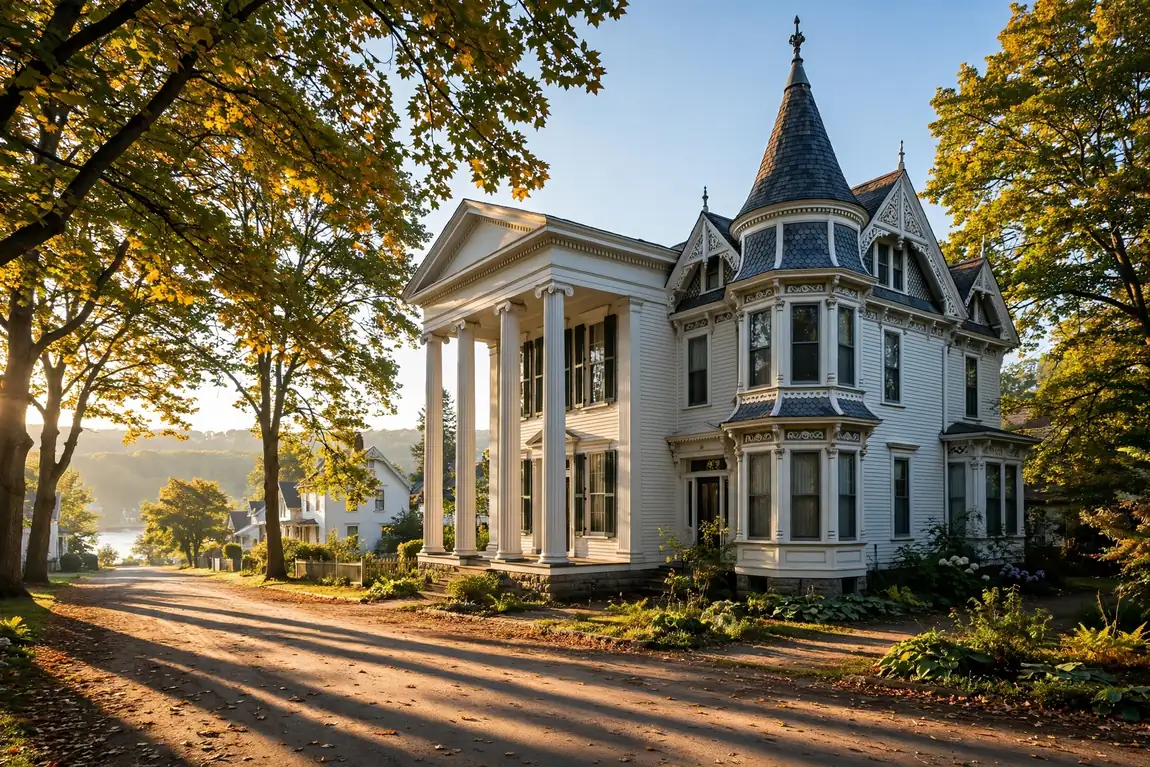
Edward Hopper house at a Glance
Here are the three homes, as reported by the Edward Hopper House Museum, the Whitney Museum, and the National Gallery of Art:
- Nyack, New York: Birthplace and boyhood home, built in 1858 by Hopper’s maternal grandfather. His primary residence until 1910. Now the Edward Hopper House Museum and Study Center.
- 3 Washington Square North, New York City: Top-floor apartment and studio, rented from 1913 until his death in 1967. Preserved today within a New York University building.
- South Truro, Cape Cod, Massachusetts: Summer house and studio built in 1934 after three summers in a rented cottage. Used for long stretches of almost every year that followed. Still private, and not open to the public.
The Nyack Birthplace: Where Hopper Started
The first Edward Hopper house stands in Nyack, a village on the Hudson River in Rockland County, New York. According to the Edward Hopper House Museum, the house was built in 1858 by the artist’s maternal grandfather, John Smith, and it was Hopper’s primary residence until 1910, when he was 28 years old. Hopper was born there on July 22, 1882, and the museum notes that the house held his first “studio,” where he created his earliest artworks.
The setting mattered. Nyack sits close to the Hudson River, and the National Trust for Historic Preservation notes that the young Hopper sketched the active shipyard he could see from his bedroom window. The strong sunlight and long shadows that define his mature paintings were first seen in and around this house.
Hopper never really let the house go. After he moved to Manhattan, his sister Marion continued to live in Nyack until her death in 1965, and Hopper visited throughout his life. After Marion’s death the house fell into disrepair and faced demolition, but local residents raised the money to buy and restore it. The Edward Hopper Landmark Preservation Foundation was incorporated in 1971, and the house has operated as a nonprofit art center ever since. It was added to the National Register of Historic Places in 2000, and today it is a museum and study center with a gallery dedicated to Hopper’s early work, alongside exhibitions of later art.
3 Washington Square North: The Studio He Never Left
In 1913, Hopper moved into a top-floor apartment and studio at 3 Washington Square North in Greenwich Village, and, as the Whitney Museum puts it, he lived and worked there with his wife Jo until his death on May 15, 1967. For comparison, another famously settled owner is in our guide to the Jack Nicholson house, a Mulholland Drive compound held since 1969.
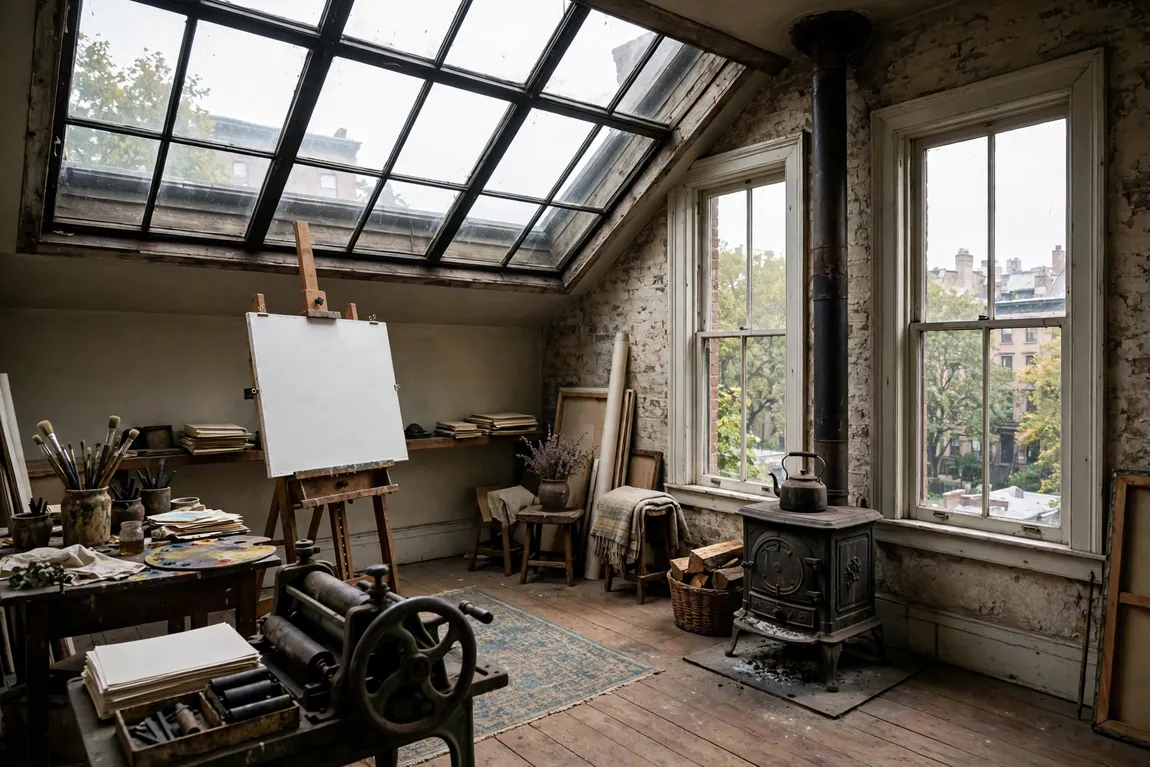
The building was part of a three-and-a-half-story Greek Revival terrace built in 1833 and commonly known as “The Row,” according to the Whitney. The Hoppers’ front-facing studio-residence sat on the top floor, with a broad north-facing skylight, a small kitchenette, and a shared bathroom. The Whitney describes two long windows overlooking Washington Square Park, a massive easel, and a printing press. Other accounts mention the old pot-bellied stove, fueled by coal carried up four flights of stairs.
Hopper married fellow artist Josephine “Jo” Nivison in 1924, and the small studio became a shared working home for both painters. From this base he produced many of his best-known city pictures, including Early Sunday Morning (1930) and Nighthawks (1942), and he painted the rooftops outside his own windows in Roofs, Washington Square (1926). The building is now part of New York University, and the studio space has been preserved. It is not a walk-in museum, but reports describe visits by appointment and during events such as Open House New York.
The South Truro House: A Summer Studio on Cape Cod
The third Edward Hopper house is the one he built for himself. The National Gallery of Art reports that Hopper and Jo first rented a cottage in South Truro, on Cape Cod, in the summer of 1930. Christie’s gives the same timeline: the couple returned for the next three summers, then built a home and studio there in 1934. The National Gallery dates the building of the studio house to July 1934 and notes that the Hoppers then spent six months of almost every succeeding year in South Truro.
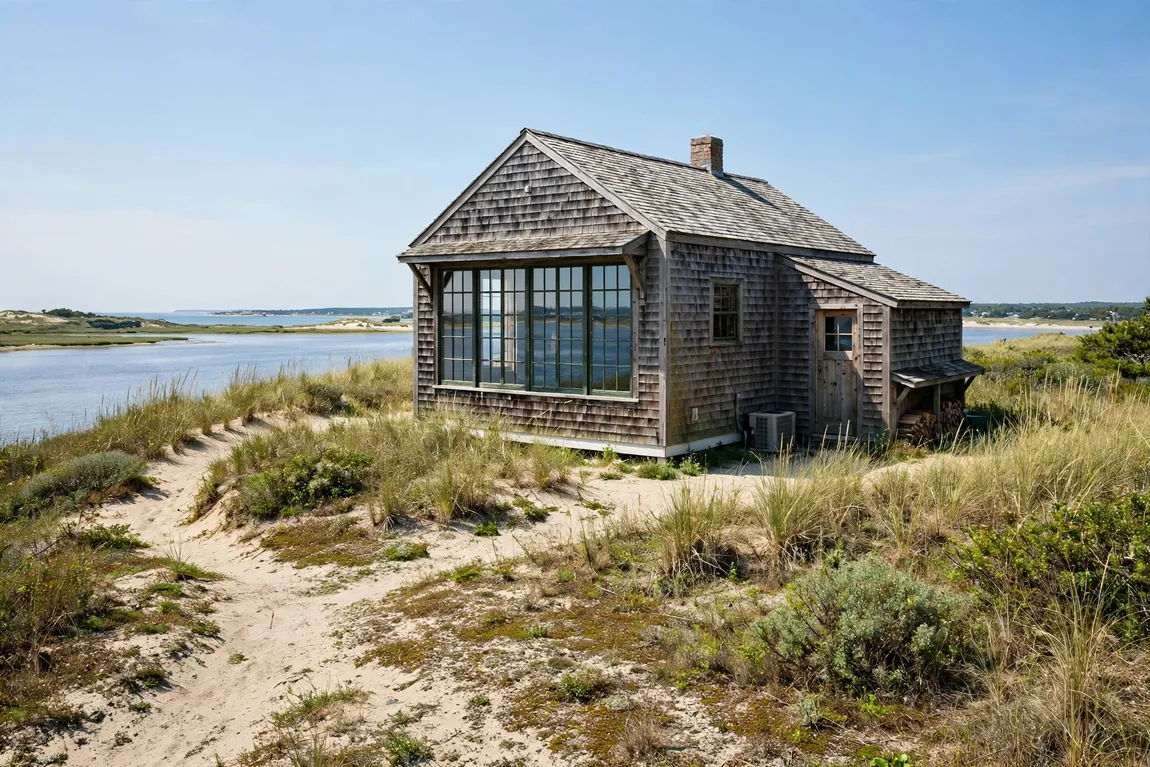
Published accounts describe a plain wooden house designed by Hopper himself, helped by money Jo had inherited, with a large north-facing window over a scrubby bluff in the dunes above the bay. North light is the steady, indirect light painters prize, and Hopper built his summers around it. He also drove across the Cape in search of subjects, often painting from his car, a habit Christie’s highlights in its notes on his Cape Cod work.
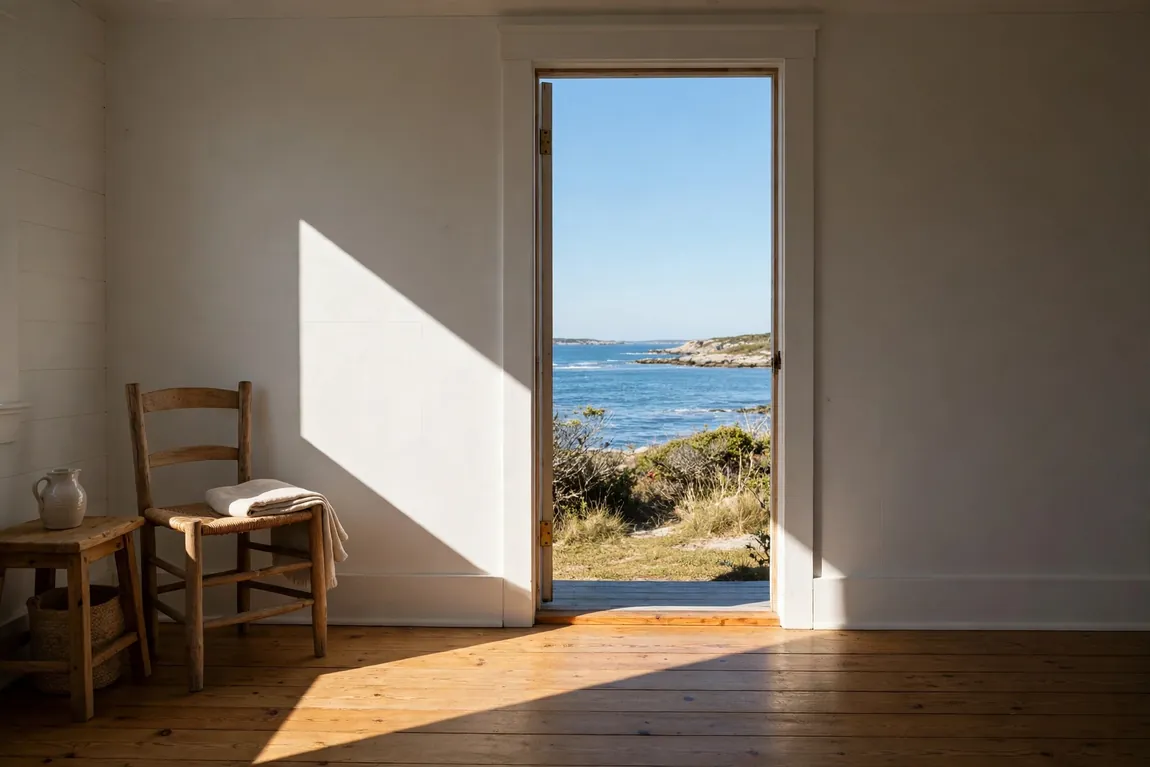
The Truro house sits behind some of his calmest paintings. Cape Cod Evening dates to 1939, and Rooms by the Sea (1951) depicts the view out of his studio door toward the water. Unlike Nyack, the South Truro house never became a museum: it remains private and not open to the public, so it is best appreciated through the paintings.
Which Edward Hopper House Can You Visit in 2026?
- Nyack: Yes. The birthplace is a working museum and study center with exhibitions and a gallery of early Hopper work. Check the museum website for current hours before you go.
- Washington Square: Sometimes. The studio survives inside an NYU building, but access is limited and generally by appointment or during special open-house events.
- South Truro: No. The house is privately owned and not open to the public. The landscapes around Truro and the Cape Cod National Seashore, however, are public and still recognizably Hopper’s.
That mix of one museum, one preserved studio, and one private house is unusual. Most famous homes in this category follow a single path: compare the Marilyn Monroe house in Brentwood, her final home, which remains a private property with a very public mythology.
Why These Three Houses Explain the Paintings
Hopper’s lifelong subject was, in his own framing, painting sunlight on the side of a house — and his three homes gave him three kinds of sunlight: the river light of his Nyack childhood, the skylight of a Manhattan studio, and the clear coastal light of Cape Cod. His New York rooms were small, rented, and held for a lifetime. His Cape house was deliberately plain and isolated. Neither was bought for show.
That is the real answer to the Edward Hopper house question. There was never a mansion or a headline purchase price. There was a family house he kept, a studio he refused to leave, and a summer house he designed around a window. For readers who enjoy homes defined by a long creative life rather than a sale price, our Jim Carrey house guide covers another artist’s long-held Los Angeles home.
All images in this post are AI-generated illustrative images, not photographs of Hopper’s actual homes.