

Modern kitchen design blends clean lines, handleless cabinets, and natural materials like wood and stone. It favors open layouts, smart storage, and calm color palettes over clutter. The goal is a space that looks sleek but still feels warm and easy to live in every day.
Your kitchen is where the whole house tends to gather. People cook there, eat there, do homework there, and end up talking there long after the food is gone. So when you plan a modern kitchen, you’re not just picking pretty finishes. You’re shaping how your family actually spends its time.
The good news is that modern design has moved past the cold, stark look it used to have. Today’s kitchens feel warm, personal, and genuinely livable. Let’s walk through the ideas shaping kitchens right now, and how you can bring them into your own home.
What Makes a Kitchen Design “Modern”
Modern kitchen design isn’t about following one strict rulebook. It’s built around a few core ideas: simplicity, function, and honest materials. Cabinets stay flat and uncluttered. Countertops stay clear. Every object in the room earns its spot.
That doesn’t mean modern kitchens feel empty or cold. Quite the opposite. The best ones use texture, wood, and soft color to keep things feeling human. Think of modern design as editing, not stripping away. You keep what works and cut what doesn’t.
Clean Lines and Handleless Cabinets
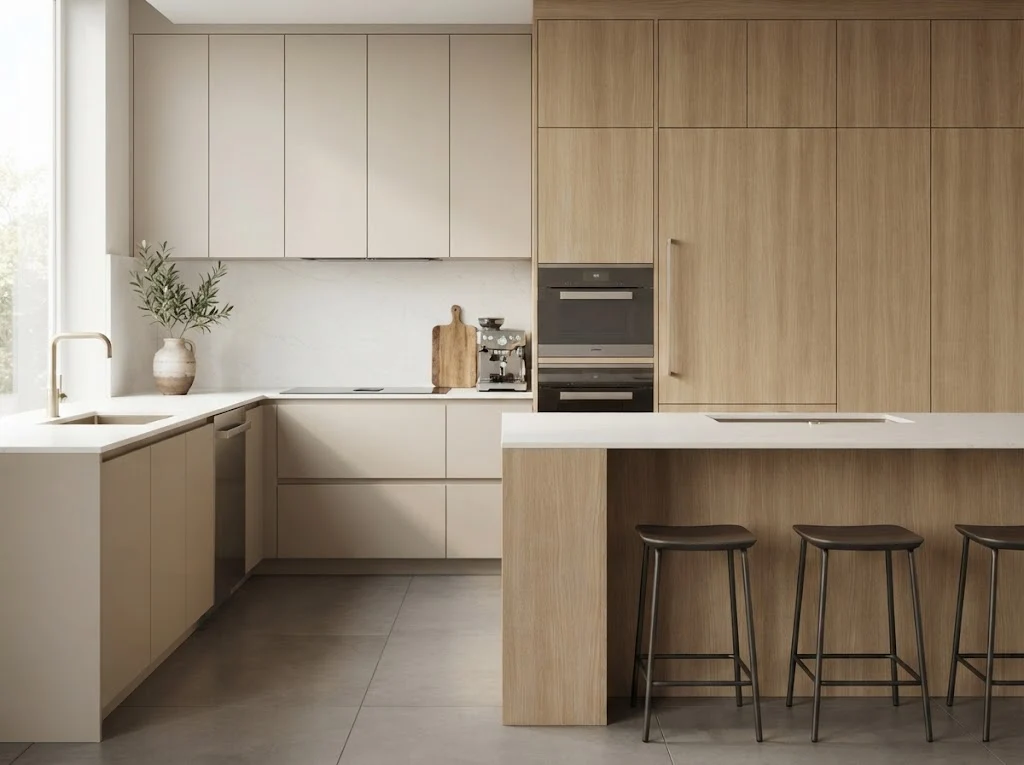
Flat-front cabinets with hidden or push-to-open hardware are everywhere right now. They give your kitchen a smooth, continuous look, since there are no knobs or pulls breaking up the surface. This style works especially well in smaller kitchens, where every visual break can make the room feel busier than it is.
You don’t have to go fully handleless, though. A lot of homeowners mix in slim integrated grips or subtle brass pulls for a bit of contrast. The key is keeping the overall shape simple, so your eye can rest instead of jumping from detail to detail.
Designers are also mixing materials on cabinet fronts more than before. Wood paired with matte glass or metal panels adds depth without adding clutter. It gives the kitchen personality while keeping that clean modern base intact.
Warm Wood Tones Balance the Minimalism
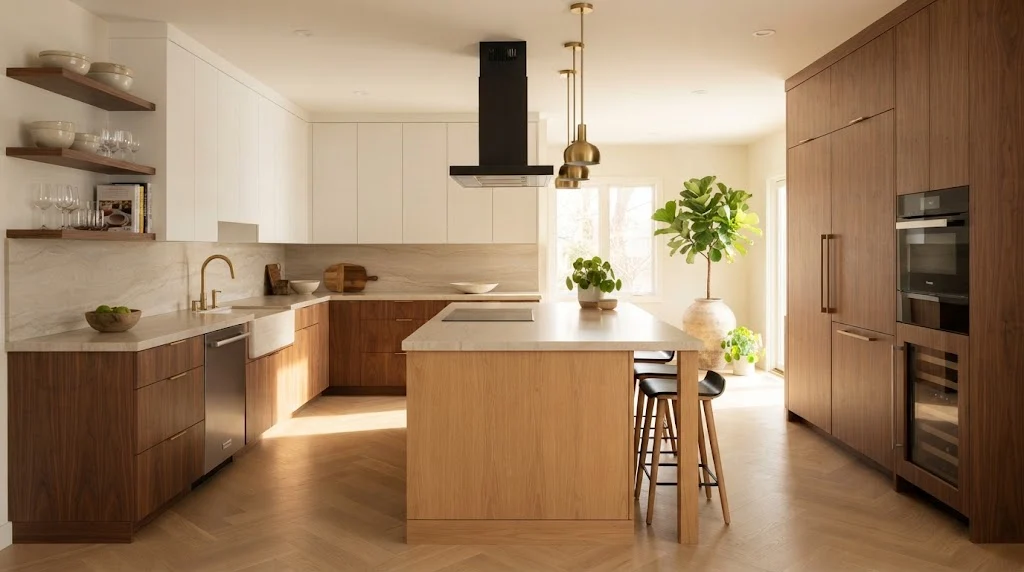
Pure white kitchens had their moment, but a lot of homeowners now find that look a little too sterile. Warm wood tones are stepping in to soften things up. Walnut, white oak, and smoked oak finishes bring natural texture into a room that could otherwise feel flat.
Wood also does something practical: it grounds the space. Pair a light wood island with white upper cabinets, and the kitchen feels open but never cold. Add wood open shelving, and you get a spot to display everyday dishes or a few plants without extra cabinetry.
If you want a nature-inspired feel, rift-cut white oak is worth a look. It highlights the natural grain of the wood, giving your cabinets a one-of-a-kind pattern instead of a mass-produced finish.
Color Choices: From Soft Neutrals to Bold Statements
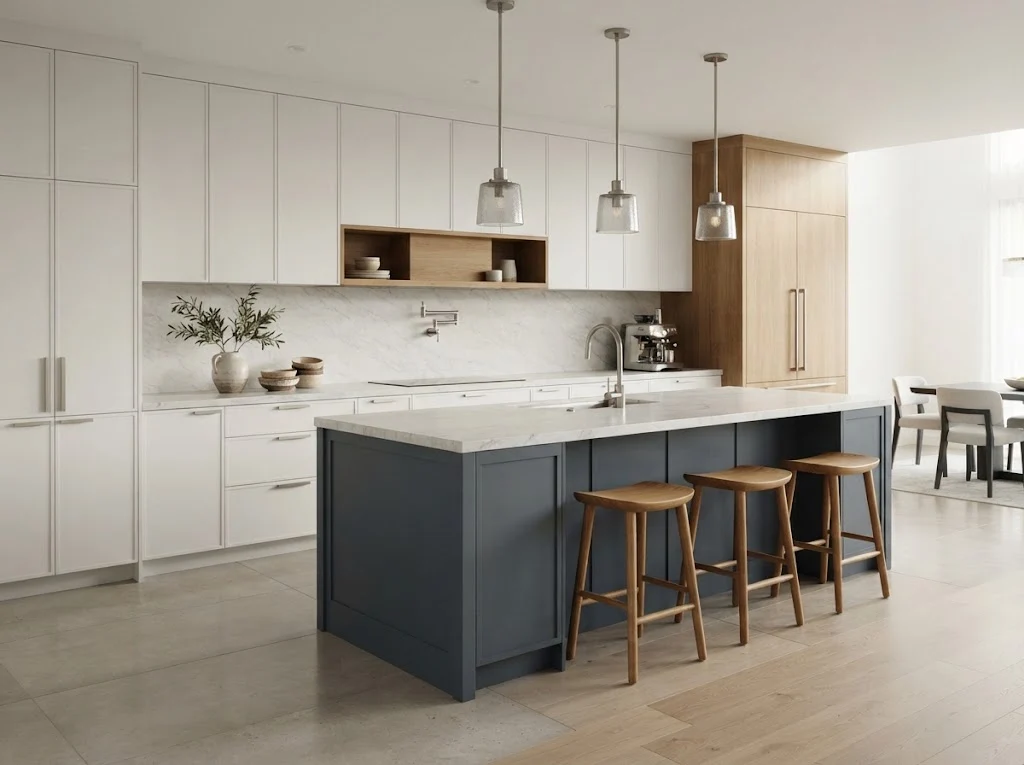
Gray and white are still common, and for good reason. They’re versatile, they photograph well, and they won’t feel dated anytime soon. Soft gray cabinetry paired with a light stone counter gives you a calm, put-together look that suits almost any home style.
But plenty of homeowners are stepping away from all-neutral kitchens. Muted pastels like lavender, soft blue, and blush are showing up on cabinetry, especially on kitchen islands where a splash of color feels playful instead of overwhelming. Deep, moody tones are having a moment too. Black or charcoal lower cabinets paired with a bright marble counter create real contrast, and that contrast gives the kitchen depth.
If you’re not ready to commit to color on every wall of cabinets, start small. Paint just the island, or choose one colored appliance. You get the personality without the risk of outgrowing the look in a few years.
Smart Storage That Actually Works
A modern kitchen only feels modern if it actually functions well, and storage is where that shows. Pull-out pantries, rotating corner baskets, and adjustable shelving let you use every inch of cabinet space instead of losing items in the back of a deep cupboard.
Appliance garages are another smart addition. They give your blender, coffee maker, and toaster a home that’s out of sight but still within reach. Instead of packing a cabinet and digging around each morning, you open one door and everything you need is right there.
Good storage planning starts before you pick a single finish. Walk through how you actually cook, what you reach for daily, and what only comes out twice a year. Build your layout around those habits instead of a generic template, and the kitchen will feel far more livable.
Islands Built for More Than Cooking
The kitchen island has become the anchor of the whole room. It’s where people prep food, eat quick breakfasts, help kids with homework, and pour drinks during a party. Because it does so much, modern islands are getting bigger, and designers are packing in more function.
Some islands now include built-in sinks with accessory boards for extra prep space. Others add outlets for charging phones or running small appliances right at the counter. A few even build in seating on one side, so the island doubles as a casual dining spot without needing a separate table.
If your kitchen is small, don’t skip the island idea entirely. A narrow rolling cart or a compact fixed island can still give you extra counter space and a place to gather, just at a smaller scale.
Lighting That Sets the Mood
Lighting does more work in a kitchen than most people realize. Under-cabinet lighting adds a soft glow that makes prep areas easier to use at night and gives the whole room a warmer feel. Pendant lights over the island add both function and style, especially when you choose a fixture with a bit of shape or texture.
Layering your lighting matters more than picking one perfect fixture. Combine overhead lighting for general brightness, task lighting for counters, and one statement piece over the island. That mix keeps the kitchen functional during the day and cozy at night.
Countertops and Backsplashes Worth a Second Look
Marble is still a favorite for its natural veining, though quartz remains popular for homeowners who want a similar look with less upkeep. Whatever material you choose, the countertop sets the tone for the whole kitchen, so it’s worth spending time picking one that fits your daily habits, not just your Pinterest board.
Backsplashes are getting more attention too. Handmade zellige tile brings in subtle texture and slight color variation that a flat surface can’t match. If you’d rather keep things simple, a full-height stone slab backsplash gives a sleek, seamless look that pairs well with minimalist cabinetry.
Smart Technology in the Kitchen
Smart kitchens are becoming more common, and the technology is getting genuinely useful instead of just flashy. Voice-controlled systems can adjust lighting or set a timer while your hands are covered in flour. Sensors built into pantry shelving can track what you’re running low on, so you know before you’re standing at the store trying to remember.
You don’t need to fill your kitchen with gadgets to get the benefit. Even one or two smart features, like a connected fridge or an app-controlled oven, can save real time during a busy week.
Sustainable Materials and Appliances
More homeowners are thinking about the long-term impact of their kitchen choices, not just the look. Energy-efficient induction cooktops use less power and heat up faster than traditional gas or electric ranges. Water-saving faucets cut down on waste without sacrificing performance.
Built-in compost systems and waste-separation drawers make eco-friendly habits part of the daily routine instead of an extra chore. These additions don’t have to compromise on style either. Most fit seamlessly into cabinetry, so your kitchen stays sleek while doing a bit more for the planet.
Small Kitchen? Modern Design Still Works
You don’t need a huge footprint to pull off a modern look. Narrow kitchens actually benefit from the clean-line approach, since handleless cabinets and light colors help the space feel larger than it is. Pairing white cabinetry with a wood countertop gives a small kitchen warmth without adding visual weight.
Open shelving can also help a tight kitchen breathe. It skips the bulk of upper cabinets while still giving you a place to store everyday items. Just keep what’s on display simple, since a small space shows clutter fast.
Putting It All Together
A modern kitchen works best when it reflects how you actually live, not just what’s trending this year. Start with function: how you cook, how you store things, and how your family uses the space. Then layer in the finishes, from warm wood to smart storage to a lighting plan that makes the room feel good at any hour.
You don’t need every idea on this list. Pick the ones that solve a real problem in your current kitchen or match how you want the space to feel, and build from there. That’s how you end up with a kitchen that still feels right years from now, not just the day it’s finished.