

Vinyl plank looks like wood, shrugs off water, and costs far less than hardwood — but the vinyl plank flooring cost still varies a lot from one quote to the next. In 2026, most homeowners pay between $4 and $13 per square foot installed for standard vinyl plank, according to ranges published by Modernize drawing on Angi and HomeAdvisor data, with premium luxury vinyl plank (LVP) reaching $9 to $16 per square foot installed. This guide breaks down what you actually pay by plank type, room size, and installation method.
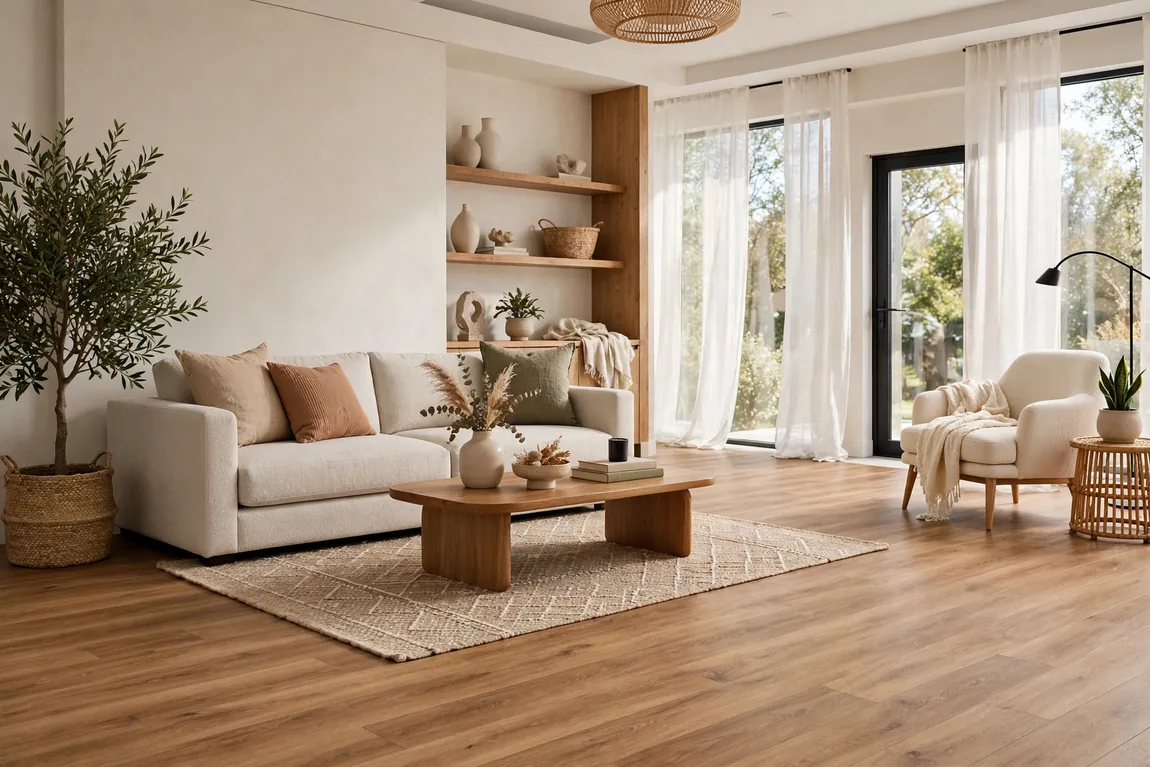
A new wood-look vinyl plank floor in a living room — the hardwood look without the hardwood price. (Illustrative image)
How Much Does vinyl plank flooring cost in 2026?
The table below shows typical 2026 US prices. “Installed” means planks, standard underlayment or attached pad, and professional labour. Labour is a bigger share than many people expect — usually $2 to $6 per square foot, roughly a third to half of the total bill.
| Plank Type | Material per Sq. Ft. | Installed per Sq. Ft. |
|---|---|---|
| Flexible / glue-down vinyl plank | $1.50 – $4 | $4 – $8 |
| Rigid core SPC (stone plastic composite) | $2.50 – $5.50 | $5 – $10 |
| Rigid core WPC (wood plastic composite) | $3 – $7 | $6 – $12 |
| Premium luxury vinyl plank (20 mil+ wear layer) | $5 – $10 | $9 – $16 |
| Typical mid-range rigid core, most homes | $3 – $6 | $5 – $11 |
Wear layer thickness is the number worth paying for: 6 mil is fine in a quiet bedroom, 12 mil suits most family homes, and 20 mil or more stands up to dogs, kids, and hallways — and is cheaper than replacing a worn floor early.
What a Whole Room Costs
| Project | Typical Installed Total (2026) |
|---|---|
| 200 sq. ft. bedroom or home office | $1,000 – $2,200 |
| 500 sq. ft. kitchen and living area | $2,500 – $5,500 |
| 1,000 sq. ft. main floor | $5,000 – $11,000 |
| Old flooring removal | Add $1 – $3 per sq. ft. |
| Subfloor levelling or repair | Add $1 – $3 per sq. ft. where needed |
| Separate underlayment (if not attached to the plank) | Add $0.50 – $1.50 per sq. ft. |
Those totals use mid-range rigid core pricing; budget glue-down can come in below them, and premium product in a high-cost city above them.
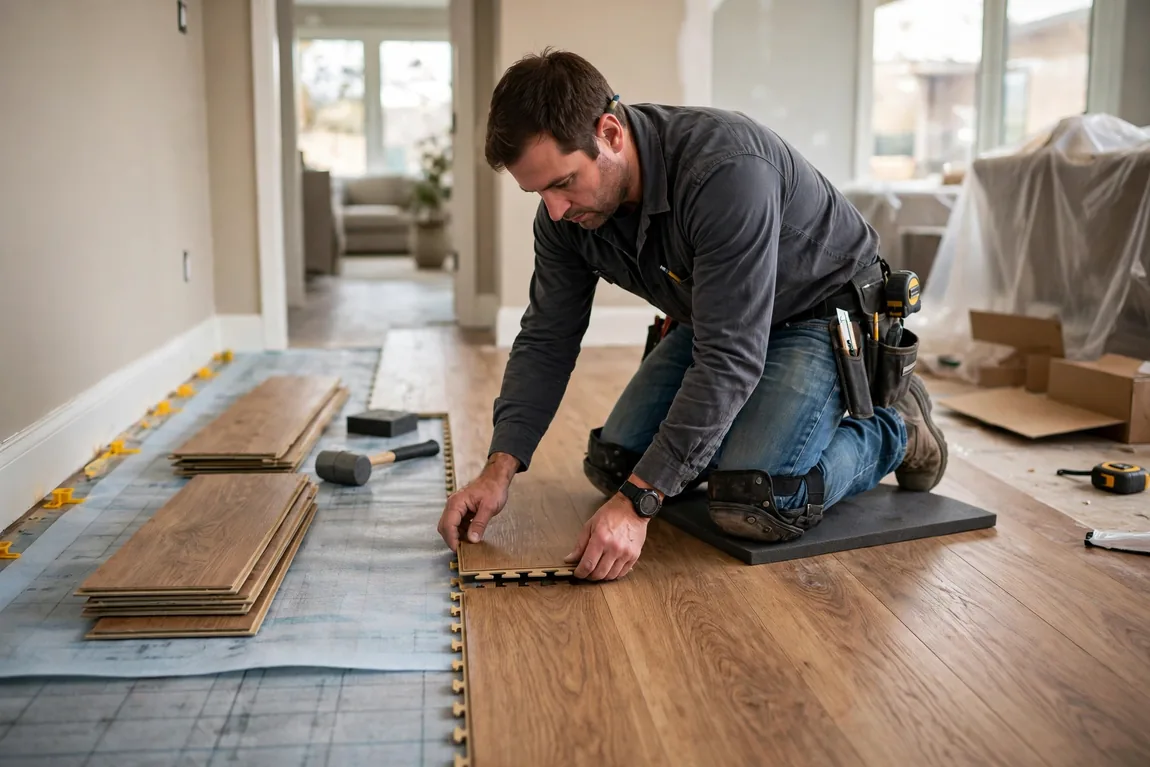
Professional installation adds $2 to $6 per square foot; a level subfloor keeps click-lock planks from lifting or gapping. (Illustrative image)
SPC, WPC, or Flexible Plank: Which Type Fits Your Budget?
SPC rigid core has a dense stone-plastic core. It is the most dent-resistant, stable option — the usual pick for kitchens, basements, and high-traffic areas — but feels firmer underfoot than WPC.
WPC rigid core has a foamed wood-plastic core. It is thicker, warmer, quieter, and softer, so it suits bedrooms and living rooms. It costs a little more than comparable SPC and can dent under very heavy furniture.
Flexible glue-down plank is the original, thinner format. Material is cheapest and single planks are easy to replace, but it telegraphs every subfloor bump and needs adhesive and more prep. It is common in rentals.
All three are waterproof through the plank itself, unlike hardwood or standard laminate. That is why vinyl plank is often priced alongside a larger project — homeowners planning a kitchen, for example, frequently budget the floor together with our guide to kitchen remodel cost so cabinets and appliances do not eat the flooring allowance.
Factors That Affect Vinyl Plank Flooring Cost
- Core and wear layer: Thicker planks with a 20 mil wear layer cost more and last longer — 15 to 25 years for quality rigid core, against 10 to 20 for basic plank.
- Room size and layout: Open rooms are cheaper per square foot. Hallways and rooms with many doorways, vents, and angles need more cuts and waste.
- Subfloor condition: Vinyl plank needs a flat surface. Levelling, patching, or replacing damaged plywood adds real money, and skipping it can void the warranty.
- Removal of old flooring: Carpet is cheapest to lift, at about $1 to $1.50 per square foot; glued vinyl, tile, or hardwood runs $2 to $3 including disposal.
- Underlayment: Many rigid core planks have an attached pad and need nothing extra. Without one, budget $0.50 to $1.50 per square foot, plus a moisture barrier over concrete.
- Trim and transitions: Baseboards, quarter round, nosings, and transition strips are small items that add up across a whole floor.
- Region: Labour runs noticeably higher in large coastal metros than in the Midwest or South, for the same product.
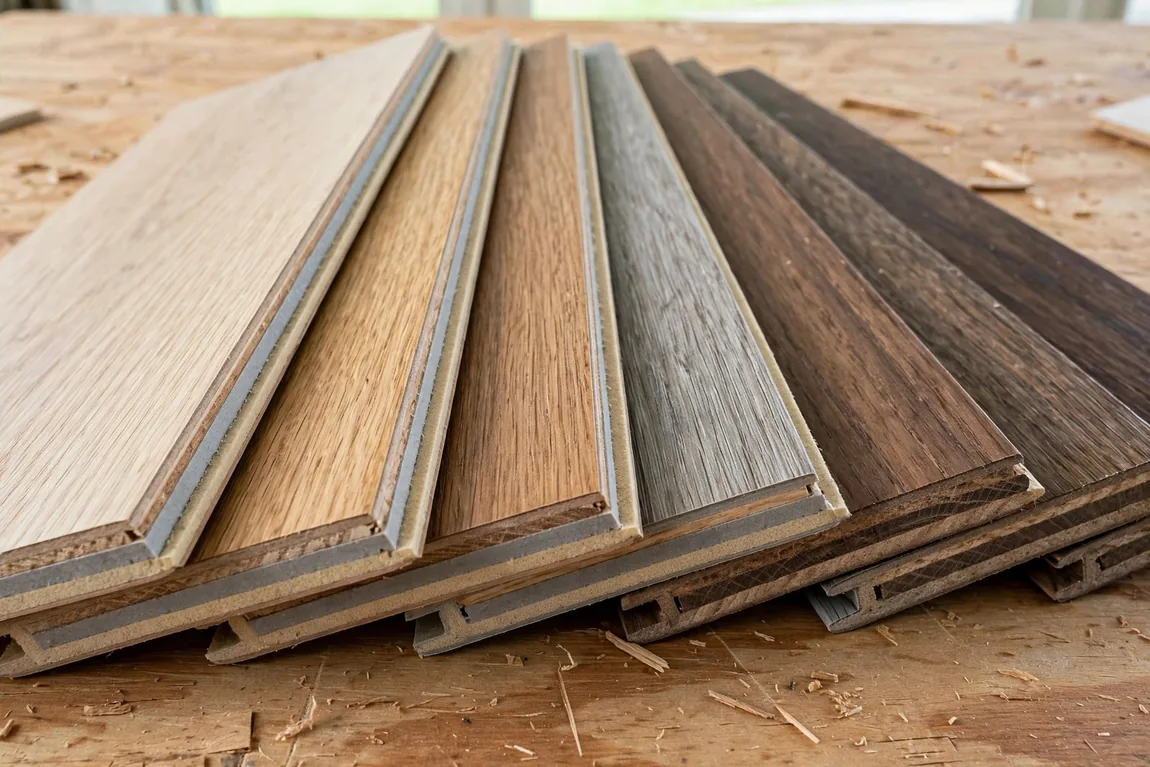
Plank samples in different wood tones — core type, thickness, and wear layer are the three choices that move the price most. (Illustrative image)
Prep, Removal, and the Costs Quotes Hide
Angi advises budgeting an extra $150 to $700 per project for subfloor repairs, old flooring removal, and transition strips — a sensible minimum to hold back. Levelling a large room, or scraping a glued-down old floor clean, can push past it. Ask every installer to itemise removal, prep, furniture moving, and trim separately, so you can see where a cheap quote is cheap.
Moisture testing matters too, especially over concrete: the plank is waterproof, but trapped moisture can still damage the subfloor below it. A test and a vapour barrier are inexpensive insurance in a basement.
DIY vs. Professional Installation
Click-lock rigid core is one of the most DIY-friendly floors sold today. Doing it yourself saves the $2 to $6 per square foot labour charge — $1,000 to $3,000 on a 500 square foot project. You still pay for planks, trim, a tapping block and spacers, and a saw, and should order about 10% extra material for cuts and mistakes.
Professional installation is worth paying for with glue-down plank, stairs, herringbone layouts, and any floor that needs levelling. Pros also work faster — a straightforward 500 square foot area often takes one to two days — and their labour normally carries a warranty.
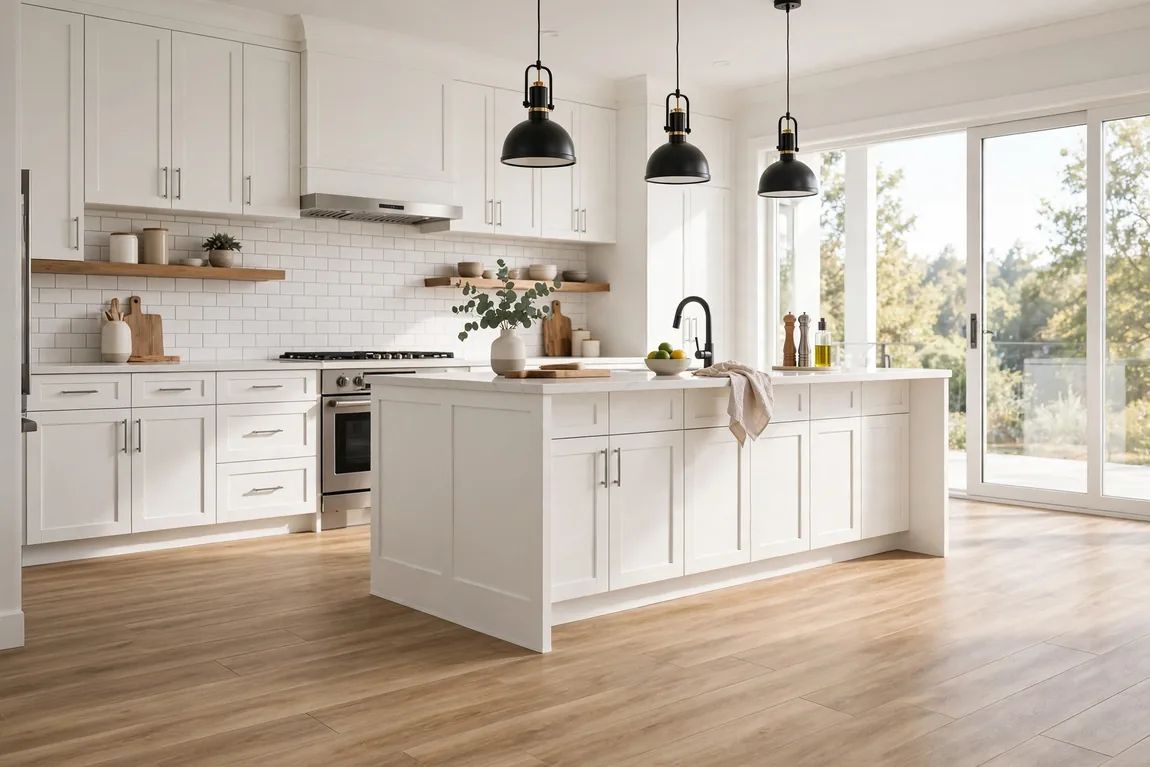
Waterproof vinyl plank in a kitchen — the room where its water resistance earns back the price difference over laminate. (Illustrative image)
How to Save Money on Vinyl Plank Flooring
- Choose a mid-range SPC plank with a 12 to 20 mil wear layer instead of the cheapest or the most premium line.
- Remove old carpet and move furniture yourself, if your installer agrees, and handle disposal where local rules allow it.
- Keep a straight lay pattern — herringbone and diagonal layouts add labour and waste.
- Buy during seasonal flooring sales, and buy the whole project at once so dye lots match.
- Get three itemised quotes that separate material, labour, removal, and prep.
- Use the same waterproof plank in adjoining wet rooms instead of switching materials; it pairs well with the moisture-first thinking in our look at bathroom design trends.
If you are sequencing projects in one season, compare this budget with our guide to deck building cost — floors usually win in winter, decks in spring.
Frequently Asked Questions
What is the average vinyl plank flooring cost in 2026?
Most homeowners pay $4 to $13 per square foot installed for standard vinyl plank, and $5 to $11 for mid-range rigid core. Angi’s 2026 data puts a typical total project at roughly $1,007 to $4,050, depending mainly on area and grade.
Is vinyl plank cheaper than hardwood?
Yes, usually by a wide margin. Vinyl plank commonly installs for about half the price of real hardwood, needs no refinishing, and can go over concrete and in basements where solid wood should not be used.
How long does vinyl plank flooring last?
Budget flexible plank typically lasts 10 to 20 years. Quality SPC and WPC rigid core with a 20 mil wear layer is commonly rated for 15 to 25 years, provided the subfloor was flat when it went down.
Can vinyl plank go in a kitchen or bathroom?
Yes — the plank itself is waterproof, which is why it is so popular in kitchens, bathrooms, and basements. Follow the manufacturer’s rules on expansion gaps and sealing at tubs, and it will handle everyday spills without swelling.
Is it worth paying for professional installation?
For a single rectangular room with click-lock plank, confident DIYers usually get a good result and save the labour share. For stairs, glue-down products, or uneven subfloors, professional installation pays for itself in speed, finish, and warranty cover.