

If you need heating and cooling in a room that never feels comfortable, the ductless mini split cost is often lower than extending ductwork or replacing a whole central system. A mini split heats and cools without ducts, so it suits additions, garages, basements, older homes, and single rooms that a central system struggles to reach. This guide explains typical US prices for 2026 as planning estimates and ranges, not quotes. Your final price will depend on your home, your climate, and the installer you choose, so use these figures to build a realistic budget and to compare written quotes fairly.
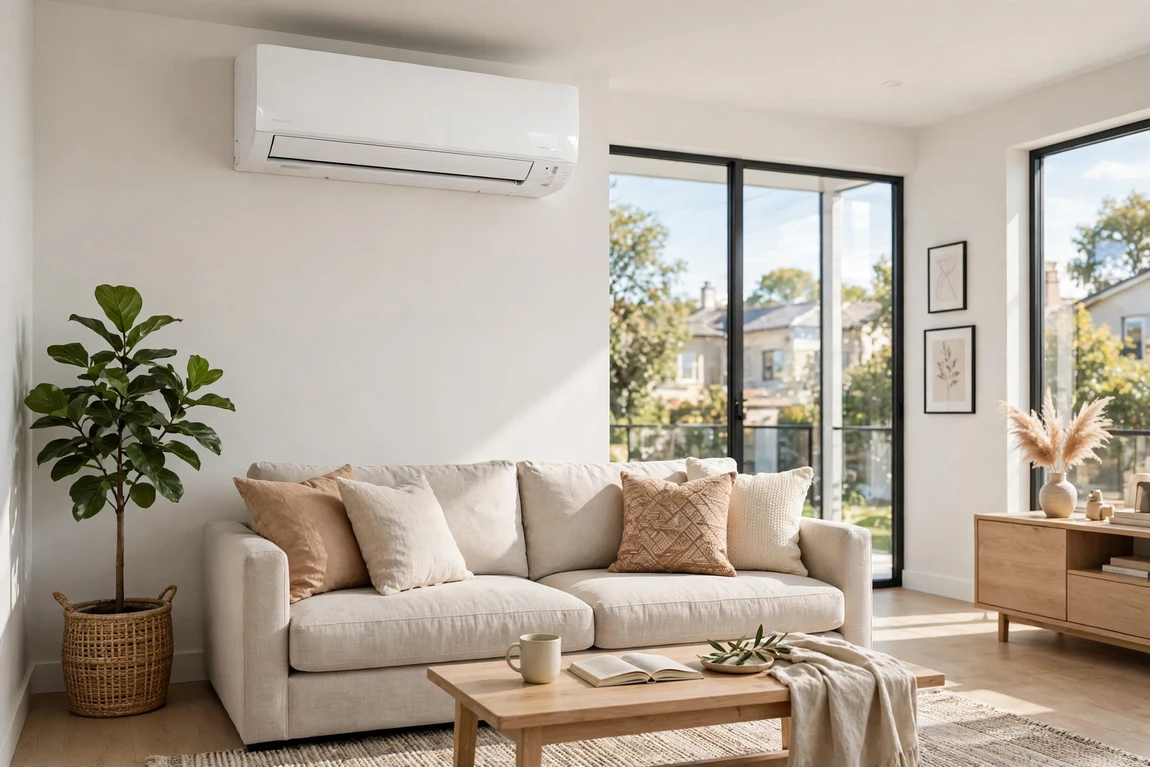
A wall-mounted indoor head unit in a bright living room. (Illustrative image)
What a ductless mini split is, and where it suits best
A ductless mini split has two main parts: an outdoor condenser and one or more indoor air handlers, often called heads. A slim refrigerant line set connects them through a small hole in the wall, so there is no ductwork to build, seal, or clean. Each indoor head serves one zone, which means you can set a different temperature in a bedroom than in a living room, and you can turn off heating or cooling in rooms nobody is using.
Mini splits are a strong fit in several common situations:
- Older homes with no existing ducts, where adding ductwork would be disruptive and expensive
- Room additions, sunrooms, converted garages, attics, and finished basements
- A single hot or cold room that the main system never quite fixes
- Homes that use costly electric baseboards, oil, or propane and want a more efficient option
- Households that want room-by-room control instead of one thermostat for the whole house
They are less ideal when a home already has good, well-sealed ducts and a central system in decent shape. In that case, compare the mini split quote against a straightforward central replacement before you decide.
What installation involves
A professional installation usually starts with a load calculation and a walk-through to size each zone correctly. Oversizing wastes money and can leave a room clammy, while undersizing leaves the system running constantly on the hottest and coldest days. The crew then mounts each indoor head, drills a small opening for the line set, sets the outdoor unit on a pad or wall bracket, and runs refrigerant lines, a condensate drain, and electrical wiring.
Most single-zone jobs finish in one day. Multi-zone systems, long line runs, panel upgrades, or permit inspections can stretch the work to two or three days. Ask in advance whether the quote includes the electrical work, the pad or bracket, the line-set cover, permits, and disposal of packaging, because those small items are where cheaper quotes often quietly leave things out.
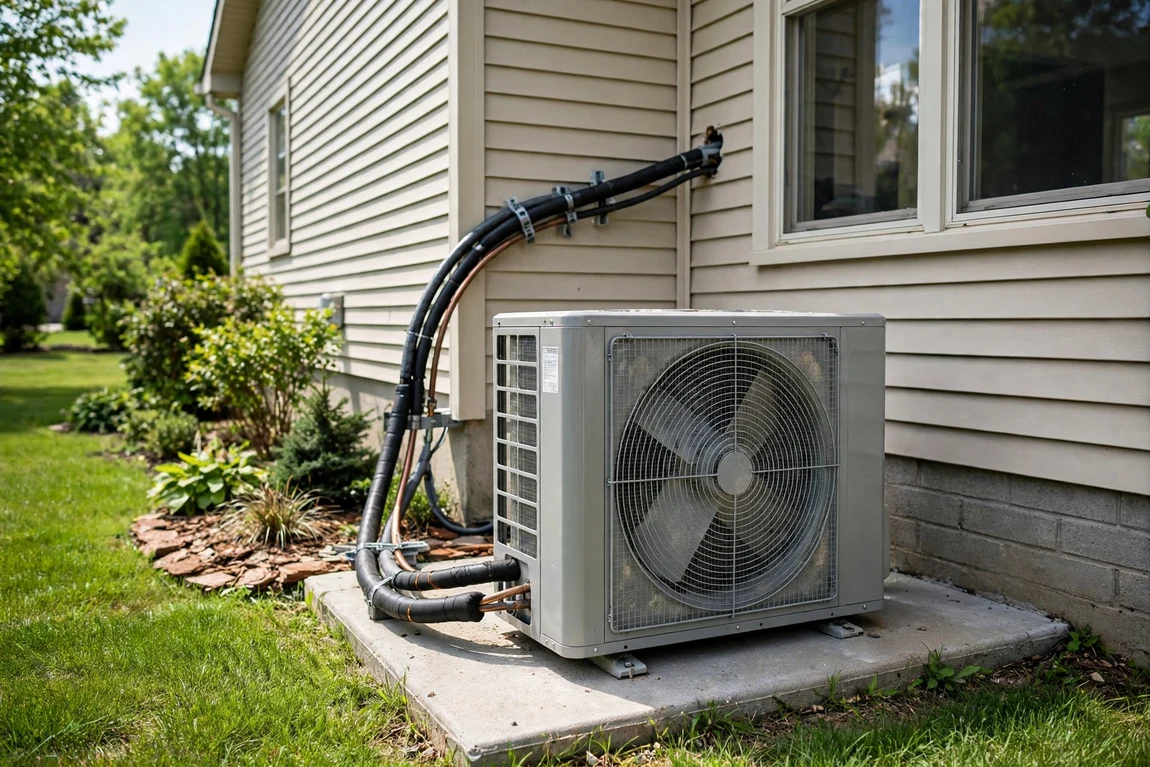
An outdoor condenser on a pad beside a house exterior. (Illustrative image)
What affects ductless mini split cost the most?
The table below gives typical installed price ranges for 2026. Treat every figure as a planning estimate for a typical US home, not a promise. High-efficiency cold-climate models, difficult access, and high local labour rates can push a project above these ranges, while a simple single-zone job in a lower-cost area can come in below them.
| System size | Typical installed cost range (2026 planning estimate) | Common use |
|---|---|---|
| 1 zone (single-zone) | $3,500 to $7,500 | One bedroom, office, garage, or sunroom |
| 2 zones | $6,500 to $12,000 | Two bedrooms, or a living room plus bedroom |
| 3 zones | $9,000 to $16,500 | Main living areas plus bedrooms |
| 4 or more zones | $12,000 to $24,000 or more | Most or all of a house |
Equipment alone, before labour, often accounts for roughly half of a single-zone budget, with the rest covering installation, electrical work, materials, and permits. Multi-zone systems share one outdoor unit, so each added head usually costs less than a separate single-zone system, but the total still rises with every zone you add. If you are comparing systems for a larger project, our guide to heat pump installation cost explains how ducted heat pump pricing is built up, which makes the two options easier to compare side by side.
Factors that change the price
- Number of zones: every extra indoor head adds equipment, lines, and labour.
- Capacity and efficiency: larger, higher-efficiency, and cold-climate models cost more upfront.
- Line-set length: longer or hidden runs between the outdoor unit and the heads take more time and material.
- Electrical work: a new breaker is minor, but a full panel upgrade can add a significant amount.
- Mounting and access: wall brackets, roof work, tight crawl spaces, and masonry walls all add labour.
- Permits and local rates: labour and permit costs vary widely by region and city.
- Brand and warranty: established brands with longer parts warranties usually sit at the higher end.
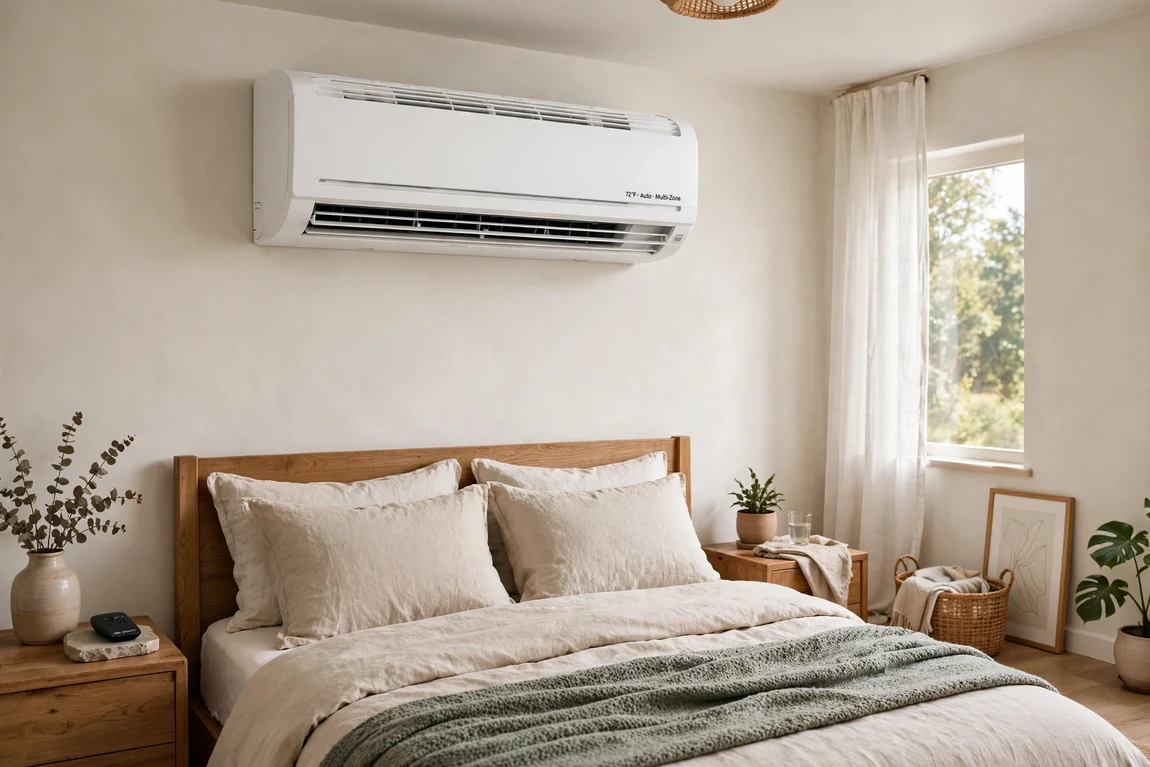
A bedroom head unit in a multi-zone mini split layout. (Illustrative image)
Mini split vs central air and heat pumps
Central air with new ductwork is usually the most disruptive route, and adding ducts to a home that has none can cost as much as the cooling equipment itself. A ducted heat pump makes sense when ducts are already in good condition, because you reuse them. A mini split avoids ducts entirely, avoids duct losses, and gives you zoning as standard, but a whole-house multi-zone system can cost as much as a ducted system, and some buyers simply prefer vents to wall-mounted heads.
Running costs depend more on your insulation and air sealing than on the badge on the unit. A mini split in a leaky, poorly insulated room will still work hard. Pairing the project with the improvements in our attic insulation cost guide often lets you choose a smaller, cheaper system that holds temperature better. If the mini split is for a new room, our home addition cost guide helps you budget the heating and cooling alongside the building work itself.
DIY mini splits vs professional installation
DIY mini split kits, including pre-charged line sets, are sold for a lower upfront price, and a confident homeowner with the right tools can fit one. The trade-offs are real, though. Mistakes with flared connections, vacuuming, drainage slope, or electrical work can cause leaks, poor performance, or a failed unit. Some manufacturers also limit warranty cover on self-installed systems, and local codes may still require permits and a licensed electrician for the circuit.
Professional installation costs more, but it normally includes correct sizing, a cleaner finish, permit handling, and full warranty registration. For a single simple zone, compare both routes honestly. For multi-zone or cold-climate systems, professional fitting is usually the safer spend.
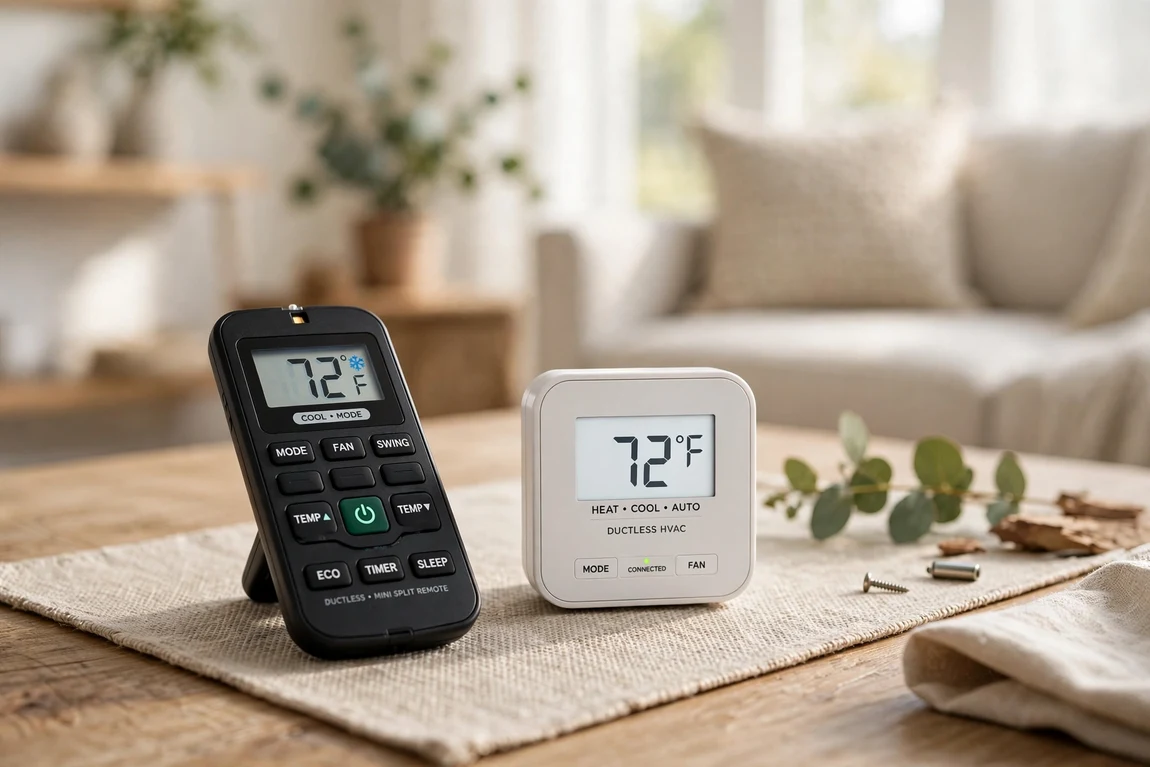
A remote control and temperature setting detail for a mini split. (Illustrative image)
How to save, and how to maintain your system
Get at least three written quotes with the model numbers, zone sizes, and scope spelled out, so you are comparing like with like. Ask about off-season scheduling, manufacturer promotions, and any current utility or state incentives in your area, and confirm eligibility before you count on them, because incentive rules change. Right-size the system rather than paying for capacity you do not need, and fix insulation and draughts first where they are cheap to fix.
Maintenance is simple but it matters. Rinse or replace the indoor filters regularly, keep the outdoor unit clear of leaves, snow, and garden growth, and make sure the condensate drain stays clear. Book a professional service visit periodically so coils, connections, and refrigerant charge can be checked. A clean, correctly sized mini split should hold its efficiency well, keep each zone comfortable, and reward the upfront cost with years of quiet, flexible heating and cooling.