

A gray, football-shaped nest in a tree or under an eave can turn a quiet yard into a no-go zone. Hornets defend their colony hard, and a disturbed nest can mean multiple stings. Learning how to get rid of hornets safely starts with one calm decision: does this nest actually need to go, or can it be left alone until cold weather ends the colony on its own?
This guide walks through identification, the safest removal order, and the mistakes that make a hornet problem worse. If anyone in your home is allergic to stings, skip the DIY sections entirely and call a professional from the start.

Signs You Have a Hornet Problem
The bald-faced hornet is one of the most common problem species. The University of Kentucky describes it as larger than a yellowjacket, black and white in color, and the builder of a large, gray nest resembling a bloated football. Illinois Extension adds that bald-faced hornets are about one inch long, with a whitish face and tip of the abdomen.
Look for steady flight traffic to a single point. A hornet nest usually has one opening, typically toward the bottom, where the insects enter and exit. Nests are often attached to a tree, bush, or the side of a building, and they are frequently hidden among branches.
Do not confuse hornets with calmer insects. Paper wasps have a very thin waist and build open, umbrella-shaped nests, and they are usually less aggressive. Honeybees are also different and should not be treated with hornet spray.
If you are comparing similar stinging insects, our guides on wasp removal and yellowjackets vs. wasps can help you separate them before you act.
Why Hornets Nest Near Homes
Hornets choose shelter, height, and food. Eaves, dense trees, and quiet corners of a building protect the paper nest from rain and predators. A nest that starts small in spring can grow through summer as the colony expands, which is why early identification matters.
How to Get Rid of Hornets Step by Step
The safest order for how to get rid of hornets is decide, prepare, treat at night if treatment is truly needed, wait, and only then remove the empty nest. Skipping the decision step is where most people go wrong.
Step 1: Decide whether to leave it. If the nest is at least ten feet off the ground and away from doors, sidewalks, and play areas, leaving it is often the better option, according to Illinois Extension. The nest will not be reoccupied next year, and in states with cold winters the colony dies off naturally once the weather turns cold, as the University of Kentucky notes.
Step 2: Identify and locate the entrance in daylight. Pinpoint the single opening during the day so you know where to direct any treatment after dark. Plan a clear retreat path with no toys, hoses, or furniture to trip over.
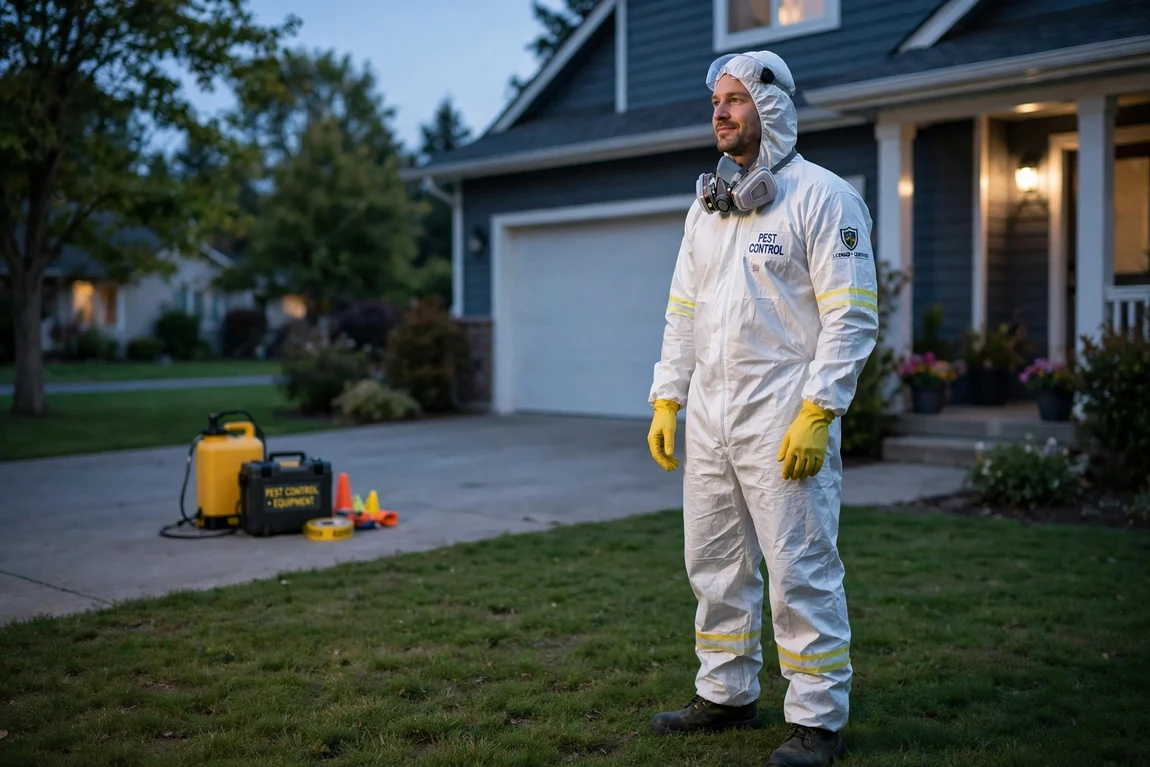
Step 3: Dress for the job or stop here. Anyone treating a nest should wear a full wasp suit and head veil sealed at the wrists, ankles, and collar, as the University of Kentucky ENTFACT-620 guide to controlling wasps, hornets, and yellowjackets strongly recommends. If you do not have that protection, do not proceed.

Step 4: Treat at night, into the opening only. Treat when most of the insects are in the nest and less active. Apply a labeled aerosol wasp and hornet spray or insecticide dust directly into the nest opening. Do not break the paper envelope of the nest during treatment, or the irritated wasps will scatter in all directions.
Step 5: Do not stand under the nest and do not use a bright light carelessly. Aroused hornets fly toward lights. Keep any light low, indirect, and off to the side rather than shining it straight into the entrance. Never stand directly below a treated nest, because stunned insects can fall.
Step 6: Wait, check, and repeat only if needed. After treatment, wait at least 3 to 4 days before removing the nest to be sure all of the wasps are killed, following the Kentucky guidance. If hornets are still entering and leaving after that wait, the treatment may need to be repeated or handed to a professional.
Step 7: Remove and clean up. Once there has been no activity for several days, knock down or clip off the empty nest and bag it for disposal. Seal cracks around eaves and vents afterward so other pests do not use the same sheltered spot, but never seal an opening while a colony is still active inside a wall or attic.
What Not to Do
Do not douse a nest with gasoline or blast it with a garden hose. The University of Kentucky calls these folk remedies seldom successful and warns they can result in multiple stings. They also create fire, runoff, and injury risks that a labeled product does not.
Do not seal a nest inside a wall void. Trapped hornets can chew or push their way into living space, turning an outdoor problem into an indoor one. If the nest is inside a wall, attic, or chimney, treat that as a professional job from the start.
Prevention for Next Season
Prevention is mostly about food and shelter, and it is also the long-term answer behind how to get rid of hornets for good. Keep trash cans closed with tight lids, clean up spills and fallen fruit promptly, and cover sweet drinks outdoors in late summer.
Inspect eaves, shutters, porch ceilings, and dense shrubs in spring, when new nests are still small. A small starter nest found early is far easier and safer to deal with than a mature colony found in August. Caulk cracks and repair screens and vents at the same time.

DIY vs. Professional Help
DIY treatment can be reasonable for a small, reachable, outdoor nest when no one nearby is allergic, you have full protective clothing, and you can treat at night from the ground. Even then, the plan for how to get rid of hornets should include an exit route and another adult nearby who can call for help.
Call a professional for large nests, nests in walls or attics, nests that need a ladder, and any nest near a school, sidewalk, or neighbor’s yard. Professionals have long-handled dusters, protective suits, and experience judging whether a colony is fully dead before removal.
Safety and Allergy Notes
Stings are a real health risk, not just a painful nuisance. The University of Kentucky, citing Wilderness & Environmental Medicine, reports that allergic reactions to venomous insects account for about 225,000 emergency room visits and as many as 100 deaths per year in the United States.
Most stings cause pain, redness, itching, and local swelling, which can be eased with soap and water, an ice pack, and an over-the-counter antihistamine. Seek medical care immediately for hives, widespread itching, swelling of the face, throat, or mouth, difficulty breathing or swallowing, dizziness, or a rapid pulse. Do not wait to see whether those symptoms pass.
People who know they are hypersensitive should carry an epinephrine auto-injector if advised by their doctor and should never treat a nest themselves. Keep children and pets indoors during any treatment and until activity has stopped completely.
Frequently Asked Questions
Can I leave a hornet nest alone until winter?
Often, yes. If the nest is high and away from doors, paths, and play areas, it can usually be left alone. Colonies die off in cold weather, old nests are not reused, and the paper breaks down over winter.
When is the best time of day to treat a nest?
At night, when most of the colony is inside and less active. Locate the entrance in daylight first, wear full protective clothing, and keep light indirect and away from the opening.
How long should I wait before removing a treated nest?
Wait at least 3 to 4 days after treatment, following University of Kentucky guidance, and confirm there is no flight activity. If hornets are still active, repeat treatment or call a professional instead of removing the nest.
Will a fake nest or a trap solve the problem?
Traps can catch foraging workers, but they rarely eliminate a mature colony, and a trap placed in the wrong spot can draw more insects toward your seating area. Nest treatment or professional removal is what ends a colony.
What should I do if hornets are inside my wall?
Do not seal the outside opening and do not spray blindly into the wall. Call a professional. A colony in a void needs a planned treatment so the insects do not move inward into the house.
What is the safest first step overall?
Confirm the insect and the nest location from a distance, then decide whether removal is needed at all. That calm first check is the core of how to get rid of hornets without creating a bigger, angrier problem.