

A faint skunk smell at dusk, small cone-shaped holes in the lawn, and a dog barking at the deck are often the first clues. Skunks are mild-tempered and usually prefer to leave, but a den under a porch is too close for comfort. Learning how to get rid of skunks safely means letting the animal walk out on its own, proving the den is empty, and then blocking it for good.
This guide covers identification, the flour-track and one-way door method, food and habitat fixes, and the rabies and legal cautions that matter. Never handle a skunk, keep pets away, and call a professional if a skunk is inside your living space.
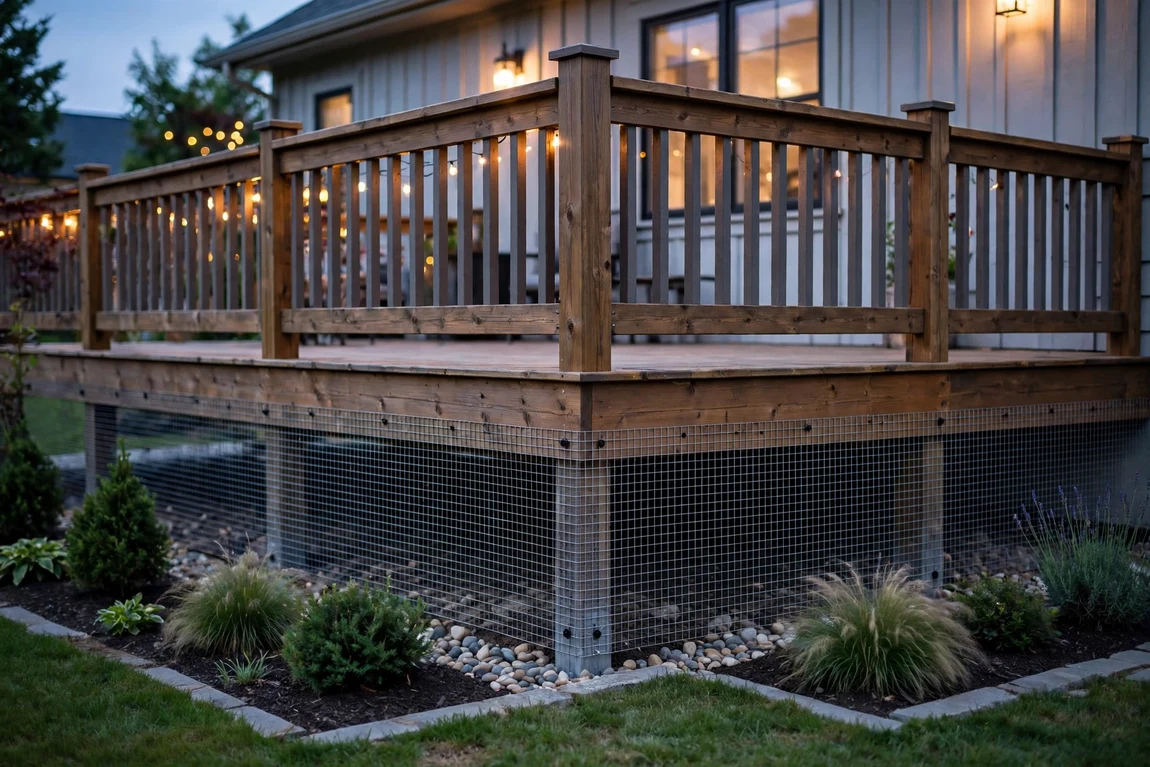
Signs You Have a Skunk Problem
The striped skunk is the species most commonly found around homes. UC IPM describes it as about the size of an adult house cat, mostly black, with white on top of the head and neck that usually extends down the back into two white stripes. Penn State Extension gives the same house-cat size comparison for the striped skunk.
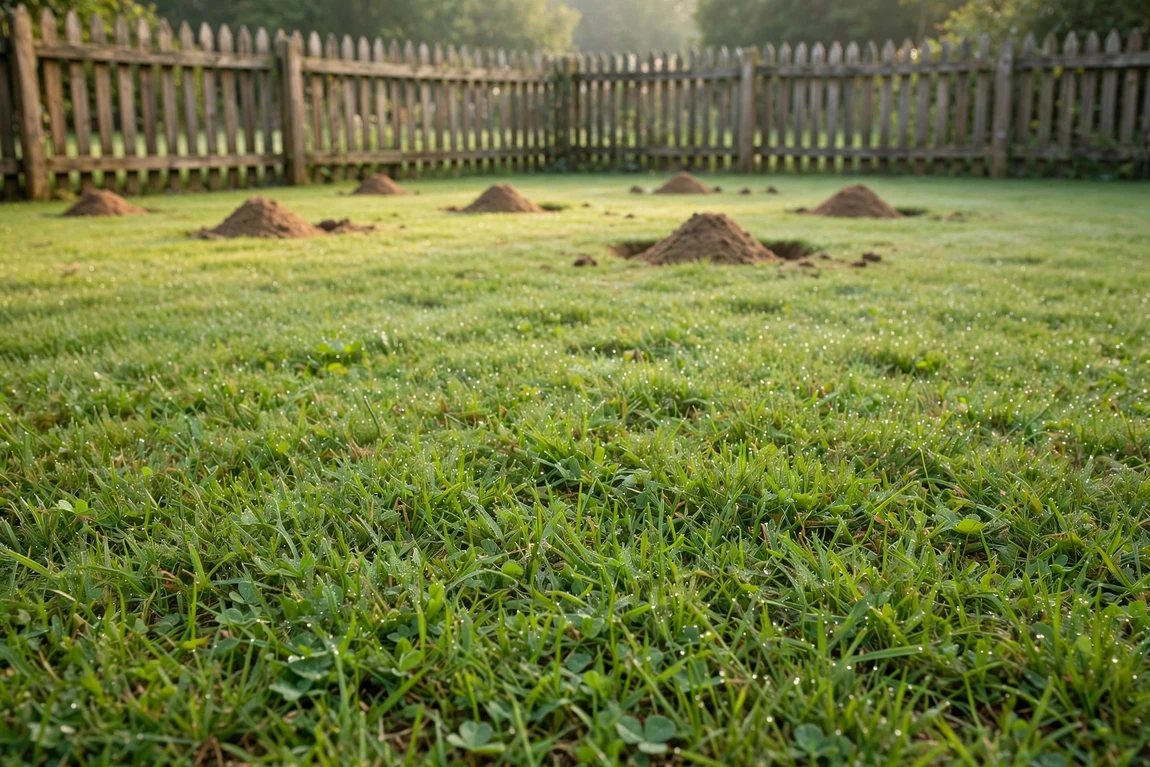
Damage is often clearer than the animal itself, because skunks are usually active at dawn, dusk, and during the night. Look for small pits or cone-shaped depressions in lawns, about 3 to 5 inches across according to UC IPM, where a skunk dug for grubs and other insects. Penn State describes similar holes up to 3 to 4 inches in diameter.
Skunks den in burrows, brush piles, hollow logs, and culverts, and in urban settings under decks, porches, or beneath buildings, UC IPM notes. If you are also seeing mice or other pests that can attract predators, our guides on insect home proofing and rodent control can help you fix the wider food and shelter picture.
Why Skunks Come to Your Home
Skunks are attracted to residential areas by food, water, and shelter, in UC IPM’s plain summary. They eat insects, grubs, earthworms, small rodents, fruit, berries, pet food, and garbage, and their diet changes with the season and what is easiest to find.
A lawn full of grubs is a buffet. So is fallen fruit, spilled bird seed, open compost, and pet food left out overnight. Shelter completes the invitation: a dry, dark space under a deck or shed, a brush pile, or firewood stacked on the ground.
How to Get Rid of Skunks Step by Step
The proven order for how to get rid of skunks is seal every entrance except one, prove the animal leaves at night, fit a one-way door if needed, confirm the den is empty, and only then close the last opening. Sealing first can trap a skunk, and possibly its kits, under your home.
Step 1: Confirm it is a skunk and find every entrance. Inspect foundations, decks, porches, and sheds in daylight. Note the main burrow entrance and any side gaps. Do this from a distance and never reach into a burrow.
Step 2: Seal all but the main entrance. Penn State Extension advises sealing all possible entrances along the foundation but leaving the main burrow entrance open. Cover openings with wire mesh, sheet metal, or concrete so the animal has only one way out.
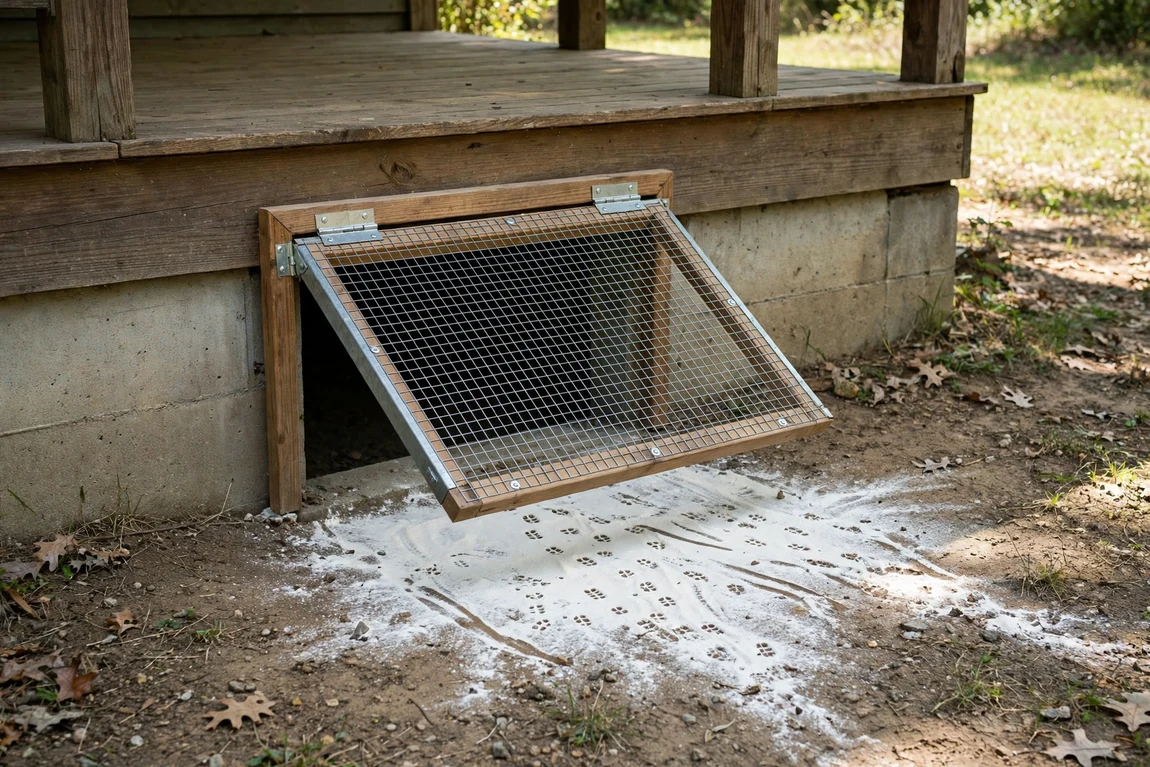
Step 3: Lay a flour tracking patch. Sprinkle a thin layer of flour in front of the opening — Penn State suggests a patch 2 feet in circumference, and UC IPM describes a smooth layer about 1/8 inch thick. Check after dark for footprints showing the skunk has left to feed, and recheck in an hour if there are no tracks.
Step 4: Fit a one-way door if you are not sure the den is empty. UC IPM describes a one-way, outward-swinging gate made from 1/2-inch mesh hardware cloth, hinged at the top and loose on the other three sides, larger than the opening so it can only swing outward. Penn State describes a similar improvised door of plywood larger than the opening, wired so it can be pushed open from inside. Leave it in place for several nights.
Step 5: Mind the kit season. Do not permanently seal a burrow if immobile kits may be inside. Penn State warns that burrows sealed from early May to mid-August may leave young skunks trapped in the den. If kits are present and cannot walk, call a professional wildlife control operator rather than forcing the timing.
Step 6: Seal the last entrance properly. Once tracks, the one-way door, and several quiet nights confirm the den is empty, close the opening with 1/4-inch mesh hardware cloth, as the UC IPM Pest Notes on skunks recommend. If there is soil below the entrance, bury the wire at least 6 inches to discourage digging under, and make every fitting tight, because skunks will work hard to re-enter a good den.
Step 7: If a skunk is in a garage or house, open a way out. Penn State advises opening doors so a skunk that has entered a garage, cellar, or house can exit on its own. Do not prod or disturb it. Keep people and pets in another area until it has left.
Trapping and Relocation: Know the Law First
Relocation is restricted. UC IPM reports that in California skunks cannot be relocated without a permit, and because of the potential for rabies it is unlikely the California Department of Fish and Wildlife will issue one. Penn State notes that in Pennsylvania striped skunks are furbearers with legal protection, and a hunting license is required before trapping unless they are causing damage to the property. Your state will have its own rule, so check it first.
Prevention That Keeps Skunks Away
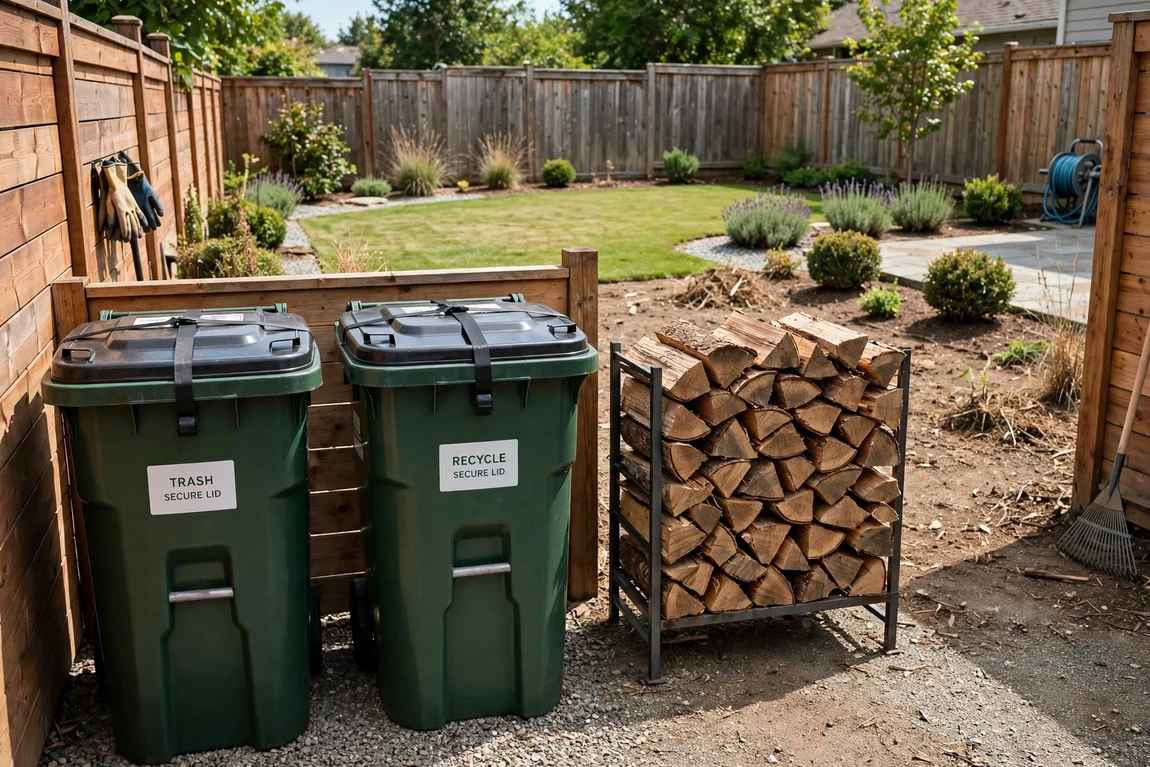
Prevention is the lasting half of how to get rid of skunks, because an empty den under an open deck will be found again. Remove food first: pick up fallen fruit, clean spilled bird seed, use garbage cans with tight-fitting lids, keep food scraps out of cold compost, and bring pet food in by nightfall, following UC IPM.
Remove shelter next. Cut back overgrown shrubbery, stack firewood tightly and preferably at least 18 inches above the ground, and remove boards, rocks, and debris lying on the ground where insects hide, as UC IPM advises. Screen window wells and the open sides of decks, porches, and sheds before a new den starts.
DIY vs. Professional Help
DIY work fits the calm, outside jobs: laying a flour patch, sealing side entrances, fitting a one-way door on a simple deck den outside kit season, and doing the food and habitat cleanup. That patient sequence is the everyday core of how to get rid of skunks for most homeowners.
Call a professional wildlife control operator, animal control, or your local health department for a skunk in living space, a den with kits, a trapped or injured animal, repeated spraying, or any animal showing abnormal behavior. Penn State warns that any skunk showing abnormal behavior, such as daytime activity, may be rabid and should be treated with caution.
Safety, Rabies, and Spray Notes
Skunks can carry rabies, and UC IPM notes rabies is endemic in the skunk population in California, with some health departments helping with control for that reason. Never handle a skunk, keep pets away and vaccinated, and report a bite or a pet fight to a veterinarian and local health authorities promptly.
If a person or pet does get sprayed, the standard home remedy is a fresh mixture of 1 quart of 3% hydrogen peroxide, 1/4 cup of baking soda, and 1 to 2 teaspoons of liquid dish soap. Work it into the coat or skin, avoiding the eyes, leave it for about five minutes, then rinse thoroughly. Mix it fresh each time and never store it in a closed container.
Frequently Asked Questions
How can I tell if the den under my deck is empty?
Use a flour tracking patch in front of the entrance and check it after dark for exit footprints. A one-way door left for several nights, with no new tracks or odor of activity, is stronger proof before you seal.
When should I never seal a skunk den?
When kits may be inside and not yet mobile. Penn State warns burrows sealed from early May to mid-August may leave young trapped. Wait, use a one-way door, or call a professional.
Do repellents or mothballs work?
Penn State states there are no registered repellents for skunks, and UC IPM presents habitat and exclusion work as the effective route. Skip home-remedy chemicals and fix food, shelter, and access instead.
Can I relocate a trapped skunk myself?
Usually not legally, and rules vary by state. In California a permit is required and unlikely to be issued because of rabies risk, according to UC IPM. Check your state agency and prefer exclusion.
What do I do if my dog gets sprayed?
Keep the dog outside if possible, wear gloves, and wash with the hydrogen peroxide, baking soda, and liquid soap mixture described above, avoiding the eyes. Check for bites as well as spray, and call your veterinarian if there was contact.
What is the most permanent solution?
Let every animal leave, confirm the den is empty, seal it with buried hardware cloth, and remove food and shelter for good. That full sequence is what makes how to get rid of skunks last instead of repeating next season.