

A groundhog can clear a row of beans overnight and dig a burrow right beside your foundation. Learning how to get rid of groundhogs starts with confirming the animal, then combining exclusion, habitat changes, and, where the rules allow, live trapping. No single trick works for long on its own.
This guide follows university extension advice, covering burrow signs, the fence design that stops a climbing, digging animal, and the legal points to check before trapping.

Signs You Have a Groundhog, Not Another Digger
According to Penn State Extension, a woodchuck burrow entrance is 10 to 12 inches in diameter, with a large mound of excavated earth at the main entrance. That mound is constantly renewed with fresh soil from inside.
Most systems have one to three secondary entrances, dug from below, with no mound beside them, and they are often well hidden.
Groundhogs are strict herbivores that feed mainly in the early morning and evening. They favour beans, peas, carrot tops, alfalfa, clover, squash, and tomatoes, and a homeowner can lose an entire tomato patch to one animal.
A burrow this size, a big soil mound, and cleanly eaten garden plants point to a groundhog. Smaller holes with no mound suggest a different animal, and our guide to chipmunk control can help you tell them apart.
Why Groundhogs Choose Your Yard
Penn State Extension explains that burrows are commonly found along fence rows and stone walls, on roadsides, and near building foundations or the bases of trees. A garden beside a deck, shed, or brushy edge is ideal habitat.
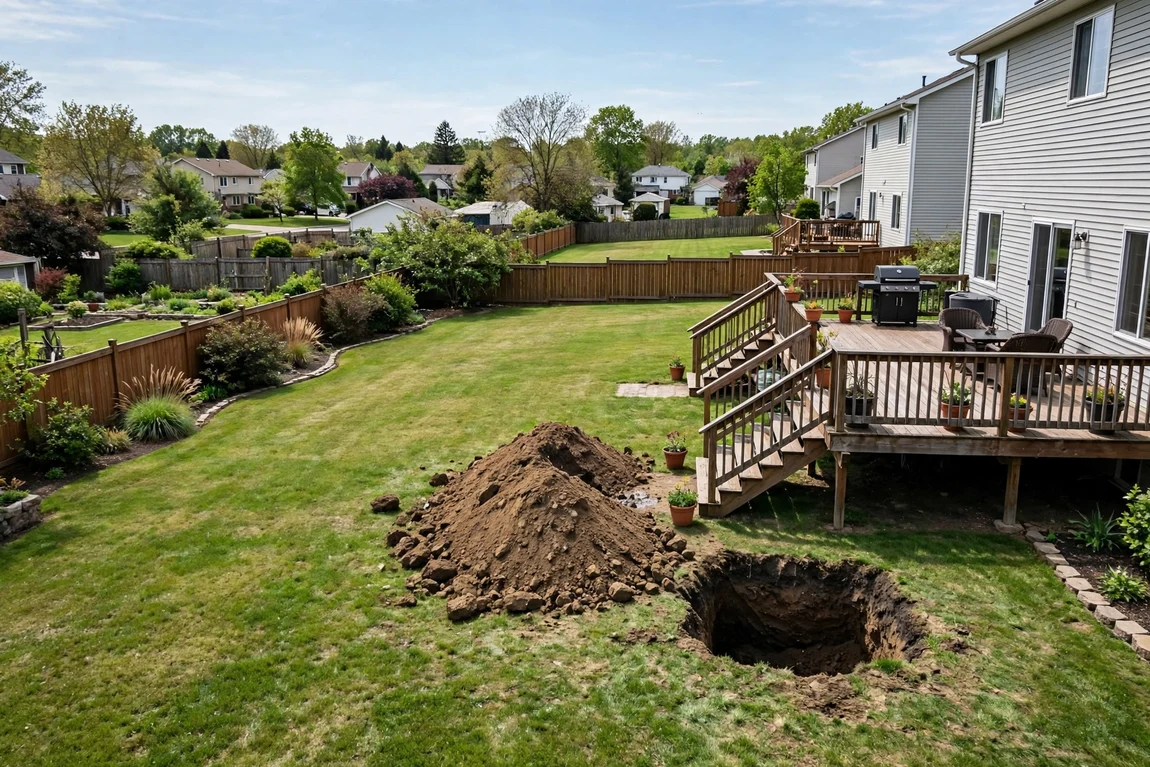
A single burrow serves for mating, raising young, hibernating, and escaping danger, and an occupied system may be used for several seasons. Young animals frequently move into abandoned dens, so an empty burrow rarely stays empty.
Groundhogs breed in March and April, raise one litter a year, and then fatten up through summer before hibernation. Damage usually peaks when gardens are fullest and young animals are dispersing in late summer.
How to Get Rid of Groundhogs: Step-by-Step Methods That Work
Start with the method extension services call the most permanent: exclusion. When homeowners ask how to get rid of groundhogs for good, fencing is the answer that keeps working after traps and scare devices have failed.
Step 1: Confirm the burrow is active. Look for fresh soil on the mound, fresh tracks, and new feeding damage nearby. Groundhogs usually range only 50 to 150 feet from the den, so damage close to the burrow is a strong sign it is occupied.
Step 2: Build a fence that stops digging and climbing. Penn State Extension recommends fencing at least 3 feet high, made of heavy poultry wire or 2-inch woven mesh. Bury the lower edge 12 inches deep, with the bottom 6 inches bent outward in an L shape so the animal digs into wire, not under it.
Step 3: Stop the climb. Groundhogs climb well, so height alone is not enough. Bend the top 15 inches of the fence outward at a 45-degree angle, or add an electric wire 4 to 5 inches off the ground and the same distance outside the fence, as Penn State advises in its Penn State Extension woodchuck guide.
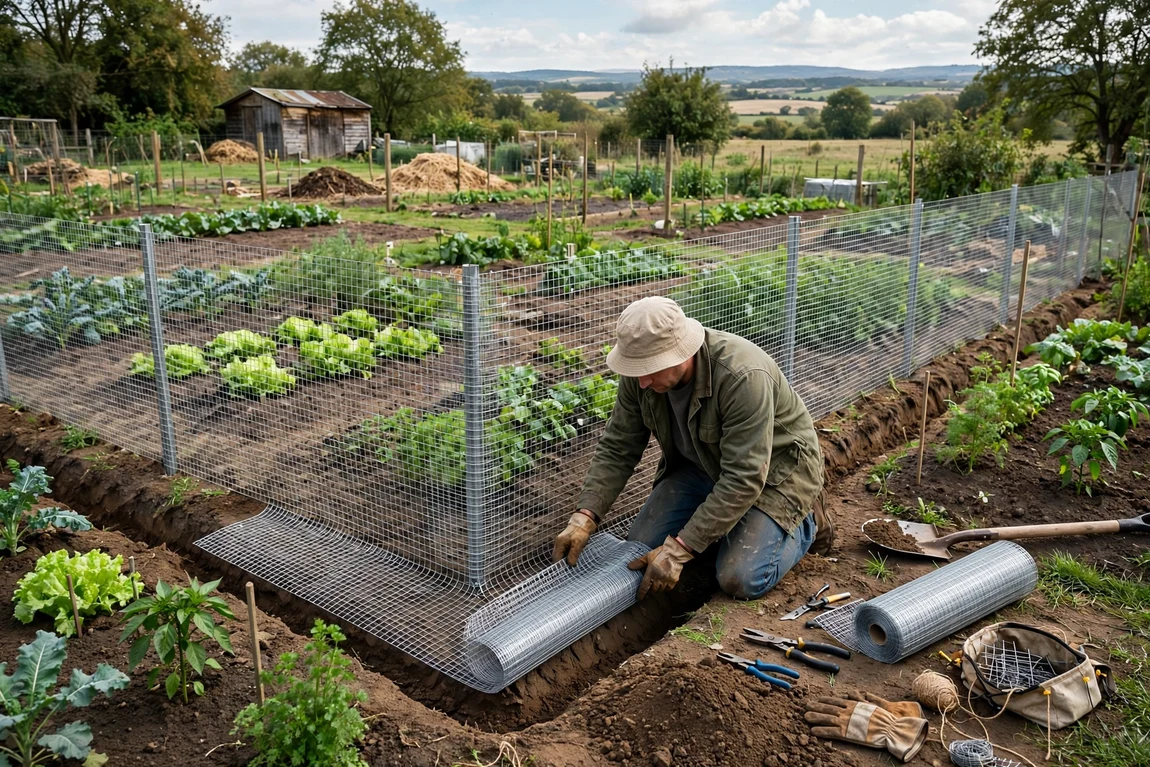
Step 4: Seal under decks, sheds, and porches. Iowa State University Extension describes the same barrier approach for structures: dig a narrow trench around the perimeter, bury half-inch mesh hardware cloth 10 to 12 inches deep, and attach it firmly to the bottom of the structure. Leave no loose sections.
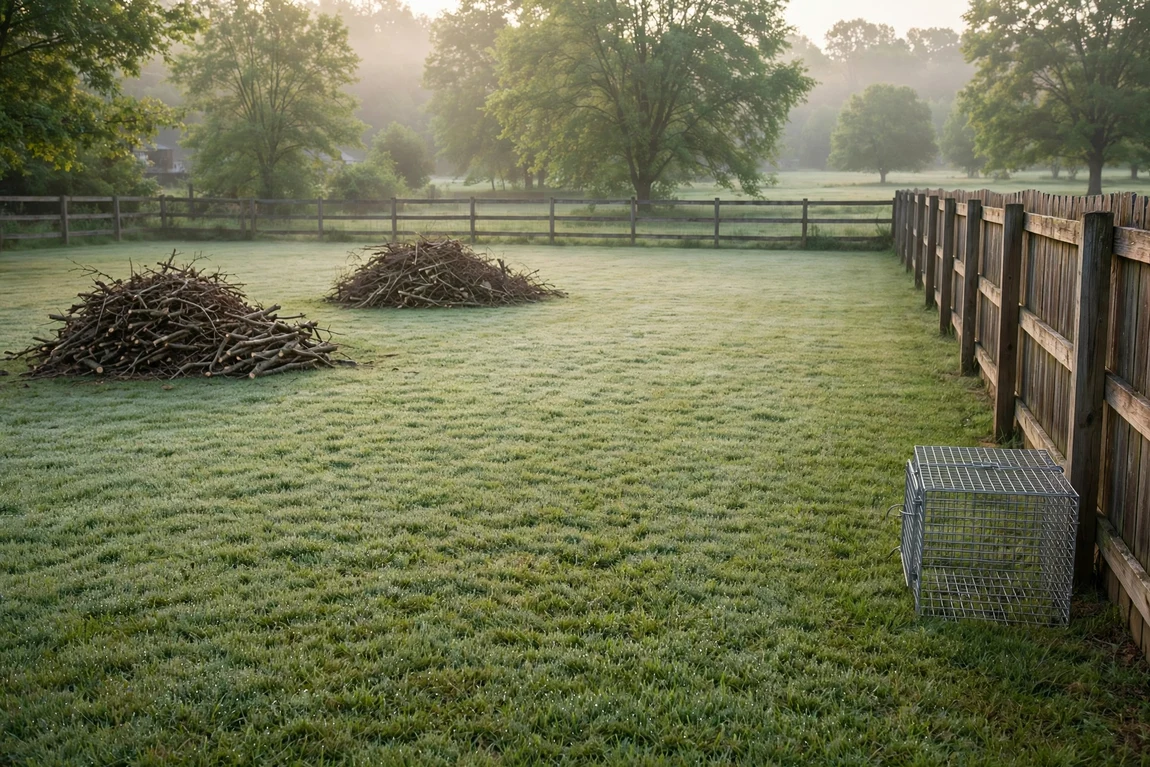
Step 5: Remove cover and easy food. Clear brush piles, scrap lumber, boards, and rock piles near the house, and feed pets indoors. Iowa State notes that habitat changes like these should come before trapping, because a yard with no cover is far less attractive to the next animal.
Step 6: Consider live trapping, carefully and legally. If damage continues, a live trap of at least 10 by 10 by 24 inches can be set at the burrow entrance or in a travel lane. Penn State suggests guide logs on either side to funnel the animal in, and bait such as apple slices, cantaloupe, lettuce, or fresh peas.
Check traps twice a day, morning and evening, so a captured animal is removed quickly. Pre-baiting with the door wired open for two or three days can improve success, because the animal learns the trap is a safe food source before it is set.
What Does Not Work Well
Scarecrows and effigies give only temporary relief. Penn State Extension says they must be moved regularly and paired with a high level of human activity near the crop. Left in one place, a groundhog quickly learns to ignore them.
Repellents and toxicants are also weak options. In Pennsylvania, Penn State notes that no repellents and no toxicants are registered for use against woodchucks. Products sold elsewhere may offer short protection at best, and they never fix an open burrow or an unfenced garden.
Fumigants are a specialist tool, not a first step. Gas cartridges and aluminum phosphide carry fire and non-target risks, and some products require a certified applicator. Never use them in a burrow under a wooden shed or building, and always follow the label exactly.
Prevention: Keep the Next Groundhog Out
An empty burrow is an invitation. Once you are sure the animal is gone, fill or screen vacant entrances and keep the exclusion fence in good repair. Checking how to get rid of groundhogs once is not enough if the habitat that attracted the first one is still in place.
Keep grass and cover low along fence lines, foundations, and garden edges. Remove fallen fruit promptly, and harvest ripe vegetables rather than leaving them on the ground. Less food and less cover means a passing groundhog is far more likely to keep moving.
A fence installed in spring, when groundhogs emerge and breed, prevents the whole summer battle. Our broader guide to rodent control around the home covers the same exclusion-first approach for other pests.
DIY vs. Hiring a Professional
Most garden fencing, habitat cleanup, and deck screening are realistic DIY jobs. For many homeowners, learning how to get rid of groundhogs themselves ends with a well-built fence.
Call a licensed wildlife control operator when the burrow is under a foundation, slab, or retaining wall. Burrowing in those spots can weaken the structure, and the repair is structural as well as a wildlife job. A pro also helps when several burrow systems are active at once.
Legal rules decide what happens after a capture, and they vary by state and town. In Pennsylvania, for example, woodchucks are game animals and, because they are a potential rabies vector, trapped animals may not be relocated to other properties. Always check your state wildlife agency and local ordinances before trapping or relocating any animal.
Safety Notes Before You Start
Never reach into a burrow or handle a trapped groundhog with bare hands. Groundhogs have strong teeth and claws and will bite when cornered. Wear heavy gloves for fence and trap work, and keep children and pets away from set traps.
Call before you dig, because buried utility lines often run along fences and foundations, exactly where exclusion trenches go.
If you are still deciding how to get rid of groundhogs on a property with heavy damage, start with one fenced garden and one sealed structure. Success there proves the method, and you can extend the same barrier to the rest of the yard.
Frequently Asked Questions
What is the best fence for keeping groundhogs out of a garden?
Use heavy poultry wire or 2-inch woven mesh at least 3 feet above ground. Bury it 12 inches deep with the bottom 6 inches bent outward, and bend the top outward or add an electric wire to stop climbing, per Penn State Extension.
What is the best bait for a live trap?
Extension sources list apple slices, cantaloupe, carrots with tops, lettuce, cabbage, and fresh peas. Replace bait daily, remove wilted pieces, and place the trap at the burrow entrance or in a well-used travel lane.
Can I relocate a trapped groundhog?
It depends on your state. Some states restrict or ban relocation, and Pennsylvania does not allow trapped woodchucks to be moved to other properties because they are a potential rabies vector. Check your state wildlife agency first.
Will a groundhog leave on its own in winter?
Groundhogs hibernate, generally from late October or early November until late February or March, per Penn State Extension. The burrow is not abandoned, though, and the animal or a new occupant will often return in spring.
Do groundhogs damage foundations?
They can. Penn State Extension notes that burrowing can weaken dikes and building foundations, and mounds and holes are a hazard to equipment and livestock. Burrows beside a foundation should be dealt with promptly, usually with professional help.