

Carbon monoxide is invisible and odorless, so a working alarm is the only warning most homes ever get. Good carbon monoxide detector placement is not about putting one unit somewhere in the house and hoping for the best. It is about putting alarms where they can wake you, on every level, and in spots the manufacturer actually allows.
This guide follows guidance from the National Fire Protection Association (NFPA) and the U.S. Consumer Product Safety Commission (CPSC). It covers how many alarms you need, the right height, the rooms to avoid, and the testing and replacement routine that keeps the protection real.
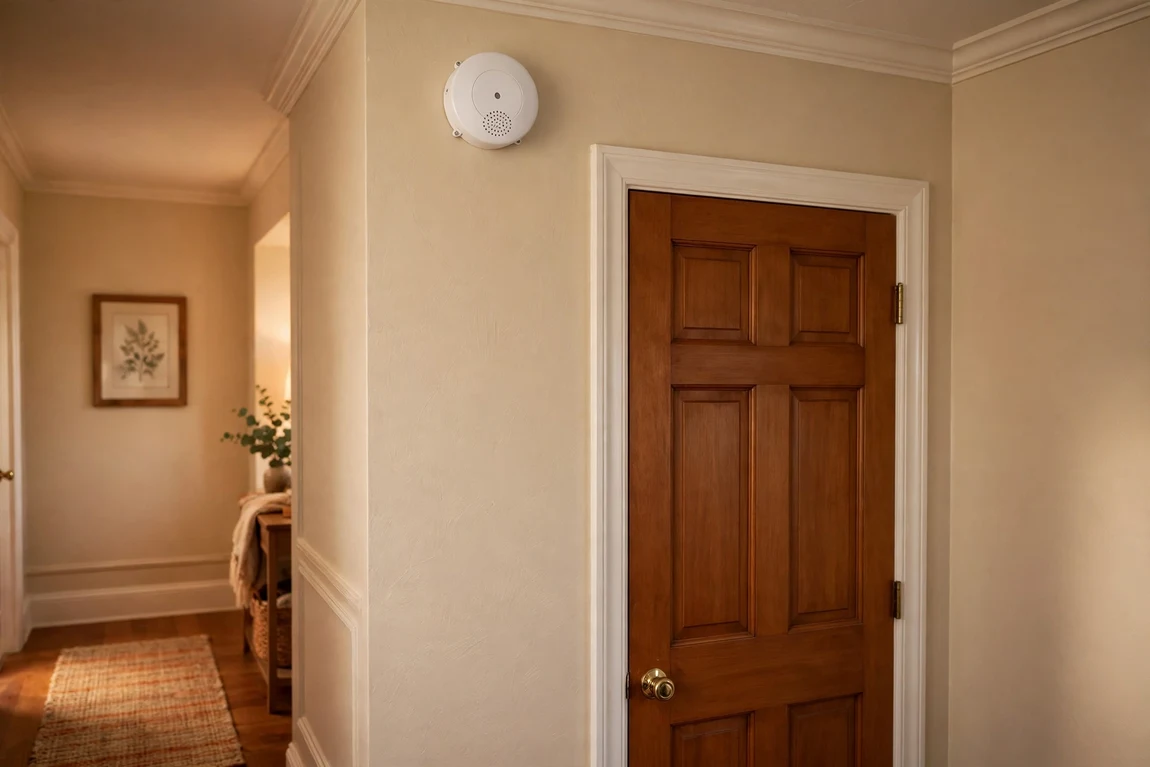
Carbon Monoxide Detector Placement Rules That Matter Most
The core rule is simple. NFPA says CO alarms should be installed in a central location outside each separate sleeping area and on every level of the home, and in other locations required by applicable laws, codes, or standards, as set out in the NFPA carbon monoxide safety materials.
CPSC gives the same basic layout. Its winter safety guidance says CO alarms should be placed on every level of the home and outside sleeping areas, and that alarms should be battery-operated or have battery backup, as explained in the CPSC winter heating safety release.
In practice, sound carbon monoxide detector placement starts with the bedrooms. People are most vulnerable while asleep, because early symptoms are easy to miss and nobody is awake to notice a problem developing in another room.
A central hallway spot outside the bedrooms covers a sleeping area well. If bedrooms sit in two separate wings, or on two different floors, treat them as separate sleeping areas. Each group needs its own nearby alarm, close enough to wake the people sleeping there.
How Many Alarms Does a House Need?
Count levels first, then sleeping areas. A one-story home with all bedrooms off one hallway needs at least one alarm in that hallway. A two-story home needs at least one on each floor, with the upstairs unit placed outside the bedrooms.
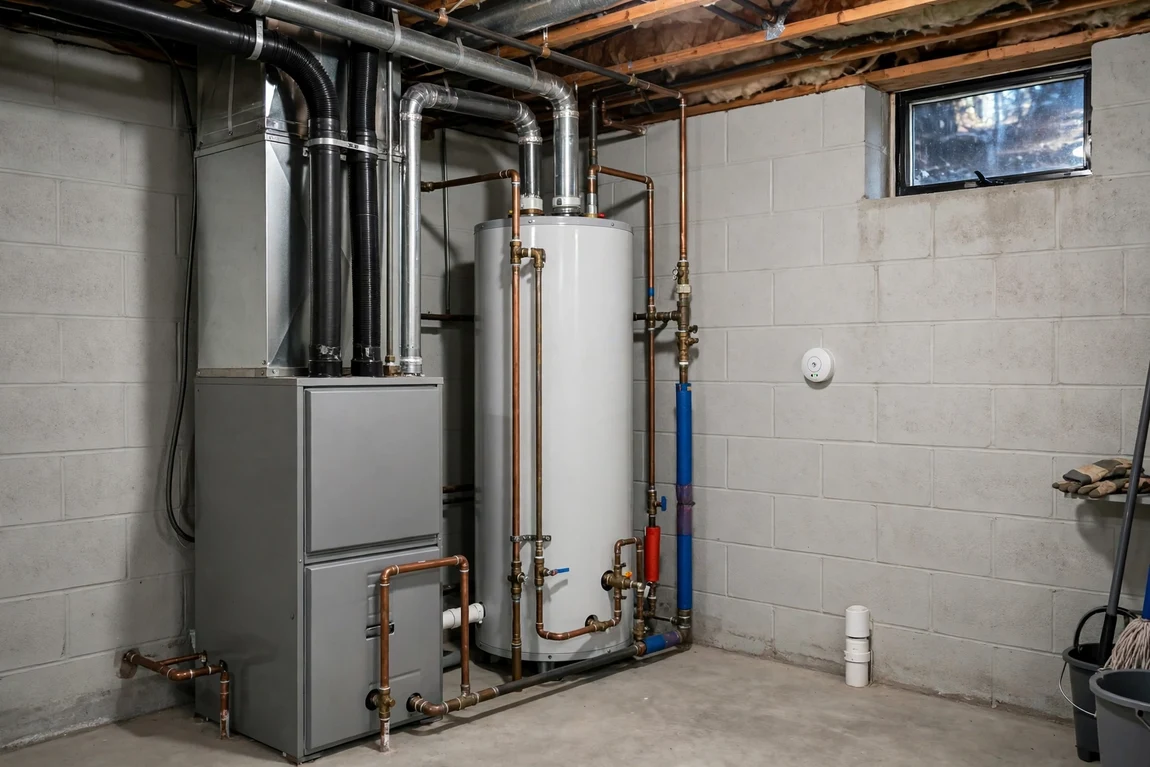
A finished basement counts as a level people use. A basement with a furnace, boiler, or water heater also deserves attention, because fuel-burning equipment in the home is a common CO source. NFPA notes that heating and cooking equipment that burns fuel can be sources of carbon monoxide.
Interconnection improves protection. NFPA says that for the best protection, interconnect all CO alarms throughout the home, so when one sounds, they all sound. CPSC also calls interconnected alarms the best setup, because a basement problem can then wake people upstairs.
Counting this way is the foundation of carbon monoxide detector placement in any layout.
Local rules can require more than this minimum. Many states and local jurisdictions require CO alarms in homes, especially homes with fuel-burning appliances or an attached garage. Check your local code or fire department guidance before you decide your final count.
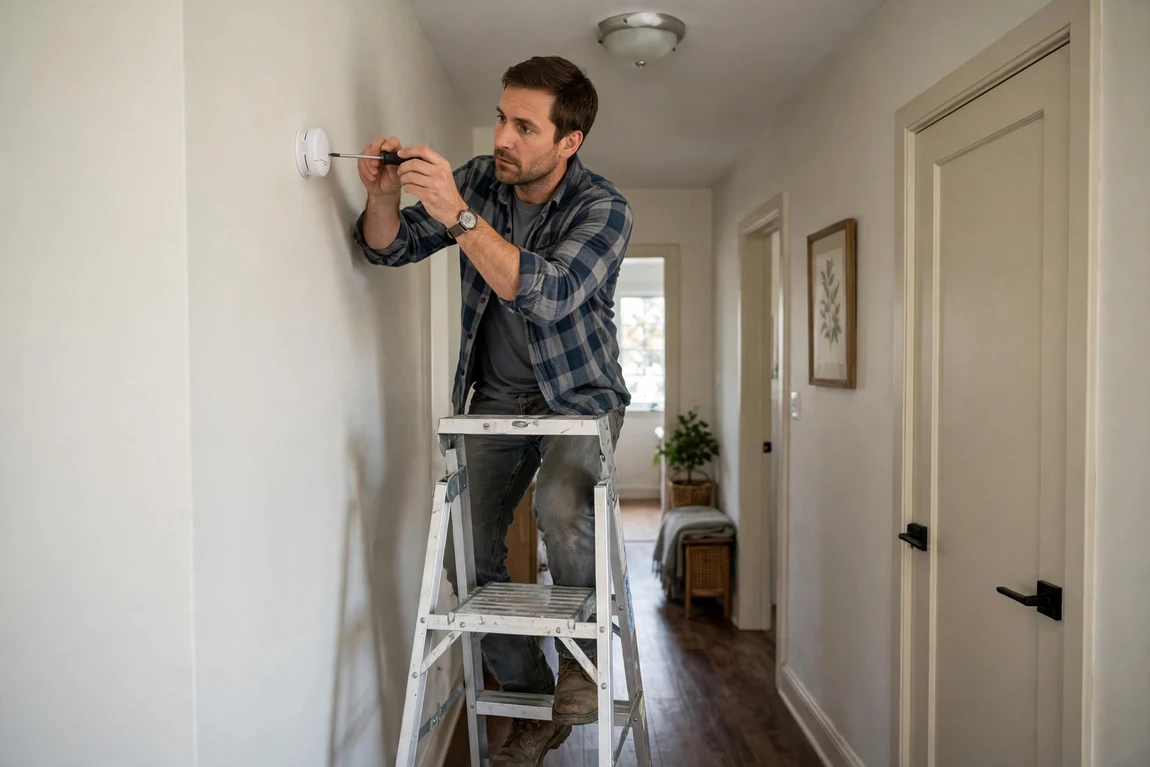
Height and Mounting: Follow the Manual
There is no single height that fits every model. NFPA says to follow the manufacturer’s instructions for placement and mounting height. That instruction matters more than any general rule you read online, because sensor design and listing requirements vary by product.
CPSC notes that alarms may be installed in a plug-in receptacle or high on the wall, and that hardwired or plug-in units should have battery backup.
Keep the alarm where air can reach it freely. Do not hide it behind furniture, curtains, or a door that stays closed. Avoid dead-air corners and spots directly in the blast of a supply vent, a ceiling fan, or an open window, where moving air can delay or distort a reading.
Make the alarm easy to reach for monthly testing, but not so low that children can treat it as a toy. If the manual gives a distance from the ceiling or floor, measure it rather than guessing.
Where Not to Put an Alarm
The wrong spot can cause false alarms or missed readings. Do not place an alarm directly above or right beside a fuel-burning appliance, in a kitchen full of cooking fumes, or in a humid bathroom where moisture can affect the sensor. Follow the distance limits in your manual for stoves, furnaces, and fireplaces.
Do not install alarms in an unfinished attic or a dusty, dirty garage. CPSC guidance summarized in its CO alarm materials says alarms should not be installed in attics or basements unless those spaces include a sleeping area. Heat, cold, dust, and vehicle exhaust make garages and attics poor locations for a household alarm.
Never use an alarm as a substitute for safe equipment use. Generators belong outdoors, well away from windows and doors. Grills belong outdoors only. A vehicle should not idle in an attached garage, even with the garage door open, because exhaust can still enter the home.
For the heating equipment itself, have fuel-burning heating systems and chimneys inspected by a professional each year. Our guide to chimney sweep cost explains what that visit covers, and a furnace check belongs on the same annual list.
Choosing the Right Type of Alarm
Battery-powered alarms are the simplest option and work during a power outage. Plug-in alarms are easy to move and test, but choose one with battery backup so protection does not stop when the power fails. Hardwired alarms are common in newer homes and are often interconnected.
Combination smoke and CO alarms can save wall and ceiling space, but placement must suit both hazards. Follow the manual carefully if you choose a combination unit, because smoke alarm placement rules and CO guidance are not identical in every detail.
Look for an alarm listed by a qualified testing laboratory. NFPA advises choosing a CO alarm that is listed by such a laboratory. A digital display can help you see lower levels and peak readings, and a voice alarm can help children or guests understand what the sound means.
Testing, Batteries, and Replacement
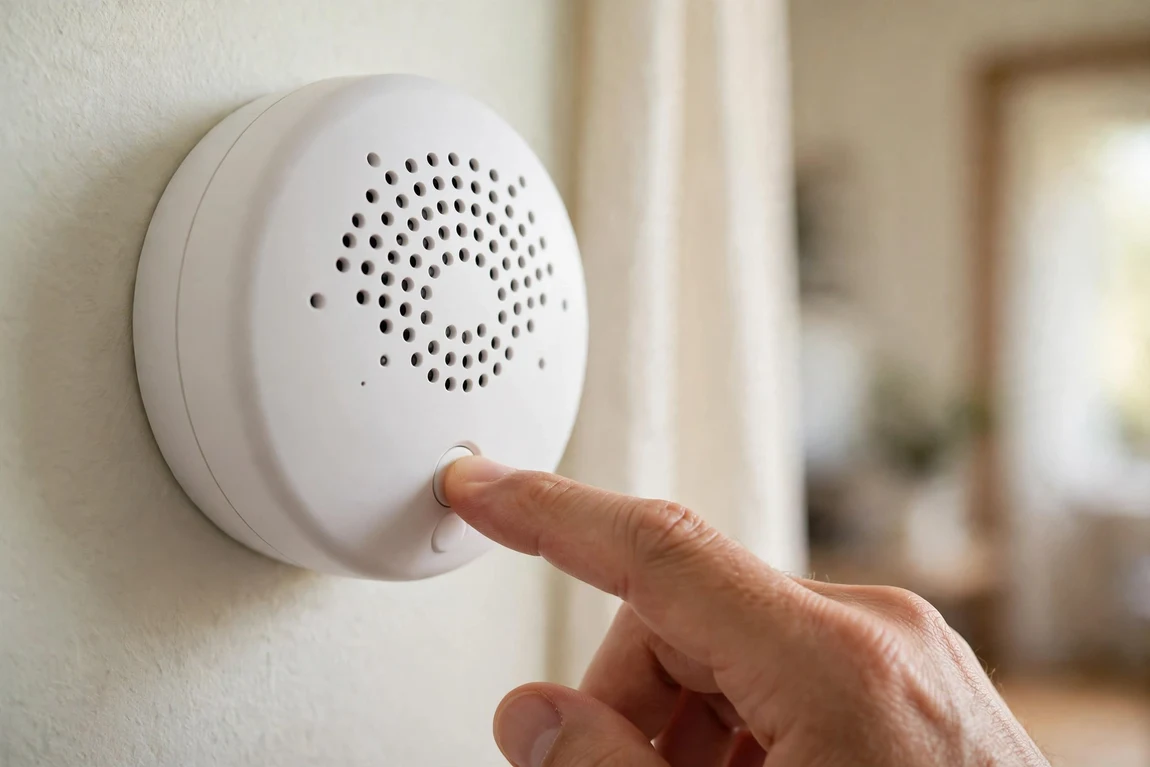
Test every alarm at least once a month using its test button. NFPA gives that monthly test as a basic rule, and CPSC gives the same advice. The test confirms power and electronics, and it also teaches everyone in the house what the alarm sounds like.
Replace batteries on the schedule in the manual, or choose sealed long-life batteries where the model offers them. CPSC advises replacing batteries at least once a year unless the alarm has a sealed 10-year battery. If a trouble signal chirps, check the battery first, and replace the alarm if the signal continues.
Alarms do not last forever. NFPA says to replace CO alarms according to the manufacturer’s instructions. Sensors age, and many models signal the end of their service life with a specific chirp pattern. When an alarm reaches that date, replace the whole unit promptly rather than silencing it.
Keep the rest of the system ready too. Our guide to winterizing your home is a useful seasonal checklist, and if an old furnace is part of the problem, our breakdown of furnace replacement cost explains the next step.
What to Do If the Alarm Sounds
Treat every alarm as real. NFPA says that if the CO alarm sounds, immediately move to a fresh air location outdoors or by an open window or door. Make sure everyone inside is accounted for, including pets where you can do so safely.
Call for help from that fresh air location. Call the fire department or the emergency number your local department tells you to use, and stay outside until emergency personnel declare it safe to re-enter. Do not go back inside to open windows, gather belongings, or find the source.
Do not try to diagnose the problem yourself. Let responders measure the air, and let a qualified technician inspect fuel-burning equipment before you use it again.
Frequently Asked Questions
Where is the single most important place for a CO alarm?
Outside the sleeping area, in a central hallway spot that can wake everyone in those bedrooms. That is the heart of carbon monoxide detector placement, because people are least able to respond while they are asleep.
How high should a CO alarm be mounted?
At the height the manufacturer specifies. Models differ, and both NFPA and CPSC point you to the manual rather than to one universal number. Plug-in and high wall positions can both be correct for listed models.
How many alarms do I need in a two-story home?
At least one on every level and one outside each separate sleeping area. In many two-story homes that means a minimum of two, and more if bedrooms are split into separate areas or local code requires alarms in additional rooms.
How often should CO alarms be replaced?
On the manufacturer’s schedule, which is printed in the manual and often on the unit itself. Good carbon monoxide detector placement also includes keeping a record of install dates, testing monthly, and replacing the whole alarm when it signals the end of its life.
Can I put a CO alarm in the garage or kitchen?
Generally no. Garages bring exhaust, dust, and temperature extremes, and kitchens bring cooking fumes that can trigger nuisance alarms. Place the alarm in the hallway or living space the manual allows, at the stated distance from fuel-burning appliances.