

Your electrical panel is the control centre of your home, yet most homeowners only think about it when a breaker keeps tripping or a big new appliance arrives. If you are planning ahead, understanding the electrical panel upgrade cost before you call an electrician helps you budget properly, compare quotes fairly, and avoid surprises once the work starts. This guide walks through the signs that point to an upgrade, what the job actually involves, and the typical price ranges US homeowners can expect in 2026. All prices below are planning estimates and typical ranges, not fixed quotes, because every home, panel location, and local code requirement is different.
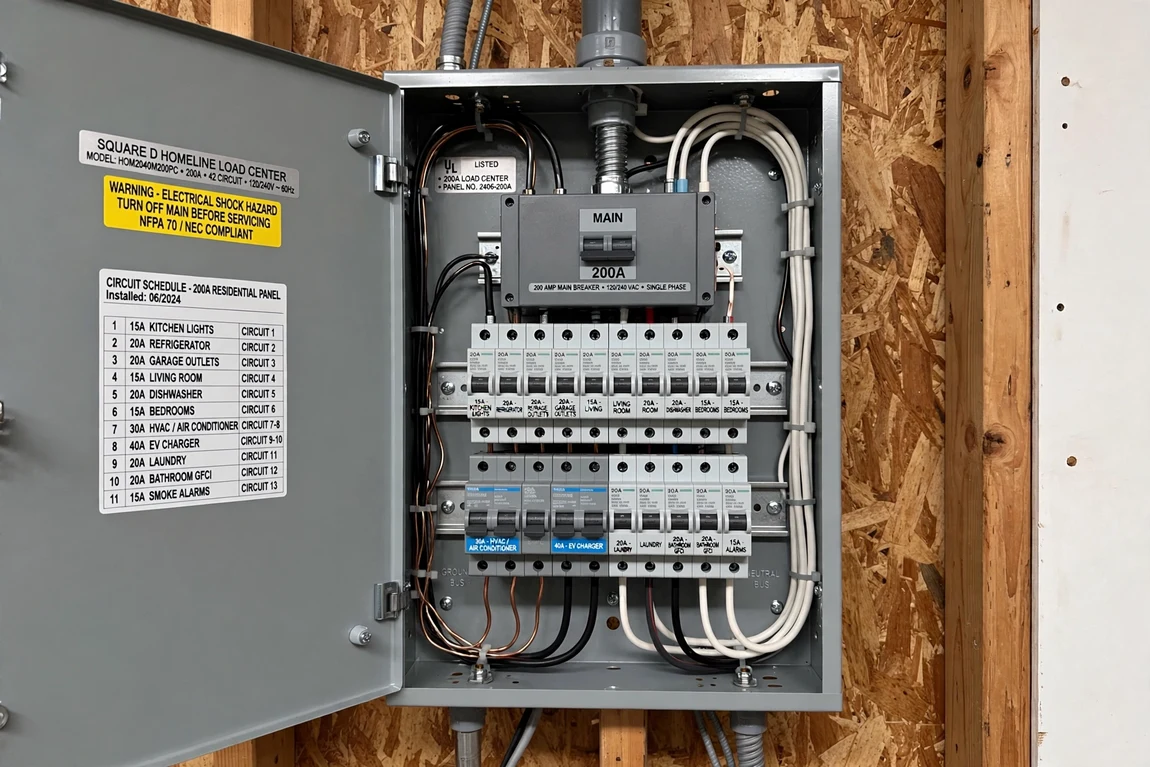
A modern 200-amp breaker panel with clearly labelled circuits. (Illustrative image)
Signs You May Need a Panel Upgrade
Panels rarely fail overnight. More often, the warning signs build up slowly until the panel simply cannot keep up with the way the home is used today. Watch for these common clues:
- Your home still has a fuse box instead of circuit breakers, especially one with screw-in fuses.
- Your service is only 60 amp or 100 amp, which was common in older homes but is often too small for modern loads.
- Breakers trip regularly, lights flicker when a large appliance starts, or you rely heavily on extension cords and power strips.
- The panel feels warm, shows rust or scorch marks, or makes a buzzing sound.
- There are no spare breaker spaces left for a new circuit.
New high-demand equipment is the other big trigger. Adding an EV charger, a hot tub, a heat pump, an electric range, or a workshop can push an older panel past its safe capacity. The same applies to smaller projects that still need new circuits, such as the work covered in our recessed lighting installation cost guide. Heating upgrades deserve the same panel check first, as covered in our heat pump installation cost guide.
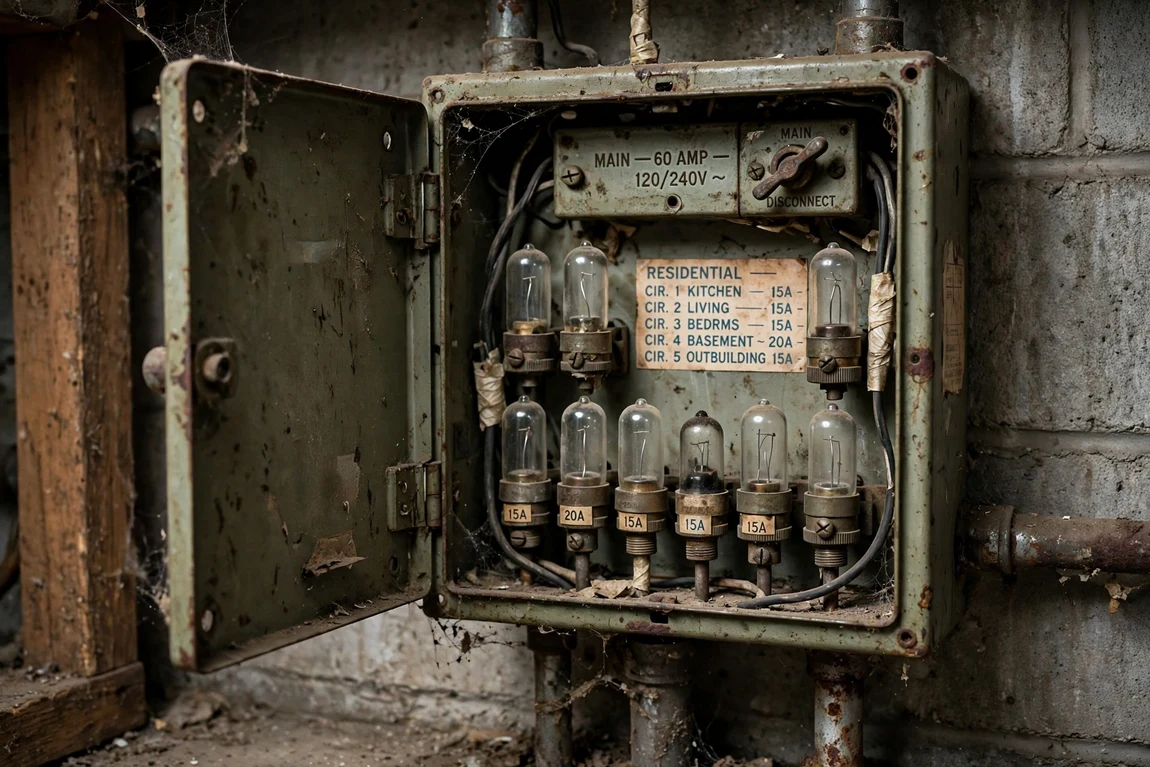
An older fuse box with screw-in fuses, a common sign that service is due for an upgrade. (Illustrative image)
What the Job Involves
A panel upgrade is more than swapping one metal box for another. A typical job starts with a load calculation, where the electrician works out how much power the home uses now and how much the new equipment will add. That calculation decides whether a like-for-like panel replacement is enough, or whether the whole service needs to grow.
On installation day, the power is shut off, the old panel is removed, and the new panel is fitted with breakers sized for each circuit. Existing circuits are reconnected and labelled, grounding and bonding are brought up to current code, and any damaged or undersized wiring at the panel is corrected. For a full service upgrade, the electrician may also replace the meter base, the service mast, and the cable that connects your home to the utility supply. Most straightforward upgrades are completed in a single day, although larger service work can take longer.
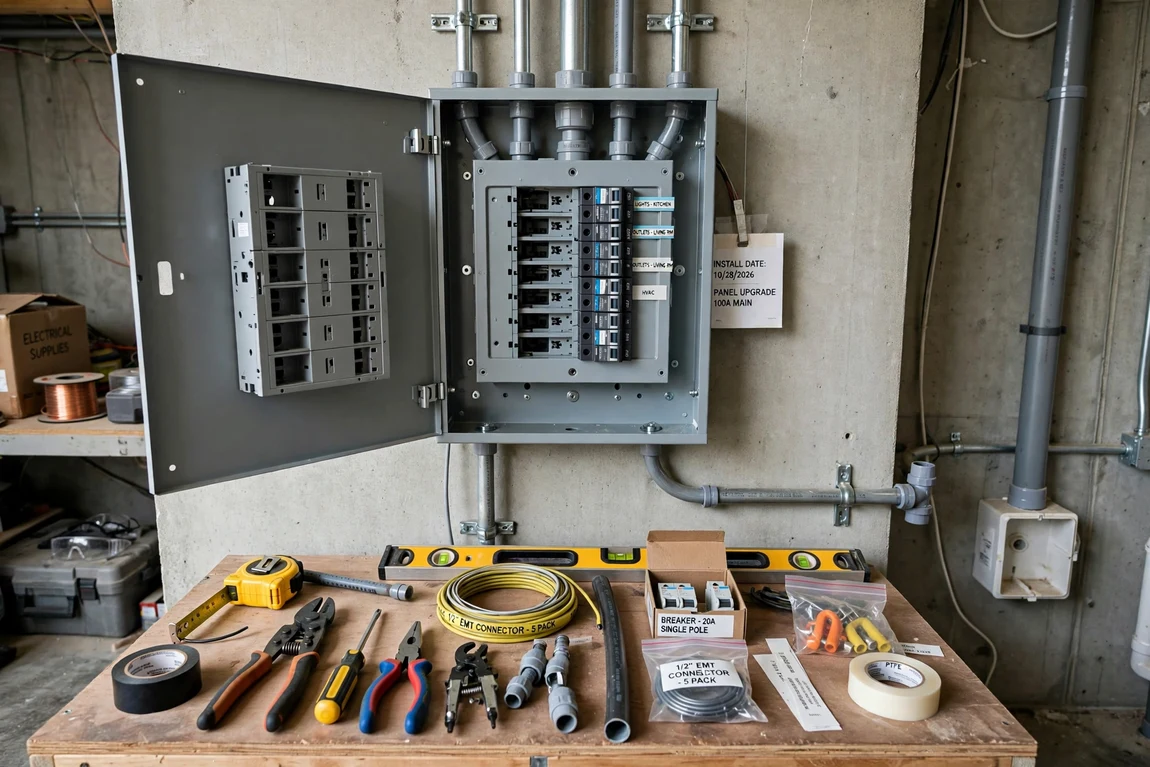
Panel, conduit and tools prepared for an installation day. (Illustrative image)
Permits and Utility Coordination
Panel work almost always needs an electrical permit and an inspection. The permit confirms the work follows local code, and the inspector checks the finished installation before the job is signed off. Skipping the permit can cause problems later when you sell the home or make an insurance claim, so a proper quote should include it.
When the service size changes, the utility company is involved too. The utility usually disconnects power at the start of the job and reconnects it once the new equipment passes inspection. Your electrician normally schedules this, but the timing can affect the date of the work, so build a little flexibility into your plans.
Breaking Down the electrical panel upgrade cost
The table below shows typical US price ranges for 2026. Treat these figures as planning estimates for budgeting only. Your final price depends on your region, your home, and the scope confirmed after an inspection of the existing installation.
| Upgrade type | Typical cost range (2026 planning estimate) | What it usually covers |
| 100 amp to 200 amp panel upgrade | $1,500 to $3,000 | New 200-amp panel and breakers, labour, permit, and reconnection of existing circuits |
| 200 amp to 400 amp panel upgrade | $3,500 to $6,500 | Larger panel or dual panels, heavier service equipment, labour, and permit |
| Subpanel installation | $500 to $1,500 | Added panel for a garage, workshop, or extension where main service capacity is already enough |
| Full service upgrade | $2,500 to $5,500 | Panel plus new meter base, service mast, and service cable, with utility coordination |
A simple panel swap in the same location, with no service increase, usually sits at the lower end of these ranges. Costs rise when the panel must move, the service cable needs replacing, or extra work is needed to bring grounding and wiring up to code.
Factors That Change the Price
- Amperage: jumping to 400 amp service needs heavier equipment than a standard 200-amp upgrade.
- Panel location: moving a panel, or working in a tight finished space, adds labour and materials.
- Wiring condition: damaged, outdated, or undersized wiring found during the job may need correcting.
- Meter and mast work: a full service upgrade costs more than a panel-only change.
- Permits and inspection fees: these vary by city and county.
- Regional labour rates: electrician rates differ widely across the US.
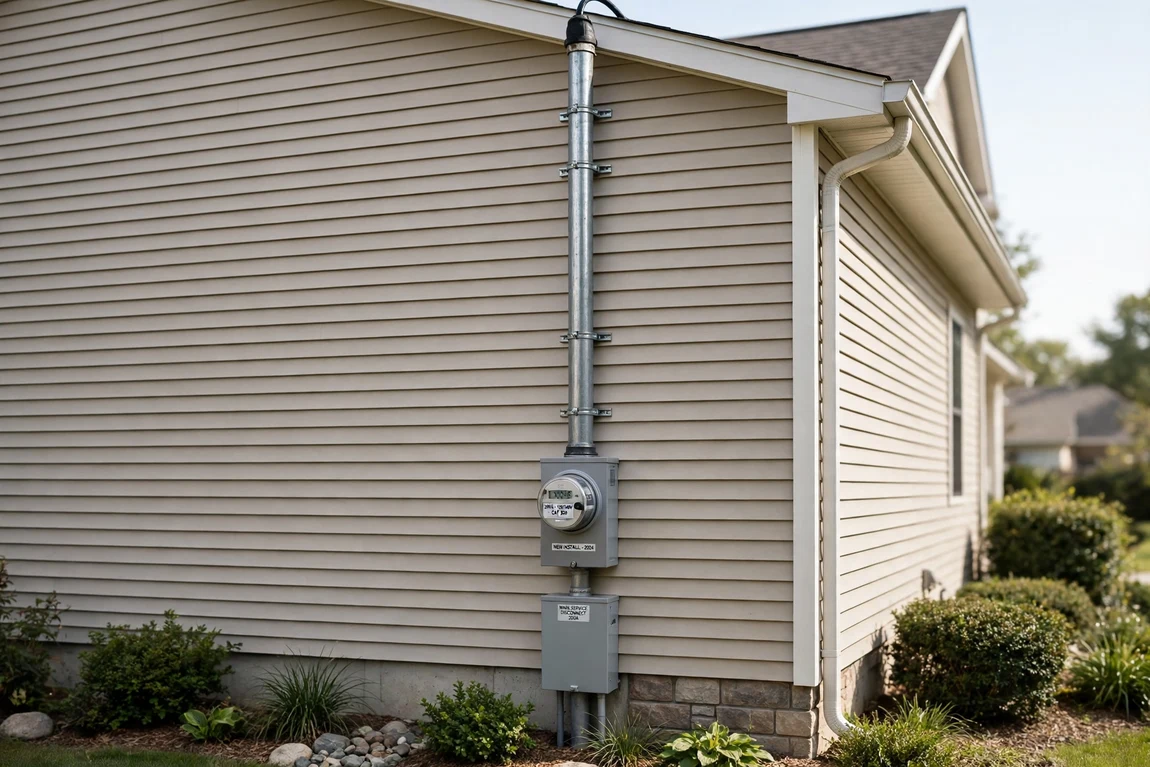
A new meter base and service mast on a home exterior after a full service upgrade. (Illustrative image)
Why This Is Licensed-Electrician Work
A panel connects directly to the utility supply, and mistakes can cause fire, serious injury, or damage to everything plugged in at home. For that reason, panel and service work should always be done by a licensed electrician who can pull the permit, coordinate with the utility, and stand behind the inspection. Homeowners can safely prepare by clearing access to the panel, listing the new equipment they plan to add, and gathering past electrical paperwork, but the panel itself is not a do-it-yourself project. The same caution applies to other connected upgrades around the home, from chargers to the devices covered in our guide to the best smart locks, where correct, safe installation matters.
How to Save Without Cutting Corners
- Get at least three written quotes that list the panel size, permit, and utility work separately.
- Plan ahead: combining a panel upgrade with a planned charger, heat pump, or remodel avoids paying for repeat visits.
- Ask whether a subpanel solves your problem before paying for a full service upgrade you may not need.
- Keep the panel in its existing location if code allows, since relocation adds cost.
- Check whether your utility or state offers any current rebate or incentive, and confirm eligibility before work starts.
Red Flags to Watch For
- A quote that avoids permits or inspection, or an installer who asks you to pull the permit yourself.
- A price given over the phone with no load calculation and no look at your existing panel.
- Pressure to decide on the spot, or a large cash-only payment demanded upfront.
- No licence or insurance details on the quote.
- A recommendation for a much larger service than your current and planned loads justify.
Upgrading your panel is not the most glamorous home project, but it is one of the most practical. It supports the way you already live, makes room for the equipment you want next, and removes an old bottleneck that can limit everything from heating to charging. Get the load calculation done, compare like-for-like quotes, and treat the ranges in this guide as a starting point for a proper, permitted job.