

A coated garage floor is easier to clean, brighter to work on and far better protected against oil, road salt and everyday wear than bare concrete. Understanding what drives the garage floor epoxy cost helps, because two quotes for the same garage can differ a lot depending on the coating system and the condition of the slab. This guide breaks down typical 2026 US prices, compares epoxy with polyaspartic coatings, and shows where you can save. All prices are planning estimates and typical ranges, not fixed quotes.
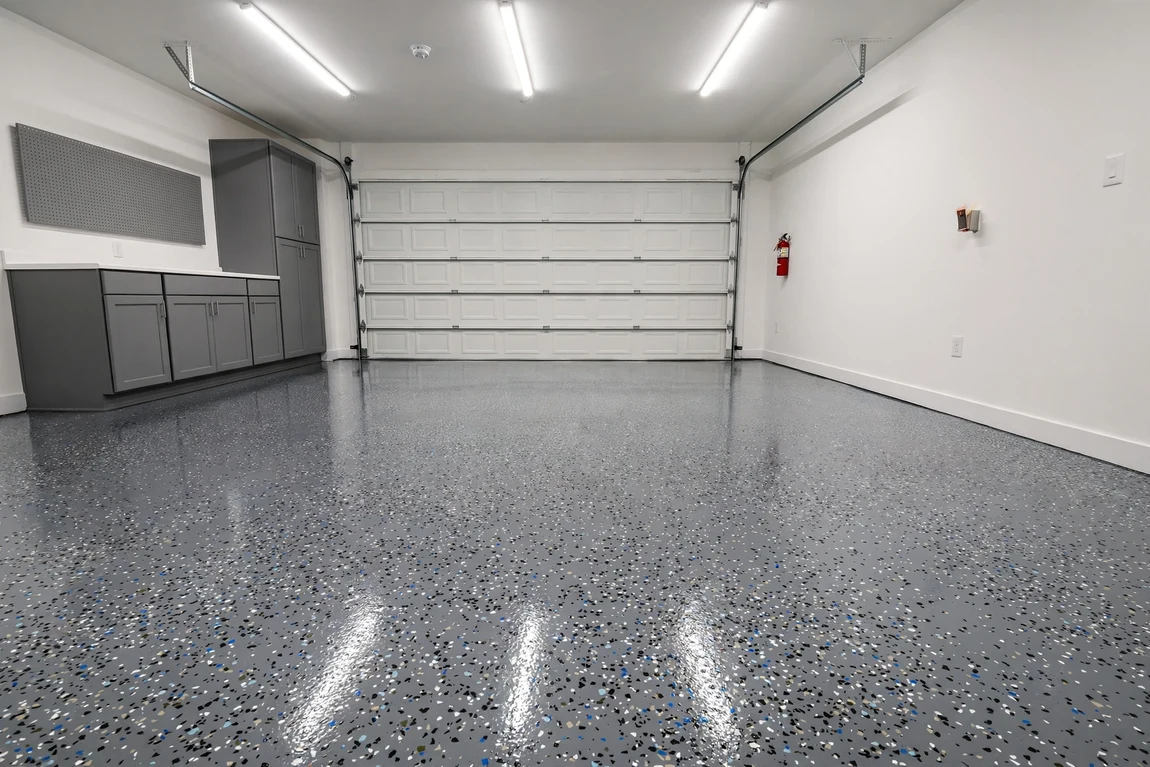
A glossy grey epoxy floor with decorative colour flakes in a clean residential garage. (Illustrative image)
What the garage floor epoxy cost covers in 2026
Most professional prices are quoted per square foot, and the system you choose is the biggest single factor. A basic water-based epoxy is cheapest, a thicker 100 percent solids epoxy costs more and usually lasts longer, and a polyaspartic or polyurea system sits at the top of the range because it cures faster and resists yellowing. The table below uses a one-car garage of roughly 250 square feet, a two-car garage of roughly 450 square feet and a three-car garage of roughly 650 square feet.
| Coating system | Typical cost per square foot | 1-car garage (about 250 sq ft) | 2-car garage (about 450 sq ft) | 3-car garage (about 650 sq ft) |
|---|---|---|---|---|
| Water-based epoxy | $3 to $7 | $750 to $1,750 | $1,350 to $3,150 | $1,950 to $4,550 |
| 100% solids epoxy | $5 to $9 | $1,250 to $2,250 | $2,250 to $4,050 | $3,250 to $5,850 |
| Polyaspartic / polyurea coating | $6 to $12 | $1,500 to $3,000 | $2,700 to $5,400 | $3,900 to $7,800 |
These ranges are planning estimates for typical US professional installation in 2026, including standard preparation and a clear topcoat. Heavy crack repair, moisture treatment or old coating removal can push a job above the range.
Epoxy vs polyaspartic coatings, in plain terms
Epoxy is a two-part coating that is mixed, rolled onto prepared concrete and left to harden into a tough, glossy film. Water-based versions are thinner and easier to apply, which keeps the price down, but they may need recoating sooner. A 100 percent solids epoxy goes on thicker and generally gives a more durable floor.
Polyaspartic and polyurea coatings cure much faster than traditional epoxy and tend to resist fading and yellowing better where sunlight reaches the floor near the door. That speed costs more per square foot, and the fast cure leaves less working time, which is why these systems are usually a professional job rather than a first DIY project.
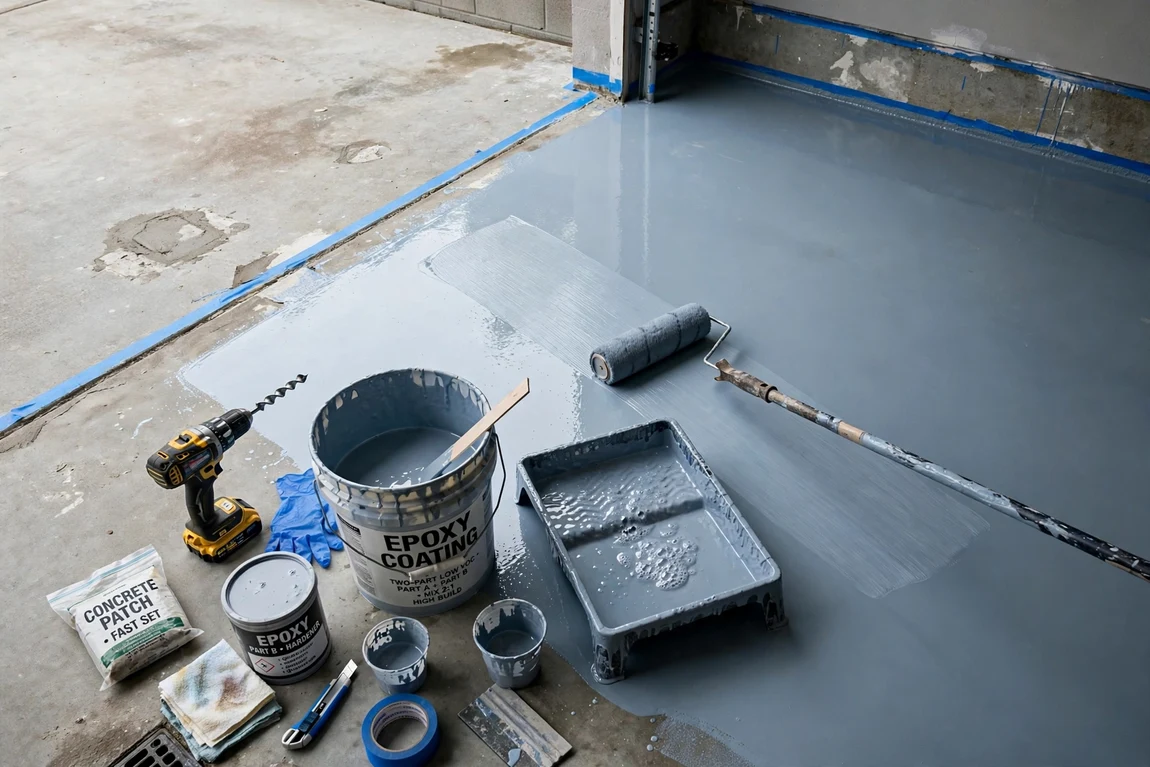
Applying a fresh epoxy coat over properly prepared concrete, using coating equipment only. (Illustrative image)
What professional installation involves
Good preparation is the main reason a professional floor bonds properly and lasts, and it is a large part of what you are paying for. A typical job follows this sequence:
- Emptying and cleaning the garage, then testing the concrete for moisture where needed.
- Diamond grinding or acid etching the surface so the coating can grip the concrete.
- Repairing cracks, chips and spalled areas before coating begins.
- Applying a primer or base coat across the whole prepared floor.
- Broadcasting decorative colour flakes into the wet coat if a flake finish is chosen.
- Removing loose flakes once the base coat has cured, then sealing everything with a clear topcoat.
- Allowing the stated cure time before walking on the floor or parking vehicles on it.
Ask any installer to put those steps in writing. A very low quote sometimes leaves preparation out, and a coating rolled onto dirty or sealed concrete is far more likely to peel.
Cost breakdown: where the money goes
Materials are only part of a professional total. Surface preparation, labour, crack repair products, the flake broadcast, the clear topcoat and clean-up all add up. Decorative upgrades also change the price: a full flake broadcast costs more than a light sprinkle, and metallic finishes need extra material and skill. If you plan other garage work, sequence it sensibly. Many owners deal with a worn door while the garage is already empty, and our guide to garage door replacement cost explains that separate project.
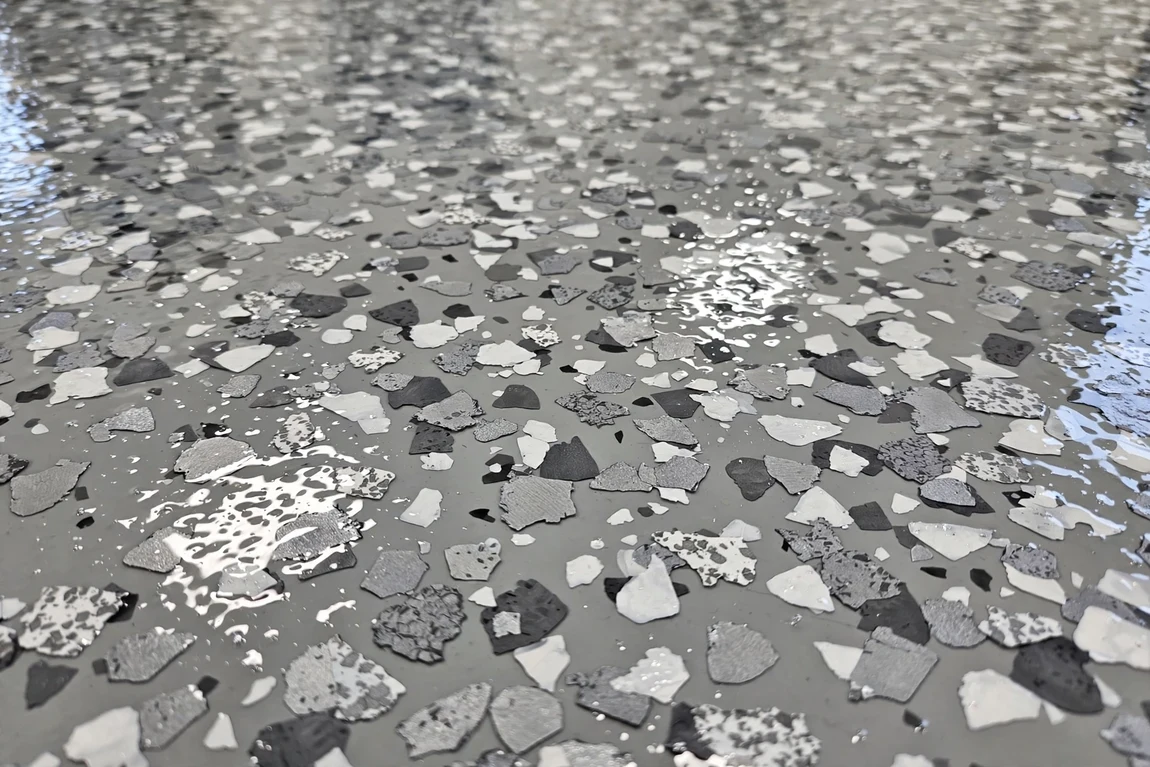
Close-up detail of the decorative flake texture in a finished coated floor. (Illustrative image)
Factors that change the price
- Concrete condition: cracks, pitting, oil staining and crumbling edges take extra repair time and material.
- Moisture: damp rising through the slab can stop a coating bonding, and a moisture barrier may be needed first.
- Old coating removal: a failed previous coating usually has to be ground off completely, adding labour time.
- Size and layout: larger floors cost more in total but often less per square foot, while steps and corners add detail work.
- Finish choice: full flake coverage, metallic effects and extra topcoats raise the total.
- Local labour rates: the same system can cost noticeably more in an expensive metro area.
If your slab has settled or is uneven, deal with that before you think about a finish. Our overview of deck building cost shows how ground conditions affect budgets in a similar way. Always ask whether slab repair is included or priced separately.
DIY kits vs professional systems
A DIY water-based epoxy kit for a typical garage often costs in the region of $150 to $600 for materials, plus rollers, cleaning and etching products, safety gear and possibly a rented grinder. That is far less than a professional total, and a careful homeowner with a sound slab can get a respectable result. Be realistic, though. Retail kits are usually thinner than professional systems, preparation is hard work, and you carry the risk if the floor is damp. A failed DIY coat must also come off before a professional can redo it, which can erase the saving.
How to save without ruining the floor
- Empty the garage completely and sweep it out yourself before the crew arrives.
- Get at least three itemised quotes listing preparation, repairs, coats and cure times.
- Choose a standard colour and flake finish instead of a custom metallic effect.
- Fix drainage or water entry problems first, so you do not coat a floor that stays damp.
- Ask about scheduling in the installer’s quieter weeks, when pricing may be more flexible.
The same approach works across the house. If you are comparing several upgrades at once, our breakdown of kitchen remodel cost shows how separating materials, labour and finishing choices makes any quote easier to judge.
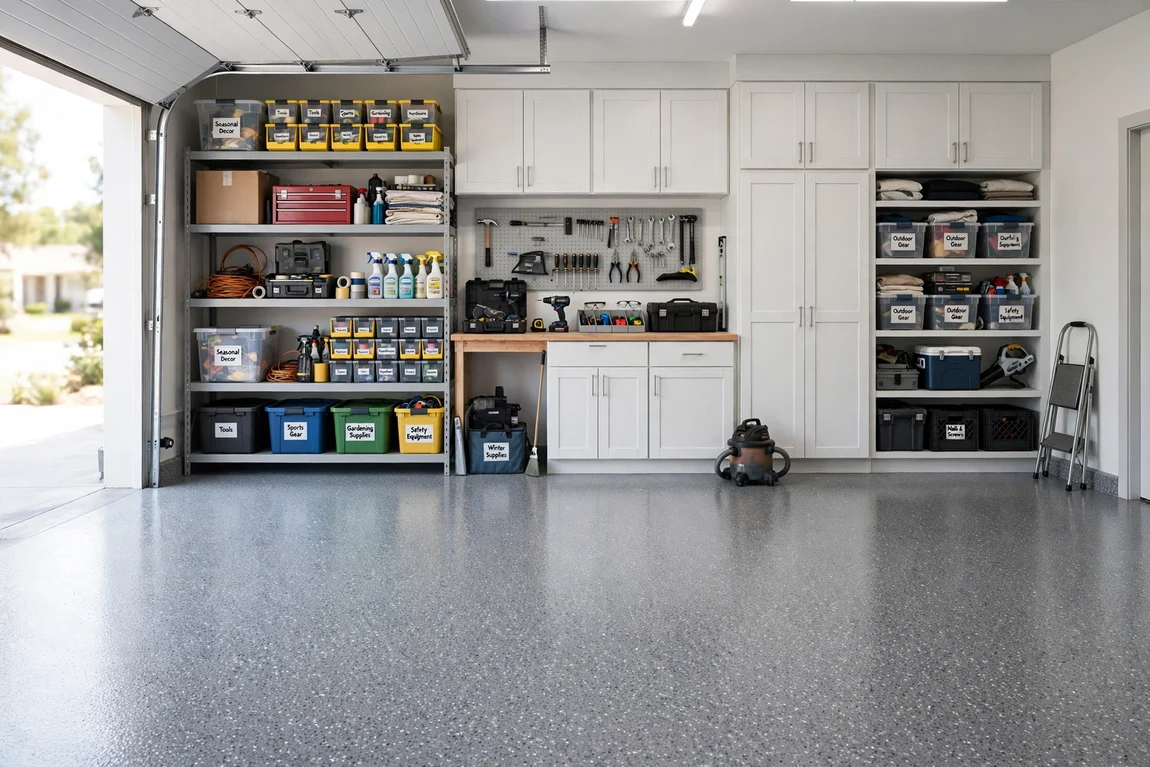
A clean, organised garage with storage in place on a finished coated floor. (Illustrative image)
Maintenance and how long a coated floor lasts
Maintenance is simple but it matters. Sweep grit away regularly, because grit under tyres and shoes acts like sandpaper on the topcoat. Wash it occasionally with water and a mild cleaner, clean up oil and chemical spills promptly, and use pads under heavy equipment.
Lifespan depends on the system, the preparation and how the garage is used. A thin water-based coating in a hard-used garage will generally need attention sooner than a thick, professionally prepared 100 percent solids epoxy or polyaspartic system. Hot tyres, moisture problems, poor preparation and skipped topcoats shorten the life of any of them. Keep the product and colour details safe for future touch-ups.
In short, budget by system, insist on proper preparation in writing, and treat every price here as a 2026 planning range, not a promise.